
The push to upgrade water, gas and irrigation networks across Palestine has put HDPE pipe welding at the center of many infrastructure projects. Choosing the right butt fusion machine depends on project scale, pipe sizes, site conditions in Gaza and the West Bank, and the availability of trained operators and spare parts. This guide helps municipal teams, contractors, and NGO project managers pick the best butt fusion solution for local pipe welding needs.
Why Butt Fusion Is the Right Choice for Palestine
Butt fusion delivers leak-free, high-strength joints that are ideal for drinking water, sewer, gas distribution, and agricultural irrigation systems. In Palestine, where projects often require durable, corrosion-resistant pipelines and long-term low-maintenance solutions, butt fusion is widely preferred over mechanical fittings and solvent methods. It also performs well in sandy or coastal soils and in regions with limited access to ongoing maintenance.
Local Factors to Consider
Project planners must account for power reliability on site, transport restrictions, and available workshop space. Many installation crews in Palestine operate in constrained workspaces or travel through checkpoints, so portability and modular design are advantages. For emergency repairs and smaller community connections, compact manual units work well. For large municipal or donor-funded projects, hydraulic or automatic machines increase throughput and weld consistency.
Types of Butt Fusion Machines — Quick Overview
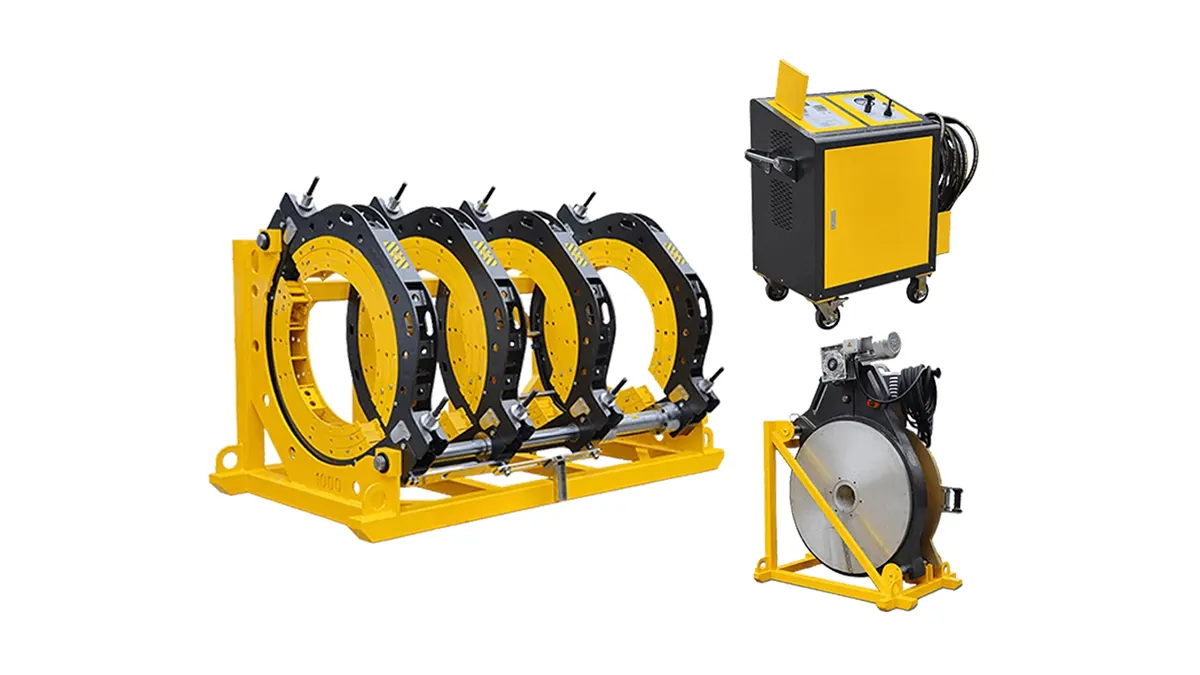
Manual machines are cost-effective and portable, suitable for small-diameter pipes and field repairs. Hydraulic machines are ideal for mid-to-large diameters and frequent daily use, offering stronger clamping and consistent pressure. Automatic/CNC units deliver the highest repeatability and are best for large-scale pipeline contractors handling long runs and strict quality records.
Comparison at a Glance
| Machine Type | Best For | Common Pipe Sizes | Primary Benefit |
|---|---|---|---|
| Manual Butt Fusion | Small community repairs, tight-access sites | 20–315 mm | Portability and low capital cost |
| Hydraulic Butt Fusion | Municipal works, medium-to-large pipelines | 160–2000 mm | Consistent pressure, high reliability |
| Automatic / CNC Butt Fusion | Large contractor projects, high-volume welding | 63–1600+ mm | Repeatability, digital records, faster cycles |
Choosing the Best Machine for Specific Palestinian Needs
For rural village water lines and small irrigation networks, choose portable manual units that local crews can carry and operate without heavy support equipment. In urban or donor-funded projects (water supply upgrades, sewer nets), hydraulic machines provide the durability and clamping power needed for larger diameters and continuous shifts. Where international contractors require documented quality control and traceable weld reports, an automatic butt fusion machine with a data logger is the right investment.
Practical Tips for Procurement and Operation
Verify power options (single-phase, three-phase, or hydraulic powerpacks) and check voltage compatibility. Prioritize machines with readily available spare parts and accessible heating plates and facing tools. If projects operate across Gaza and the West Bank, consider modular systems that can be disassembled for transport through narrow checkpoints. Training local teams and maintaining an inventory of common spare parts will reduce downtime.
Quality & Compliance
Look for machines that support standard welding procedures (ISO, ASTM where applicable) and offer clear operation manuals. Devices with digital controls reduce human error and produce weld logs that help with QA for donor-funded or municipal contracts.
Accessories and Add-Ons to Maximize Value
Essential accessories include facing tools, spare heating plates, hydraulic power packs, aluminum clamps for accurate alignment, and welding documentation modules. For large-diameter works, consider transport frames and protective cases to keep components intact during long site transfers.
How to Get Support and Spare Parts
Buy from suppliers with reliable after-sales service and regional shipping options. For tailored consultations and a wide range of HDPE pipe welding machines, contact JQ-Fusion at their official site for product options and shipping guidance.
Final Buying Checklist
– Confirm pipe diameter range and daily weld count expected on site.
– Check site power availability and weight/transport limits.
– Ask about spare parts lead times and local technical support.
– Ensure operator training and welding procedure documents are provided.



