
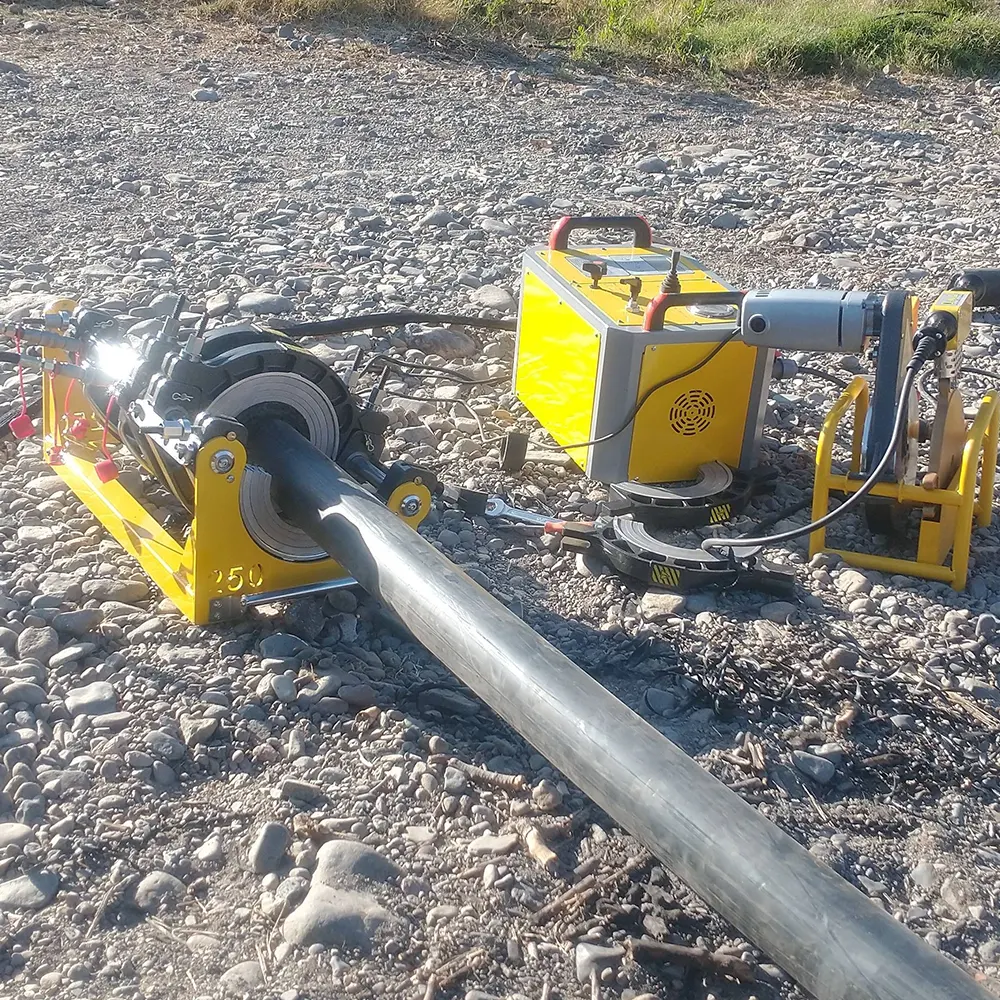
Selecting the best butt fusion machine for HDPE pipes is a critical decision for contractors, engineers, and project managers involved in pipeline installation. The right equipment ensures strong, leak-proof welds, project efficiency, and long-term system reliability. With various models and manufacturers available, making an informed choice requires understanding key technical and operational factors.
Core Factors for Choosing the Best Butt Fusion Machine
The ideal machine is not a one-size-fits-all solution. It must align with your specific project requirements, pipe material, and working conditions.
1. Pipe Diameter Range and Machine Capacity
Your primary consideration should be the diameter of the HDPE pipes you will be welding. Machines are designed for specific size ranges. Using a machine outside its capacity can lead to poor fusion and joint failure. Ensure the machine’s clamp and heater plate are compatible with your pipe’s outside diameter (OD).
2. Power Source and Operational Mode
Butt fusion machines come in different power configurations:
• Manual Machines: Require operator skill for pressure application. Best for smaller diameters or occasional use.
• Hydraulic Machines: Use hydraulic systems for consistent pressure. Offer a balance of control and power for medium to large projects.
• CNC/Automatic Machines: Feature programmable logic controllers (PLC) for fully automated, repeatable weld cycles. Essential for large-diameter, high-volume, or critical pressure applications to eliminate human error.
3. Heating Plate Technology and Temperature Control
Precise and uniform heating is the heart of a good fusion weld. Look for machines with high-quality, anti-stick coated heater plates and accurate digital temperature controllers. Consistent heat distribution across the entire plate surface is non-negotiable for achieving a perfect molecular bond.
4. Alignment and Clamping System
A robust clamping system holds the pipes in perfect alignment during the entire fusion process. Misalignment leads to weak joints. Check for features like:
✓ Strong, serrated clamps that prevent pipe slippage.
✓ Easy-to-use alignment tools (face clamps, pipe supports).
✓ Low-pressure closing systems that ensure smooth, controlled joining.
5. Portability and Job Site Suitability
Consider the working environment. For field work in remote or confined spaces, a compact, lightweight machine with easy setup is crucial. Larger, stationary machines are suited for yard or factory pre-fabrication. Some models offer modular designs or wheel kits for enhanced mobility.
6. Manufacturer Support and Reliability
The machine’s quality is directly tied to its manufacturer. A reputable supplier provides more than just equipment. Key support elements include:
• Comprehensive Warranty: Protects your investment.
• Technical Training & Documentation: Ensures your team operates the machine correctly and safely.
• Availability of Spare Parts: Minimizes downtime.
• Proven Track Record: Look for manufacturers with experience in projects similar to yours.
Why Partner with a Professional Manufacturer?
Choosing a machine from a dedicated manufacturer like JQ-Fusion offers distinct advantages over generic suppliers. With over 20 years of specialization in HDPE welding technology, such manufacturers build deep expertise directly into their equipment.
They employ advanced manufacturing technology and strict quality control processes, where each machine undergoes testing for temperature accuracy, hydraulic stability, and clamp alignment. This commitment to quality ensures every weld meets project specifications. Furthermore, professional manufacturers often provide flexible OEM & ODM customization, allowing you to tailor the butt fusion machine for specific voltage requirements, branding, or unique project configurations, giving you a competitive edge.
Their commitment extends beyond the sale. Reliable global support, including professional technical guidance and efficient logistics, is crucial for keeping your project on schedule, especially when working internationally. Exploring the product range of a seasoned manufacturer, from hydraulic and automatic butt fusion machines to electrofusion and multi-angle fitting welders, ensures you find a solution that perfectly fits your application.
Making the Final Decision: A Practical Checklist
Before purchasing, use this checklist to evaluate your options:
🔸 Confirm the machine’s diameter range covers all your current and near-future pipe sizes.
🔸 Match the power/automation level (Manual/Hydraulic/CNC) to your project’s volume and criticality.
🔸 Verify the precision of the temperature control and heating plate quality.
🔸 Inspect the sturdiness and ease of use of the clamping and alignment system.
🔸 Assess the manufacturer’s reputation, warranty, and after-sales service network.
🔸 Consider total cost of ownership, including maintenance and part availability, not just the initial price.
Investing time in selecting the right butt fusion machine pays long-term dividends through reduced weld failures, lower maintenance costs, and enhanced project safety. By prioritizing technical specifications, operational needs, and manufacturer credibility, you secure a tool that delivers consistent, high-quality joints for the lifespan of your HDPE pipeline system.
Frequently Asked Questions (FAQs)
What is the main difference between a hydraulic and a fully automatic (CNC) butt fusion machine?
A hydraulic machine relies on the operator to control the heating and fusion phases based on time and pressure gauges. A CNC automatic machine uses a programmable controller to execute the entire weld cycle (heat, switch, fusion, cool) with pre-set parameters, ensuring perfect repeatability and removing potential operator error, which is vital for large-diameter or critical pipes.
Can one machine weld all different sizes of HDPE pipe?
No, a single machine has a defined clamping range. You must select a machine whose clamp inserts and heater plate size are compatible with the outside diameter (OD) of your pipes. For projects involving vastly different pipe sizes, you may need multiple machines or a modular system with interchangeable components.
How important is temperature control in the butt fusion process?
Extremely important. HDPE must be heated to a specific melt temperature (typically around 200°C – 230°C / 392°F – 446°F) to achieve proper molecular fusion. Inaccurate or uneven heating leads to cold welds (weak joints) or burnt material, both of which compromise the integrity of the pipeline.
What kind of maintenance does a butt fusion machine require?
Regular maintenance includes cleaning the heater plate after each use, checking hydraulic fluid levels (for hydraulic models), inspecting and cleaning clamp jaws, verifying the calibration of temperature and pressure gauges, and ensuring all moving parts are lubricated. Always follow the manufacturer’s specific maintenance schedule.
Why should I choose a specialized manufacturer instead of a general equipment dealer?
A specialized manufacturer possesses deeper technical expertise, offers direct engineering support, and typically provides better after-sales service and genuine spare parts. Their machines are often built to higher, industry-specific standards, and they can offer valuable customization (OEM/ODM) to meet unique project demands that a general dealer cannot.



