
In the world of pipeline construction and industrial fabrication, welding remains a cornerstone process. Two broad categories often dominate the discussion: traditional welding methods and modern fusion welding techniques. Understanding the key differences between these approaches is crucial for selecting the optimal method for your project’s success, budget, and timeline.
Core Principles: Heat, Material, and Bonding
The fundamental distinction lies in how the joint is created. Traditional welding, such as arc, MIG, or TIG welding, involves melting a filler material along with the edges of the base metals (often steel or other metals) to form a joint. The weld pool solidifies to create the bond.
Fusion welding, specifically referring to methods like butt fusion for thermoplastics, does not use a filler material. Instead, it involves heating the two clean pipe ends to a precise molten state and then joining them under controlled pressure. The molecules intermingle and cool as one homogeneous piece, creating a joint as strong as the pipe itself.
Key Differentiator at a Glance
Traditional Welding: Uses filler rod/wire. Bonds metals. Operator skill is paramount. Often used for structural steel, fabrication.
Fusion Welding: No filler material. Fuses similar thermoplastics (e.g., HDPE, PP). Process is machine-controlled and repeatable. Ideal for pressure pipes, chemical lines.
Material Compatibility: Metals vs. Thermoplastics
This is one of the most decisive factors. Traditional welding is primarily designed for joining metals—steel, stainless steel, aluminum, and alloys. Its versatility across different metallic materials is its strength.
Fusion welding is the premier method for joining thermoplastic pipes, especially High-Density Polyethylene (HDPE). HDPE’s corrosion resistance, flexibility, and long service life make it ideal for water, gas, and mining pipelines, but it cannot be welded with traditional methods. The development of reliable butt fusion machine technology has been pivotal for the global adoption of HDPE systems.
Joint Strength and Integrity
A high-quality traditional weld can be extremely strong but creates a heat-affected zone (HAZ) where the metal’s properties are altered. The weld’s strength is dependent on the filler material and the welder’s technique.
A properly executed fusion weld creates a homogeneous joint. Since the melted ends fuse completely, the resulting joint has no discernible interface and maintains the material’s inherent corrosion resistance and flexibility. The strength is consistent and predictable when using calibrated equipment.
Skill Requirement and Process Control
Traditional welding is an artisanal craft. Achieving consistent, high-quality, and code-compliant welds requires years of training and experience. Results can vary between welders.
Fusion welding, particularly butt fusion, is a procedure-based process. Once the correct parameters (heat temperature, heating time, fusion pressure) are set for the pipe material and diameter, the machine automates the critical phases. This drastically reduces human error and ensures repeatable, documented results, even with less experienced operators after proper training.
⚙ When Fusion Welding is the Clear Choice
Consider specifying fusion welding for your project if:
✔ The primary material is HDPE or another fusible thermoplastic.
✔ The application involves fluid or gas pressure (e.g., potable water mains, gas distribution).
✔ Corrosion resistance is a top priority (e.g., industrial effluent, mining slurry lines).
✔ You need consistent, leak-free joints with a long service life (50-100 years for HDPE).
✔ Project success depends on repeatable processes and documented weld parameters.
Equipment and Operational Context
Traditional welding requires power sources, gas cylinders, filler wire, and personal protective equipment against sparks and UV light. It is highly portable and adaptable to complex field conditions and positions (e.g., overhead welding).
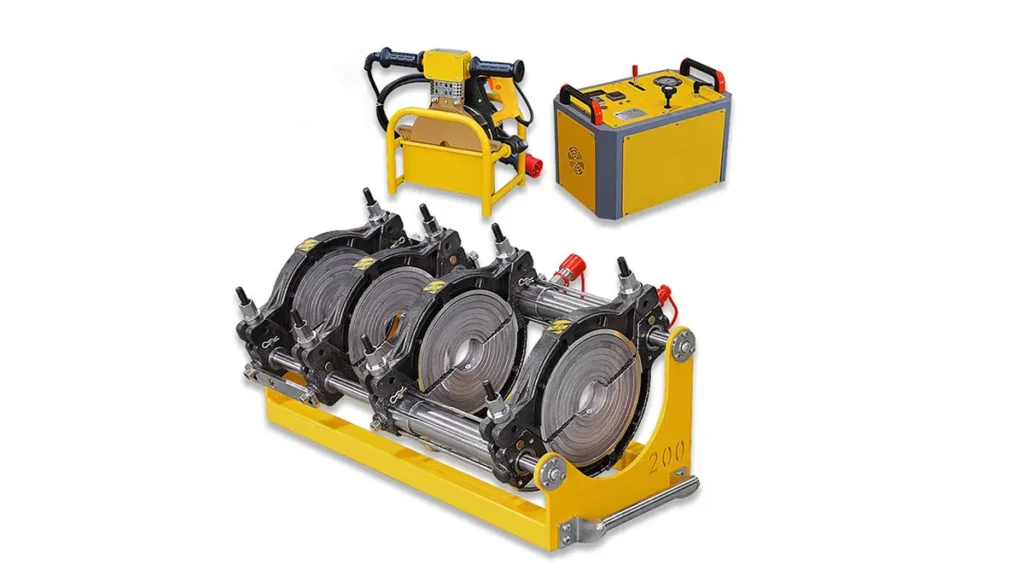
Fusion welding equipment, like a hydraulic butt fusion machine, is more specialized. It includes a facing tool, heater plate, and alignment clamps. While modern machines are designed for field use, they require a stable setup space. The process is typically performed on pipes in a straight alignment. For complex geometries, electrofusion or multi-angle fitting welding machines are used.
Cost Considerations: Initial Outlay vs. Lifetime Value
The initial cost for a skilled welder and traditional equipment may be lower than investing in a fusion welding machine. However, long-term analysis often favors fusion for pipeline projects. The reduction in joint failures, minimal maintenance, lack of corrosion, and lower operational labor costs provide a superior lifetime value, especially for large-diameter, long-run pipelines.
Making the Best Choice for Your Project
There is no universal “best” method. The optimal choice is dictated by your project’s specific parameters. Ask these key questions:
1. Material: Are you joining metal or thermoplastic (like HDPE)?
2. Application: Is it for structural integrity, pressure containment, or corrosion-resistant conveyance?
3. Environment: Is it in a factory, a tight trench, or a corrosive setting?
4. Consistency: Do you need hundreds of identical, reliable joints?
5. Longevity: What is the required service life of the system?
For thermoplastic pipeline projects, partnering with an experienced equipment manufacturer is critical. A professional butt fusion machine manufacturer like JQ-Fusion provides not only reliable machines but also the technical support and parameter guidance essential for project success. Their expertise in both hydraulic and automatic butt fusion welding machines ensures you have the right tool for the job, from small service connections to large-diameter mains.
Frequently Asked Questions (FAQs)
Can fusion welding be used on metal pipes?
No. Fusion welding as discussed here (butt fusion, electrofusion) is specifically for thermoplastic materials like HDPE, PP, and PVDF. Metals require traditional welding or other bonding methods like brazing.
Is a fusion-welded joint stronger than a traditional welded joint?
For thermoplastic pipes, a properly made fusion joint is as strong as or stronger than the pipe itself because it becomes a homogeneous part of it. For metals, a good traditional weld can meet or exceed base metal strength, but it remains a distinct zone with different properties.
Which method is faster?
Speed depends on context. A single traditional weld might be quicker for a small repair. However, for joining long sections of thermoplastic pipe in the field, a butt fusion machine can produce a high-integrity joint in minutes, and the process is highly repeatable, making it faster for pipeline installation.
Does fusion welding require less skilled labor?
It requires different skills. The need for manual dexterity is reduced, but operators must be thoroughly trained in the fusion procedure, machine operation, and pipe handling. The critical factor is meticulous adherence to the process rather than artistic technique.
How do I choose the right fusion welding machine?
Selection is based on pipe material (SDR/Pressure rating), diameter range, project environment (manual vs. hydraulic vs. automatic), and power availability. Consulting with a reputable manufacturer who offers full technical support is the best way to ensure you select the correct butt fusion welding machine for your specific needs.



