
In modern pipeline construction, welding quality can determine whether a system performs safely for decades or fails under pressure. Among the many joining methods used for thermoplastic pipes, CNC fusion welding technology has become one of the most trusted solutions for creating strong, consistent, and repeatable joints. For contractors, distributors, and engineering teams, understanding how this technology works is essential when selecting the right equipment and planning reliable pipeline installation.
CNC fusion welding technology combines precision control, automated process management, and advanced heating and alignment functions to produce a high-strength weld between pipe ends. It is widely used for HDPE pipelines in water supply, gas distribution, mining, and industrial systems. Compared with manual methods, CNC systems help reduce human error, improve weld consistency, and support traceable quality control across large projects.
At its core, the process is designed to make two pipe ends behave as one continuous line after fusion. The pipe sections are clamped, aligned, heated to the correct temperature, pressed together under controlled force, and cooled while remaining fixed in place. The result is a molecular bond that is often stronger than the pipe itself when the procedure is performed correctly.
CNC Fusion Welding Technology Explained
CNC stands for Computer Numerical Control. In welding equipment, this means the machine uses programmed parameters to guide the operator through each stage of the fusion cycle. Instead of relying entirely on manual timing and guesswork, the system monitors critical values such as heating time, pressure, and movement to ensure the weld follows a repeatable standard.
The technology is especially valuable in projects that demand consistency across many joints. When multiple welders are working on the same site, CNC automation helps standardize the process so each joint is produced under similar conditions. This is one of the main reasons modern pipeline contractors prefer advanced automated systems for large-scale infrastructure work.
For companies looking for dependable equipment, a professional butt fusion machine can provide the precision and durability needed for demanding applications. JQ-Fusion, for example, specializes in HDPE pipe welding machines with manual, hydraulic, and CNC automatic solutions designed for global projects.
How the CNC Fusion Welding Process Works
The workflow of CNC fusion welding is straightforward in principle, but every stage must be controlled carefully. The process usually begins with pipe preparation. The ends of the pipes are cleaned, squared, and fixed into the machine clamps. Proper alignment is extremely important because even a small offset can affect weld strength and long-term reliability.
Next, a facing tool trims the pipe ends to create smooth, parallel surfaces. After facing, the heating plate is inserted between the pipe ends. The machine then brings the pipe faces into contact with the heated surface for a preset period. During this stage, the material softens to the correct fusion temperature.
Once the heating phase is complete, the heating plate is removed and the pipe ends are pressed together under controlled pressure. This step creates the fusion bond. The joint is then held steady during the cooling phase so the material can solidify without distortion. When the weld is finished, the machine may record the data for quality control and traceability.
Key point: CNC fusion welding is not only about heating plastic together. It is about controlling temperature, pressure, alignment, and time with precision so the final joint meets engineering standards.
Why Precision Matters in Butt Fusion Welding
Butt fusion is a process where pipe ends are directly joined without fittings, adhesives, or mechanical connectors. Because the joint becomes part of the pipeline itself, its quality must match the pipe’s performance requirements. Any error in heating or pressure can weaken the joint and lead to future leakage or failure.
Precision matters even more in systems that transport gas or high-value industrial fluids. In these applications, the pipeline must remain stable under pressure, temperature changes, and environmental stress. CNC automation reduces the chance of inconsistent manual operation and helps create welds that are suitable for critical infrastructure.
Another advantage of precision is documentation. Many modern CNC machines can store welding parameters, allowing project managers to review records later. This is useful for quality assurance, inspections, and project handover. It also supports compliance with international standards and client specifications.
Main Advantages of CNC Fusion Welding Technology
One of the biggest benefits of CNC fusion welding is repeatability. Once the parameters are set, the machine can reproduce the same process accurately across many joints. This is especially useful on long pipeline routes where dozens or hundreds of welds may be required.
Another advantage is efficiency. Automated control helps shorten the learning curve for operators and reduces the risk of wasted pipe material. The machine can also improve workflow on the construction site by simplifying the welding procedure and reducing rework.
Durability is also a major benefit. A well-executed fusion weld can last for many years in underground and industrial environments. Since the bond is formed by melting and joining the same base material, the joint can offer excellent resistance to leakage and mechanical stress.
Advantages at a glance: consistent weld quality, lower operator error, improved productivity, strong joint strength, and better traceability for project records.
Typical Applications in Real Projects
CNC fusion welding technology is used in many industries where pipeline safety and durability are essential. Water supply systems rely on it to create stable joints that can withstand constant flow and pressure changes. Gas distribution networks depend on it because secure connections are critical for safety.
Mining projects often involve harsh operating environments, abrasive materials, and long pipeline routes. In these conditions, fusion welding provides the strength needed for demanding service. Industrial plants also use HDPE pipelines for chemical transfer, drainage, and process water, where reliable joint quality is important for continuous operation.
Because the technology works with a range of pipe diameters, it is suitable for both small-scale installations and large infrastructure developments. This flexibility makes CNC fusion welding a practical choice for contractors serving multiple industries.
Machine Features That Support Better Welding Results
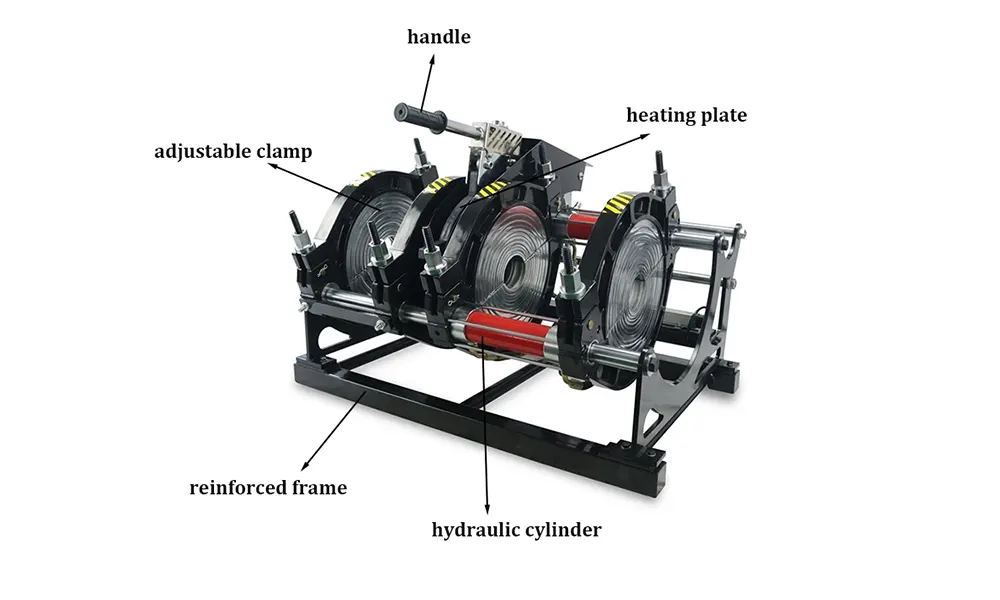
High-performance CNC fusion welding machines typically include a robust hydraulic system, accurate temperature control, secure clamp alignment, and an intuitive control interface. These features work together to support stable operation and reliable output.
Temperature accuracy is especially important because the pipe material must be heated within a narrow range. If the temperature is too low, fusion may be weak. If it is too high, the material may degrade. Stable hydraulic pressure is also essential because the joining force must be controlled during both fusion and cooling.
Clamp alignment helps ensure the pipe ends remain centered and level. This reduces stress concentration in the weld area and improves the overall integrity of the pipeline. For contractors who need dependable equipment, manufacturers like JQ-Fusion emphasize advanced production lines, strict testing, and customizable configurations to meet project requirements.
How Quality Control Improves Field Performance
Reliable welding equipment should not only perform well in the factory, but also deliver consistent results on site. That is why strict quality control is essential. Before delivery, machines are typically tested for temperature accuracy, hydraulic pressure stability, and clamp alignment.
This level of inspection helps ensure the machine will function properly under real construction conditions. It also reduces downtime, which is especially important for urgent projects with tight deadlines. A well-tested machine can improve the confidence of both operators and project managers.
For global contractors, quality control is closely tied to project reputation. A single bad weld can create costly repairs, safety issues, and schedule delays. By investing in dependable CNC technology, companies can reduce these risks and support long-term operational success.
Choosing the Right Welding Partner
Selecting a welding machine supplier is about more than price. Contractors should consider manufacturing capability, technical support, customization options, inventory availability, and after-sales service. A supplier with strong engineering experience can recommend the right configuration based on pipe size, voltage, application environment, and project scale.
JQ-Fusion offers a broad product range including hydraulic butt fusion welding machines, automatic butt fusion welding machines, electrofusion welding machines, and multi-angle pipe fitting welding machines. The company also provides OEM and ODM customization, which allows customers to adapt the equipment to their own market needs or project conditions.
In addition, global shipping support and fast response service can make a major difference when deadlines are tight. For distributors and contractors, this combination of manufacturing strength and service support helps ensure smoother project execution and better business outcomes.
Selection tip: choose a supplier that can provide technical guidance, stable stock, and reliable training support, not just equipment delivery.
The Future of CNC Fusion Welding
As pipeline systems become more complex and quality requirements continue to rise, CNC fusion welding is likely to play an even bigger role in construction and maintenance. Digital control, data recording, and automated guidance are helping the industry move toward more predictable and efficient installation methods.
In the future, machines may offer even more advanced monitoring functions, easier user interfaces, and stronger integration with project management systems. These improvements will make it easier to train operators, document weld quality, and maintain consistent standards across different sites and regions.
For businesses working in global infrastructure, investing in modern fusion welding technology is not just a technical decision. It is also a strategic one that can improve productivity, reduce risk, and strengthen competitiveness in the market.
Conclusion
CNC fusion welding technology is a highly effective method for joining HDPE pipes with precision, strength, and repeatability. By controlling the entire fusion process through automation, it helps contractors achieve consistent weld quality while reducing human error and improving project efficiency.
Whether used in water supply, gas distribution, mining, or industrial pipeline projects, the technology delivers the durability and traceability that modern construction demands. With the right machine, skilled support, and proper quality control, pipeline teams can build systems that perform reliably for years.
FAQ
Q1: What is CNC fusion welding technology?
It is an automated pipe joining process that uses computer-controlled parameters to manage heating, pressure, alignment, and cooling for consistent butt fusion results.
Q2: Why is CNC fusion welding better than manual welding?
It improves repeatability, reduces operator error, supports quality records, and helps maintain stable weld results across many pipeline joints.
Q3: What industries use butt fusion machines most often?
Water supply, gas distribution, mining, and industrial pipeline projects commonly use butt fusion machines for HDPE pipe installation.
Q4: What should I check before buying a CNC fusion welding machine?
Look at temperature control, hydraulic stability, clamp alignment, customization options, inventory support, and after-sales technical service.
Q5: Can CNC fusion welding be used for different pipe sizes?
Yes. Many machines are designed to cover a wide range of diameters, making them suitable for both small and large pipeline projects.



