
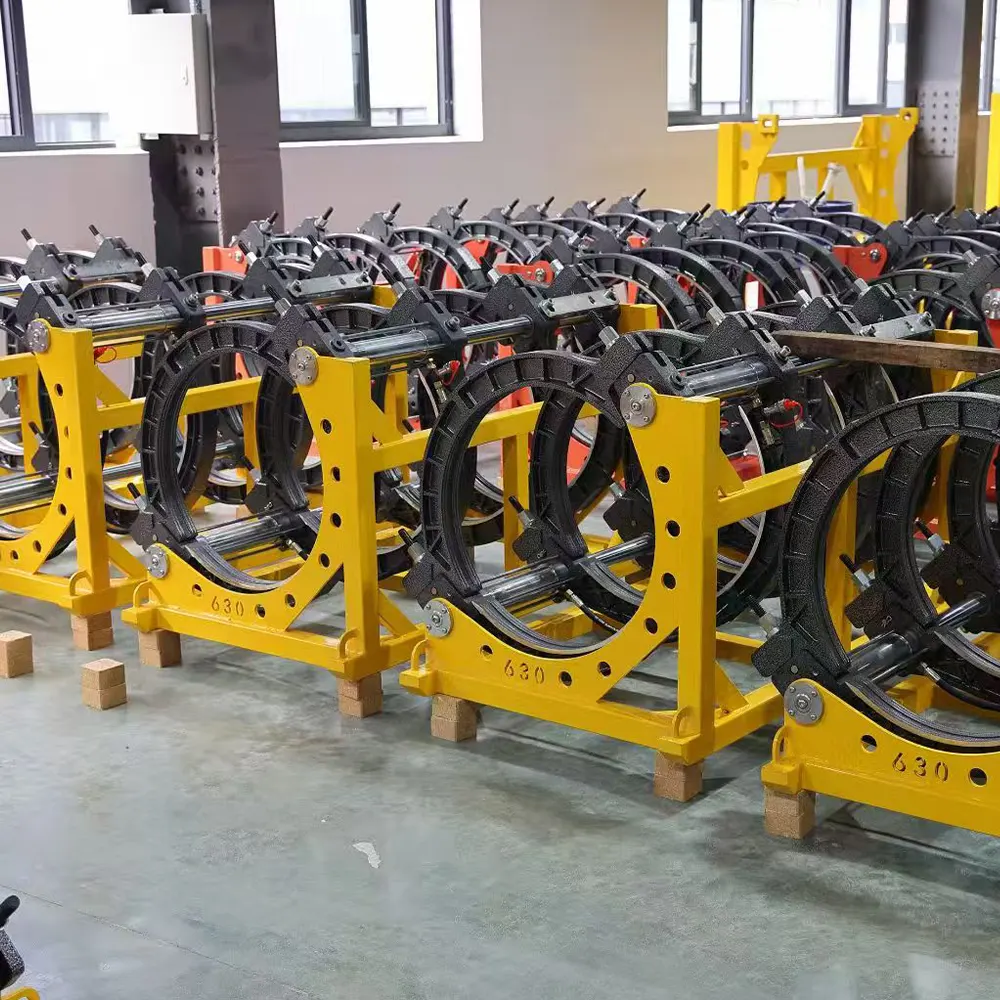
In modern pipeline construction, the quality of every connection determines the long-term reliability of the entire system. Whether the project is part of a water supply network, gas distribution line, industrial plant, or mining operation, a secure joint is essential for safety, durability, and cost efficiency. This is where a butt fusion machine becomes a critical piece of equipment. Among the many tools used in HDPE pipe installation, the HDPE pipe jointing machine stands out for its ability to create strong, seamless, and leak-resistant welds.
For contractors, distributors, and project managers, understanding what this machine is and how it works can improve purchasing decisions and project planning. At JQ-Fusion, professional welding solutions are designed to support global pipeline projects with stable performance, flexible customization, and reliable technical support. With more than 20 years of experience in the industry, the company has helped customers choose the right equipment for different pipe diameters, work environments, and project demands.
What Is an HDPE Pipe Jointing Machine?
An HDPE pipe jointing machine is a specialized welding device used to join high-density polyethylene pipes and fittings by applying controlled heat and pressure. Instead of relying on adhesives, mechanical fasteners, or chemical connectors, the machine melts the pipe ends and fuses them together into a single continuous structure. After cooling, the welded joint becomes as strong as, or often stronger than, the pipe itself.
This process is commonly known as butt fusion welding. It is widely used because HDPE pipes are valued for their corrosion resistance, flexibility, long service life, and excellent performance in challenging conditions. A properly welded joint helps preserve those advantages by eliminating weak points in the system.
🔧 Key idea: An HDPE pipe jointing machine is not just a connector tool; it is a precision welding system that creates a permanent bond between pipe ends.
Why HDPE Pipe Jointing Matters
Pipeline systems are only as strong as their joints. Even if the pipe material itself is durable, a poor connection can lead to leakage, pressure loss, contamination, or costly maintenance. In water and gas distribution networks, these failures can be especially serious. That is why many engineers prefer fusion-based joining methods for HDPE pipelines.
A reliable jointing process offers several advantages:
- Leak-free performance for long-term system reliability
- High structural strength suitable for pressure applications
- Excellent corrosion resistance because no metal coupling is required at the joint
- Lower maintenance costs over the lifecycle of the project
- Flexibility in field installation for different pipe sizes and site conditions
These benefits make HDPE pipe jointing machines a preferred choice in water supply systems, mining projects, industrial processing pipelines, and gas infrastructure. For international contractors, they are also valuable because they support consistent results across different project locations and climates.
Main Types of HDPE Pipe Jointing Machines
HDPE pipe jointing machines are available in different configurations depending on the level of automation, pipe diameter, and project requirements. Choosing the right type depends on the workload, workforce skill level, and desired welding precision.
Common types include: manual butt fusion machines, hydraulic butt fusion machines, and CNC automatic butt fusion machines.
Manual Butt Fusion Machines
Manual machines are typically used for smaller pipe sizes and simpler applications. They require the operator to control the heating, alignment, and pressure application with direct supervision. Their structure is usually compact, making them practical for lighter work and small-scale projects.
These machines are a good option when portability matters and welding tasks are not highly repetitive. They are also easier to maintain and often more affordable, which makes them attractive for smaller contractors and field teams.
Hydraulic Butt Fusion Machines
Hydraulic machines use a hydraulic system to apply more stable and consistent pressure during the fusion process. This improves welding precision and is suitable for medium to large diameter pipes. In many professional projects, hydraulic models are the standard choice because they balance efficiency, control, and durability.
At JQ-Fusion, hydraulic butt fusion welding machines are developed for stable performance in demanding project environments. Their robust construction and precise pressure control help operators achieve dependable results in real working conditions.
CNC Automatic Butt Fusion Machines
CNC automatic machines represent a more advanced solution. They automate many welding parameters such as heating time, joining pressure, and cooling control. This reduces the risk of human error and improves repeatability, especially in projects that require many identical welds.
For large-scale pipeline construction, automation can significantly improve productivity and quality control. It is especially valuable where certified welding procedures and documentation are required. These machines are often selected by contractors who need efficiency, accuracy, and traceability in their welding operations.
How Does an HDPE Pipe Jointing Machine Work?
The working principle of an HDPE pipe jointing machine is straightforward, but the process must be carefully controlled. The machine uses heat and pressure to fuse two pipe ends into a single joint. Although the details may vary by model, the basic workflow usually follows a fixed sequence.
Simple workflow: align the pipes, heat the ends, fuse them together, and allow the joint to cool under pressure.
1. Pipe Preparation
The process begins with proper preparation. The pipe ends are placed into the machine clamps and aligned carefully. Good alignment is essential because even a small deviation can affect the strength and appearance of the finished weld.
Before heating, the ends are usually cleaned and trimmed to ensure a smooth contact surface. This helps remove dirt, dust, oxidation layers, or irregular edges that might weaken the joint.
2. Facing the Pipe Ends
A facing tool is used to trim the pipe ends so that they are flat and parallel. This step ensures both surfaces meet evenly during fusion. If the ends are uneven, the joint may contain gaps or areas of weak bonding.
This stage is especially important in professional pipeline work, where quality control standards are strict. A precise facing operation supports better heat transfer and improves the final fusion result.
3. Heating the Surfaces
Once the pipe ends are ready, a heating plate is placed between them. The plate raises the temperature of both surfaces until the material softens. HDPE does not burn or chemically react during the process; instead, it becomes pliable enough to fuse under pressure.
The heating time must be carefully managed. Too little heat may result in incomplete fusion, while too much heat can damage the pipe structure. This is why temperature accuracy is one of the most important performance factors in a quality machine.
4. Joining Under Pressure
After the surfaces reach the correct temperature, the heating plate is removed and the pipe ends are pressed together. Pressure is applied so the softened material merges and forms a uniform bond. A small bead typically forms at the joint line, which is a normal sign of successful fusion.
The pressure must remain stable throughout this phase. Machines with reliable hydraulic systems or automatic control units are especially effective because they reduce fluctuations that could compromise joint quality.
5. Cooling and Solidification
After joining, the pipe remains clamped while the fused area cools. This cooling period allows the molten material to solidify into one continuous structure. Moving the pipe too soon can weaken the bond, so the machine must hold the joint firmly until the process is complete.
Once cooling is finished, the joint is ready for service. A properly executed weld provides a strong connection that can withstand pressure, vibration, and long-term environmental stress.
Key Components of the Machine
Although designs vary, most HDPE pipe jointing machines share several important components. Each one plays a role in ensuring alignment, heating, pressure control, and safe operation.
- Frame and clamps: hold the pipes securely in position
- Facing unit: trims pipe ends for perfect alignment
- Heating plate: softens pipe surfaces for fusion
- Hydraulic system: provides controlled pressure in advanced models
- Control panel: manages parameters in automatic machines
- Power system: supports stable operation in field or factory use
In professional production environments, the quality of these components directly affects welding consistency. That is why manufacturers such as JQ-Fusion focus on precision machining, strict testing, and dependable material selection.
Where Are These Machines Used?
HDPE pipe jointing machines are used in many industries where secure fluid or gas transport is necessary. Their applications continue to expand as HDPE pipes become more popular across infrastructure projects.
Typical applications: potable water systems, gas distribution, mining pipelines, irrigation projects, industrial plants, and drainage networks.
In water supply projects, the machine helps create hygienic and leak-free joints. In gas distribution, safety and consistency are critical, so a dependable fusion process is essential. In mining and industrial use, pipes often face abrasive materials, pressure changes, and harsh conditions, making durable joints especially important.
What to Consider When Choosing a Machine
Selecting the right HDPE pipe jointing machine requires attention to technical specifications and project requirements. A machine that works well for small-diameter field repair may not be suitable for large industrial piping.
Important factors include:
- Pipe diameter range supported by the machine
- Control method, such as manual, hydraulic, or automatic
- Temperature and pressure stability during the welding cycle
- Portability for onsite use
- Customization options for voltage, color, branding, and configuration
- After-sales support and technical training availability
For global buyers, the ability to customize equipment can make a major difference. JQ-Fusion offers OEM and ODM services that help customers tailor machines to specific markets and project needs, from machine size and appearance to functional upgrades and project-specific configurations.
Why Quality Control Is So Important
In welding equipment, quality control is not optional. A machine may look well built, but without testing, it cannot be trusted in critical pipeline work. Reliable manufacturers perform comprehensive inspections before delivery to ensure stable operation.
JQ-Fusion emphasizes testing for temperature accuracy, hydraulic pressure stability, and clamp alignment. These factors directly influence weld quality. When the machine operates correctly, users can achieve repeatable results with less rework, fewer delays, and lower long-term maintenance costs.
✅ Practical benefit: Better quality control means fewer failed welds, improved site efficiency, and stronger confidence in the final pipeline system.
Why Buyers Choose JQ-Fusion
When sourcing a butt fusion machine, many buyers look for more than just the equipment itself. They want a manufacturing partner that can provide stable supply, engineering support, and adaptable solutions. JQ-Fusion meets these expectations through advanced manufacturing technology, strict quality control, and a broad product range.
The company supplies manual, hydraulic, automatic, and electrofusion welding machines, as well as multi-angle pipe fitting welding machines. Its products are used globally and certified by SGS, supporting safety and reliability in demanding projects. For contractors, this means easier procurement and greater confidence in performance.
Another major advantage is global support. Fast response, logistics assistance, and technical guidance help customers reduce project delays and maintain installation schedules. In industries where time matters, this kind of support can be just as valuable as the machine itself.
Future Trends in HDPE Pipe Jointing
The future of pipe fusion technology is moving toward greater automation, better data control, and improved energy efficiency. As infrastructure projects grow larger and more complex, contractors increasingly need machines that can deliver consistent results with less operator dependence.
CNC control systems, digital monitoring, and smarter pressure regulation are making welding more precise and easier to document. These improvements are particularly important for large-scale utility projects, where quality traceability and compliance are essential. At the same time, manufacturers continue to refine portable and field-friendly models for smaller installations and remote work sites.
For buyers planning long-term investment, choosing a machine from an experienced manufacturer can help future-proof operations and support broader project capabilities.
Frequently Asked Questions
Q1: What is the main purpose of an HDPE pipe jointing machine?
It is used to fuse HDPE pipe ends together with heat and pressure, creating a strong, seamless, and leak-resistant joint.
Q2: Is butt fusion better than mechanical joining?
For many HDPE pipeline applications, yes. Butt fusion creates a permanent bond and removes many weak points that can exist in mechanical connections.
Q3: Can one machine handle different pipe sizes?
Yes, many machines are designed to cover a range of pipe diameters. However, the supported size range depends on the model and configuration.
Q4: What affects weld quality the most?
Temperature accuracy, correct pressure, proper alignment, clean pipe ends, and sufficient cooling time are the most important factors.
Q5: Where can I find a reliable butt fusion machine supplier?
Professional manufacturers such as JQ-Fusion provide HDPE pipe welding machines, customization services, and global support for pipeline projects.



