
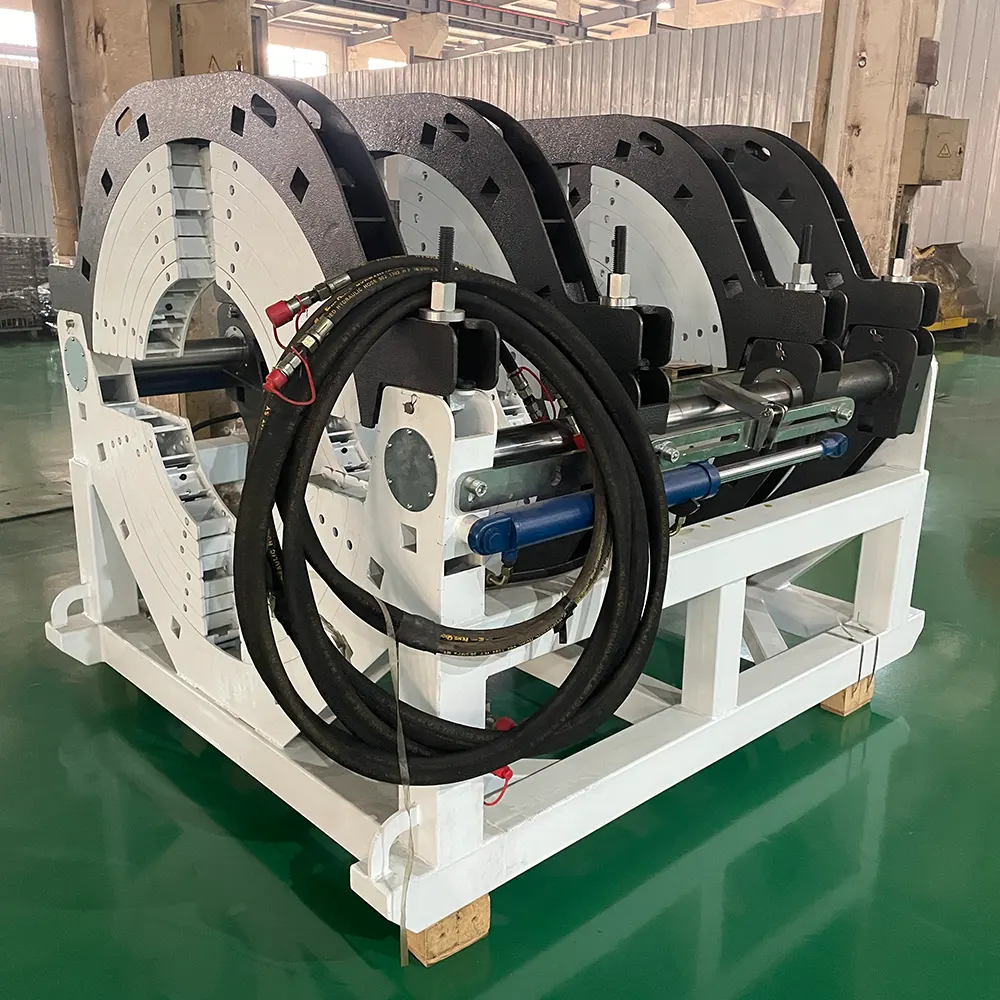
When HDPE pipeline projects depend on airtight, durable joints, even a small welding issue can affect the entire system. That is why technicians, contractors, and project managers need a clear and practical butt fusion machine troubleshooting guide that explains not only what goes wrong, but also why it happens and how to fix it efficiently. HDPE butt fusion welding is trusted in water supply systems, gas distribution networks, mining applications, and industrial pipelines because it creates a single continuous pipe structure. However, the quality of each weld depends on temperature control, pipe preparation, alignment, pressure, and operator skill. If any one of these factors is inconsistent, common problems such as bead irregularity, misalignment, overheating, or weak fusion can appear.
In real projects, troubleshooting is not only about repairing defects after they appear. It is about recognizing early warning signs, preventing repeated mistakes, and maintaining stable output across different pipe diameters and site conditions. This guide explains the most common HDPE welding problems, the likely causes behind them, and the best ways to solve them while keeping production safe, efficient, and reliable.
Key point: A successful fusion weld is built on four essentials: clean pipe ends, accurate alignment, correct heating, and stable cooling. If one of these steps is missed, the weld can look acceptable on the outside but still fail under pressure.
1. Understanding the Basics of HDPE Butt Fusion Welding
HDPE butt fusion welding joins two pipe ends by heating them to a controlled molten state and then pressing them together under specific pressure. Once cooled, the joint becomes as strong as the pipe itself when done correctly. Because the process relies on temperature and mechanical precision, even minor errors can produce serious defects. A dependable setup, whether manual, hydraulic, or CNC automatic, helps reduce these risks and maintain repeatable results.
Professional manufacturers such as JQ-Fusion focus on stable machine performance because consistent heating platens, reliable hydraulic systems, and accurate clamp alignment directly influence weld quality. This matters especially on large diameter pipelines where small deviations can become costly repair work later.
Important: Many welding failures are not caused by the machine alone. They usually result from a combination of equipment settings, operator technique, pipe condition, and environmental factors.
2. Common HDPE Welding Problems and Their Solutions
Problem 1: Uneven or Poor Bead Formation
An even fusion bead is one of the first signs of a proper weld. If the bead looks too thin on one side, too large on the other, or irregular around the joint, the cause may be pipe misalignment, insufficient heating, excessive pressure, or contaminated pipe ends. Uneven bead formation often indicates that the material did not soften uniformly.
How to fix it: Recheck pipe alignment in the clamps, clean the pipe surfaces thoroughly, verify heating plate temperature, and ensure pressure is applied according to the pipe specification.
Technicians should also confirm that the pipe ends are cut squarely. A poor cut can create a gap on one side and generate bead distortion during the heating and joining phases. For stable production, the pipe face should be smooth, centered, and evenly compressed.
Problem 2: Weak Weld or Joint Separation
A weak joint may not be visible immediately. In many cases, the weld appears normal but fails during stress testing or after the pipeline is in service. This problem usually results from insufficient heating time, incorrect fusion pressure, inadequate cooling time, or contamination such as dust, moisture, or oil on the pipe surface.
Tip: Never rush the cooling stage. Moving or stressing the joint too early can reduce bond strength and create hidden internal defects.
To prevent weak fusion, operators should use the correct temperature range, monitor timing carefully, and follow the manufacturer’s parameters for each pipe diameter and wall thickness. When using a butt fusion machine, verify that the pressure gauge and control system are functioning consistently before starting production.
Problem 3: Overheating or Burned Pipe Ends
If the pipe surface becomes dark, glossy, brittle, or deformed, overheating may have occurred. Excessive heat can damage the molecular structure of HDPE and weaken the joint. It can also cause material to drip, distort, or form a very flat bead with little structural integrity.
The most common reasons include a heating plate set too hot, a delayed transition between heating and joining, or leaving the pipe in contact with the platen for too long. In some cases, the operator may also apply too much pressure while joining the softened ends.
Best practice: Use calibrated temperature control, follow the recommended heating cycle, and remove the pipe from the platen as soon as the specified melt appearance is reached.
Problem 4: Cold Weld or Incomplete Fusion
A cold weld happens when the pipe ends are not heated enough or the joint is pressed together before the surfaces are fully softened. This results in a poor bond that may look flat, dry, or underdeveloped. In severe cases, the joint can split under bending or pressure loads.
Cold fusion often comes from low heater temperature, incorrect timing, wind or low ambient temperature, or poorly maintained equipment. If the heater platen is not reaching the proper temperature evenly across its surface, the fusion quality can vary from one part of the pipe to another.
To solve this issue, inspect platen temperature with reliable instruments, protect the welding area from drafts and rain, and ensure the machine is rated for the pipe size being used. A stable machine from a trusted source can significantly reduce the chance of inconsistent heating.
Problem 5: Misalignment of Pipe Ends
Misalignment is one of the most common and visible welding defects. If the pipe ends are not centered properly in the clamps, the joint will be offset, and stress will concentrate on the weaker side. Over time, this can reduce pipeline life and increase the chance of failure.
Misalignment may be caused by incorrect clamping, worn clamp components, uneven cutting, or poor setup on unstable ground. In large projects, even a small offset can become a serious quality issue.
Checklist: Confirm pipe roundness, check clamp grip, inspect machine levelness, and verify that both ends are fully centered before heating begins.
3. Practical Troubleshooting Checklist for Technicians
Before starting any weld, it helps to use a systematic workflow. This reduces errors, saves time, and improves repeatability across multiple joints. A simple troubleshooting checklist can prevent many problems before they happen.
- Inspect pipe surfaces: Remove dirt, moisture, oxidation, and grease.
- Check pipe cutting: Make sure the ends are square, smooth, and properly faced.
- Verify machine setup: Confirm clamp alignment, hydraulic pressure, and platen temperature.
- Follow timing rules: Heat, changeover, and cooling periods must match the pipe specification.
- Protect the work area: Avoid strong wind, rain, dust, and unstable ground conditions.
For contractors managing high-volume work, using equipment with stable performance and clear controls can reduce human error. This is one reason many global pipeline teams choose manufacturers with strict quality control, technical support, and customization options for different project conditions.
4. How Equipment Quality Affects Welding Results
Not all welding machines perform the same way. A machine with unstable pressure, inaccurate heat control, or poor clamp alignment can produce inconsistent joints even if the operator is skilled. For this reason, equipment quality is a major part of any serious troubleshooting guide.
Reliable butt fusion solutions often depend on advanced manufacturing technology, strict testing, and proper calibration. In professional production environments, machine stability helps maintain repeatability across different pipe sizes, which is essential for water, gas, mining, and industrial pipeline applications. JQ-Fusion, for example, focuses on manual, hydraulic, and CNC automatic butt fusion welding machines designed for a wide range of pipe diameters and project requirements.
Why this matters: Better machine consistency means fewer defects, less rework, lower labor cost, and stronger confidence in final pipeline performance.
5. Preventive Measures for Long-Term Welding Success
Good troubleshooting is important, but prevention is even better. The most effective way to avoid common HDPE welding problems is to build a disciplined workflow that combines training, maintenance, inspection, and parameter control.
First, operators should receive practical training on machine handling, fusion timing, and defect recognition. Second, heating platens, hydraulic systems, and clamps should be checked regularly for wear or calibration drift. Third, every project should use the correct fusion parameters based on pipe material, diameter, wall thickness, and site temperature.
Pro advice: Keep a weld log for each job. Recording temperature, pressure, timing, and ambient conditions makes it easier to identify patterns if a defect appears later.
6. When to Repair, Repeat, or Reject a Weld
Not every suspicious weld can be repaired safely. In many cases, the best solution is to cut out the defective section and perform the fusion again. If the defect is superficial and does not affect the load-bearing structure, a qualified inspector may allow the joint to remain after evaluation. However, if there is evidence of poor fusion, major misalignment, or overheating, the weld should be rejected.
The decision should be based on project standards, inspection requirements, and safety regulations. This is especially important in critical pipeline systems where failure can lead to service interruption, leakage, or environmental risk.
7. Conclusion: Build Reliable Welds with the Right Process
HDPE butt fusion welding can deliver long-lasting, high-performance joints, but only when every step is handled carefully. Most common problems, including uneven beads, weak joints, overheating, cold welds, and misalignment, are preventable when the equipment is stable and the procedure is followed correctly. The best troubleshooting guide is not just a list of defects; it is a practical system for improving quality, reducing downtime, and protecting the entire pipeline investment.
For contractors and distributors looking for dependable equipment, advanced production capability, strict quality control, OEM and ODM customization, and fast global support can make a real difference in project success. Whether the application is water supply, gas distribution, mining, or industrial piping, the right machine and the right process work together to ensure strong, consistent fusion results.
Frequently Asked Questions
Q1: What is the most common reason for HDPE butt fusion failure?
The most common reasons are poor surface preparation, incorrect heating temperature, misalignment, and inaccurate fusion pressure. In many cases, more than one issue occurs at the same time.
Q2: How can I tell if a weld is too weak?
A weak weld may show irregular bead shape, poor symmetry, visible separation, or failure during pressure testing. Some defects are hidden, so inspection and testing are essential.
Q3: Can a cold weld be repaired?
Usually, a cold weld should not be repaired in place. The safest solution is often to cut out the defective joint and redo the fusion under correct conditions.
Q4: Why is cooling time so important?
Cooling time allows the molten HDPE to solidify properly. If the joint is moved too early, internal stress and weak bonding can occur.
Q5: How do I reduce welding defects on site?
Use clean pipe ends, accurate machine setup, proper temperature control, correct fusion timing, and well-trained operators. Regular maintenance and weld logging also help reduce repeated errors.



