
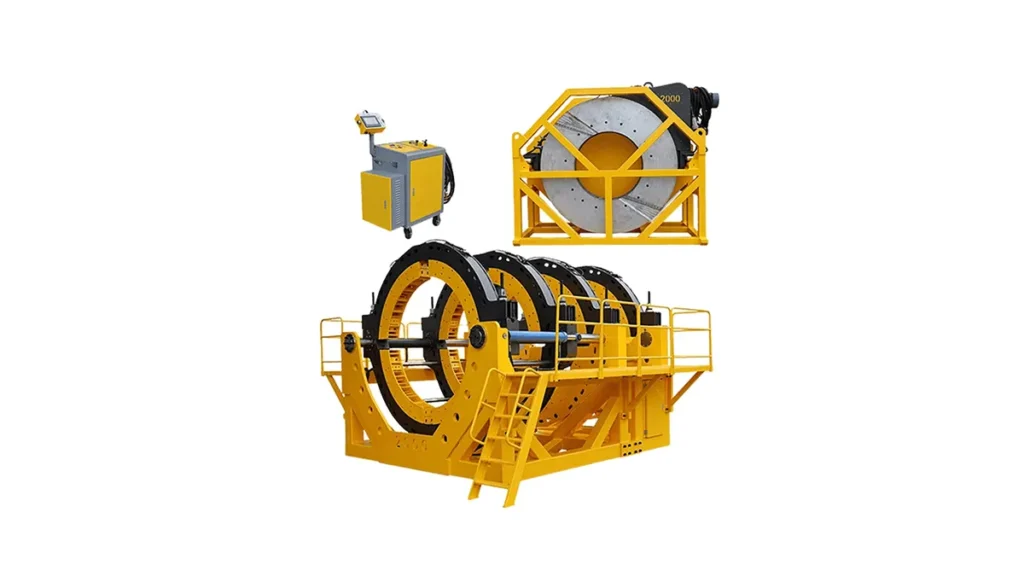
The question “What Is a Plastic Pipe Welding Machine and How Do You Choose the Right One?” matters for anyone building or maintaining water supply lines, gas distribution systems, mining pipelines, or industrial networks. A plastic pipe welding machine is designed to join thermoplastic pipes and fittings by applying controlled heat, pressure, or electrical fusion so that the connection becomes strong, clean, and long-lasting. When selected correctly, it can improve installation speed, reduce leakage risk, and support safe operation for many years.
In today’s pipeline projects, contractors and distributors need equipment that is not only efficient but also stable, easy to maintain, and suited to specific pipe diameters and jobsite conditions. That is why understanding the working principle, machine types, and selection criteria is essential before purchasing. Whether you are working on a small project or a large industrial installation, the right butt fusion machine can directly affect welding quality and project success.
What a Plastic Pipe Welding Machine Does
A plastic pipe welding machine joins two pipe ends by heating them to a controlled melting temperature and then pressing them together under precise force. After cooling, the two parts form a continuous joint with high structural integrity. This process is widely used for HDPE, PP, and other thermoplastic piping materials.
The basic goal is simple: create a joint that performs like the pipe itself. Unlike mechanical connections, fusion welding reduces the number of seals and fittings that may fail over time. That is why industries that demand durability often prefer fusion systems for long-distance pipelines and demanding environments.
Key advantage: a properly fused joint can offer excellent leak resistance, strong mechanical performance, and reliable service life in harsh operating conditions.
Main Types of Plastic Pipe Welding Machines
Different pipeline projects call for different welding technologies. Below are the most common machine types used in the industry.
1. Butt Fusion Welding Machine
A butt fusion welding machine is one of the most widely used solutions for HDPE pipe joining. It heats both pipe ends with a heated plate, then presses them together to form a uniform joint. This method is especially suitable for straight pipe-to-pipe connections.
According to project scale, butt fusion machines can be manual, hydraulic, or CNC automatic. Manual systems are usually more economical and fit smaller jobs, while hydraulic and CNC models improve alignment, pressure control, and repeatability for larger or more technical applications.
Best for: water supply systems, gas networks, large-diameter HDPE pipelines, and industrial infrastructure.
2. Electrofusion Welding Machine
Electrofusion welding uses special fittings with embedded heating coils. The machine sends an electric current through the fitting, heating the internal surface and bonding it to the pipe. This method is particularly useful for repairs, branch connections, and confined spaces where conventional butt fusion may be difficult.
It is often chosen for field installation because it can handle a variety of site conditions and pipe layouts. However, it requires proper cleaning, correct pipe preparation, and accurate voltage control to ensure a dependable weld.
3. Multi-Angle Pipe Fitting Welding Machine
This type of equipment is designed for fitting welding and angle-based connections. It supports more complex assemblies and helps installers handle elbows, tees, and other shaped parts more efficiently. In projects where pipe routes are not linear, this machine can save time and improve precision.
How the Welding Process Works
Although the exact procedure depends on the machine type, most plastic pipe fusion workflows follow a similar sequence:
➤ Step 1: Secure and align the pipe ends
➤ Step 2: Face or clean the pipe surface
➤ Step 3: Heat the pipe ends or fitting surface
➤ Step 4: Apply the required pressure or electric fusion
➤ Step 5: Allow cooling and inspect the finished joint
Every step affects final performance. If the pipes are misaligned, the temperature is unstable, or the pressure is incorrect, the weld quality may be compromised. That is why modern machines with accurate control systems are highly valued on professional job sites.
What to Consider When Choosing the Right Machine
Selecting the right machine is not just about budget. It is about matching the equipment to the pipe material, diameter, jobsite requirements, and expected production level. Here are the most important factors to evaluate.
Pipe Material and Diameter Range
Before buying, confirm what type of plastic pipes you will weld and what diameters you need to cover. A machine made for small pipes may not handle larger industrial lines, and a machine built for large diameters may be unnecessary for simple maintenance work.
If your projects involve mixed sizes, choose a model with a broad diameter range and flexible clamps. This will help reduce equipment changes and make your workflow more efficient.
Project Type and Application
Different industries have different priorities. Water distribution projects often need stable, repeatable joints. Gas pipelines require high safety standards and excellent pressure resistance. Mining and industrial systems may demand heavy-duty performance and strong machine durability.
Matching the machine to the real application ensures that you do not overpay for unnecessary features or underinvest in critical performance.
Control System and Automation Level
Manual machines are suitable for basic operation and smaller budgets, but hydraulic and CNC automatic machines offer better control over alignment, pressure, and process consistency. For high-volume jobs or projects that demand precise repeatability, automation can significantly improve efficiency.
Tip: If welding quality must remain highly consistent across many joints, an automatic or hydraulic model is often a smarter long-term investment.
Temperature and Pressure Stability
Reliable fusion depends on stable heating and pressure control. A quality machine should maintain accurate temperature and keep hydraulic pressure steady throughout the welding cycle. Even small fluctuations can affect joint strength and appearance.
For this reason, machines that undergo strict testing are usually more dependable. Many manufacturers inspect temperature accuracy, clamp alignment, and hydraulic stability before delivery to ensure consistent real-world performance.
Durability and Build Quality
Construction quality matters because welding machines are often used in demanding site conditions. A robust frame, precision-machined components, and durable hydraulic parts can help extend service life and reduce downtime.
When equipment is built to last, it not only performs better but also lowers long-term ownership cost. This is especially important for contractors handling repeated projects or distributors serving multiple markets.
After-Sales Support and Spare Parts
A good machine is only part of the solution. Technical guidance, spare parts availability, and fast response from the supplier can make a major difference during installation and maintenance. Strong support helps users troubleshoot problems quickly and keep projects moving.
For global customers, logistics and shipping capability are also important. A supplier with efficient delivery systems can reduce delays and help maintain project schedules.
Why Buyers Pay Attention to Manufacturer Capability
When evaluating equipment, many buyers focus on the manufacturer’s experience and production standards. A professional supplier with strong engineering capability can offer more than a basic machine. They can provide customization, testing, training, and application support based on the needs of the project.
For example, JQ-Fusion is a professional manufacturer specializing in HDPE pipe welding machines, offering manual, hydraulic, and CNC automatic solutions for a wide range of global pipeline projects. Their production capability covers different pipe sizes and application scenarios, which is valuable for contractors seeking a reliable long-term partner.
To learn more about product options and support, you can visit the official website here: https://jq-fusionwelding.com/
Customization and OEM/ODM Options
In many cases, standard models are not enough. Some buyers need specific voltage configurations, branding, colors, or machine dimensions. Others need functional upgrades for special pipeline tasks. This is where OEM and ODM services become valuable.
Flexible customization can help distributors build market identity and enable contractors to match equipment with local technical requirements. A supplier that supports customization can provide a stronger competitive advantage than one offering only fixed models.
JQ-Fusion also offers customized welding solutions designed to support different operational needs, project specifications, and market demands.
Safety, Testing, and Certification
Safety should never be treated as an optional feature. A dependable plastic pipe welding machine should comply with international quality standards and undergo thorough testing before shipment. Certification from recognized organizations increases trust and gives buyers more confidence in performance and safety.
Testing should cover key factors such as heat stability, hydraulic performance, clamp alignment, and overall machine reliability. These checks help reduce failure risk during real project execution.
Important: Always ask whether the machine has been tested under practical working conditions, not only in factory demonstration settings.
Common Mistakes to Avoid
Many buyers make avoidable mistakes when choosing a welding machine. One of the most common is selecting a model based only on price. A cheap machine may save money initially but create higher losses later if it cannot maintain stable performance.
Other common mistakes include ignoring pipe diameter compatibility, overlooking voltage requirements, and failing to evaluate technical support. Some buyers also underestimate the importance of operator training. Even the best machine requires correct use to produce reliable joints.
Another mistake is not considering inventory and delivery timing. If a project is urgent, choosing a supplier with ready stock and efficient shipping can be just as important as choosing the machine itself.
Who Should Choose Which Machine
If you are a small contractor handling local repair work or lower-volume installations, a manual or compact model may be enough. If you need higher consistency and better efficiency for ongoing construction projects, a hydraulic machine is often a better choice. For large-scale operations, global projects, or users seeking the highest level of repeatability, a CNC automatic machine is usually the best fit.
For repair teams, utility companies, and site crews working in constrained spaces, electrofusion equipment may offer the flexibility needed for branch connections and special fittings. In practice, many businesses benefit from using more than one type of welding technology depending on the task.
Conclusion
Choosing the right plastic pipe welding machine is a technical decision with long-term consequences. The best option depends on your pipe material, diameter requirements, project type, automation needs, and support expectations. A well-selected machine can improve weld quality, reduce maintenance issues, and help complete projects more efficiently.
Whether you need a straightforward butt fusion setup or a fully automated system, the key is to work with a supplier that combines engineering strength, strict quality control, and responsive service. With the right machine and the right partner, your pipeline installation can achieve both performance and reliability.
FAQs
Q1: What is the main purpose of a plastic pipe welding machine?
It is used to join thermoplastic pipes and fittings by heat, pressure, or electrical fusion, creating a strong and leak-resistant connection.
Q2: Which machine is best for large HDPE pipelines?
A hydraulic or CNC butt fusion machine is usually preferred for large-diameter pipelines because it offers better control and repeatability.
Q3: Is electrofusion better than butt fusion?
Neither is universally better. Electrofusion is ideal for repairs and confined spaces, while butt fusion is often better for straight, large-scale pipe connections.
Q4: What should I check before buying a welding machine?
Check pipe diameter range, material compatibility, control accuracy, build quality, certification, and after-sales support.
Q5: Why is supplier support important?
Good supplier support helps with machine selection, installation, training, troubleshooting, and fast delivery, which reduces project delays and operational risks.



