
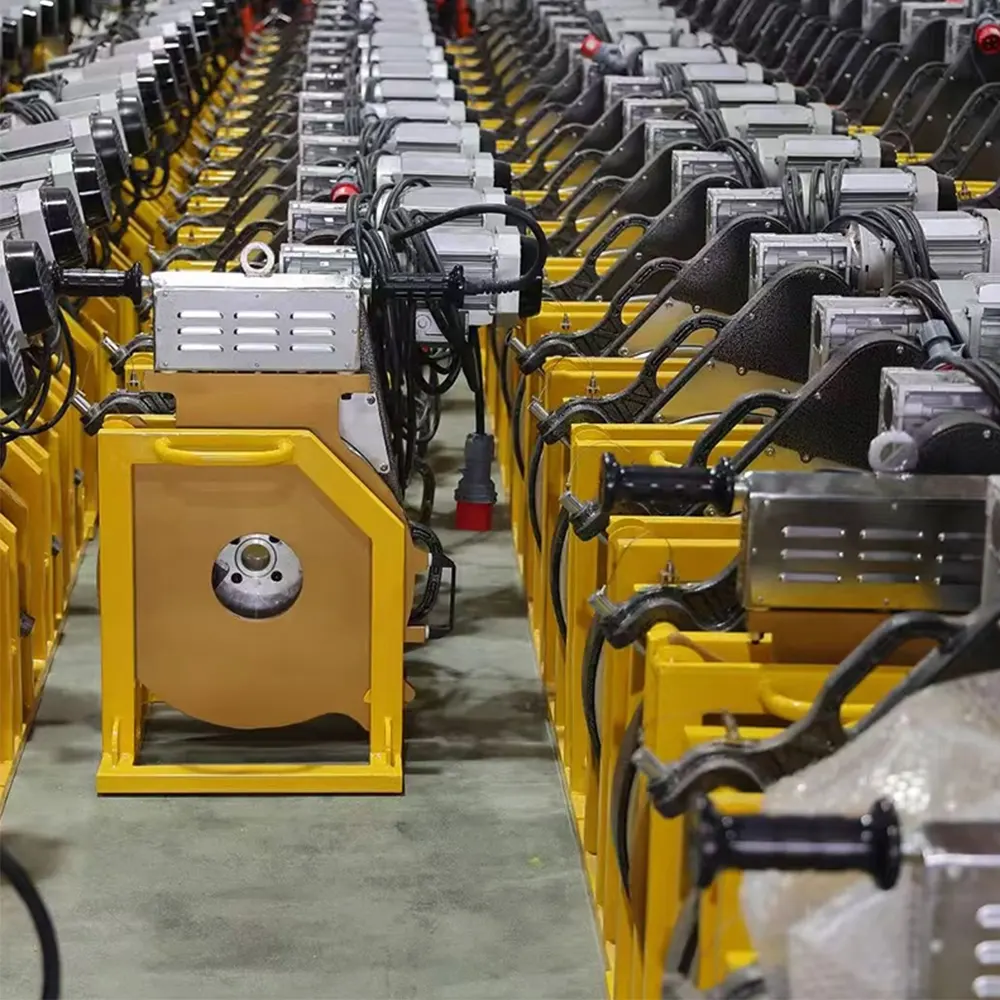
HDPE pipe welding plays a critical role in modern infrastructure because it directly affects the safety, durability, and environmental footprint of pipeline systems. When welds are performed correctly, HDPE pipelines can serve for decades with minimal maintenance, reduced leakage risk, and lower lifecycle emissions. For contractors, distributors, and project managers, sustainable welding is not only a technical priority but also a practical way to improve long-term project value. In this context, choosing the right equipment, following precise procedures, and maintaining stable welding conditions are the foundations of eco-friendly results.
One of the most important principles in sustainable welding is consistency. Every joint must be created under controlled temperature, pressure, and alignment conditions so the fused section becomes as strong as the pipe itself. When these factors are managed properly, the system experiences fewer failures, less material waste, and fewer emergency repairs. That means fewer replacement parts, lower transport demand, and less energy consumed over the full service life of the pipeline.
Why Sustainability Matters in HDPE Pipe Welding
HDPE piping is widely used in water supply, gas distribution, mining, and industrial systems because it offers corrosion resistance, flexibility, and long service life. However, the environmental benefits of HDPE systems depend heavily on the quality of the welding process. Poor fusion can cause leaks, pressure loss, and premature joint failure, all of which increase waste and create unnecessary repair work. Sustainable welding practices help ensure that the natural advantages of HDPE are fully realized.
From a project management perspective, sustainability also means efficiency. A well-executed weld reduces rework, shortens downtime, and limits the need for extra consumables. This is especially important for large-scale pipeline projects where even a small reduction in waste can produce a significant environmental and financial impact. In other words, the cleanest weld is often the most economical one too.
Key idea: Sustainable HDPE welding is not only about protecting the environment. It is also about creating stronger joints, reducing labor waste, improving safety, and extending the service life of the pipeline system.
Choose the Right Welding Equipment for Stable Results
The first step toward long-lasting and eco-friendly welding is selecting the right machine for the job. Different pipe diameters, project conditions, and output requirements call for different levels of automation and control. A stable machine helps maintain accurate heating and pressure, which are essential for forming reliable fusion joints. If the equipment is inconsistent, energy is wasted and the chances of defective welds rise significantly.
For many industrial applications, a high-quality butt fusion machine is one of the most efficient tools for creating durable pipe joints. Butt fusion methods are widely preferred because they eliminate the need for additional connectors and allow the pipe material itself to form a single continuous system. This reduces material complexity and supports a more sustainable installation process.
JQ-Fusion, for example, is known for manufacturing manual, hydraulic, and CNC automatic butt fusion welding machines designed for a wide range of pipe sizes and project needs. Equipment built with advanced manufacturing and strict quality control can help contractors achieve better repeatability, lower failure rates, and improved resource efficiency across projects.
Maintain Correct Temperature and Pressure Control
Temperature accuracy is one of the most important factors in HDPE pipe fusion. If the heating plate is too cool, the material may not soften evenly. If it is too hot, the polymer structure may be damaged, leading to weak joints. Sustainable welding requires precise heat control because improper temperature settings lead to scrap, rework, and additional energy use.
Pressure control is equally important. The fusion process depends on the correct application of force during heating and joining. Too much pressure can force molten material out of the joint area and create a thin weld line. Too little pressure can result in incomplete bonding. Stable hydraulic performance and properly calibrated equipment help ensure the right balance, which improves joint integrity and reduces the chance of failure.
Tip: Always verify heating plate temperature, hydraulic pressure stability, and clamp alignment before welding begins. These checks support both product quality and environmental efficiency.
Focus on Pipe Preparation and Alignment
Many welding problems begin before the heating stage. Proper pipe preparation is essential for clean, strong, and sustainable fusion results. The pipe ends should be cut square, cleaned thoroughly, and free from dirt, oil, moisture, and surface contamination. Any foreign material trapped in the joint can reduce bond quality and increase the risk of leakage or repair.
Alignment is another major factor. Misaligned pipe ends create uneven stress distribution and may weaken the joint over time. A well-maintained clamping system helps keep the pipe ends in the correct position during the entire welding cycle. This reduces the chance of defects and avoids wasting pipe sections that may otherwise need to be cut out and replaced.
Good preparation also improves worker productivity. When technicians follow a clear and repeatable process, they spend less time correcting errors and more time completing successful welds. This lowers energy usage, improves project speed, and helps minimize the overall carbon footprint of installation work.
Use the Right Fusion Parameters for Each Pipe Size
HDPE pipes come in many diameters and wall thicknesses, so one set of welding parameters cannot fit every project. Sustainable welding means matching the machine settings to the specific pipe size, material grade, and site conditions. Incorrect settings often lead to overheating, underheating, or uneven fusion, all of which create avoidable waste.
Technicians should always follow established welding procedures and manufacturer guidelines. When available, digital or automatic controls can help reduce human error by maintaining accurate cycle timing and pressure profiles. This is especially valuable in large projects or when multiple crews must produce uniform weld quality across different work zones.
Standardized parameter control also supports better traceability. If a problem arises, project teams can review the welding record and quickly identify whether the issue came from the material, the equipment, or the procedure. That makes root-cause analysis faster and prevents repeated mistakes.
Reduce Waste Through Better Equipment Maintenance
Even the best welding machine will become inefficient without regular maintenance. Dust, worn parts, hydraulic instability, and damaged heating components can all reduce weld quality and increase energy consumption. Sustainable practice includes routine inspection, cleaning, lubrication, and part replacement according to the equipment schedule.
Maintaining the heating plate, hydraulic system, and clamps helps keep the machine operating at peak performance. It also extends the life of the equipment, which is a key sustainability benefit. A durable machine does not need frequent replacement, and that means fewer raw materials, less manufacturing energy, and less shipping impact over time.
Maintenance matters: Clean, calibrated, and well-serviced machines help ensure stable fusion quality while reducing unnecessary waste from failed welds, repeat work, and premature equipment replacement.
Train Operators for Repeatable, Eco-Friendly Welding
Human skill remains one of the biggest factors in welding quality. Even with advanced equipment, results depend on the operator’s ability to prepare the pipe, set the parameters, monitor the cycle, and inspect the finished joint. Proper training improves weld consistency and helps reduce errors that lead to wasted material or rework.
A well-trained team understands how to respond to changing site conditions, including temperature fluctuations, moisture, and different pipe grades. They also know how to recognize early warning signs of poor fusion, such as irregular beads, contamination, or misalignment. By catching problems early, they prevent larger failures later in the pipeline’s service life.
Training is also closely tied to safety. Efficient and careful operators create fewer accidents, less damage to materials, and better overall jobsite organization. That benefits the project, the workers, and the environment at the same time.
Choose Durable Systems That Support Long-Term Value
The most sustainable weld is the one that lasts. Long service life reduces the need for replacement materials, emergency interventions, and repeated transportation to the job site. HDPE itself is a durable and corrosion-resistant material, but only properly fused joints can deliver the full lifespan potential of the pipeline.
For this reason, many contractors look for equipment and support from manufacturers with strong engineering capability, strict quality control, and proven global experience. Companies like JQ-Fusion focus on delivering stable welding performance, customized solutions, and reliable technical support for pipeline projects around the world. Their product range includes hydraulic butt fusion welding machines, automatic butt fusion welding machines, electrofusion welding machines, and multi-angle pipe fitting welding machines, which helps project teams match the right technology to the right job.
When equipment is designed for durability and precision, the result is not just a better weld. It is a better project outcome, with lower life-cycle cost and reduced environmental impact.
Adopt Digital and Automated Welding Where Possible
Automation can significantly improve sustainability in HDPE pipe welding. CNC automatic systems and other advanced controls help standardize the welding process, reduce operator inconsistency, and maintain more accurate timing and pressure. This reduces material waste and improves repeatability, especially in large-volume projects.
Digital data logging can also support quality assurance. When weld records are stored and reviewed, project teams gain better visibility into performance trends. This makes it easier to spot recurring problems, optimize procedures, and improve future work. Over time, data-driven welding contributes to both higher quality and more efficient resource use.
Automation should not be seen as a replacement for human skill, but as a tool that strengthens it. The best results come from combining experienced operators with reliable, well-controlled machines.
How JQ-Fusion Supports Sustainable Pipeline Projects
JQ-Fusion has more than 20 years of industry experience in the design and production of HDPE pipe welding machines. The company’s commitment to advanced manufacturing technology, strict quality control, flexible OEM and ODM customization, and reliable global support makes it a practical partner for projects that demand both performance and long service life.
For contractors and distributors, this means access to equipment that is built for stable welding performance, efficient production, and project-specific customization. The factory’s strong engineering capability and large inventory support fast delivery, while technical guidance helps ensure proper installation and operation. These advantages all contribute to a more sustainable pipeline workflow because they reduce delays, lower the risk of unsuitable equipment, and improve the success rate of each weld.
In global markets where infrastructure quality and environmental responsibility are both important, such support can make a meaningful difference. Sustainable welding is not only a technical process; it is a system built on dependable tools, skilled people, and consistent standards.
Important: Stable stock supply, fast shipping, and full technical support help reduce project delays and minimize the indirect environmental costs caused by waiting, rework, and repeated transportation.
Best Sustainable HDPE Pipe Welding Practices at a Glance
To achieve long-lasting and eco-friendly results, teams should combine the following practices in every project:
- Use reliable equipment that maintains steady temperature, pressure, and alignment.
- Prepare and clean pipe ends carefully to prevent contamination and weak fusion.
- Match welding settings to pipe size and material for each application.
- Maintain machines regularly to preserve performance and extend service life.
- Train operators thoroughly so every weld follows the same quality standard.
- Adopt automation where practical to improve repeatability and reduce waste.
When these practices are followed consistently, HDPE systems can deliver excellent durability with lower environmental impact. The goal is not simply to complete the weld, but to create a joint that performs reliably for many years with minimal waste, fewer repairs, and less resource consumption.
Frequently Asked Questions
1. What makes HDPE pipe welding sustainable?
It becomes sustainable when the process reduces waste, prevents defects, extends pipeline life, and uses energy and materials efficiently.
2. Which welding method is best for long-lasting HDPE joints?
Butt fusion is one of the most durable options because it creates a continuous joint with strong structural integrity when done correctly.
3. Why is temperature control so important in HDPE welding?
Correct temperature ensures the pipe ends soften evenly and fuse properly. Too much or too little heat can weaken the joint and cause waste.
4. How does operator training improve eco-friendly welding?
Trained operators make fewer errors, reduce rework, and produce more consistent welds, which lowers material waste and energy use.
5. Can automation really improve welding sustainability?
Yes. Automated and CNC systems improve consistency, reduce human error, and support better quality control, which leads to fewer failures and less waste.



