
In modern pipeline construction, joining plastic pipes securely and efficiently is essential for long-term system performance. One of the most trusted tools for this job is the butt fusion machine. It is widely used in water supply, gas distribution, mining, and industrial piping projects because it creates strong, seamless, and leak-resistant joints. For contractors, distributors, and project engineers, understanding how a pipe fusion machine works can help improve welding quality, reduce installation risks, and support better project planning.
A pipe fusion machine is designed to join thermoplastic pipes by heating the pipe ends and pressing them together under controlled pressure. Once the heated surfaces cool, they form a single continuous structure. This process is especially effective for HDPE piping systems, where durability and joint integrity are critical. Compared with mechanical joining methods, fusion welding offers a cleaner, more reliable connection that can better withstand pressure, vibration, and environmental stress.
Key idea: a pipe fusion machine does not use glue, threads, or bolts. It uses heat + pressure + cooling time to create a permanent pipe joint.
What Is a Pipe Fusion Machine?
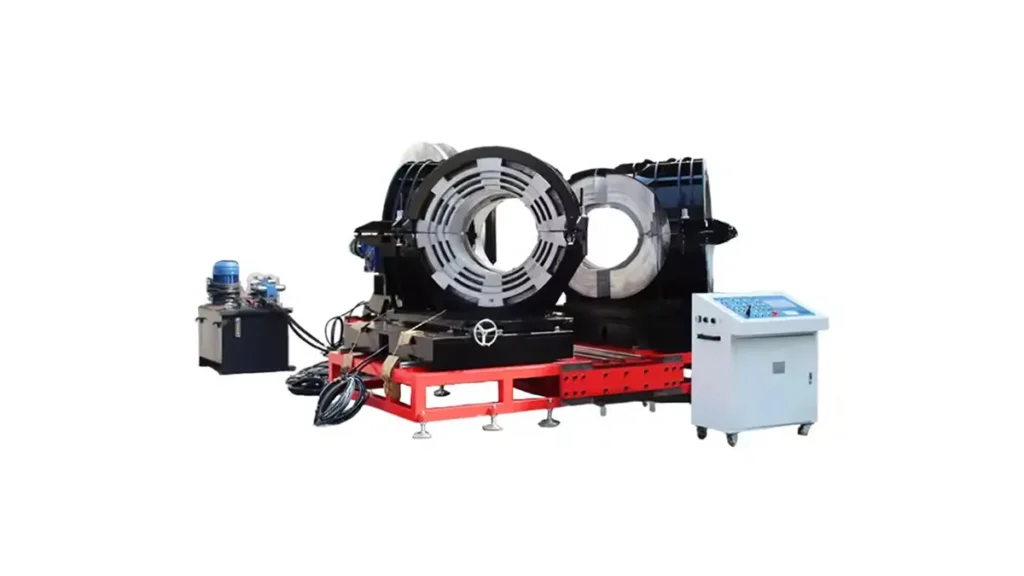
A pipe fusion machine is specialized welding equipment used to fuse plastic pipes and fittings together. In practice, the most common type is the butt fusion machine, which aligns two pipe ends, heats them with a hot plate, and then joins them under pressure. The goal is to create a bond that is as strong as the pipe material itself.
These machines are available in different configurations, including manual, hydraulic, and CNC automatic models. Smaller systems are often chosen for utility repairs or compact installation sites, while larger machines are used on municipal and industrial projects where pipe diameters are significantly bigger. You can learn more about related equipment at JQ-Fusion, a professional manufacturer focused on HDPE pipe welding solutions.
Main Components of a Butt Fusion Machine
Although designs vary by model, most butt fusion systems share several basic components. Each part plays a specific role in ensuring accurate alignment and reliable welding performance.
Common components include:
- Frame and clamps to hold and align the pipes
- Hydraulic unit for applying controlled pressure
- Heating plate to soften the pipe ends evenly
- Trimmer or facer for preparing smooth, clean pipe ends
- Control unit for monitoring temperature and timing
When these parts work together properly, the machine can produce consistent fusion joints with minimal human error. That is why manufacturers such as JQ-Fusion place strong emphasis on precision machining, temperature control, and clamp alignment during production.
How Does a Pipe Fusion Machine Work?
The butt fusion process follows a clear sequence. Although some systems automate many steps, the basic welding principle remains the same across most machines.
Step 1: Clamping The pipe ends are placed into the machine clamps and aligned carefully to avoid angular mismatch.
Step 2: Facing The pipe ends are trimmed to create clean, even surfaces so they can fuse properly.
Step 3: Heating The heating plate is inserted between the pipe ends, and heat is applied until both surfaces soften evenly.
Step 4: Joining The heating plate is removed, and the softened pipe ends are pressed together using controlled hydraulic force.
Step 5: Cooling The joint is held in place until it cools and solidifies into a strong, unified connection.
This process may seem simple, but successful fusion depends on exact temperature, correct pressure, pipe cleanliness, and proper timing. Even a small mistake during preparation can affect weld strength. That is why many companies prefer machines with stable hydraulic systems and accurate thermal controls.
Why Butt Fusion Is So Popular in Pipeline Projects
The popularity of butt fusion machines comes from the practical advantages they deliver on the job site. For modern pipeline contractors, speed is important, but reliability is even more important. Fusion welding helps achieve both.
- Leak-resistant joints that improve system safety
- No need for extra fittings like adhesives or mechanical connectors
- Long service life when the weld is done correctly
- Strong pressure resistance for demanding applications
- Suitable for large-diameter pipes used in major infrastructure projects
For these reasons, butt fusion is often the preferred joining method for HDPE pipelines in water networks, gas systems, and mining operations. In projects where reliability cannot be compromised, fusion technology offers a practical and proven solution.
Types of Pipe Fusion Machines
Different project requirements call for different machine types. Choosing the right system depends on pipe size, operating environment, budget, and the level of automation needed.
1. Manual Butt Fusion Machine
Manual models are ideal for smaller pipe sizes and simple job sites. They are easier to transport and often more affordable, making them a good choice for basic installation work.
2. Hydraulic Butt Fusion Machine
Hydraulic systems provide more stable pressure control and are widely used for medium and large pipe diameters. They are a strong fit for professional pipeline contractors.
3. Automatic CNC Butt Fusion Machine
Automatic systems improve repeatability and reduce operator variation. They are especially useful in high-standard projects where precision and efficiency are essential.
If you are comparing equipment options, it can be helpful to review machine specifications, supported pipe diameters, and customization options. On the manufacturer side, JQ-Fusion offers manual, hydraulic, and CNC automatic machines to meet different project needs.
Where Pipe Fusion Machines Are Used
Fusion machines are not limited to one industry. Their versatility makes them valuable in many sectors that require durable pipeline systems.
Water supply systems use fusion welding to build reliable pipelines with minimal leakage risk. Gas distribution networks depend on secure joints to maintain safety and pressure integrity. Mining projects often require tough pipe connections that can handle abrasive environments and heavy workloads. Industrial installations also benefit from fusion welding because the method supports large-scale and high-performance piping systems.
Because these applications vary so widely, manufacturers that support OEM and ODM customization can offer a real advantage. This includes adjustments in machine voltage, color, design, branding, and functional configuration.
What to Look for in a Quality Fusion Machine
Not every fusion machine offers the same level of performance. Before purchasing, buyers should evaluate build quality, stability, and after-sales support. A well-designed machine should support repeatable results under real job site conditions.
- Temperature accuracy to ensure proper heating
- Hydraulic pressure stability for consistent fusion force
- Clamp alignment precision to avoid poor joint geometry
- Durable construction for long-term field use
- Technical support for training, setup, and troubleshooting
A manufacturer with strong quality control can make a major difference in project outcomes. For example, JQ-Fusion emphasizes comprehensive testing before delivery, including inspection of temperature performance, pressure stability, and clamp alignment. This kind of process helps reduce risk and improves confidence on the job site.
The Role of Manufacturer Experience
When selecting a butt fusion machine, the manufacturer behind the equipment matters just as much as the machine itself. An experienced supplier understands the practical demands of pipeline projects and can design products that perform well in different environments.
JQ-Fusion, for instance, brings more than 20 years of industry experience to HDPE pipe welding equipment. The company focuses on durable machines, custom engineering, fast delivery, and global service support. Such strengths are valuable for contractors and distributors who need reliable supply and consistent product performance.
Another important factor is inventory readiness. A manufacturer with a large stock of popular models can help customers avoid project delays. This is especially important for urgent orders, large-volume procurement, or international shipping schedules.
Safety and Training Matter
Even the best machine requires trained operators. Proper use of a fusion machine involves understanding pipe preparation, heating time, pressure settings, and cooling requirements. Without training, weld quality can suffer, and the joint may fail under stress.
Important: never rush the cooling stage. The joint must fully solidify before it is moved or tested.
A reliable supplier should provide technical guidance, installation support, and after-sales service. This is one reason global buyers often prefer manufacturers that offer full support from selection to operation, not just equipment delivery.
Conclusion
A pipe fusion machine is a vital tool for creating strong, permanent connections in thermoplastic piping systems. By using heat and pressure in a controlled process, it produces joints that are durable, efficient, and highly resistant to leakage. Whether the application is water, gas, mining, or industrial infrastructure, the right fusion machine can improve both installation quality and long-term system performance.
For buyers and project teams, the key is not only choosing the right machine type but also choosing a trustworthy manufacturer. Experience, quality control, customization, and support all play a role in ensuring successful pipeline welding. If you are looking for professional HDPE fusion equipment, explore solutions from JQ-Fusion and compare models based on your actual project requirements.
FAQ
What is the main purpose of a butt fusion machine?
Its main purpose is to join plastic pipes by heating and pressing the pipe ends together, creating a strong and seamless weld.
Which pipes can be welded with a pipe fusion machine?
Most commonly, HDPE and other thermoplastic pipes are welded with fusion machines, depending on the machine design and application.
Is automatic fusion better than manual fusion?
Automatic systems offer better repeatability and reduced operator variation, while manual systems are often simpler and more affordable for smaller jobs.
Why is temperature control important in fusion welding?
Correct temperature ensures the pipe ends soften evenly without overheating, which is essential for forming a strong and reliable joint.
How can I choose the right supplier?
Look for a supplier with proven experience, strong quality control, customization ability, fast delivery, and professional technical support.



