
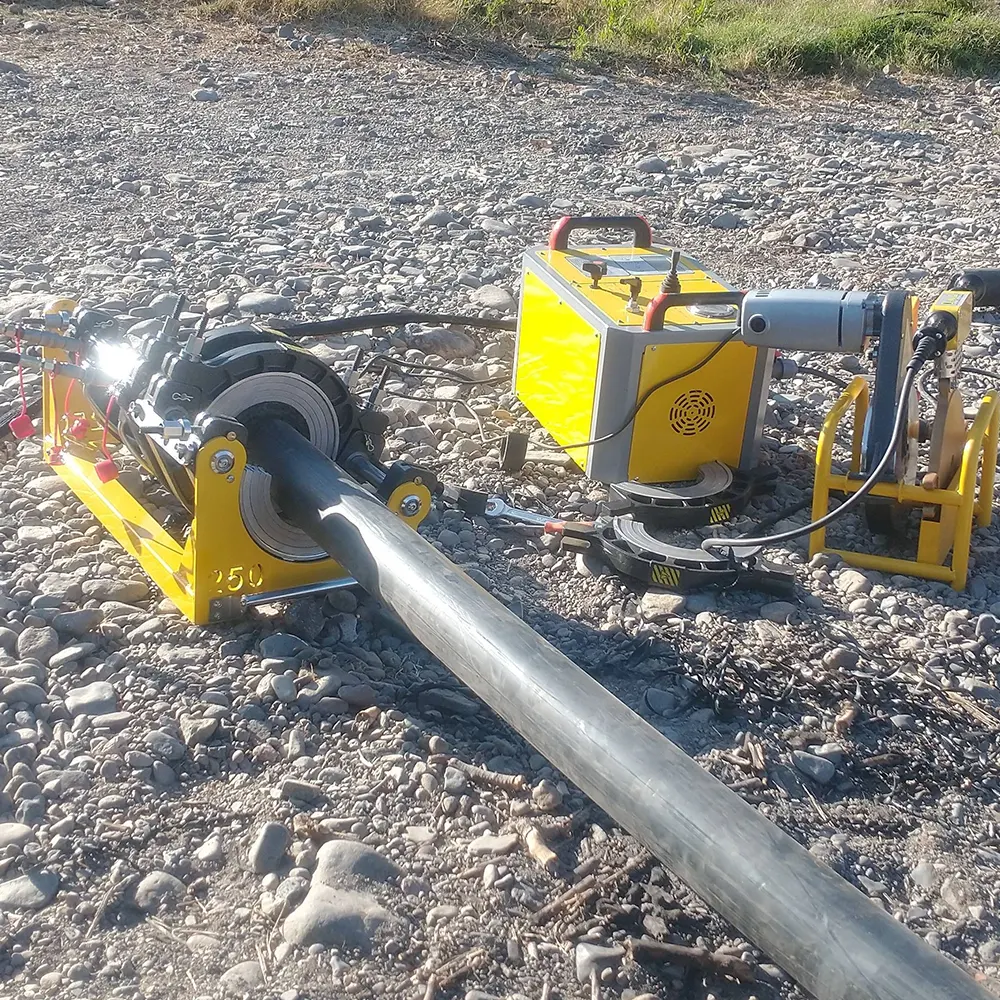
When a pipeline project depends on strong, leak-free joints, the equipment behind the weld matters just as much as the pipe material itself. A butt fusion machine is designed to heat, align, and fuse thermoplastic pipes into a single continuous line, creating a bond that can perform reliably in demanding environments. For engineers, contractors, and distributors, understanding the key specifications of a butt fusion welding machine is essential before making a purchase or planning a project.
From pipe diameter range and heating plate performance to hydraulic pressure control and power requirements, each specification affects welding quality, efficiency, and long-term durability. Choosing the right machine is not only about matching a budget; it is about ensuring the equipment can support the application, the project schedule, and the required safety standards. For this reason, professionals in water supply, gas distribution, mining, and industrial installations pay close attention to machine specifications before committing to a model.
What Is a Butt Fusion Welding Machine?
A butt fusion welding machine is used to join HDPE, PP, and other thermoplastic pipes by heating the pipe ends and pressing them together under controlled pressure. The process creates a seamless joint that is strong, durable, and resistant to leakage. Compared with mechanical joints, butt fusion delivers higher structural integrity and is widely accepted in modern pipeline systems.
The core value of butt fusion technology is simple: proper heat, alignment, pressure, and cooling time produce a weld that becomes part of the pipe itself.
Because this process depends on precision, the machine’s technical specifications directly influence whether each weld meets project requirements. A well-built machine improves consistency, reduces human error, and supports faster workflow on site.
Why Machine Specifications Matter
Many buyers focus on overall appearance or price, but the true performance of a butt fusion welding machine is determined by its specifications. These details define what the machine can handle and how accurately it can work under real conditions. If a machine is underpowered, poorly aligned, or limited in pipe size range, the weld quality may suffer.
Important: the correct specification should always match the pipe material, pipe diameter, working environment, and project intensity. A machine that is ideal for small municipal lines may not be suitable for large industrial or high-pressure pipeline systems.
Reliable manufacturers like JQ-Fusion design machines for different project scales, offering manual, hydraulic, and CNC automatic models to meet varying needs across global markets.
1. Pipe Diameter Range
One of the most important specifications is the pipe diameter range the machine can fuse. Butt fusion machines are usually categorized by the minimum and maximum pipe sizes they support. This range determines whether the machine is suitable for small service lines, medium municipal systems, or large industrial pipelines.
A machine with a wider pipe diameter range provides greater flexibility for contractors who handle multiple project types.
Before choosing a model, check whether the machine can handle the exact pipe sizes used in your project. If the machine is too small, it may not clamp or heat the pipe properly. If it is oversized, it may be unnecessarily expensive and harder to transport.
- Small diameter machines are often used for residential and light commercial systems.
- Medium range machines fit most water supply and gas distribution projects.
- Large diameter machines are designed for major infrastructure and industrial applications.
2. Heating Plate Temperature Control
The heating plate is the heart of the fusion process. It must reach and maintain a stable temperature to soften the pipe ends evenly. If the temperature fluctuates too much, the weld may be weak, uneven, or contaminated.
A high-quality machine should provide accurate temperature control with clear digital display or dependable analog monitoring. In professional models, temperature uniformity across the heating surface is especially important because uneven heat can affect the fusion bead and final joint strength.
Key point: stable temperature control helps ensure repeatable weld quality, especially on long pipeline runs where many joints must be consistent.
In real-world use, operators should also consider how quickly the heating plate reaches working temperature and how well it performs in changing weather conditions. Outdoor projects in cold or windy environments demand more reliable heating performance.
3. Hydraulic System Performance
Hydraulic pressure is responsible for clamping, alignment, and fusion force during the welding cycle. In hydraulic butt fusion machines, the quality of the hydraulic system has a major impact on weld accuracy and operator convenience. A stable hydraulic unit helps maintain consistent pressure during heating, joining, and cooling.
Important hydraulic specifications include maximum pressure, pressure regulation accuracy, hose quality, and control valve reliability. If the system is unstable, the pipe ends may not join with the correct force, which can reduce weld integrity.
For demanding projects, a machine with precise hydraulic control is often preferred because it reduces manual labor and improves repeatability. This is one reason many contractors choose hydraulic or automatic models over basic manual versions.
4. Clamp Alignment and Structure
Perfect alignment is essential in butt fusion welding. If the pipe ends are not held squarely and centrally, the welded joint may be uneven and structurally weaker. That is why the clamp frame and alignment system should be carefully evaluated.
The machine frame should be rigid, well-machined, and capable of holding the pipe securely without distortion. Good clamp alignment reduces stress during welding and helps create a smooth, balanced bead.
A strong frame and precise clamps are not just design features; they are the foundation of welding accuracy.
When inspecting a machine, look for evidence of precision machining, stable guide rails, and smooth movement of the clamping system. These details may seem minor, but they strongly affect the final result.
5. Power Supply and Voltage Options
Another practical specification is the machine’s power supply requirement. Butt fusion welding machines are available in different voltage and frequency configurations to match regional standards and on-site power conditions. For international buyers, voltage flexibility can be a critical advantage.
A machine that supports multiple voltage options is easier to deploy across different countries and construction environments. This is especially important for distributors and contractors working on global projects with varying power systems.
JQ-Fusion offers customizable configurations, helping clients choose machines that fit local standards and project demands. This flexibility is valuable when working in remote areas or on projects with limited electrical infrastructure.
6. Heating Plate Material and Coating
The durability of the heating plate depends not only on its size and temperature control but also on the material and surface coating. A high-quality non-stick coating helps prevent melted plastic from sticking to the plate, which improves weld cleanliness and simplifies maintenance.
Durable heating plates also maintain better thermal consistency over time. If the plate surface degrades quickly, the machine may lose efficiency and produce less reliable joints. For this reason, buyers should ask about plate construction, coating quality, and replacement availability.
- Non-stick coating supports cleaner welds and easier operation.
- Stable heating performance improves repeatability.
- Durable construction reduces long-term maintenance cost.
7. Cutter and Facing Tool Efficiency
Before fusion begins, pipe ends must be cut and faced properly to ensure flat, even surfaces. A machine with an efficient facing tool improves preparation speed and reduces the chance of imperfect joints. The cutter should produce clean surfaces with minimal vibration or unevenness.
This component is often overlooked, but it plays a major role in achieving a professional weld. If the pipe ends are not prepared correctly, even a high-end fusion system will struggle to create a perfect joint.
Tip: efficient preparation tools save time on site and help maintain a high-quality workflow across multiple welding points.
8. Automation Level: Manual, Hydraulic, or CNC
Different projects require different levels of automation. Manual butt fusion machines are often preferred for smaller jobs or basic operations. Hydraulic machines add pressure stability and ease of use, while CNC automatic machines offer the highest level of control and repeatability.
The automation level should be chosen based on project size, operator experience, and required precision. For example, a large-scale utility project may benefit from CNC automation because it reduces the chance of error and supports standardized welding procedures.
JQ-Fusion’s product range includes hydraulic butt fusion welding machine, automatic butt fusion welding machine, and other related equipment to support different work environments.
9. Safety Features and Operator Protection
Safety should always be part of the specification checklist. A dependable machine should include safe electrical components, emergency stop functions where applicable, and a structure that minimizes risk during operation. Since butt fusion involves high temperatures and mechanical force, safety cannot be an afterthought.
Good safety design also improves operator confidence and reduces downtime caused by accidents or equipment misuse. For professional project teams, this is particularly valuable because it contributes to both productivity and compliance.
10. Portability and Job Site Adaptability
Some machines are built for fixed workshop environments, while others are designed for easier transport and field use. Portability matters when the project requires frequent movement between locations or work in remote areas. In such cases, wheel design, frame weight, modular assembly, and transport convenience all become relevant specifications.
Even large machines can be designed with practical site mobility in mind. The right balance between strength and portability helps contractors work efficiently without sacrificing performance.
11. Customization and OEM/ODM Capability
For many buyers, customization is a major advantage. Project requirements can vary by pipe size, voltage, branding, color, or control configuration. A manufacturer with strong OEM and ODM capability can adapt the machine to the customer’s market and operational needs.
JQ-Fusion emphasizes flexible customization services, allowing clients to request changes in machine size, design, branding, and project-specific features. This is especially useful for distributors who want to develop a unique product line or contractors who need special configurations for specific jobs.
Custom solutions are not only about appearance; they can improve workflow, compatibility, and overall project efficiency.
12. Quality Control and Certification
Specification sheets are important, but manufacturing quality is just as critical. A machine built with poor quality control may fail to deliver the advertised performance. Reliable manufacturers test temperature accuracy, hydraulic pressure stability, clamp alignment, and overall function before delivery.
Certification adds another layer of trust. Products manufactured in compliance with recognized standards and certified by organizations such as SGS offer greater confidence for global buyers. This is particularly important in regulated industries and international engineering projects.
When evaluating a supplier, ask about inspection procedures, testing records, and compliance documentation. These details help ensure the machine will perform safely and consistently in real applications.
How to Compare Butt Fusion Machine Specifications
Comparing machines becomes easier when you focus on the specifications that affect your project most directly. Start with pipe diameter range, then examine temperature control, hydraulic stability, frame quality, power supply, and automation level. After that, consider support services such as spare parts, training, logistics, and after-sales assistance.
It is also wise to look at the manufacturer’s reputation. A company with more than 20 years of experience, strong export capability, and proven global use is generally better positioned to support long-term projects. JQ-Fusion’s experience in water supply systems, gas networks, mining projects, and industrial pipelines makes it a practical reference point for buyers seeking dependable equipment.
Why JQ-Fusion Is a Strong Choice
Choosing a machine is not just about technical data; it is also about the reliability of the company behind it. JQ-Fusion stands out through advanced manufacturing technology, strict quality control, and comprehensive global support. The company’s product line includes multiple fusion solutions, giving buyers more flexibility across different project sizes and applications.
Its strengths include 20+ years of industry experience, strong OEM and ODM capability, stable stock supply, fast shipping, and technical support from selection to installation. For contractors and distributors, this kind of support can make a major difference in project execution and customer satisfaction.
Conclusion
Understanding butt fusion welding machine specifications is the key to choosing equipment that delivers reliable, repeatable, and high-quality welds. Pipe diameter range, heating plate control, hydraulic performance, clamp alignment, power supply, automation level, and customization options all shape the final performance of the machine. The best choice is always the one that matches the project’s technical demands and working conditions.
For buyers who need durable equipment, flexible customization, and dependable support, working with an experienced manufacturer can reduce risk and improve results. Whether the project involves water distribution, gas pipelines, mining infrastructure, or industrial installation, the right butt fusion machine is an investment in long-term performance and project success.
FAQs
1. What pipe materials can a butt fusion welding machine join?
It is mainly used for thermoplastic pipes such as HDPE and PP, where heat fusion creates a strong and continuous joint.
2. Which specification is the most important when choosing a machine?
Pipe diameter range is usually the first specification to check, followed by temperature control, hydraulic stability, and clamp alignment.
3. Are automatic machines better than manual ones?
Not always. Automatic models offer higher precision and consistency, but manual or hydraulic machines may be more suitable for smaller or simpler projects.
4. Why does temperature control matter so much?
Because even heating is essential for creating a proper fusion bond. Unstable temperature can weaken the weld and reduce joint reliability.
5. Can the machine be customized for different projects?
Yes. Many professional manufacturers offer customization for size, voltage, branding, color, and functional requirements to suit different markets and applications.



