
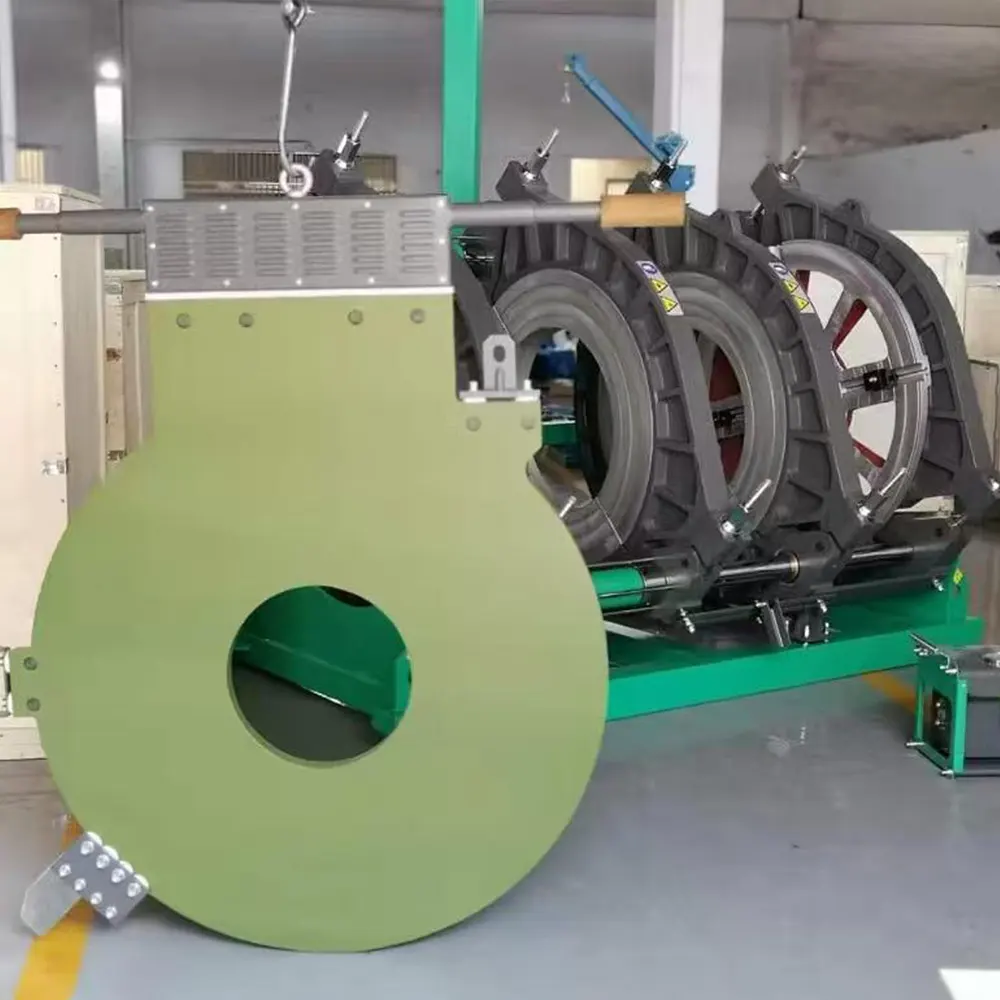
Writing a pipe welding project report sample is not just about listing work completed on site. A strong report helps project teams document welding quality, material usage, machine settings, inspection results, and final acceptance details in a clear and professional way. For contractors, engineers, and procurement teams, this type of document is often used to prove that the welding process met technical requirements and that the pipeline was completed safely and efficiently.
When the project involves HDPE pipelines, the report becomes even more important because fusion quality directly affects the long-term performance of the entire system. Whether the work is for water supply, gas distribution, mining, or industrial piping, a well-written report shows how each weld was completed, tested, and approved. If you are preparing documentation for a butt fusion machine project, your report should reflect both technical accuracy and practical field conditions.
1. What a Pipe Welding Project Report Should Include
At the most basic level, a pipe welding project report should answer five questions: what was welded, where it was welded, how it was welded, who performed the work, and how the results were verified. The report should give readers a complete overview of the project from start to finish. A good structure usually includes project background, scope of work, pipe specifications, welding method, equipment details, inspection records, and final conclusions.
For example, if the project uses HDPE butt fusion, the report should mention pipe diameter, wall thickness, material grade, joint count, machine model, heater plate temperature, hydraulic pressure, cooling time, and visual inspection results. These details are essential because they allow supervisors and clients to confirm that the welding conditions matched the project requirements.
Important: A project report should be written in a way that anyone on the project team can understand it later, even if they were not present during the welding work.
2. Recommended Report Structure
A clear structure makes the report easier to read on desktop and mobile devices. Below is a practical format commonly used in welding project documentation:
✓ Project Overview — introduce the site, client, timeline, and welding purpose.
✓ Pipe and Material Data — list pipe size, SDR, material type, and quantity.
✓ Welding Equipment — record the machine type, power supply, and calibration status.
✓ Welding Parameters — include temperature, pressure, heating time, fusion time, and cooling time.
✓ Inspection and Test Results — document visual checks, alignment, and any nondestructive testing.
This structure is simple, but it works well because it moves from general project information to technical details and then to final quality confirmation. Many engineers prefer this order because it matches the actual workflow on site.
3. How to Write the Project Background
The background section should explain the purpose of the project. For example, was the pipeline installed for a new water supply network, a gas transmission line, or an industrial plant upgrade? This section should also state the location, client, contractor, and expected completion date. Keep the language direct and factual.
If the project used equipment from a professional manufacturer, that can also be mentioned in a neutral and professional way. For instance, when a contractor chooses reliable welding equipment from a supplier with strong manufacturing experience, the report can note that the machine supported stable field operation and consistent weld quality. That kind of information helps connect the equipment choice with project performance.
Tip: Avoid marketing language in the background section. Focus on facts, not promotion.
4. Recording Pipe and Welding Details Correctly
One of the most important parts of a pipe welding project report is the technical record. This should include all key pipe data and fusion conditions. In HDPE pipe welding, small changes in temperature or pressure can affect joint strength, so the report must be precise.
The pipe data section should normally list:
- Pipe material type
- Pipe diameter and wall thickness
- SDR or pressure rating
- Number of welded joints
- Project section or chainage location
The welding data section should include:
- Welding method used
- Machine model and serial number
- Heater plate temperature
- Hydraulic pressure setting
- Fusion and cooling times
- Operator name and qualification
Accurate data recording helps reduce disputes later. If a joint fails inspection, the report can be checked to determine whether the failure came from incorrect setup, environmental conditions, or operator error.
5. How to Describe Equipment Performance
The equipment section should explain what machine was used and how it performed during the project. In pipe fusion work, the quality of the machine is a major factor in consistent results. A reliable machine should provide stable heating, accurate pressure control, and precise clamp alignment.
For larger or more demanding projects, contractors often look for equipment with proven durability and strong support service. Manufacturers with more than 20 years of experience in HDPE pipe welding machines often provide manual, hydraulic, and CNC automatic solutions for different project sizes. This matters because project needs can change significantly depending on pipe diameter, site conditions, and production speed.
Key point: Equipment performance should be described with measurable results, such as stable temperature control, smooth pressure operation, and no misalignment during the fusion process.
6. Quality Inspection and Acceptance Records
A professional report must show how the welded joints were inspected. Visual inspection is usually the first step. The inspector checks bead shape, alignment, contamination, and whether the fusion zone appears uniform. If required by the project, additional testing may be carried out to verify integrity.
Inspection records should indicate whether each joint passed or failed. If a defect is found, the report should clearly state the reason, the corrective action taken, and whether the joint was reworked. This creates a transparent quality trail that is valuable for both the contractor and the client.
In many projects, the final acceptance record is the most important page in the report. It confirms that the welding work was completed according to the approved method and that the pipeline section is ready for service or the next stage of installation.
7. Writing Style That Works for English Websites
Because this report sample may be published on an English website, the writing should be clear, simple, and easy to scan on mobile screens. Short paragraphs work better than long blocks of text. Headings should guide the reader through the content logically. Important points should be emphasized using bold text and light yellow highlighting rather than heavy decoration.
For readability, it is also helpful to use boxed sections for tips, warnings, or key technical notes. This makes the content visually stronger without overwhelming the page. In web formatting, a report article should balance professionalism with user-friendly design. That is especially important when the article is used to educate buyers, engineers, or distributors who want practical information quickly.
Best practice: Use one idea per paragraph and keep technical terms consistent throughout the report.
8. Sample Content Flow for a Pipe Welding Project Report
A simple sample flow for your report could look like this: start with the project name, location, and contractor; then describe the pipeline purpose and specifications; next explain the welding equipment and settings; after that, present the welding progress and inspection results; and finally close with the summary and acceptance statement. This sequence feels natural and helps the reader move from general information to specific technical proof.
If your project involves multiple sections, you can separate them by work area or welding batch. That makes the report more organized and helps the reader compare performance across different sections. For example, one section may cover main pipeline welding, while another section may cover service branches, fittings, or repair joints.
Many companies that supply fusion equipment also provide technical support, training, and customizable configurations. This can be useful in project reports because the machine setup may be adjusted to meet voltage requirements, pipe sizes, or site-specific conditions. JQ-Fusion, for instance, offers solutions for different pipeline projects and emphasizes stable welding performance, quality control, and fast delivery support.
9. Common Mistakes to Avoid
One common mistake is writing too generally. A report that says “the welding was successful” without proof is not useful. Another mistake is leaving out machine settings or inspection data. Without these details, the report cannot be used as technical evidence. A third mistake is mixing promotional text with project records in a way that makes the document look unprofessional.
To avoid these problems, keep the report evidence-based. Include numbers, dates, machine data, and inspection outcomes whenever possible. If the project was completed using a high-performance hydraulic or automatic welding machine, mention the model and function, but do not exaggerate the results. A credible report is always more valuable than an overly polished one.
10. Conclusion
A good pipe welding project report sample is clear, accurate, and easy to verify. It should document the project background, pipe specifications, welding method, equipment used, inspection results, and final acceptance. When written well, it becomes a practical record for engineers, clients, and future maintenance teams. It also reflects the professionalism of the contractor and the reliability of the equipment used on site.
For HDPE pipeline projects, especially those using butt fusion technology, report quality is closely linked to welding quality. That is why the report should be treated as a technical document, not just an administrative form. With the right structure and proper detail, your report can demonstrate both compliance and project value.
Frequently Asked Questions
Q1: What is the main purpose of a pipe welding project report?
It records the welding process, equipment, inspection results, and final acceptance so the project can be reviewed and verified later.
Q2: What technical details should always be included?
Pipe size, material type, welding machine model, temperature, pressure, fusion time, cooling time, and inspection results should always be included.
Q3: Can the report include equipment supplier information?
Yes, if it is relevant to the project. It should be written in a factual and professional way, focusing on how the equipment supported the work.
Q4: How long should a pipe welding project report be?
There is no fixed length, but it should be long enough to cover all required technical and inspection information without unnecessary repetition.
Q5: What makes a report look professional on a website?
Clear headings, short paragraphs, highlighted key points, simple formatting, and accurate technical content make it professional and easy to read on mobile devices.



