
Butt fusion machines are the backbone of HDPE pipe installation projects across Pakistan — from municipal water networks in Lahore and Karachi to irrigation canals in Punjab and gas distribution in Sindh. This guide explains what a butt fusion machine is, how it works, and how contractors, distributors, and small-to-mid sized installers in Pakistan can choose the right model for their projects.
How Butt Fusion Works
Butt fusion is a thermoplastic welding method that joins two HDPE pipe ends by heating their faces and applying pressure until they fuse into a single, homogeneous joint. The process removes the need for mechanical fittings and produces strong, leak-free connections ideal for potable water, gas, and agricultural pipelines. In Pakistan’s hot climate and varied jobsite conditions, the method provides durable joints that resist corrosion and withstand ground movement.
Main Types of Butt Fusion Machines
Manual Machines
Manual units are compact, portable, and cost-effective. They are ideal for small diameter pipes (commonly 20–355 mm) and for crews working in remote or constrained sites. Use manual machines when budgets are tight and weld volume is moderate.
Hydraulic Machines
Hydraulic butt fusion machines deliver stronger and more consistent clamping forces than manual units, making them suitable for a wider diameter range and heavier-duty use. They fit mid-level projects such as municipal repairs, small distribution mains, and rural irrigation pipelines.
Automatic / CNC Machines
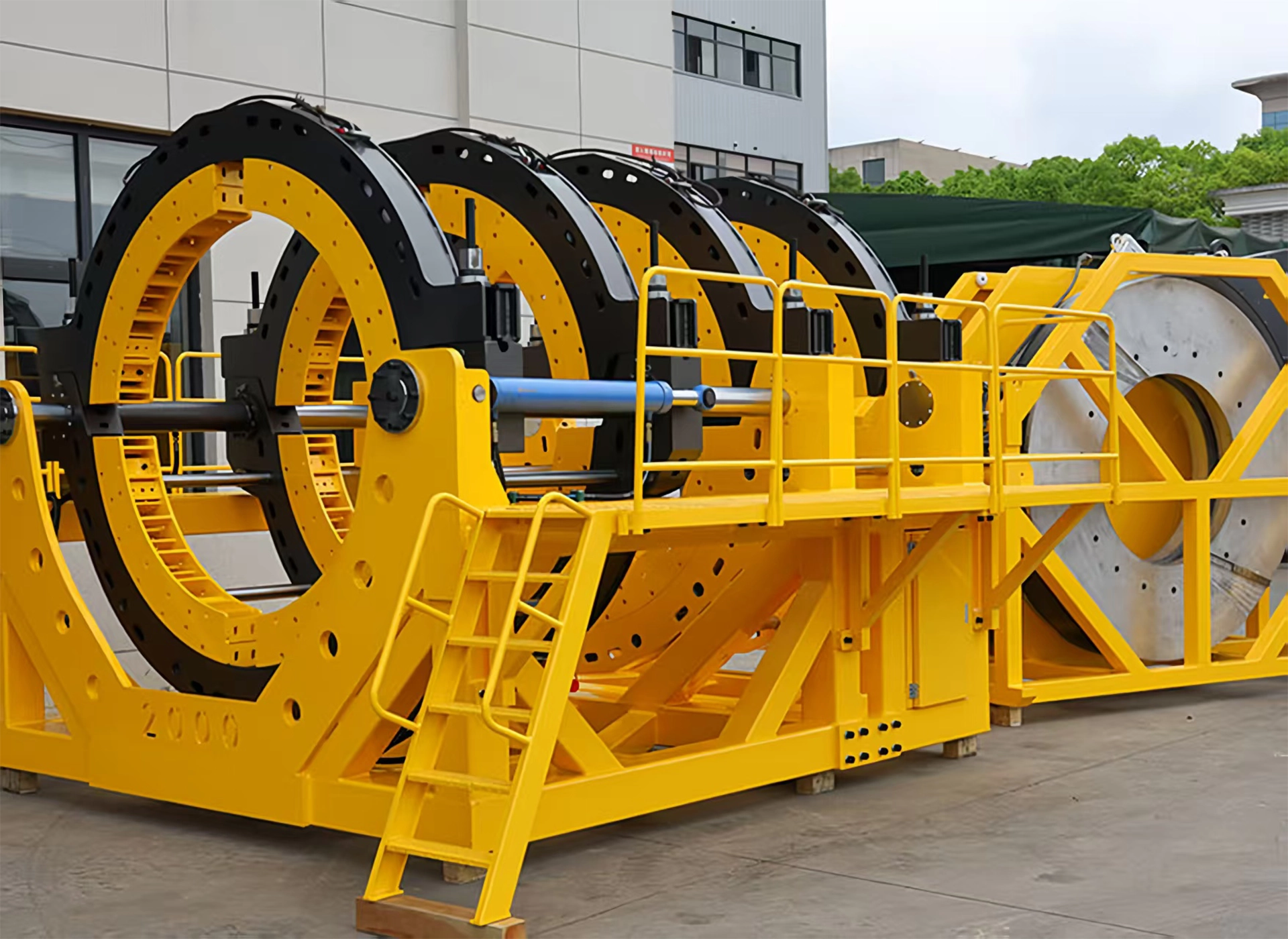
Automatic machines control pressure, temperature, and cycle time with high precision. They are best for high-volume contractors, large-diameter mains, and projects requiring strict quality control and certification records. In Pakistan, automatic machines are popular with large infrastructure and industrial pipeline projects.
Key Specifications to Check Before Buying
Pipe size range — Choose a machine that covers the pipe diameters you work with most often. For mixed projects, consider machines with modular clamps.
Clamping force & travel — Ensures consistent, defect-free joints, especially for larger diameters.
Heating plate quality — Non-stick surfaces and accurate temperature control reduce contamination and rework.
Portability & setup — For fieldwork in rural Pakistan, compact and easy-to-assemble units save time and transport costs.
Control & data logging — Automatic units with programmable cycles and records help meet international standards (ISO/DVS/ASTM) often required by large clients and donors.
Operational factors specific to Pakistan
-
Dusty and hot environments: choose machines with robust electronics and sealed components.
-
Power availability: for automatic units, confirm generator compatibility or battery backup.
-
On-site training: ensure supplier provides operator training and troubleshooting support.
Quick Comparison Table
| Type | Typical Pipe Range | Best For | Relative Cost |
|---|---|---|---|
| Manual | 20–355 mm | Small jobs, remote sites | Low |
| Hydraulic | 63–1000 mm | Municipal & contractor use | Medium |
| Automatic | 90–2250 mm+ | Large projects, certified work | High |
Practical Buying Tips for Pakistan Buyers
1. Request sample weld reports and ask about local references. Large infrastructure clients often require documented weld logs.
2. Confirm spare parts availability and delivery times. Fast access to consumables (heating plates, hydraulic seals) reduces downtime.
3. Check warranty & on-site service options. Machines used in remote irrigation projects should have accessible support networks.
4. Train your operators. Proper technique impacts joint quality more than any single machine feature.
5. Consider total cost of ownership: transport, consumables, training, and resale value — not only the ticket price.
Standards & Certification
Look for machines and procedures compliant with international welding standards (ISO, DVS, ASTM). For gas pipelines and treated water systems, compliance is often mandatory for tender acceptance.
Where to Source Reliable Machines
For Pakistani buyers seeking dependable suppliers with a range of manual, hydraulic, and automatic butt fusion machines, consider manufacturers that combine quality, spare-part support, and operator training. JQ-Fusion offers a broad product line covering small to large diameters and supports global infrastructure projects.
Final Advice
Choose the butt fusion machine that matches the scale of your work, local site conditions, and long-term project plans. For small contractors, a robust manual or hydraulic unit may be perfect; for municipal or industrial contractors, investing in automatic machines with data logging often pays back through improved weld quality and client confidence.



