
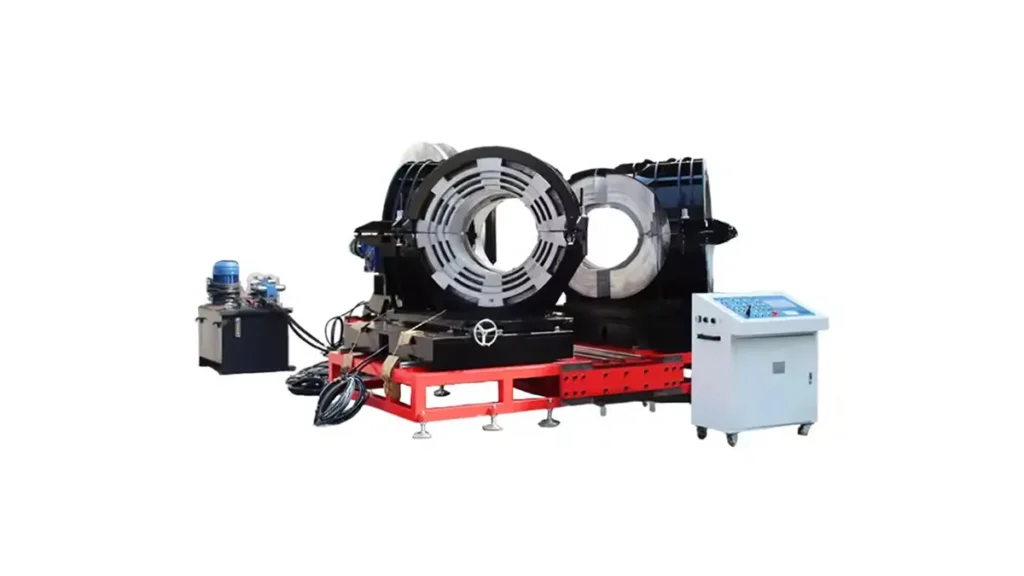
Butt fusion welding is a cornerstone technique for joining HDPE pipes, creating strong, leak-proof, and durable joints that are integral to modern pipeline infrastructure. The success of this process hinges on precise control over multiple parameters, with applied pressure being one of the most critical. Using incorrect pressure settings can lead to weak welds, bead imperfections, or even pipe damage, compromising the entire system’s integrity. Therefore, understanding and applying the recommended butt fusion welding pressure settings for different pipe sizes is not just a technical detail—it’s a fundamental requirement for project safety and longevity.
The Critical Role of Pressure in Butt Fusion Welding
During the butt fusion process, pressure serves several vital functions. In the initial heating phase, it ensures full and consistent contact between the pipe ends and the heating plate, facilitating uniform heat transfer. During the changeover and fusion phases, the applied pressure forces the molten material at the pipe ends together, enabling molecular diffusion and the formation of a homogeneous joint. The cooling phase pressure maintains alignment and prevents stress formation as the joint solidifies. The required pressure is directly proportional to the pipe’s cross-sectional area, meaning it must be carefully calculated based on the pipe’s outside diameter (OD) and wall thickness (SDR rating).
Key Takeaway: Pressure is not a one-size-fits-all setting. It must be calculated specifically for each pipe size and type to achieve the required interfacial pressure for a perfect molecular bond.
General Pressure Calculation Methodology
While machine manuals and pipe standards provide specific charts, the fundamental calculation for fusion pressure (Pf) is based on the following formula:
Pf = Pi × A
Where:
Pf = Fusion Pressure (the force to set on the machine, in kN or lbf)
Pi = Recommended Interfacial Pressure (a constant provided by the pipe manufacturer or standard, typically in N/mm² or psi)
A = Cross-sectional area of the pipe wall being fused (in mm² or in²)
The area (A) is calculated using the pipe’s outside diameter and wall thickness. This is why knowing the pipe’s SDR (Standard Dimension Ratio) is essential, as it defines the wall thickness for a given diameter.
Recommended Pressure Settings by Pipe Size (Guideline)
The following table provides a general guideline for typical interfacial pressures and resulting machine force settings. Always consult the pipe manufacturer’s specifications and your butt fusion machine manual for project-specific values.
| Pipe OD (mm) | Pipe OD (inches) | SDR Range | Typical Interfacial Pressure (Pi) | Estimated Machine Force (Pf) Range* |
|---|---|---|---|---|
| 63 | 2″ | 11 – 17 | 0.15 – 0.22 N/mm² (22 – 32 psi) | 0.5 – 0.8 kN (112 – 180 lbf) |
| 125 | 5″ | 11 – 17 | 0.15 – 0.22 N/mm² (22 – 32 psi) | 2.0 – 3.5 kN (450 – 787 lbf) |
| 250 | 10″ | 11 – 17 | 0.15 – 0.22 N/mm² (22 – 32 psi) | 8.0 – 14.0 kN (1800 – 3150 lbf) |
| 400 | 16″ | 11 – 17 | 0.15 – 0.22 N/mm² (22 – 32 psi) | 20.0 – 35.0 kN (4500 – 7870 lbf) |
| 630 | 24″ | 11 – 17 | 0.15 – 0.22 N/mm² (22 – 32 psi) | 50.0 – 85.0 kN (11200 – 19100 lbf) |
*Force range is estimated for SDR11 pipe. Higher SDR (thinner wall) pipes require slightly less force, lower SDR (thicker wall) pipes require more.
Factors Influencing Pressure Settings
Beyond basic pipe dimensions, several other factors can influence the optimal pressure setting for a weld:
- Pipe Material (PE80 vs. PE100): PE100 material often requires a slightly higher interfacial pressure compared to PE80 due to its higher density and melt flow characteristics.
- Ambient Temperature: Cold environments may necessitate a slight increase in pressure or heating time, while very hot environments might require a slight decrease.
- Machine Condition & Calibration: A well-maintained and regularly calibrated butt fusion machine is crucial. Hydraulic system accuracy directly impacts the delivered pressure.
- Heating Plate Temperature: Pressure and temperature work in tandem. An incorrect temperature will not be compensated for by pressure alone.
Pro Tip: For critical projects, always conduct a test weld (butt fusion procedure test) using the exact pipe batch, machine, and environmental conditions. Measure the bead dimensions and perform a destructive test (e.g., tensile test) to confirm your pressure, temperature, and time parameters are perfect before starting production welding.
The Advantage of Modern Fusion Equipment
Modern butt fusion machines, especially hydraulic and CNC automatic models, take the guesswork out of pressure application. They feature precise hydraulic gauges, digital pressure readouts, and often have programmable controllers that store pressure settings for various pipe sizes. Automatic machines calculate and apply the correct pressure for each phase (drag, heating, fusion, cooling) consistently, eliminating human error and ensuring repeatable, high-quality welds across every joint, regardless of pipe size. Investing in reliable equipment from a professional manufacturer is the first step toward pressure precision.
Consequences of Incorrect Pressure
- Pressure Too Low: Results in a “cold weld.” The molten material is not forced together sufficiently, leading to poor molecular entanglement, a weak joint, and possible crevices at the interface that can cause failure.
- Pressure Too High: Causes excessive bead formation (a large, uneven rollback bead) and can thin the pipe wall at the joint (neck-down), creating a stress point. It may also force too much material out, reducing the effective inner diameter.
Frequently Asked Questions (FAQs)
1. Can I use the same pressure for the same diameter pipe from different manufacturers?
Not necessarily. While the diameter may be the same, the SDR (wall thickness) and the material grade (PE80/PE100) can differ. Always use the interfacial pressure recommendation from the specific pipe manufacturer you are using for the project.
2. How do I convert interfacial pressure (psi) to the machine force (lbf or kN) I need to set?
You must calculate the cross-sectional area of the pipe wall (A). The formula is: A = π * (OD – t) * t, where ‘t’ is the wall thickness. Then, multiply A by the interfacial pressure (Pi). Pf = Pi * A. Many machine manuals and manufacturer websites provide calculators or pre-made charts for this.
3. Does the pressure change during the different stages of welding?
Yes. There are typically distinct pressure stages: a low drag pressure during initial contact with the heater, the main fusion pressure during joining, and a holding/cooling pressure which is often the same as fusion pressure but maintained until the joint is cool. Modern automatic machines manage these transitions seamlessly.
4. What is the single most important thing to check if my weld beads look inconsistent?
First, verify that your machine pressure calibration is accurate and that the hydraulic system is functioning properly. Next, check that the pipe faces are squared and clean before welding. Inconsistent beads often point to uneven pressure application or misalignment.
5. Where can I find reliable butt fusion machines with accurate pressure control?
For machines engineered with precision pressure control and durability for all pipe sizes, consider partnering with an experienced manufacturer like JQ-Fusion. They specialize in producing reliable manual, hydraulic, and automatic butt fusion welding machines backed by strict quality control and global technical support.



