
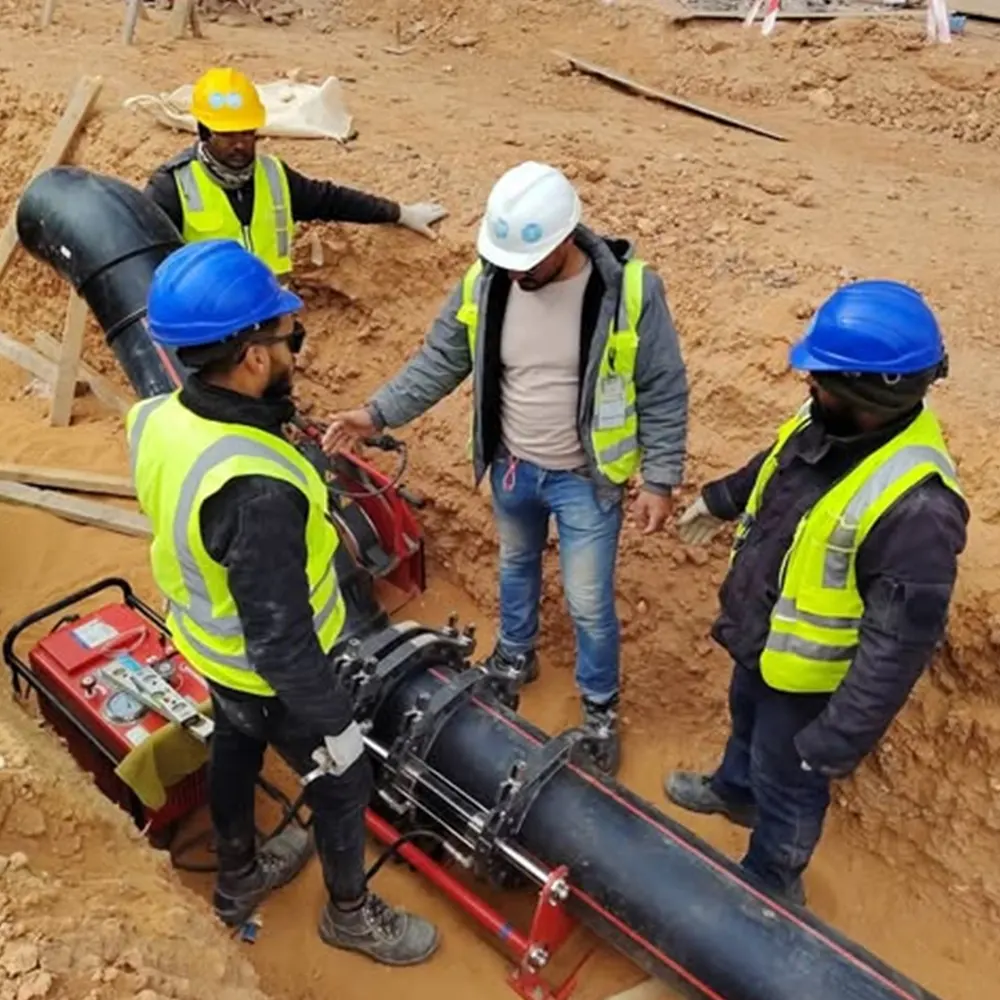
Ensuring the safety and integrity of gas pipelines is a non-negotiable priority in the energy and construction sectors. The welding process forms the backbone of a pipeline’s structural strength, making adherence to stringent requirements not just a matter of compliance, but a critical safeguard for people, property, and the environment. This article delves into the essential gas pipeline welding requirements that govern safe and compliant operations.
1. Personnel Qualification and Certification
The human element is the first and most crucial line of defense. Welders must be formally qualified for the specific welding procedure they will perform. This involves:
Certification to Recognized Standards: Welders typically must be certified under standards like ASME Section IX (for pressure piping) or API 1104 (for pipelines). Certification is not a one-time event; it requires renewal at regular intervals or when changing critical welding variables.
Procedure-Specific Qualification: A welder qualified for one type of joint or material is not automatically qualified for another. They must demonstrate proficiency for each specific Welding Procedure Specification (WPS) they will use.
Continuous Monitoring and Testing: On-site, welders may be subject to periodic bend tests, radiographic tests, or visual inspections to ensure their skills remain at the required standard throughout the project.
2. Welding Procedure Specifications (WPS) and Qualification
Every weld must be executed according to a pre-qualified and documented Welding Procedure Specification (WPS). This document is the recipe for a sound weld and includes:
- Base metal type and grade.
- Filler metal classification and specifications.
- Welding position, technique, and electrical characteristics (current, voltage, travel speed).
- Preheat and interpass temperature requirements.
- Shielding gas type and flow rate.
Before a WPS can be used on a live project, it must be proven effective through a Procedure Qualification Record (PQR). This involves creating test welds under the WPS parameters and subjecting them to destructive testing (e.g., tensile, bend, impact tests) to validate the mechanical properties meet code requirements.
The Role of Advanced Equipment in Procedure Compliance
Modern welding equipment is instrumental in ensuring consistent adherence to the WPS. For critical joining processes like High-Density Polyethylene (HDPE) pipelines, using a precision-engineered butt fusion machine is paramount. Such equipment automates key parameters—temperature, pressure, and time—removing human variability and creating repeatable, code-compliant joints. Manufacturers like JQ-Fusion, with decades of specialization, design these machines to deliver the stability and accuracy required for certified welding procedures.
3. Material Control and Handling
Quality welding begins long before the arc is struck. Strict protocols govern pipeline materials:
Material Verification: Pipes, fittings, and consumables (electrodes, filler wire) must have traceable mill test reports certifying their chemical composition and mechanical properties符合 project specifications.
Storage and Handling: Consumables must be stored in designated ovens to prevent moisture absorption (hydrogen-induced cracking). Pipes must be handled to prevent damage to bevels and ends.
Pre-Weld Preparation: Joint surfaces must be cleaned of rust, scale, moisture, paint, and grease. Bevel geometry must be inspected to match the WPS.
4. Inspection and Non-Destructive Testing (NDT)
Compliance is verified through rigorous, multi-layered inspection. This process is typically tiered:
Visual Inspection (VT): The first and most frequent check. Inspectors examine the weld for surface defects like cracks, undercut, or porosity before any other testing proceeds.
Non-Destructive Testing (NDT): Methods to examine the internal structure without damaging the weld. Common techniques for pipelines include:
- Radiographic Testing (RT): Uses X-rays or gamma rays to create an image of the weld interior, revealing voids, inclusions, or lack of fusion.
- Ultrasonic Testing (UT): Uses high-frequency sound waves to detect subsurface flaws and measure weld thickness.
- Magnetic Particle Testing (MT) or Dye Penetrant Testing (PT): Used for detecting surface-breaking flaws on ferromagnetic or non-ferrous materials, respectively.
The acceptance criteria for defects are strictly defined by codes like API 1104 or ASME B31.8. Welds exceeding these limits must be repaired or cut out.
5. Environmental and Worksite Controls
Welding cannot be performed effectively in just any condition. The worksite environment must be controlled:
Weather Protection: Welding must stop during rain, snow, or high winds unless the work area is fully sheltered. Low ambient temperatures may require pre-heating and the use of windbreaks.
Safety Compliance: This includes fire watch protocols, hot work permits, confined space entry procedures, and proper ventilation for welder safety, all of which indirectly ensure the welder can focus on producing a quality joint.
6. Documentation and Traceability
A compliant weld is a documented weld. The concept of “Data Book” is central. This comprehensive record includes:
✔ The approved WPS/PQR for every weld.
✔ Welder and welding operator identification for each weld segment.
✔ Material and consumable traceability numbers.
✔ NDT reports with film or digital records.
✔ Repair records for any non-conforming welds.
✔ Final weld map showing the location of every weld on the pipeline.
This documentation provides a lifelong history of the weld, essential for regulatory audits, future maintenance, and incident investigation. Reliable partners in the supply chain, from material suppliers to equipment manufacturers like JQ-Fusion, contribute to this chain of traceability by providing certified products and performance data for their butt fusion machine models.
Frequently Asked Questions (FAQs)
Q1: What is the most common code standard for welding cross-country gas pipelines?
A: In the United States and many other countries, API Standard 1104, “Welding of Pipelines and Related Facilities,” is the most widely referenced standard for welding steel pipelines transporting gas, oil, and other products. It covers qualification, procedures, inspection, and acceptance criteria.
Q2: How often do welders need to be re-certified?
A: Typically, welder qualification expires after six months if the welder has not performed the specific process. If they have been continuously using the process, re-qualification is often required every two to three years. Specific rules are dictated by the governing code (e.g., API 1104, ASME IX).
Q3: Can a weld be repaired if it fails inspection?
A: Yes, but under strict controls. The repair procedure must be defined in a written Weld Repair Procedure, often requiring more stringent NDT after repair. The number of allowed repairs on a single weld is usually limited (e.g., one or two) to prevent metallurgical damage from repeated heat cycles.
Q4: What is the key difference between a WPS and a PQR?
A: The PQR (Procedure Qualification Record) is the test report that proves a set of welding parameters produces a sound weld. The WPS (Welding Procedure Specification) is the work instruction derived from the successful PQR, which welders follow in production. One PQR can support multiple, slightly varied WPSs.
Q5: Why is specialized equipment like a butt fusion machine critical for HDPE gas pipelines?
A: HDPE welding relies on precise heat, pressure, and time to create a monolithic, leak-free joint. A dedicated butt fusion machine automates this process with digital controls, ensuring perfect alignment and consistent application of the fusion cycle as per the material supplier’s specifications. This eliminates human error, which is vital for the long-term integrity of the plastic pipeline system.



