
When a pipeline carries fuel gas, industrial chemicals, corrosive liquids, or process water, the quality of every welded joint becomes a direct factor in safety, uptime, and long-term operating cost. Chemical pipeline welding is not simply a joining task; it is a controlled engineering process that must account for material compatibility, pressure conditions, temperature swings, chemical exposure, and the consequences of failure. A single poor weld can lead to leakage, contamination, emergency shutdowns, regulatory penalties, or serious environmental damage.
That is why chemical pipeline welding requirements are built around precision, inspection, traceability, and repeatability. In many modern projects, especially those using thermoplastic systems such as HDPE, butt fusion welding has become a preferred method because it creates a homogeneous joint with excellent sealing performance when executed correctly. For contractors and project owners, understanding the rules behind safe and reliable installation is essential to choosing the right equipment, setting the correct procedure, and delivering a system that performs as designed for years.
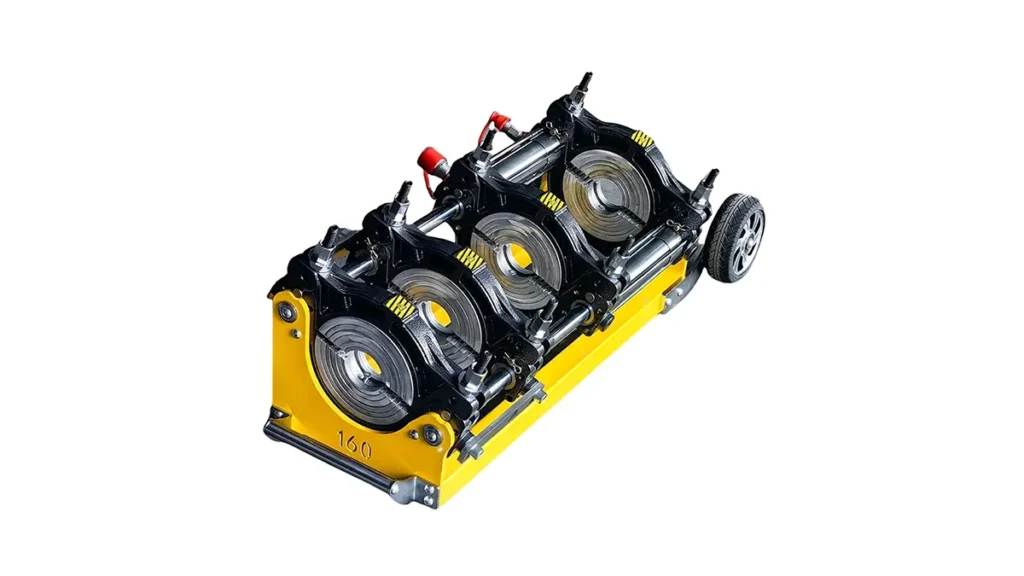
At the center of a reliable installation is the principle that the weld must be stronger and more durable than the conditions it will face in service. This means the welding method, the pipe material, the operator skill level, the site environment, and the quality of the welding machine all matter equally. Modern pipeline programs often rely on specialized equipment such as a butt fusion machine to achieve stable heat control, accurate alignment, and consistent fusion pressure across every joint.
Key idea: chemical pipeline welding should be treated as a controlled manufacturing process in the field, not as a routine assembly activity. The more hazardous or sensitive the transported media is, the stricter the welding discipline must be.
1. Material Selection Must Match the Chemical Environment
The first requirement for safe chemical pipeline welding is selecting the correct pipe material. Chemical systems may use steel, stainless steel, PVDF, PP, PE, or HDPE depending on pressure, temperature, corrosion risk, and fluid composition. If the material is not compatible with the substance being transported, even a perfect weld cannot prevent long-term failure. For example, aggressive chemicals can attack metals through corrosion, while some plastics can be weakened by solvents, elevated temperature, or UV exposure.
Engineers must review chemical resistance charts, operating temperature limits, and pressure ratings before welding begins. The pipe, fittings, and joining method must all belong to the same design logic. In thermoplastic systems, fusion welding is often preferred because it allows the pipe and fitting to become one continuous structure. This reduces the number of failure points and helps maintain a leak-tight seal under challenging service conditions.
2. Welding Procedures Need Qualified Control
Reliable installation depends on following an approved welding procedure. This procedure should define surface preparation, alignment tolerances, heating temperature, fusion time, pressure application, cooling time, and acceptance criteria. When the procedure is written clearly and followed consistently, it reduces operator variation and improves joint quality.
For chemical pipelines, small deviations can create serious risks. Underheating may lead to weak fusion; overheating can degrade the material; incorrect pressure may cause misalignment or uneven bead formation. The welding specification should be based on pipe size, wall thickness, material type, and the project’s safety class. In complex projects, procedure qualification tests are often needed to prove that the selected method can deliver acceptable performance under actual service conditions.
Important: a documented procedure is only effective when the crew is trained to use it exactly as written. On chemical projects, field improvisation should be avoided.
3. Surface Preparation Is Critical to Joint Integrity
No welding method can produce a dependable joint if the mating surfaces are contaminated. Dust, oil, moisture, oxidation, grease, and machining debris can all prevent proper bonding. In butt fusion welding, the pipe ends must be cut square, cleaned carefully, and aligned with precision before heating starts. Even a small alignment error can create stress concentration and reduce the reliability of the finished joint.
For metallic chemical pipelines, preparation may also include beveling, degreasing, purging, and verifying the cleanliness of internal surfaces. In plastic fusion systems, scraping away the oxidized layer is especially important. The objective is to expose clean, uniform base material so that the heating process can create full molecular contact. A clean joint is not just a quality preference; it is a basic requirement for safe service.
4. Temperature and Pressure Control Must Be Precise
Chemical pipeline welding requires accurate control of temperature and pressure because both factors directly affect the strength and structure of the joint. Too much heat can distort the material, reduce mechanical properties, or create weak zones. Too little heat may leave the bond incomplete. Pressure must also be managed carefully during heating, fusion, and cooling stages to ensure correct bead formation and structural continuity.
This is one reason modern welding equipment is so important. A stable machine can help maintain repeatable heating plate temperature, accurate hydraulic pressure, and proper clamp alignment. In larger installations, especially where multiple crews are working under schedule pressure, consistent machine performance is one of the best protections against quality drift. Many global contractors prefer equipment from established manufacturers with strong inspection systems and reliable field performance history, such as those supplying automated or hydraulic fusion solutions for pipeline work.
5. Environmental Conditions Must Be Controlled
Welding performance can be affected by wind, rain, humidity, dust, and extreme temperatures. For chemical pipeline installations, the work area should be protected whenever possible because moisture or contamination can compromise both the weld and the surrounding pipe surface. In cold environments, material heating behavior may change; in hot environments, cooling times and operator safety become more difficult to manage.
Safe installations often include weather shelters, cleanliness controls, and process checks before each weld cycle. For outdoor projects, planning should account for seasonal variations and daily temperature swings. This is especially important where the welded pipe will later carry sensitive or hazardous fluids. If the environment cannot be controlled adequately, the welding work should be paused rather than forced forward.
6. Operator Training and Certification Are Essential
Even the best equipment cannot compensate for untrained workmanship. Chemical pipeline welding must be performed by operators who understand both the welding process and the risk profile of the pipeline service. Training should cover machine setup, parameter selection, joint preparation, inspection criteria, safety procedures, and emergency response.
Certification is particularly important when projects involve pressurized systems, hazardous fluids, or strict regulatory oversight. Competent operators know how to identify abnormal bead appearance, incorrect pressure behavior, misalignment, and signs of contamination. They also understand when a joint should be rejected and remade. In high-risk work, the willingness to stop and correct a problem is part of professional welding discipline.
Safety note: training should include both technical welding knowledge and site safety practices, including ventilation, protective equipment, lockout procedures, and chemical exposure awareness.
7. Inspection and Testing Confirm the Weld Quality
A chemical pipeline should never be placed into service without proper inspection and testing. Visual inspection is the first step, but it is not enough by itself. Depending on the material and project requirements, nondestructive testing, pressure testing, leak checks, dimensional verification, or record review may be required. The goal is to confirm that every joint meets the design standard before the line carries any product.
For fusion welded thermoplastic systems, bead symmetry, alignment, fusion parameters, and cooling compliance are all important quality indicators. For metallic systems, additional examinations may be needed to detect internal flaws or incomplete penetration. Thorough documentation supports traceability and helps project teams identify trends if problems appear. Quality records are also valuable for compliance audits, maintenance planning, and future expansions.
8. Traceability Supports Long-Term Safety
A safe chemical pipeline installation should be traceable from material procurement to final commissioning. Traceability means the project team can identify which pipe lot, fitting batch, welding machine, operator, procedure, and inspection result belong to each section of the system. This matters because if an issue appears later, the team can quickly isolate the source and take corrective action.
Traceability is especially valuable in regulated industries such as gas distribution, mining, and industrial processing. Contractors that maintain clear records demonstrate professionalism and reduce dispute risk. It also creates a feedback loop for continuous improvement, making it easier to refine future projects and standardize best practices across multiple sites.
9. Equipment Reliability Influences Installation Outcomes
The performance of the welding machine has a direct impact on safety and reliability. Machines used on chemical pipelines must deliver steady clamping force, accurate heating, and repeatable cycle control. If the equipment is inconsistent, even skilled operators may struggle to produce acceptable results. That is why many projects rely on robust systems built for industrial use, with features such as hydraulic stability, temperature accuracy, and clamp alignment verification.
Manufacturers with strong quality control and global support are often preferred because they help reduce downtime and improve field confidence. JQ-Fusion, for example, focuses on butt fusion solutions for a wide range of pipeline needs, including manual, hydraulic, and CNC automatic systems. In projects where reliability and delivery speed matter, access to a proven machine platform can significantly improve installation efficiency and final weld quality.
Practical takeaway: the welding machine is not just a tool; it is part of the quality assurance system. Stable equipment helps turn procedure into consistent field performance.
10. A Safe Installation Workflow Reduces Risk
A strong chemical pipeline welding workflow usually follows a clear sequence: verify material compatibility, inspect the site, confirm equipment calibration, prepare the pipe ends, align and clamp the components, execute the weld under controlled parameters, allow full cooling, and then inspect the finished joint. Each step builds on the previous one, so skipping any stage weakens the final result.
Good project management also includes spare equipment planning, consumable control, and coordination between welding crews and inspection teams. When the work is organized properly, teams can maintain productivity without sacrificing quality. This is particularly important on long pipeline runs, where repeated weld consistency matters more than speed alone.
11. Where Reliable Welding Solutions Fit in Modern Projects
Modern pipeline contractors increasingly look for welding systems that combine performance, repeatability, and customization. Projects in water supply, gas distribution, mining, and industrial pipelines may all require different machine sizes, voltage settings, and operational configurations. A supplier that understands these variations can support better installation outcomes by matching equipment to the project rather than forcing the project to adapt to the equipment.
This is why many buyers value manufacturers offering flexible OEM and ODM support, reliable stock supply, and technical guidance. When a project spans multiple locations or tight deadlines, equipment availability becomes part of safety planning. The right welding partner helps contractors keep work moving while maintaining compliance with required standards.
Frequently Asked Questions
What is the most important requirement for chemical pipeline welding?
The most important requirement is controlling the full welding process so the finished joint is compatible with the transported chemical, the operating pressure, and the site conditions. Material selection, preparation, procedure control, and inspection all matter.
Why is butt fusion widely used in pipeline installation?
Butt fusion is widely used because it creates a strong, continuous joint with excellent sealing performance when the pipe ends are prepared and fused under correct parameters. It is especially suitable for thermoplastic pipeline systems.
How can welding defects be reduced on chemical pipelines?
Defects can be reduced by using qualified operators, calibrated equipment, clean surfaces, approved procedures, and controlled environmental conditions. Inspection after welding is also necessary to catch issues before commissioning.
Do all chemical pipelines need the same welding method?
No. The correct method depends on the pipe material, chemical media, pressure, temperature, and design standard. Some systems may require metallic welding, while others are better suited to fusion welding or electrofusion methods.
Why is equipment quality so important in pipeline welding?
Because welding machines control temperature, pressure, and alignment. Stable equipment helps ensure repeatable weld quality, which is essential for safe and reliable chemical pipeline operation.



