
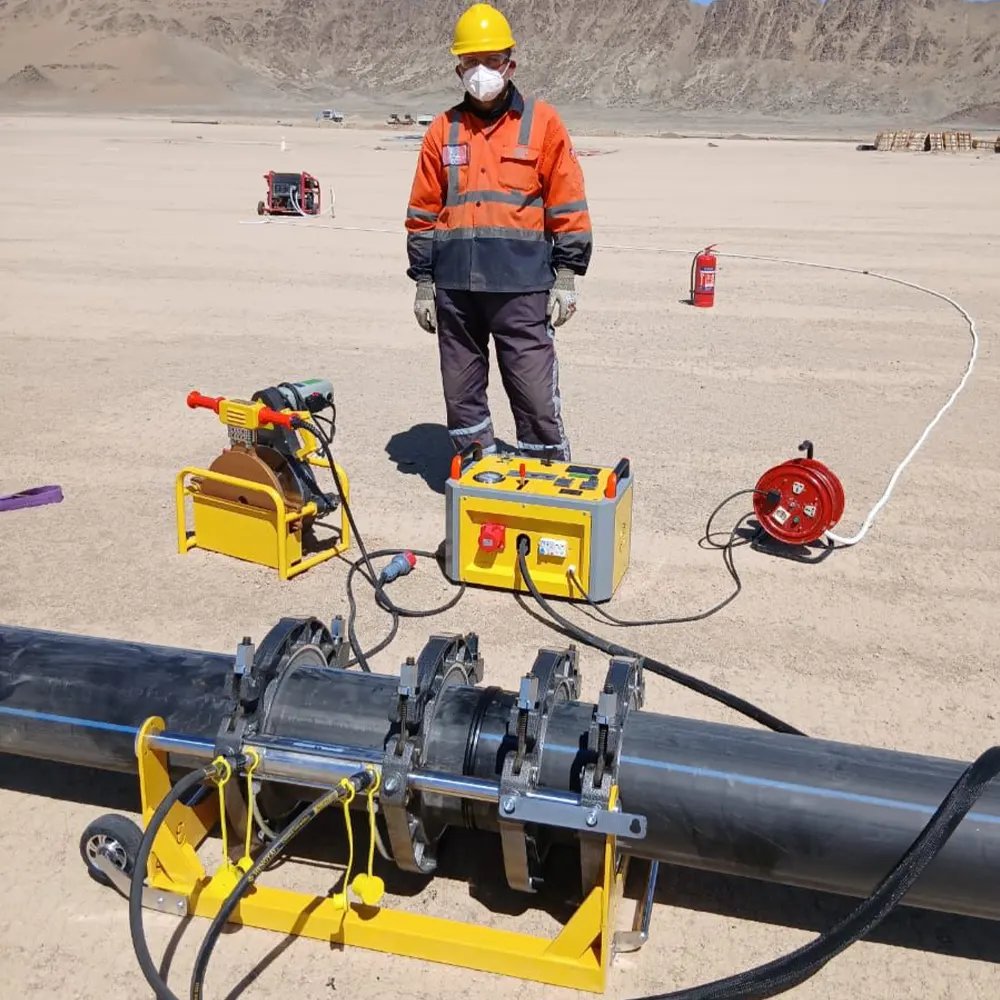
Urban infrastructure projects depend on one thing above all: dependable pipeline connections that can withstand constant pressure, limited construction space, changing weather conditions, and strict safety regulations. From water distribution systems to gas networks, district heating lines, and industrial service pipelines, the quality of every joint directly affects long-term performance. That is why choosing the right butt fusion machine solution is not just a technical decision—it is a project success factor.
In densely built cities, pipeline contractors often face narrow work zones, traffic control restrictions, underground utility congestion, and tight schedules. Under these conditions, welding technology must deliver more than strength. It must offer precision, repeatability, mobility, and easy operator control. A modern butt fusion welding solution provides these advantages by creating seamless, leak-resistant pipe joints that are ideal for HDPE and other thermoplastic piping systems used in urban construction.
Compared with mechanical joining methods, butt fusion welding reduces the risk of leakage, lowers long-term maintenance costs, and improves system life cycle reliability. For municipal projects, that means fewer disruptions to residents, fewer emergency repairs, and better performance over decades of service. For contractors, it means efficient installation, predictable quality, and improved compliance with project specifications.
Key advantage: Butt fusion creates a continuous pipe joint with the same strength characteristics as the pipe itself, which is especially valuable in high-demand urban environments where system failure is costly and difficult to repair.
Why Urban Infrastructure Demands Better Welding Solutions
Urban infrastructure is more complicated than rural or open-field pipeline work. Projects are often performed near roads, buildings, rail lines, public utilities, and active service corridors. This complexity places pressure on contractors to finish work quickly without compromising quality. In this environment, the best welding solution is one that balances productivity with joint consistency.
Pipe fusion equipment used in cities must support accurate alignment, stable heating control, and reliable hydraulic pressure. Even a small error in temperature or clamp positioning can lead to weak welds, costly rework, or hidden defects. That is why professional-grade equipment is preferred for urban water supply, gas distribution, and industrial utility installations.
Another important factor is project coordination. Urban jobs often require phased construction, night work, or rapid mobilization across multiple sites. Contractors need machines that are easy to transport, simple to set up, and flexible enough to handle different pipe diameters and site conditions. A strong welding system helps crews stay on schedule while maintaining safety and quality standards.
Core Features of the Best Pipeline Welding Solutions
The best pipeline welding solutions for city projects usually share several essential features. These include stable heating performance, precise alignment, rugged construction, and support for a wide diameter range. In practice, this means the equipment should be suitable for both small utility branches and large municipal mains.
1. Accurate temperature control is critical because HDPE and similar materials require consistent heat throughout the fusion process. A machine with poor temperature accuracy can create underheated or overheated joints, both of which reduce weld integrity.
2. Strong hydraulic stability ensures that the correct fusion pressure is maintained during heating and cooling. Reliable hydraulic systems help operators produce repeatable welds, which is especially important when multiple crews are working across a large project.
3. Precise clamp alignment reduces mismatch between pipe ends and improves joint quality. In urban environments, where construction sites may be tight and pipe handling is challenging, accurate alignment is a major advantage.
4. Durable structure and long service life matter because project equipment is often transported, reused, and exposed to demanding site conditions. Machines built with precision machining and strong materials can support better long-term value.
5. Flexible diameter compatibility allows one machine platform to serve multiple project needs. This is valuable for contractors handling mixed infrastructure work, from service lines to main distribution pipelines.
Manual, Hydraulic, and CNC Automatic Options
Different urban projects call for different levels of automation. Manual butt fusion systems are suitable for smaller jobs, occasional installations, and crews that prioritize affordability and portability. They can be effective when pipe sizes are manageable and welding volume is relatively low.
Hydraulic butt fusion machines are often the preferred choice for most professional urban infrastructure work. They improve pressure control, reduce operator fatigue, and support more consistent results across repeated welds. For contractors working on municipal water or gas projects, hydraulic systems offer a strong balance of performance and practicality.
CNC automatic butt fusion welding machines are ideal for projects demanding high efficiency and advanced quality control. These systems can help standardize the welding process, reduce human error, and improve documentation. In complex city infrastructure programs, automation can be especially useful where weld consistency and traceability are required.
Practical selection tip: Choose the machine type based on pipe diameter range, weld volume, site access, crew skill level, and required documentation. The best solution is not always the most advanced one—it is the one best matched to the project.
How Butt Fusion Supports Municipal Water and Gas Networks
Water and gas systems are among the most important lifelines in any city. Because these networks run underground and serve large populations, they require joint integrity that can be trusted for decades. Butt fusion is widely used because it produces a strong, homogenous bond that performs well under pressure.
For water supply systems, the main concerns are leakage prevention, hygienic performance, and long-term durability. Butt fusion joints help minimize maintenance needs and reduce the likelihood of contamination caused by failed connections. In gas distribution networks, safety becomes even more critical. A reliable fusion joint supports secure containment and helps operators meet stringent regulatory standards.
Contractors and distributors looking for proven equipment often prioritize manufacturers with strong quality control, stable stock supply, and technical support. For example, companies such as JQ-Fusion provide a range of welding equipment designed for diverse global pipeline applications, including urban utility work. Their manufacturing capability, customization options, and testing standards can be particularly useful for organizations that need both performance and service support.
When evaluating suppliers, it is wise to look at certifications, production consistency, after-sales support, and availability of spare parts. These factors can significantly affect project continuity and long-term ownership cost.
Installation Challenges in City Environments and How to Solve Them
Urban pipeline installation often presents obstacles that are less common in open-area construction. Traffic control may limit staging areas. Underground utilities may restrict excavation depth. Noise restrictions may affect working hours. In some areas, access routes may be narrow enough to require compact equipment and efficient material handling.
To address these challenges, contractors should choose welding systems that are easy to move and set up quickly. A well-designed fusion machine reduces unnecessary downtime during relocation and helps crews maintain productivity. Portable hydraulic models are often favored for their versatility, while automatic systems are useful when high-volume welding justifies the investment.
Another solution is project-specific customization. Machines with adjustable configuration options can better meet different voltage requirements, branding needs, and operational preferences. This is especially valuable for distributors and contractors working in multiple regions where standards and site conditions vary.
Operator note: Training is just as important as machine quality. Even the best equipment needs skilled operators who understand surface preparation, heating time, cooling time, and proper alignment procedures.
What Makes a Supplier Reliable for Urban Infrastructure Projects?
For pipeline contractors, a reliable supplier is more than a vendor. It is a long-term project partner. The right manufacturer should be able to provide stable product quality, technical guidance, delivery support, and customization services. This matters because urban projects often have strict deadlines and limited tolerance for equipment failure.
Key supplier strengths include:
• Over 20 years of industry experience in HDPE pipe welding solutions
• Strong OEM and ODM capability for market-specific customization
• Strict testing standards for temperature accuracy and hydraulic stability
• Fast shipping and organized inventory to support urgent timelines
• Professional technical support from selection to after-sales service
These capabilities help contractors reduce uncertainty, especially when managing multi-phase urban developments or emergency utility replacement work. Choosing a supplier with proven global performance can improve both equipment reliability and project execution.
Why Quality Control Cannot Be Ignored
In pipeline welding, quality control is not optional. A single weak joint can undermine an entire system, especially in urban networks where repairs are expensive and disruptive. The best manufacturers test each machine for temperature accuracy, hydraulic pressure stability, and clamp alignment before delivery.
These checks help ensure that the equipment performs consistently in real project conditions. When a welding machine is built and tested with precision, it gives contractors more confidence in the finished result. That confidence is essential when working on public infrastructure, where safety, reliability, and long-term durability are top priorities.
Quality control also supports cost efficiency. Fewer weld defects mean fewer reworks, less material waste, and lower labor loss. For city projects with strict budgets and deadlines, these savings can be substantial over the life of the project.
The Role of Customization in Modern Pipeline Projects
No two urban projects are exactly alike. Some require compact machines for confined spaces. Others need larger systems capable of handling substantial diameter ranges. Some clients need specific colors, voltage configurations, or branding. Others need functional upgrades for project-specific tasks.
Customization allows contractors and distributors to align equipment with real-world demands. It also creates a competitive advantage for businesses that serve different markets. Whether the need is for a hydraulic butt fusion unit, a CNC automatic machine, or a multi-angle pipe fitting welding solution, tailored design can improve usability and project fit.
Manufacturers that support customization help clients respond more effectively to changing infrastructure demands. This is especially valuable in fast-growing cities where utility expansion, pipeline replacement, and industrial development often happen simultaneously.
Bottom line: The best pipeline welding solution is not defined by one feature alone. It is the combination of machine performance, supplier support, customization, and project compatibility.
Frequently Asked Questions
What is the main advantage of butt fusion welding for urban pipelines?
It creates strong, leak-resistant joints that match the pipe material, making it ideal for long-term underground infrastructure use.
Which type of butt fusion machine is best for city projects?
Hydraulic machines are often the most practical choice, while CNC automatic machines are preferred when higher productivity and process control are needed.
Why is temperature accuracy so important in fusion welding?
Because improper heating can weaken the joint, reduce durability, and increase the risk of failure after installation.
Can one machine handle different pipe sizes?
Yes. Many modern systems are designed to cover a range of diameters, which is useful for projects with mixed pipeline specifications.
What should contractors look for in a welding equipment supplier?
They should look for proven experience, strict quality control, customization capability, fast delivery, and reliable technical support.



