
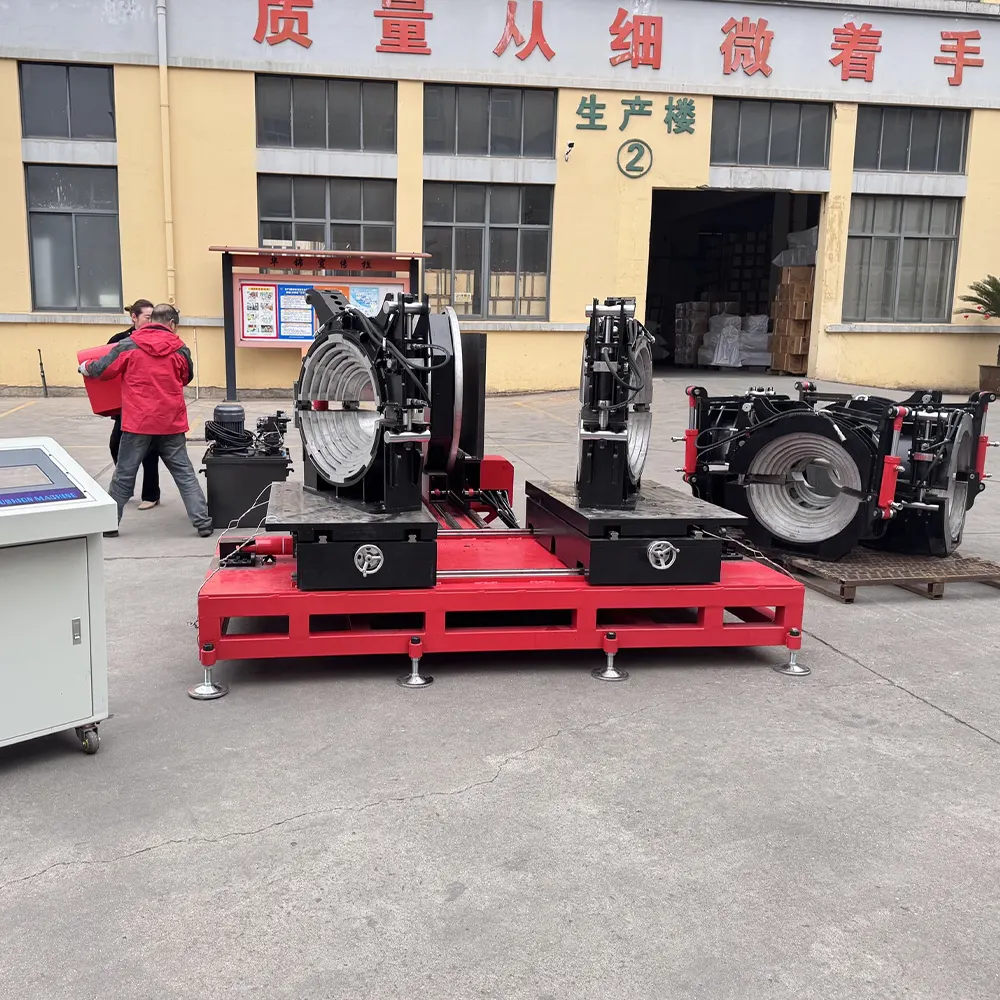
When people ask, what a butt fusion machine can do for HDPE pipelines, the real answer depends on one critical factor: testing. A perfect-looking weld is not always a reliable weld, and in HDPE pipeline construction, hidden flaws can lead to leaks, weak joints, pressure loss, or costly shutdowns. That is why choosing the best HDPE welding testing methods is essential for contractors, engineers, distributors, and project owners who want long-term performance and safety.
HDPE pipe welding is widely used in water supply networks, gas distribution, mining infrastructure, irrigation systems, and industrial fluid transport. Because these systems often run under pressure and operate in demanding environments, weld quality must be verified with both visual and technical methods. The most effective testing strategy combines inspection, process control, and sometimes destructive or non-destructive verification depending on the project scale and standard requirements.
In practice, the best testing method is not one single method. It is a system of methods that starts before welding, continues during the fusion process, and finishes after the joint has cooled and been checked. This layered approach helps ensure that every weld meets the required strength and alignment standards, especially in high-value projects where failure is not an option.
Why HDPE Welding Testing Matters
HDPE has excellent flexibility, corrosion resistance, and chemical stability, but the welded joint is still the most sensitive part of the pipeline. If the joint is not fused correctly, the overall system can be compromised even if the pipe itself is high quality. Testing helps identify errors such as insufficient heating, poor pressure control, contamination, misalignment, or improper cooling time.
One important reason testing matters is that HDPE welding defects are not always visible from the outside. A joint can look smooth and uniform while still containing internal weakness. That is why professional inspection should not rely only on appearance. Good testing methods reveal whether the machine settings, operator technique, and pipe preparation were all correct.
Key point: the goal of testing is not just to detect failure after it happens, but to confirm process reliability before the pipeline enters service.
1. Visual Inspection: The First and Most Important Check
Visual inspection is the simplest and most widely used HDPE welding testing method. It should be carried out immediately after welding and again after the joint has cooled. A trained inspector examines bead shape, symmetry, pipe alignment, and surface cleanliness. This method is fast, inexpensive, and effective at identifying obvious defects before more advanced testing begins.
During visual inspection, the operator should check whether the internal and external beads are uniform, whether the joint shows signs of contamination, and whether the pipe ends were properly centered. Uneven bead formation may indicate poor heating plate contact, unstable hydraulic pressure, or incorrect fusion timing.
Look for: consistent bead width, proper pipe alignment, clean pipe ends, and no visible scorching or gaps.
2. Dimensional Measurement and Alignment Verification
Accurate dimensions are vital in HDPE butt fusion welding. If the pipe ends are misaligned or clamped incorrectly, the final weld may be weak even if the machine temperature is correct. Dimensional measurement verifies pipe ovality, end preparation quality, clamp position, and bead symmetry.
Alignment checks are especially important on large-diameter pipelines, where even small deviations can create stress concentration points. Inspectors may use simple measuring tools or dedicated alignment gauges to confirm that the pipe ends are level and centered before fusion begins. This step is one of the best preventive testing methods because it reduces the chance of rework and project delay.
Practical benefit: dimensional verification helps catch setup errors before they become permanent weld defects.
3. Temperature Testing of the Heating Plate
The heating plate is one of the most critical components in any HDPE fusion process. If the plate temperature is too low, the pipe ends will not soften enough to bond properly. If it is too high, the material can degrade and weaken. Because of this, temperature accuracy testing is one of the best HDPE welding testing methods for quality assurance.
Temperature can be checked with built-in controllers, calibrated thermometers, or external temperature probes. The goal is to ensure that the heating plate maintains a stable, uniform surface temperature throughout the welding process. Testing should also confirm that there are no cold spots or overheating zones across the plate surface.
Reliable manufacturers such as JQ-Fusion place strong emphasis on temperature accuracy because stable heating directly affects joint strength. In professional project environments, this test is not optional; it is a core part of the welding quality system.
4. Hydraulic Pressure Stability Testing
For hydraulic butt fusion machines, pressure stability is just as important as temperature control. The fusion cycle requires precise pressure during heating, transfer, and joining. If pressure fluctuates, the molten material may not flow evenly, creating a weak or inconsistent joint.
Hydraulic pressure testing evaluates whether the machine maintains steady force under operating conditions. This is especially important on larger pipe sizes, where pressure control has a stronger effect on weld integrity. A stable hydraulic system supports predictable bead formation and reliable fusion consistency from joint to joint.
Best practice: test hydraulic stability before project deployment, especially when the machine will be used for continuous field welding.
5. Bead Observation and Fusion Profile Evaluation
One of the most practical ways to judge weld quality is by studying the bead profile. A properly formed bead usually indicates that the pipe ends were heated evenly and fused under correct pressure. An experienced technician can often spot poor process control by looking at the bead shape alone.
In butt fusion welding, both internal and external beads matter. The bead should appear consistent, balanced, and smooth without sharp irregularities. While bead appearance does not replace laboratory testing, it is still one of the most useful field methods for quick evaluation. It is especially valuable for supervisors who need to confirm many joints in a short period of time.
To improve inspection accuracy, many teams compare bead appearance against approved samples or internal project standards. This makes visual interpretation more consistent across different workers and shifts.
6. Non-Destructive Testing for Critical Projects
For high-risk or high-value projects, non-destructive testing is often used to provide a deeper level of confidence. Although HDPE is different from steel and does not respond to all conventional NDT methods in the same way, project-specific inspection techniques can still help identify surface and structural issues without damaging the joint.
Common approaches may include ultrasonic-based evaluation in special cases, infrared monitoring during process development, or pressure retention monitoring after installation. The exact method depends on pipe size, project standard, and client requirements. In many cases, non-destructive testing is chosen when the cost of failure is high or when the pipeline is difficult to access after installation.
Important: NDT is most effective when paired with strict welding procedure control, not used as a substitute for correct fusion practice.
7. Destructive Testing for Procedure Qualification
Destructive testing is one of the most reliable ways to verify whether a welding procedure is truly sound. Unlike field inspection, this method intentionally damages sample joints to examine the internal quality and mechanical strength of the weld. It is commonly used during procedure qualification, machine validation, operator training, and quality audit stages.
Typical destructive tests may include tensile testing, bend testing, peel testing, and burst-related evaluation depending on the standard being followed. These tests reveal whether the fusion zone has adequate bonding and whether the joint can handle stress without separating. Although destructive testing cannot be used on every production weld, it provides very strong evidence that the welding method is correct.
For manufacturers and contractors who want to verify equipment performance, destructive testing is especially valuable when introducing a new machine model, a new operator, or a new pipe specification.
8. Pressure Testing After Installation
After the pipeline section is assembled, pressure testing is one of the final and most important checks. This method confirms that the completed system can hold operating pressure without leakage. Hydrostatic or pneumatic pressure testing may be used depending on project requirements, safety rules, and local standards.
Pressure testing is not limited to the weld itself; it evaluates the entire pipe network. However, because welded joints are the most common weak points in a pipeline, this test is a powerful confirmation of overall fusion quality. If there is a failure during pressure testing, the weld area is usually examined first for process errors or installation damage.
Reminder: pressure testing should always be performed according to the applicable safety code and project procedure.
How to Choose the Best Testing Method
The best HDPE welding testing method depends on the application, risk level, budget, and project size. For small utility work, visual inspection and alignment verification may be enough when the welding machine and operator are highly controlled. For municipal, industrial, or mining pipelines, more advanced testing is often required.
A practical testing plan usually starts with pre-weld checks, followed by process monitoring during fusion, and ends with post-weld inspection and pressure verification. If the project involves critical transport or underground installation, destructive qualification tests may also be needed to validate the procedure before production begins.
In general, the most effective combination includes:
Recommended combination: visual inspection + dimensional alignment checks + heating plate temperature testing + hydraulic pressure stability testing + final pressure test.
The Role of Machine Quality in Testing Results
No testing method can fully compensate for unstable equipment. A well-built butt fusion machine makes it much easier to achieve consistent results, because temperature, pressure, and clamp alignment can be controlled more accurately. That is why machine quality and testing quality are closely connected.
Professional manufacturers with strong engineering and inspection systems often deliver better long-term outcomes because their machines are designed for stable performance in real-world pipeline work. JQ-Fusion, for example, focuses on strict quality control, including temperature accuracy, hydraulic stability, and clamp alignment inspection before delivery. This kind of manufacturing discipline supports better testing outcomes on site.
For contractors and distributors, choosing reliable equipment reduces weld variation and makes field inspection more predictable. It also lowers the risk of repeat work, project delays, and warranty claims.
Common Welding Defects Testing Can Catch
Effective testing helps identify many of the defects that reduce HDPE weld performance. These include contamination, insufficient heating, overheating, misalignment, poor pressure application, uneven bead formation, and incomplete fusion. In severe cases, testing may also reveal process instability caused by poorly maintained equipment or operator error.
By detecting these issues early, teams can correct the procedure before the pipeline is fully commissioned. This is one reason testing is so valuable: it protects both the technical quality of the project and the commercial reputation of the contractor or supplier.
Why Global Projects Depend on Consistent Testing
International pipeline projects often involve different climates, materials, labor conditions, and regulatory standards. In this environment, consistent testing becomes a universal quality language. Whether the project is in water infrastructure, gas transmission, or industrial processing, testing provides proof that the fusion method is under control.
For global buyers, the most trusted suppliers are the ones who understand that equipment alone is not enough. They provide technical support, training, calibration guidance, and quality assurance tools that help customers achieve repeatable results. This is especially important for OEM and ODM buyers who need customized machine configurations for specific market or project needs.
In many cases, the reliability of the entire pipeline network starts with the reliability of the testing process. That is why high-performing teams treat inspection as part of production, not as a separate afterthought.
Final Thoughts
The best HDPE welding testing methods combine simple field checks with deeper technical verification. Visual inspection, alignment measurement, temperature testing, hydraulic pressure stability checks, bead evaluation, destructive qualification tests, and final pressure testing all play important roles. Together, they create a strong quality system that protects weld integrity and supports long-term pipeline performance.
For contractors, the smartest approach is to use testing as a continuous process from preparation to commissioning. For manufacturers, the priority is to build machines that make accurate welding easier and more repeatable. When equipment quality and testing discipline work together, HDPE pipelines become safer, stronger, and more dependable.
FAQ
Q1: What is the most important HDPE welding test?
Visual inspection is the first and most important test, but it should always be combined with temperature, alignment, and pressure checks for better reliability.
Q2: Can a weld look good and still be defective?
Yes. Some HDPE weld defects are internal and cannot be identified by appearance alone, which is why multiple testing methods are recommended.
Q3: Why is temperature testing necessary for butt fusion?
Because the heating plate must stay within a stable range to soften the pipe ends correctly. Incorrect temperature can cause weak bonding or material degradation.
Q4: When should destructive testing be used?
It is usually used during procedure qualification, operator training, and machine validation, especially for critical projects or new welding setups.
Q5: Do all HDPE projects require pressure testing?
Most installed pipeline systems should undergo pressure testing according to project standards and safety requirements to confirm overall integrity before service.



