
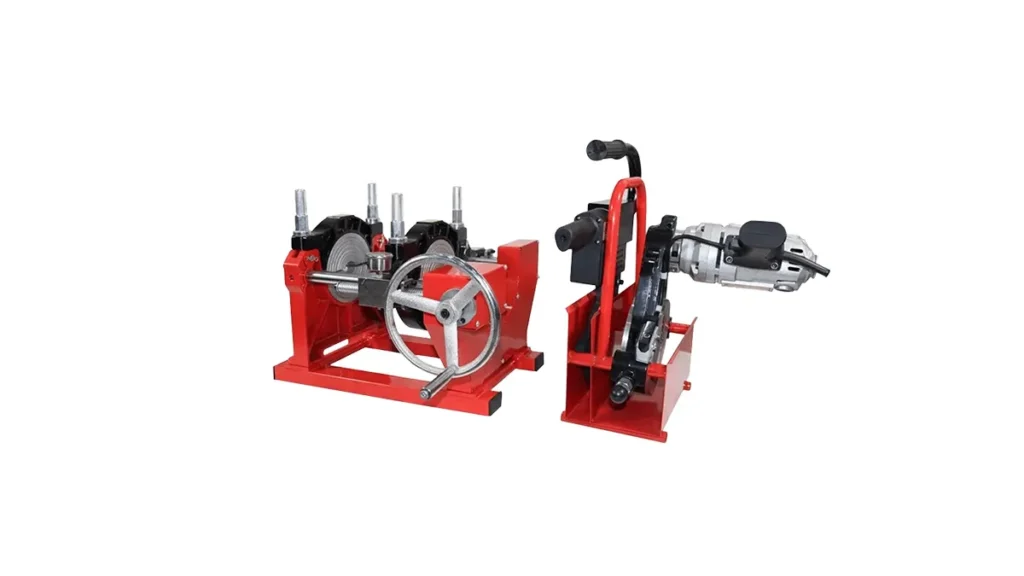
Installing gas pipelines demands absolute precision, dependable equipment, and welding methods that deliver long-term safety. In this field, the quality of every joint directly affects system integrity, pressure resistance, and operational stability. That is why choosing the right butt fusion machine and applying the correct HDPE welding technique are essential steps for every contractor, engineer, and pipeline installer.
HDPE piping is widely used in gas distribution networks because it is lightweight, corrosion-resistant, flexible, and highly durable. However, these advantages can only be fully realized when the welding process is executed correctly. The most successful gas pipeline projects are built on disciplined preparation, accurate temperature control, proper alignment, and strict process consistency.
Why HDPE Welding Matters in Gas Pipeline Installation
HDPE welding is not simply a joining method; it is the foundation of a gas pipeline’s mechanical strength. A properly fused joint can become as strong as, or even stronger than, the pipe itself. This is especially important in gas systems, where even minor defects can lead to leaks, pressure loss, or costly maintenance issues.
Key point: gas pipeline welding requires repeatable quality, not just acceptable appearance. A weld that looks good on the outside must also achieve full molecular fusion inside the joint.
For this reason, professional installers often rely on advanced equipment from experienced manufacturers such as JQ-Fusion, whose machines are designed for stable temperature control, accurate pressure output, and efficient fusion performance across different project conditions.
The Most Common HDPE Welding Techniques
Several welding methods are used for HDPE pipe installation, but not all are equally suited to gas pipeline work. The best technique depends on pipe diameter, working environment, project standards, and the required level of structural reliability.
1. Butt Fusion Welding
Butt fusion is the most widely used technique for gas pipeline installation. It works by heating the ends of two HDPE pipes until they reach a molten state, then pressing them together under controlled pressure. Once cooled, the joint forms a single continuous pipe segment.
Why it stands out: butt fusion is highly reliable for long-distance gas pipelines because it produces strong, leak-resistant joints without additional fittings.
This method is especially effective for large-diameter pipes and open-site installations. The process demands precise control over facing, alignment, heating, changeover, and cooling time. If any step is rushed or inconsistent, the weld quality can be compromised. That is why contractors prefer stable hydraulic or CNC systems for critical gas projects.
2. Electrofusion Welding
Electrofusion welding uses fittings with embedded electrical resistance wires. When current is applied, the wire heats the surrounding HDPE and creates fusion between the pipe and fitting. This method is useful where access is limited or where repairs and tie-ins are required.
Best use cases: confined areas, branch connections, emergency repairs, and transition zones that are difficult for large fusion equipment.
Although electrofusion is valuable in gas installation, it typically plays a supporting role rather than replacing butt fusion for mainline construction. It requires careful surface preparation, strict fitting compatibility, and correct electrical input.
3. Socket Fusion Welding
Socket fusion is used primarily for smaller pipe sizes. The pipe and fitting ends are heated and then joined using a socket-type tool. It is simple, cost-effective, and widely used in low-diameter HDPE systems.
While socket fusion can be appropriate for auxiliary lines or smaller gas distribution components, it is generally not the preferred method for larger, high-pressure gas pipeline sections. Butt fusion remains the stronger and more scalable choice for major infrastructure.
Best HDPE Welding Technique for Gas Pipeline Installation
For most gas pipeline projects, butt fusion welding is the best overall technique. It offers excellent joint strength, uniform quality, and a proven track record in municipal, industrial, and long-distance pipeline systems. When performed with the right equipment, butt fusion delivers dependable results even under demanding project conditions.
Important: the best technique is not only about the fusion method itself, but also about the machine quality, operator skill, pipe preparation, and welding procedure control.
Modern projects benefit greatly from automated and hydraulic systems. A professional-grade butt fusion machine improves repeatability by controlling temperature, pressure, and timing with far greater accuracy than manual methods alone. This reduces the risk of human error and helps achieve consistent joint integrity across long pipeline routes.
Critical Factors That Affect Weld Quality
Even the best welding technique can fail if the working process is not controlled. Gas pipeline welding requires attention to several critical variables that directly influence joint performance.
Pipe Surface Preparation
Before welding, the pipe ends must be clean, dry, and properly faced. Dirt, oxidation, moisture, and oil contamination can weaken the fusion bond. Clean preparation is one of the simplest yet most important steps in achieving a reliable weld.
Temperature Control
If the heating plate is too cool, the pipe may not melt enough to create full fusion. If it is too hot, the material can degrade and weaken the joint. Stable temperature accuracy is therefore essential, especially in gas applications where safety margins must remain high.
Alignment and Clamping
Proper alignment ensures that the pipe ends meet evenly. Misalignment can create stress concentration and reduce long-term durability. Reliable clamping systems help maintain a straight axis during the entire fusion cycle.
Pressure and Cooling Time
Fusion pressure must be applied consistently according to pipe specifications. After joining, the weld must cool under stable conditions. Rushing the cooling process can cause distortion or internal weakness, which is unacceptable in gas pipeline service.
Why Machine Quality Is So Important
The welding machine is the heart of the installation process. In gas pipeline projects, equipment must support precise, repeatable, and durable performance. This is where manufacturers with strong engineering capability and quality control systems bring real value to the project.
JQ-Fusion specializes in HDPE pipe welding machines with more than 20 years of experience, serving water supply, gas distribution, mining, and industrial pipeline projects. Their product range includes manual, hydraulic, and CNC automatic solutions for different pipe diameters and site requirements.
Advanced manufacturing, strict testing, and OEM/ODM flexibility are important advantages for contractors and distributors. A machine that supports stable welding performance, fast delivery, and professional technical support can reduce project delays and improve field efficiency.
How to Choose the Right Welding Equipment for Gas Projects
Choosing welding equipment should never be based on price alone. The right machine must match the pipe diameter, project scale, and required welding standard. It should also be easy to maintain and capable of performing consistently in field conditions.
- For small projects: manual or socket fusion tools may be sufficient for auxiliary lines.
- For medium to large gas networks: hydraulic butt fusion systems are generally the most practical choice.
- For high-volume or precision-driven work: CNC automatic butt fusion machines provide the highest control and repeatability.
If your project includes varying pipe sizes, custom voltage requirements, or specific branding needs, an experienced supplier can provide tailored solutions. This is especially useful for contractors who manage multiple project types across different regions.
Advantages of Using Butt Fusion in Gas Pipeline Installation
Butt fusion remains the leading choice because it offers a strong balance of reliability, efficiency, and long-term value. Its advantages are especially clear in gas distribution systems where safety and performance cannot be compromised.
Main advantages: fewer fittings, stronger joints, reduced leak risk, lower maintenance needs, and excellent compatibility with long-distance pipeline construction.
When properly executed, butt fusion can significantly improve installation efficiency and lifecycle performance. It also supports modern gas infrastructure goals by reducing the number of potential failure points in the system.
Frequently Asked Questions
Q1: What is the best HDPE welding technique for gas pipeline installation?
Butt fusion is usually the best choice because it creates strong, leak-resistant joints and is suitable for most mainline gas applications.
Q2: Can electrofusion replace butt fusion in gas projects?
Not usually. Electrofusion is excellent for repairs, tie-ins, and confined spaces, but butt fusion is preferred for long pipeline sections and main distribution lines.
Q3: Why does machine quality matter so much in HDPE welding?
Because accurate temperature, pressure, and alignment control directly determine weld consistency and long-term safety.
Q4: What should be checked before starting a gas pipeline weld?
Pipe cleanliness, machine calibration, clamp alignment, heating plate condition, and environmental conditions should all be verified first.
Q5: Where can contractors find reliable butt fusion equipment?
Professional manufacturers such as JQ-Fusion provide hydraulic, manual, and CNC solutions designed for global pipeline projects.
In gas pipeline installation, success depends on combining the right welding method with disciplined execution and dependable equipment. Butt fusion remains the most effective HDPE welding technique for most projects because it delivers strength, consistency, and long-term reliability. With proper preparation, quality control, and professional machinery, contractors can build gas systems that perform safely and efficiently for years.



