
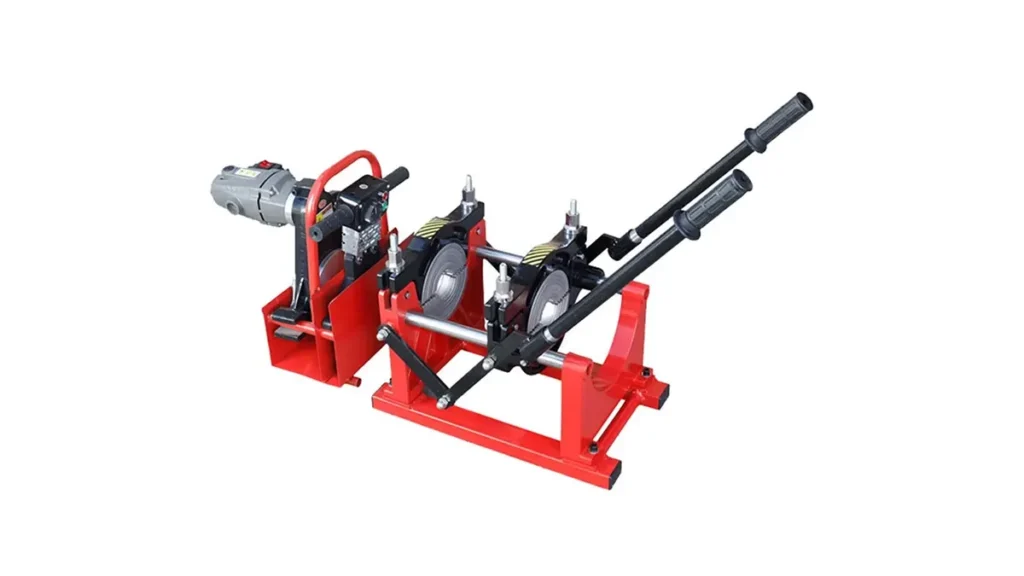
In modern pipeline construction, welding quality is not a minor detail; it is the foundation of long-term safety, efficiency, and system reliability. Whether a project involves water supply, gas distribution, mining infrastructure, or industrial piping, the equipment used to join pipes must deliver consistent alignment, accurate heating, and strong fusion results. This is why many contractors and distributors rely on a butt fusion machine to create durable joints for HDPE and other thermoplastic pipes. A well-designed pipe welding machine brings together mechanical structure, heating precision, hydraulic pressure, and control systems to ensure each weld meets project requirements.
At its core, a pipe welding machine is built to prepare two pipe ends, heat them to the proper fusion temperature, and press them together under controlled force. The result is a single, seamless connection that can perform like the original pipe material when done correctly. Understanding the structure of the machine and how it works helps buyers choose the right model, operators use it more effectively, and project managers reduce installation risks. This article explains the main components, operating principles, and practical advantages of pipe welding equipment in a clear and professional way.
1. What a Pipe Welding Machine Is Designed to Do
A pipe welding machine is engineered to join plastic pipes by heating their ends and fusing them under pressure. Unlike adhesive bonding or mechanical coupling, fusion welding creates a permanent joint with excellent sealing performance. For this reason, it is widely used in applications where leakage prevention and joint strength are critical. In pipeline projects, the machine must handle different pipe diameters, wall thicknesses, and installation environments while maintaining stable welding parameters.
Most modern machines are used for HDPE pipe systems, but the same core principle can be adapted to other thermoplastic materials. The machine structure usually includes a frame, clamps, hydraulic or manual drive system, heating plate, trimmer, and control unit. Depending on the model, it may be manual, hydraulic, or CNC automatic. Each type has its own advantages, but all are designed to produce accurate alignment and uniform fusion results.
Key point: A good pipe welding machine is not only about heat. It is a coordinated system that controls pipe alignment, temperature, pressure, and cooling time to form a reliable welded joint.
2. Main Structure of a Pipe Welding Machine
The structure of a pipe welding machine may look simple from the outside, but every component plays a specific role in the welding process. Below are the most important parts found in a typical butt fusion setup.
Clamping System
The clamping system holds the two pipe ends securely in place. It ensures that the pipes remain aligned during facing, heating, and fusion. Strong clamps are essential because even a slight misalignment can weaken the final weld. In many machines, the clamps can be adjusted to support different pipe diameters, which increases the versatility of the equipment.
Icon tip: Accurate clamping is one of the most important factors in joint quality. If the pipes are not held straight, the weld may fail under pressure or stress.
Frame and Guide Rails
The frame provides the machine with overall stability and structural strength. Guide rails help the clamps move smoothly and keep both pipe ends on the same axis. In large machines, a heavy-duty frame is especially important because it resists vibration and supports larger pipe sizes. A rigid frame contributes directly to welding precision and operator safety.
Hydraulic or Manual Drive Unit
This part controls the movement and pressure applied during welding. In manual machines, the operator applies force by hand, which is suitable for smaller pipes and simpler projects. Hydraulic machines use pressure oil and cylinders to deliver more stable and controlled force, making them a preferred choice for medium and large pipe diameters. Automatic systems take this a step further by regulating pressure through programmed parameters.
Heating Plate
The heating plate is the heart of the fusion process. It contains a temperature-controlled surface that heats both pipe ends until they reach the required fusion state. The surface must distribute heat evenly, otherwise one side of the pipe may soften too much while the other remains underheated. Reliable temperature control is therefore essential for producing consistent weld quality.
Trimmer or Facing Tool
Before welding begins, pipe ends need to be cut and smoothed so they fit together perfectly. The trimmer removes uneven surfaces and prepares a clean, flat face for fusion. This step helps eliminate gaps, improve contact, and support even heating. In professional welding, proper facing is not optional; it is part of the quality control process.
Control System
In advanced models, the control system monitors temperature, pressure, heating time, and cooling time. Some machines use digital displays or CNC automation to reduce human error and improve repeatability. This is especially valuable in large-scale projects where many joints must meet the same standard. A strong control system makes the machine more efficient and easier to use on site.
3. How the Pipe Welding Process Works
The working principle of a pipe welding machine follows a clear sequence. Each stage is important, and skipping one step can compromise the final result. The process generally includes preparation, clamping, facing, heating, fusion, and cooling.
Step 1: Pipe Preparation
Before welding, the operator checks the pipe material, diameter, wall thickness, and surface condition. Any dirt, oil, moisture, or damage must be removed. Clean pipe ends help the machine create a stronger bond and reduce the chance of contamination.
Step 2: Clamping and Alignment
The pipes are placed into the machine and fixed by the clamps. The operator checks the alignment carefully to ensure the two ends are centered. Good alignment helps the welded joint withstand internal pressure and long-term service conditions.
Step 3: Facing the Pipe Ends
The trimmer is inserted between the pipes to remove a thin layer from both ends. This creates parallel and smooth surfaces. Facing is one of the most practical steps because it removes irregularities that would otherwise prevent proper fusion.
Step 4: Heating
The heating plate is placed between the two pipe ends. The softening time depends on the pipe material, size, and ambient conditions. During this phase, the ends absorb enough heat to reach a melt-ready state without losing shape or structural integrity.
Step 5: Fusion Under Pressure
Once the heating cycle is complete, the heating plate is removed and the pipe ends are brought together quickly. Controlled pressure is applied so the softened material joins together. A small bead forms around the joint, showing that the fusion has taken place correctly.
Step 6: Cooling
The weld must remain undisturbed during cooling. This allows the fused material to solidify and gain strength. Cooling time is just as important as heating time, because moving the pipes too soon can cause distortion or weak bonding.
Important: A strong fusion joint depends on the full process, not just the heating step. Preparation, pressure control, and cooling all affect final weld performance.
4. Why Machine Structure Matters for Welding Quality
Many welding problems come from structural weaknesses in the machine rather than from the operator alone. If the frame is unstable, the clamps are loose, or the hydraulic system fluctuates, the welding result can vary from joint to joint. That is why professional manufacturers focus heavily on mechanical stability and component precision.
Stable structure improves repeatability. When every pipe is held at the same angle and pressure, welding parameters remain consistent. This is especially important in industrial or municipal projects where each joint must meet strict standards. A strong machine structure also reduces maintenance issues and supports longer service life.
For contractors, this means fewer failures on site and less rework. For distributors, it means a more dependable product with better customer satisfaction. For end users, it means safer systems and lower operating costs over time.
5. Manual, Hydraulic, and CNC Automatic Models
Pipe welding machines are available in different levels of automation. Each type serves a specific market need.
Manual models are simpler and more affordable. They are suitable for small-scale projects, basic pipe installations, and users who need a compact solution. Their structure is usually lighter, and the operator controls the pressure directly.
Hydraulic models provide stronger and more stable pressure control. They are widely used in medium and large projects because they improve consistency and reduce operator fatigue. These machines are a common choice for professional pipeline contractors.
CNC automatic models are designed for high precision and productivity. They use programmed control to regulate temperature, pressure, and timing. This reduces the chance of operator error and makes them suitable for demanding projects with strict quality requirements.
Note: The right model depends on pipe size, project scale, welding frequency, and the level of accuracy required on site.
6. Typical Applications in Global Pipeline Projects
Pipe welding machines are used across many industries because plastic pipelines offer corrosion resistance, low maintenance, and long service life. In water supply systems, they help build secure networks that can operate reliably for years. In gas distribution, joint integrity is especially critical because leakage prevention is a safety priority.
They are also used in mining projects, where pipelines often face challenging terrain and demanding operating conditions. Industrial installations benefit from the machine’s ability to create clean and durable joints for process pipelines. In each of these cases, the machine structure and operating principle must support dependable performance in real-world environments.
Manufacturers with strong engineering capabilities and strict quality control can deliver machines that perform consistently in global markets. That is why buyers often look for suppliers with proven experience, customization support, and stable stock supply. A professional brand such as JQ-Fusion focuses on these needs by offering reliable solutions for varied pipe welding applications.
7. How to Choose the Right Pipe Welding Machine
When selecting a machine, buyers should consider several key factors. Pipe diameter range is one of the first points because the machine must match the intended application. Material type is another consideration, especially if the project uses HDPE or similar thermoplastic pipes. The working environment, power supply, and required automation level also affect the final decision.
It is also important to evaluate product quality and support service. Machines with precise temperature control, stable hydraulic systems, and durable frames usually deliver better results over time. In addition, technical guidance, spare parts availability, and after-sales support can make a big difference during project execution.
For companies that need branding or project-specific modifications, OEM and ODM customization can be a major advantage. Adjustable machine size, voltage, color, and control functions help suppliers meet market demands more effectively. This flexibility is especially useful for distributors building their own product line.
8. What Makes Professional Manufacturers Different
Not all machines are built to the same standard. Professional manufacturers invest in modern production lines, precision machining, and testing procedures to ensure stable performance. Every unit should be checked for temperature accuracy, hydraulic stability, and clamp alignment before shipment. These details matter because even small deviations can affect weld quality in the field.
Another important factor is inventory and delivery speed. Large stock capacity helps reduce delays and supports urgent project needs. When a supplier can deliver quickly and provide technical assistance, the buyer gains a significant operational advantage. For global projects, logistics support is just as important as the machine itself.
Quality certification also adds confidence. Products manufactured under international standards and inspected by recognized organizations such as SGS are generally more trusted in global markets. This helps contractors and distributors reduce risk and build long-term customer relationships.
9. Practical Maintenance Tips for Better Machine Performance
Regular maintenance keeps the machine in good condition and extends service life. Operators should clean the heating plate after use, inspect clamp surfaces for wear, and check hydraulic oil levels regularly. Electrical components should also be monitored to ensure safe operation and stable control.
Before each welding job, the machine should be tested for alignment, temperature consistency, and pressure response. If any unusual vibration, leakage, or heating irregularity appears, it should be addressed immediately. Preventive maintenance is always more cost-effective than repairing a failed system in the middle of a project.
Training is equally important. Even the best machine can produce poor results if the operator does not understand the welding sequence or parameter settings. A well-trained team can improve output quality, reduce material waste, and ensure safer jobsite performance.
10. Frequently Asked Questions
Q1: What is the main purpose of a pipe welding machine?
It is used to join plastic pipes by heating and fusing the pipe ends together under controlled pressure, creating a strong and leak-resistant connection.
Q2: What is the difference between manual and hydraulic models?
Manual models rely on operator-applied force, while hydraulic models use pressure systems for more stable and precise control, especially on larger pipes.
Q3: Why is pipe alignment so important?
Proper alignment ensures even fusion and helps the welded joint withstand pressure, vibration, and long-term service conditions without failure.
Q4: Can the same machine handle different pipe sizes?
Yes, many models support adjustable clamping systems and multiple diameter ranges, but the machine must be selected according to the project’s pipe specifications.
Q5: How do I know if a welded joint is good?
A correct joint usually shows uniform fusion beads, proper alignment, and no visible defects such as gaps, overheating, or uneven pressure marks.
In conclusion, the structure of a pipe welding machine directly determines the quality, consistency, and efficiency of the welding process. From the clamping system and frame to the heating plate, trimmer, and control unit, every component plays a role in producing strong and reliable joints. When paired with proper operation and regular maintenance, the machine becomes a dependable tool for water, gas, mining, and industrial pipeline projects. Choosing a well-engineered machine from an experienced manufacturer gives users better performance, greater durability, and stronger long-term value.



