
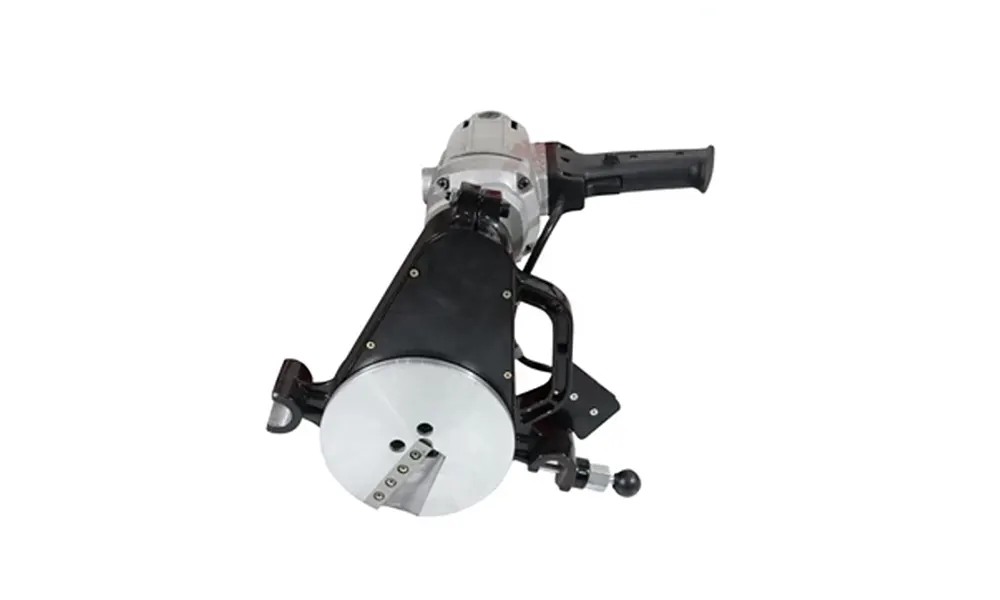
For engineering firms working on water supply systems, gas distribution networks, mining infrastructure, and industrial pipeline installations, selecting the right HDPE welding solution is not just a procurement decision—it is a project-critical engineering choice. The quality of each welded joint directly affects leak resistance, service life, maintenance costs, and long-term system safety. In this context, the best welding solution is one that combines stable performance, accurate temperature control, strong clamping precision, and adaptability to different pipe diameters and project conditions.
HDPE pipeline construction has become increasingly important because modern projects demand corrosion resistance, lightweight installation, and reliable field performance. However, these advantages can only be fully realized when the welding method is properly matched to the application. Whether a firm is handling municipal pipelines, remote mining sites, or industrial fluid transport, the welding process must deliver consistent fusion quality under real-world conditions. That is why many contractors evaluate not only equipment specifications, but also the manufacturer’s engineering capability, quality control, and after-sales support.
Key insight: the best HDPE welding solution is not always the most expensive one. It is the one that can produce repeatable, standards-aligned joints while fitting your project scale, workforce skill level, and delivery timeline.
Why HDPE Welding Quality Matters for Engineering Firms
Engineering firms carry responsibility for systems that must operate safely for years, sometimes decades. A poorly executed weld can lead to joint failure, pressure loss, service interruptions, and costly remediation. In large-scale pipeline projects, even a small percentage of defective welds can create significant financial and operational risk.
The welding process is especially important because HDPE piping relies on molecular fusion. Unlike mechanical joining, the strength of a proper butt fusion joint can approach the strength of the pipe itself. This makes the process ideal for demanding environments, but only if temperature, pressure, and alignment are controlled accurately. For this reason, equipment quality is central to every successful installation.
Engineering teams should therefore look for machines that support:
• stable heating performance
• precise hydraulic pressure control
• accurate clamp alignment
• durable machine construction
• clear operational consistency across different operators
The Main HDPE Welding Solutions Engineering Firms Should Consider
Different project types require different welding technologies. In practice, the most common and effective solutions for HDPE pipelines include butt fusion, electrofusion, and multi-angle fitting welding. Each has its strengths depending on pipe size, job-site layout, and installation demands.
1. Butt Fusion Welding
Butt fusion remains the preferred solution for many engineering firms because it is reliable, efficient, and well suited for straight pipe runs. This method heats the pipe ends and presses them together under controlled force, creating a strong, homogeneous joint. It is widely used in water supply, gas distribution, mining, and industrial systems.
A high-quality butt fusion machine helps teams achieve repeatable results with less operator variation. For large projects, this can shorten installation time and improve weld consistency across multiple crews.
Best for: long pipeline sections, large-diameter HDPE pipes, and projects where joint strength and speed are priorities.
2. Electrofusion Welding
Electrofusion welding is often chosen for constrained spaces, repair work, and complex pipeline layouts. It uses fittings with embedded heating coils, allowing precise fusion in locations where traditional butt fusion equipment may be difficult to deploy.
This method is especially useful for engineering firms that need flexibility in urban areas or challenging installation environments. Although electrofusion fittings can be more expensive, the method offers excellent control in tight spaces and branch connections.
Typical advantages include: compact setup, reduced need for large machine clearance, and strong performance in repairs or tie-ins.
3. Multi-Angle Pipe Fitting Welding
For projects involving angled joints, complex assemblies, or custom fittings, multi-angle pipe fitting welding offers important versatility. This option is useful in fabricated pipeline sections and specialized industrial installations where standard straight-line fusion is not enough.
Engineering firms often appreciate this solution because it supports project-specific design requirements and can reduce the need for field improvisation. In industrial settings, that means better quality control and fewer installation delays.
How to Evaluate the Best Welding Equipment for Your Firm
Choosing the best HDPE welding equipment requires more than comparing catalog specifications. Engineering firms should review the entire operational workflow, from site preparation to final inspection. A machine that looks advanced on paper may still create challenges if it is difficult to calibrate, unstable under load, or poorly supported by the supplier.
Here are the most important evaluation points:
✔ Temperature accuracy matters because inconsistent heating weakens the fusion interface.
✔ Hydraulic pressure stability ensures proper joining force during the fusion cycle.
✔ Clamp alignment affects pipe centering and weld symmetry.
✔ Machine durability reduces downtime in harsh environments.
✔ Training and support improve field productivity and reduce operator errors.
When these elements are balanced correctly, the welding process becomes more predictable and easier to scale across multiple sites and teams.
Why JQ-Fusion Is Relevant to Engineering Firms
With over 20 years of industry experience, JQ-Fusion focuses on HDPE pipe welding machines designed for reliable field performance. The company manufactures manual, hydraulic, and CNC automatic butt fusion welding machines, supporting a wide range of pipe diameters from small to large sizes. This broad product range is valuable for firms handling mixed project requirements or operating across different sectors.
JQ-Fusion’s equipment is used in water supply systems, gas distribution networks, mining projects, and industrial pipeline installations worldwide. That matters because engineering firms often prefer suppliers with proven application diversity and stable product quality. In addition, the company emphasizes strict quality control through temperature accuracy checks, hydraulic pressure stability testing, and clamp alignment inspection.
What sets this supplier apart: advanced manufacturing technology, flexible OEM & ODM customization, reliable global support, and a commitment to durable, customizable equipment for different project needs.
For firms building their own brand or managing distributor networks, customization can be particularly important. JQ-Fusion offers options in machine size, voltage, color, design, branding, and project-specific configurations, which helps clients align the equipment with both technical and commercial requirements.
The Role of Manufacturing Quality in Welding Performance
Even the best welding process cannot compensate for weak machine construction. In HDPE fusion equipment, precision manufacturing directly influences repeatability and reliability. Modern production lines, accurate machining equipment, and strict inspection systems help ensure that each machine performs consistently on site.
For engineering firms, this reduces uncertainty. A machine that maintains stable heating and alignment allows crews to focus on installation quality rather than troubleshooting equipment issues. Over the life of a project, this can lower labor waste, rework rates, and schedule risk.
JQ-Fusion also highlights large inventory and fast delivery, which is useful for urgent project timelines. In fast-moving infrastructure work, delays in equipment supply can affect the entire construction sequence. A supplier with available stock and efficient logistics can help keep projects on schedule.
Where Each Welding Solution Fits Best
To choose the right solution, firms should match the method to the project environment and installation goals.
• Butt fusion: best for long, straight HDPE pipelines and large-volume installation work.
• Electrofusion: best for repairs, branch connections, and restricted access areas.
• Multi-angle welding: best for fabricated assemblies and non-standard joint geometries.
In many cases, engineering firms benefit from maintaining more than one welding method in their equipment strategy. That allows them to respond to different site conditions without sacrificing weld quality or efficiency.
How to Improve Project Success with the Right Supplier
The equipment itself is only part of the solution. The supplier must also provide technical support, training, and practical guidance before and after purchase. For engineering firms, this can be the difference between a machine that merely arrives on site and a system that actually improves field productivity.
Key supplier qualities to look for include:
• responsive communication
• project-based customization
• reliable shipping and logistics
• spare parts and service support
• training for operators and supervisors
When support is strong, teams can adopt the machine faster, reduce learning curves, and maintain quality standards under pressure. This is especially important for contractors working in remote areas or across multiple countries.
Another benefit is compliance. JQ-Fusion’s products are manufactured in compliance with international standards and certified by SGS, which provides added confidence for firms operating in regulated environments or global procurement systems.
Practical Buying Advice for Engineering Firms
Before purchasing, firms should define the pipe diameters they handle most often, the job-site conditions they encounter, and the performance level required for each application. A small municipal contractor may prioritize portability and ease of use, while a mining or industrial engineering team may need greater pressure stability and heavy-duty durability.
It is also wise to review how the equipment fits into the company’s operating model. If multiple crews will use the machine, automated or hydraulic systems may improve consistency. If projects vary widely, a flexible product range may be more valuable than a single specialized unit.
Ultimately, the best HDPE welding solution is one that reduces risk, improves productivity, and supports the firm’s long-term project strategy. Equipment should not only perform well in the factory or during demonstration; it must remain dependable in real project conditions.
Conclusion
For engineering firms, the best HDPE welding solutions are those that combine precision, durability, flexibility, and dependable support. Butt fusion remains the foundation for most large-scale pipeline work, while electrofusion and multi-angle welding expand capability for specialized conditions. By selecting equipment with accurate control systems, strong manufacturing quality, and responsive technical support, firms can improve installation efficiency and long-term pipeline reliability.
JQ-Fusion’s focus on butt fusion welding machines, customization, fast delivery, and global support makes it a relevant option for contractors and distributors seeking dependable HDPE welding solutions. In the end, success depends on matching the machine to the project—and choosing a supplier that understands both engineering requirements and field realities.
FAQ
Q1: What is the most common HDPE welding method for engineering projects?
The most common method is butt fusion because it offers strong, consistent joints and works well for long pipeline runs and large-diameter pipes.
Q2: When should a firm choose electrofusion instead of butt fusion?
Electrofusion is better for tight spaces, repairs, tie-ins, and branch connections where a butt fusion machine may be difficult to use.
Q3: What machine features matter most in HDPE welding equipment?
Temperature accuracy, hydraulic pressure stability, clamp alignment, and durability are among the most important features.
Q4: Why is supplier support important when buying welding equipment?
Good support helps with training, setup, troubleshooting, logistics, and long-term reliability, which reduces project delays and errors.
Q5: Can one welding solution cover all HDPE pipeline projects?
No single method fits every job. Engineering firms usually benefit from a combination of butt fusion, electrofusion, and specialized fitting welding based on project needs.



