
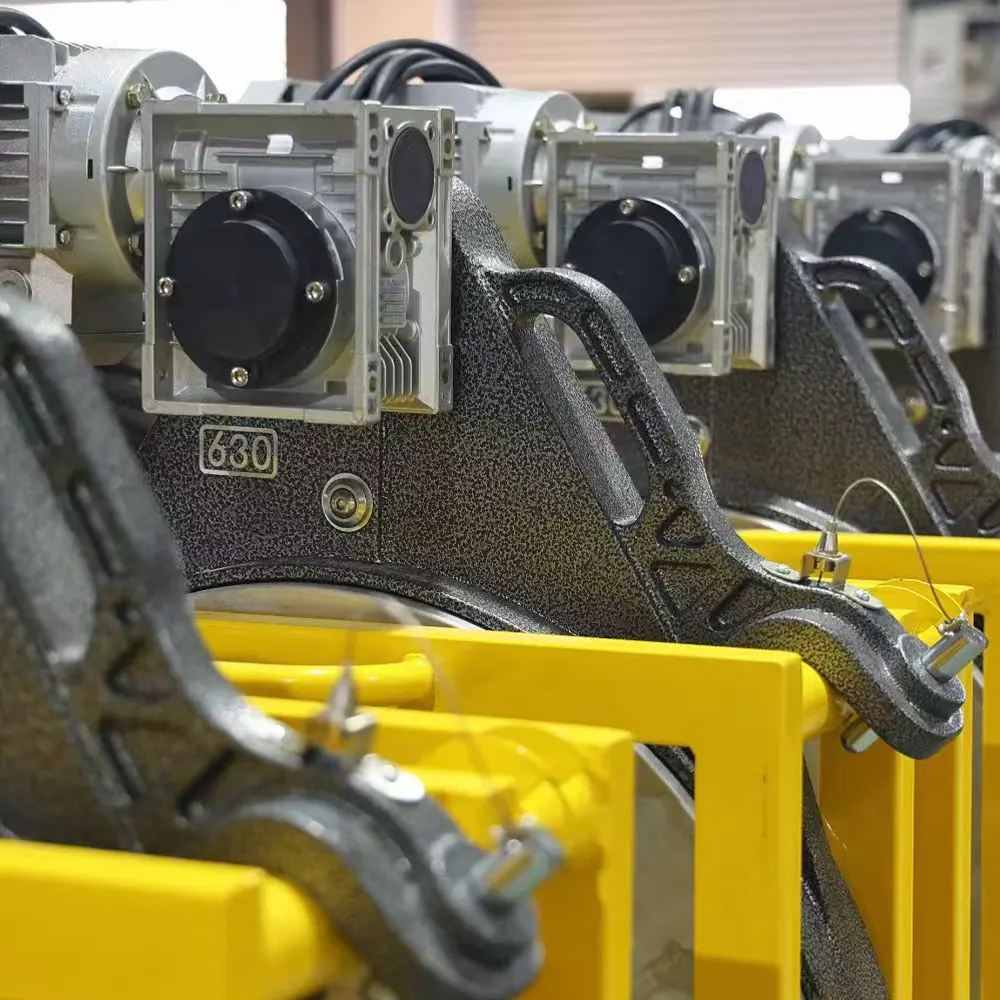
Pipe welding productivity is one of the most important factors in any pipeline project, whether the work involves water supply, gas distribution, mining, or industrial infrastructure. When welding crews can complete joints faster without losing accuracy, the whole project benefits from better efficiency, lower labor costs, and smoother scheduling. The challenge is that productivity is not only about working faster. It is about creating a process that keeps weld quality consistent, minimizes rework, and helps the team use time, equipment, and materials more intelligently.
In practical terms, improving productivity means reducing avoidable delays at every stage of the job. That includes preparing pipes correctly, keeping machines in stable condition, training operators well, and choosing the right equipment for the application. For contractors and distributors who rely on dependable welding performance, a well-planned workflow can make a major difference. A modern butt fusion machine can also support faster and more repeatable pipe joining when matched with the right welding process.
⚡ Productivity in pipe welding is built on three pillars: good preparation, reliable equipment, and disciplined operation. If any one of these is weak, output drops and welding defects become more likely.
1. Start with Better Jobsite Planning
One of the simplest ways to improve pipe welding productivity is to reduce confusion before the first weld begins. Poor planning often leads to missing materials, unnecessary machine movement, repeated pipe handling, and waiting time for approvals or inspections. A well-organized jobsite allows welders to focus on welding rather than solving logistical problems.
Before work begins, the project team should confirm pipe sizes, wall thickness, material type, joint count, and required output per day. The more complete the preparation, the easier it is to assign tasks, set realistic targets, and avoid interruptions. When a crew knows exactly what needs to be welded and in what sequence, they can keep the workflow steady and efficient.
✅ Practical tip: Create a welding checklist for each shift, including pipe cleaning tools, alignment devices, power supply status, clamp condition, and inspection instruments. This avoids repeated delays during operation.
2. Choose the Right Welding Equipment for the Project
Not every pipe welding machine is suitable for every project. Productivity rises when the equipment matches the pipe diameter, material, jobsite conditions, and production target. For example, small utility projects may benefit from compact manual systems, while larger infrastructure jobs often require hydraulic or CNC automatic models for better consistency and speed.
Choosing the right machine helps avoid underpowered equipment, excessive manual effort, and unnecessary waiting time. A machine with stable temperature control, accurate hydraulic pressure, and precise clamp alignment can reduce defects and speed up each weld cycle. That is why equipment selection should be based on project requirements rather than only upfront price.
For companies that need dependable performance and scalable solutions, working with an experienced manufacturer can be a smart move. JQ-Fusion, with more than 20 years of industry experience, offers manual, hydraulic, and CNC automatic butt fusion welding machines designed for a wide range of applications. This flexibility helps contractors select equipment that fits the actual workload instead of forcing one machine type to do everything.
🔧 Key point: The best machine is not always the biggest machine. The best machine is the one that keeps output steady, reduces rework, and supports the daily welding target with minimal downtime.
3. Improve Pipe Preparation Before Welding
Pipe preparation directly affects welding speed and quality. If the pipe ends are not cut cleanly, aligned properly, or cleaned well, the welding process slows down and the risk of defects rises. Welders may need to repeat steps, adjust alignment several times, or stop production to correct issues that could have been prevented earlier.
To improve productivity, crews should make pipe preparation a standard part of the workflow. That means checking the cut surface, removing dust and moisture, confirming that the pipe ends are square, and making sure the surfaces are ready for fusion. When preparation is done correctly, each welding cycle becomes smoother and more predictable.
In many projects, small time savings in preparation create large benefits over the full job. For example, if each joint takes just a few minutes less to prepare, the total savings can become significant across dozens or hundreds of welds. This is especially important for high-volume pipeline work where schedule pressure is high.
Common preparation issues that reduce productivity
Misaligned pipe ends, dirty surfaces, inconsistent cutting angles, and incomplete face trimming are among the most common causes of slow welding progress. These problems create extra work for the operator and can also lead to failed joints. Preventing them is much easier than fixing them later.
- Use proper cutting tools to keep pipe ends accurate and uniform.
- Clean the surface thoroughly before fusion begins.
- Check alignment twice to prevent repeated adjustment.
4. Keep Equipment in Stable Working Condition
Even a highly skilled welding team will lose productivity if the machine is not functioning reliably. Equipment problems create delays, interrupt the welding rhythm, and often force operators to stop and diagnose the issue. Regular maintenance helps prevent these problems and keeps the workflow continuous.
Routine checks should include temperature accuracy, hydraulic pressure stability, clamp movement, electrical connections, and any wear on critical parts. A machine that is not calibrated properly can produce inconsistent welds, which in turn increases rework and inspection failures. Over time, these losses have a greater cost than regular maintenance.
🛠 Efficiency rule: A short daily inspection can save hours of downtime later. Stable equipment is one of the fastest ways to protect output and avoid bottlenecks.
5. Train Operators for Repeatable Work
Operator skill has a major influence on welding productivity. Well-trained workers can complete each step more quickly, make fewer mistakes, and respond to equipment behavior with confidence. In contrast, untrained operators may spend extra time verifying steps, adjusting settings, or correcting errors after the weld is finished.
Training should focus on both technical knowledge and practical habits. Operators need to understand machine settings, joint alignment, heating time, pressure control, cooling time, and safety procedures. They also need to learn how to work efficiently without rushing, because speed without control can create expensive defects.
Many manufacturers now support customers with technical guidance and training materials. JQ-Fusion, for example, provides professional technical support that helps users select the right model, install the machine correctly, and operate it with greater confidence. This kind of support can shorten the learning curve and improve day-to-day productivity.
Skills that improve welding speed and quality
Operators who can recognize pressure changes, check alignment quickly, and complete preparation steps accurately are usually more productive than those who rely on trial and error. The goal is to create consistent habits that can be repeated across every shift.
⭐ Best practice: Standardize operator training so every crew follows the same process. Consistency reduces mistakes and helps supervisors measure performance more accurately.
6. Reduce Rework by Strengthening Quality Control
Rework is one of the biggest productivity killers in pipe welding. Every defective joint costs time, labor, and materials, and it also interrupts the project schedule. Strong quality control helps detect issues early and keeps the welding process moving forward instead of backward.
Quality control should not be treated as a final checkpoint only. It should be built into the workflow from the beginning. That includes verifying machine settings, confirming pipe preparation, checking pressure and temperature records, and inspecting completed welds according to project standards. When the team catches problems early, the chance of costly rework drops significantly.
JQ-Fusion emphasizes strict quality control in its manufacturing process, with testing for temperature accuracy, hydraulic pressure stability, and clamp alignment. This kind of reliability matters because a stable machine makes quality control easier for the user as well. When equipment performs consistently, welders spend less time correcting problems and more time producing acceptable joints.
7. Use Customization to Match Real Project Needs
Productivity improves when the machine is tailored to the job rather than forcing the job to adapt to the machine. In pipeline projects, different applications may require different voltage options, machine sizes, clamp configurations, or branding requirements. Customization can reduce operating friction and make the equipment more practical in the field.
For companies managing multiple project types, OEM and ODM customization can be especially valuable. If a machine is designed with the project environment in mind, it becomes easier to install, transport, use, and maintain. That means fewer delays and a better fit for the actual working conditions.
JQ-Fusion provides flexible OEM and ODM customization, including machine size, voltage, color, design, branding, and project-specific configurations. This approach is useful for distributors and contractors who need equipment aligned with their business model and project scope.
📌 Important: Custom solutions are not just about appearance. They can directly improve workflow, reduce wasted motion, and support better production planning.
8. Maintain a Smooth Supply and Delivery Plan
Even the most efficient welding team cannot stay productive if materials and equipment arrive late. Supply interruptions can halt production, create idle labor time, and delay project completion. That is why delivery speed and inventory planning are part of productivity management.
When a manufacturer keeps a large inventory of key models and offers fast global shipping, project teams can respond more quickly to urgent demands. This is especially helpful in time-sensitive infrastructure work where every delay affects downstream operations. JQ-Fusion supports customers with ready stock and efficient logistics, helping reduce downtime and keep projects on track.
Reliable supply planning also helps distributors maintain trust with end customers. A business that can deliver equipment quickly and provide stable technical support is more likely to win repeat orders and build long-term value in the market.
9. Focus on the Full Welding Workflow, Not Only the Weld Itself
True productivity comes from optimizing the entire welding workflow. That includes material handling, machine setup, joint preparation, fusion execution, cooling, inspection, and record keeping. If any stage is poorly managed, the entire process slows down.
It is useful to look at the project as a connected system. For example, if the machine setup takes too long, the crew may lose time before each weld. If inspection is slow, completed joints may wait unnecessarily. If pipe movement is inefficient, workers may waste energy relocating materials instead of welding them. The fastest teams are usually the ones that eliminate these small delays one by one.
✅ Workflow tip: Assign clear roles for preparation, operation, inspection, and material handling so the crew does not interrupt one another during critical welding steps.
10. Build Long-Term Productivity with the Right Partner
Improving pipe welding productivity is not a one-time task. It requires equipment that remains reliable, technical support that solves problems quickly, and a supply partner that understands project demands. For global contractors and distributors, this long-term support can be just as important as the machine itself.
JQ-Fusion stands out as a professional butt fusion welding machine manufacturer with strong manufacturing capability, strict testing, and proven performance in global pipeline projects. Its product range includes hydraulic butt fusion welding machines, automatic butt fusion welding machines, electrofusion welding machines, and multi-angle pipe fitting welding machines. With certification from SGS and more than 20 years of industry experience, the company supports projects that require both performance and stability.
For teams that want to improve productivity over time, the right supplier can help with equipment selection, customization, training, and after-sales support. That combination reduces operational risk and makes daily welding work more efficient.
Frequently Asked Questions
Q1: What is the fastest way to improve pipe welding productivity?
Start by improving preparation and reducing downtime. Clean pipe ends, organized tools, and a stable machine often produce the quickest gains.
Q2: Does automation always increase productivity?
Not always, but automatic or CNC systems can improve consistency and speed on larger or repetitive projects when the machine is selected correctly.
Q3: How does machine maintenance affect welding output?
Regular maintenance helps prevent unexpected failures, unstable pressure, and temperature problems, all of which can slow production and increase rework.
Q4: Why is operator training so important?
Skilled operators complete each step more efficiently, make fewer mistakes, and keep the welding rhythm steady across the entire shift.
Q5: Can a better supplier really improve productivity?
Yes. A supplier that offers reliable equipment, fast delivery, customization, and technical support can help keep projects moving without unnecessary delays.



