
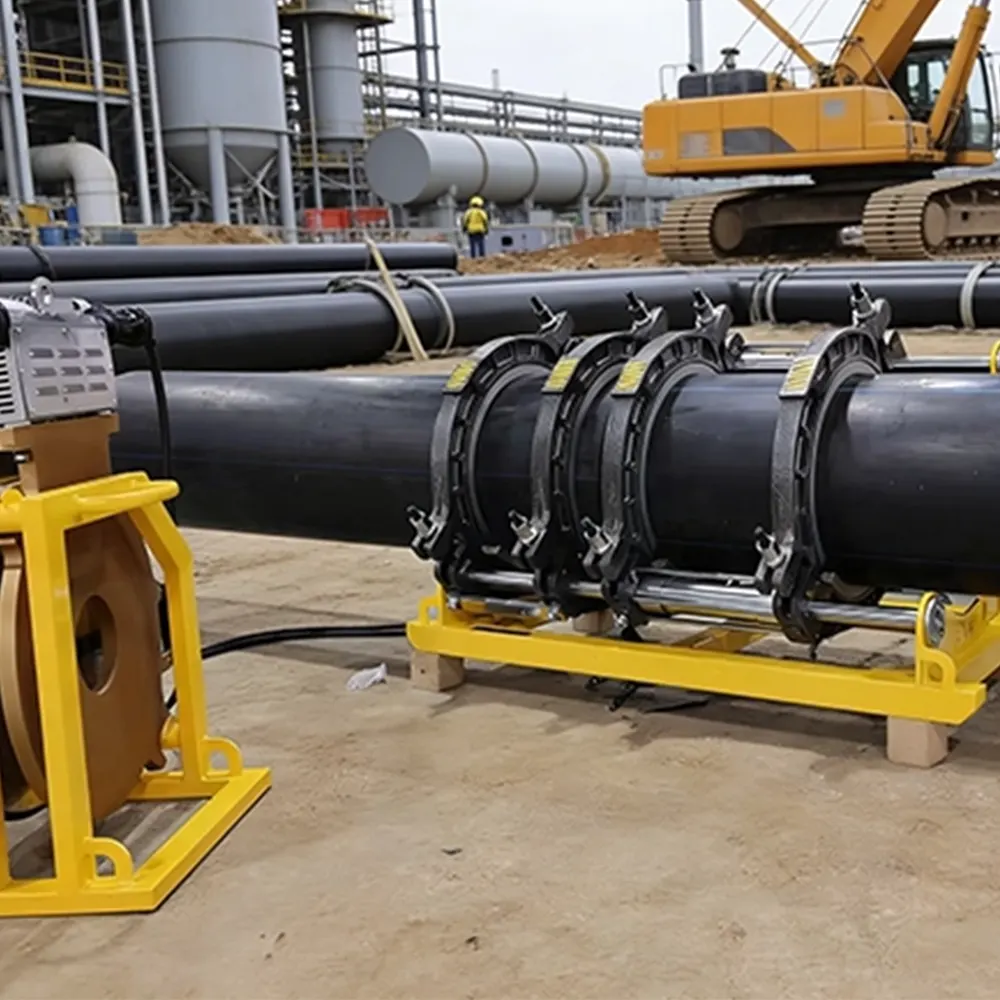
Choosing the right OEM butt fusion machine supplier is not just a purchasing decision; it is a long-term business choice that can shape your product quality, delivery speed, brand reputation, and customer satisfaction. For distributors, contractors, and project buyers working in pipeline construction, the supplier you select will directly affect welding performance, field efficiency, and after-sales reliability. A good supplier should do more than sell equipment. They should provide stable manufacturing, flexible customization, technical guidance, and dependable support that helps your business grow in competitive markets.
In today’s global pipeline industry, butt fusion welding machines are widely used in water supply, gas distribution, mining, and industrial pipeline installation. Because these applications often require high safety standards and consistent weld quality, buyers need a supplier that can deliver machines with accurate temperature control, strong hydraulic stability, and durable clamping systems. If you are searching for a trusted butt fusion machine partner, understanding how to evaluate OEM capability is essential before making a final decision.
One of the first things to check is whether the supplier is truly a manufacturer or only a trading company. A professional OEM factory can usually offer better control over product quality, shorter lead times, and more flexible customization options. This matters because OEM buyers often need special configurations such as voltage adjustment, branding, color matching, packaging design, or machine modifications for different pipe diameters. A real manufacturer can respond faster and offer more practical engineering support than a middleman with limited technical resources.
✅ Key point: A reliable OEM supplier should be able to show clear factory capability, production consistency, and customization flexibility. If a supplier cannot explain how they manufacture, test, and adapt machines, that is often a warning sign.
1. Evaluate Manufacturing Experience and Industry Focus
Experience is one of the strongest indicators of supplier reliability. In the butt fusion welding industry, years of development and field application usually translate into better engineering design, more stable machine performance, and stronger understanding of customer needs. A supplier with more than 20 years of experience, for example, is more likely to understand international project standards, common welding challenges, and the practical needs of distributors and contractors.
It is also important to confirm whether the supplier specializes in HDPE pipe welding machines rather than producing many unrelated products. A focused manufacturer is more likely to invest in product development, testing systems, and technical improvements that directly benefit butt fusion equipment users. This specialization often leads to better performance, longer machine life, and fewer failures during real project operations.
2. Check Product Range and Technical Coverage
A strong OEM supplier should offer a wide product range to cover different project scales and welding requirements. For example, some buyers need manual machines for small installations, while others require hydraulic or CNC automatic models for large and complex pipeline projects. A supplier with a complete range can help you source all the necessary equipment from one place, simplifying purchasing and ensuring better consistency across your project supply chain.
Typical product coverage may include hydraulic butt fusion welding machines, automatic butt fusion welding machines, electrofusion welding machines, and multi-angle pipe fitting welding machines. This kind of portfolio shows that the manufacturer understands different welding scenarios and can support both standard and customized applications. When reviewing products, pay attention to pipe diameter range, machine structure, control accuracy, and ease of operation.
Tip: A supplier with broad technical coverage can help you expand your market faster because you can serve more customer segments without changing vendors repeatedly.
3. Assess OEM and ODM Customization Capability
Customization is one of the most important reasons why businesses choose OEM suppliers. If you want to build your own brand, you need a supplier that can provide tailored solutions rather than standard, one-size-fits-all equipment. A good OEM partner should be able to customize machine appearance, voltage, color, label design, packaging, and even functional details based on project needs or target market preferences.
ODM capability is equally valuable because it shows the supplier can go beyond basic production and offer design-level support. This is especially important for distributors who want to launch their own product lines with a distinct identity. When a factory offers flexible engineering and branding support, your business gains more room to compete in different markets and customer categories.
★ What to ask: Can the supplier customize the machine frame, control system, voltage standard, branding, and color? Can they adjust configurations for special pipeline projects? The answers will tell you how serious they are about OEM cooperation.
4. Review Quality Control and Testing Standards
Product quality is the foundation of supplier trust. Butt fusion machines are used in critical infrastructure projects, so every unit must perform safely and consistently. Before choosing a supplier, ask how they inspect temperature accuracy, hydraulic pressure stability, clamp alignment, and final assembly quality. A serious manufacturer will have a defined testing process for every machine before delivery.
Strict quality control not only improves welding performance but also reduces maintenance risks and customer complaints after installation. In many cases, a low-price supplier may appear attractive at first, but poor machine stability can lead to weld defects, downtime, and repair costs that are far higher than the initial savings. This is why quality assurance should always be treated as a core selection criterion rather than a secondary detail.
Some manufacturers also provide certifications from recognized third-party organizations such as SGS. Such certifications can support your procurement confidence and may also help when working on international projects that require compliance documentation. If you need consistent quality for long-term distribution, ask for quality reports, inspection photos, testing procedures, and certification records.
5. Confirm Production Capacity and Delivery Speed
Even the best machine design is useless if the supplier cannot deliver on time. For pipeline projects, delays can cause schedule problems, labor inefficiency, and financial losses. That is why you should evaluate production capacity, inventory management, and logistics efficiency before signing an OEM agreement. Suppliers with modern production lines and a large inventory of key models are generally better prepared to support urgent orders and bulk purchasing.
Fast delivery is particularly important for distributors serving multiple regions or contractors managing project deadlines. A strong supplier should have clear lead times, stable stock support, and a shipping system that can handle international orders smoothly. When a factory maintains well-organized inventory and efficient supply chain management, it becomes much easier for you to avoid downtime and keep your customers satisfied.
🚚 Remember: A supplier’s delivery ability is not just about speed. It is also about consistency, communication, and the ability to handle both sample orders and large-volume shipments.
6. Look at Technical Support and After-Sales Service
An OEM supplier should remain responsible after the sale is completed. Technical support is extremely important for machinery like butt fusion equipment because users may need help with installation, operation, parameter setting, maintenance, or troubleshooting. A supplier with professional technical guidance can reduce downtime and help your team use the equipment correctly from the beginning.
Good after-sales service should include response speed, spare parts support, training resources, and clear communication channels. This is especially valuable when your customers are located in different countries and time zones. If a supplier can provide timely support in multiple stages—from product selection to installation and long-term use—that is a strong sign of professionalism.
Reliable support also protects your brand. When your end users have a better experience, they are more likely to trust your company and continue purchasing from you. For distributors, this can create repeat business and stronger market positioning over time.
7. Compare Factory Strength and Engineering Capability
Factory capability is not only about the size of the workshop. It also includes engineering strength, production discipline, and control over every stage of manufacturing. A factory with advanced machinery, modern production lines, and experienced technicians can usually maintain better product consistency and adapt to custom requests more efficiently.
When assessing a supplier, ask whether they have in-house engineering support, stable raw material sourcing, and dedicated quality inspection processes. These factors influence whether they can deliver a dependable machine every time. A capable factory will be able to explain its workflow clearly and show how it ensures precision in fabrication, assembly, and final testing.
For buyers seeking long-term cooperation, engineering capability is especially important because it determines how well the supplier can respond to future market changes. A factory that can upgrade designs and refine functionality will help you remain competitive as customer requirements evolve.
8. Understand the Supplier’s Market Reputation
Market reputation is often built through consistent performance, stable product quality, and honest communication. Before choosing a supplier, look for evidence of global project experience, customer feedback, and application areas such as water supply systems, gas distribution networks, mining projects, and industrial pipeline installations. A supplier with proven performance in multiple markets usually has better practical understanding of diverse requirements.
Reputation is also reflected in how the supplier presents information. Do they provide clear specifications? Do they explain machine functions in detail? Do they respond professionally to questions? These small details often reveal how they will behave during a real cooperation process. A supplier who is transparent and responsive is usually easier to work with in the long run.
📌 Useful standard: Choose a supplier that combines manufacturing experience, quality control, customization support, and global service capability. This combination is far more valuable than a low price alone.
9. Compare Price with Real Value
Price matters, but it should never be the only deciding factor. The cheapest supplier may cut corners in material selection, testing, or service, which can create hidden costs later. Instead of focusing only on unit price, compare total value, including machine stability, warranty support, customization options, shipping efficiency, and technical assistance.
A well-priced machine from a reliable OEM supplier often delivers far better return on investment than a low-cost machine from an unreliable source. If a supplier can help reduce warranty issues, improve project success rates, and support your branding, the overall value becomes much stronger. This is why professional buyers usually evaluate cost together with performance and service rather than in isolation.
When you work with a manufacturer that supports customized solutions and maintains stable stock, you also reduce operational risk. That can be a major advantage in fast-moving markets where customer demands and project timelines can change quickly.
10. Choose a Supplier That Supports Long-Term Cooperation
The best OEM supplier is not only a vendor but also a long-term partner. You should look for a company that understands business growth, responds to market changes, and is willing to support your brand development over time. This includes helping you with product selection, technical training, packaging, logistics, and future upgrades.
Long-term cooperation also means building trust through stable communication and predictable service. If the supplier consistently delivers high-quality machines and solves problems efficiently, you can build a stronger supply chain and focus more on market expansion. This is especially valuable for companies planning to scale across multiple regions or project categories.
⭐ Best practice: Select a supplier that offers both manufacturing strength and partnership thinking. That combination supports not just one purchase, but your future business growth.
When evaluating suppliers, JQ-Fusion is one example of a manufacturer that focuses on HDPE pipe welding solutions, OEM and ODM customization, strict quality assurance, and global support. With a product range that includes hydraulic, automatic, and electrofusion welding machines, such a supplier can serve contractors and distributors with different project needs while helping maintain stable welding performance and reliable delivery.
For buyers who want to expand their own brand, a supplier with customization capabilities, engineering support, and proven export experience can make the entire process smoother. From machine selection to final shipment, the right partner reduces uncertainty and gives your business a stronger foundation in competitive markets. That is why careful evaluation is always worth the time.
Frequently Asked Questions
Q1: What is the most important factor when choosing an OEM butt fusion machine supplier?
Quality control and manufacturing capability are usually the most important factors because they directly affect machine performance, reliability, and long-term value.
Q2: Why is OEM customization important?
OEM customization helps you build your own brand, meet local market requirements, and offer machines that fit specific project or voltage needs.
Q3: How can I know if a supplier is a real manufacturer?
Check their factory background, production lines, engineering team, testing procedures, and whether they can explain their manufacturing process clearly.
Q4: Should I choose the lowest price supplier?
Not necessarily. The lowest price may hide quality or service risks. It is better to compare total value, including durability, support, delivery speed, and customization.
Q5: What support should a good supplier provide after delivery?
A good supplier should offer technical guidance, spare parts support, installation help, and responsive after-sales communication to keep your projects running smoothly.



