
Hiring a reliable plastic pipe welder in Iceland means choosing a partner who understands cold climates, remote job sites and the importance of leak-free HDPE pipeline installation. This guide explains professional welding services, recommended equipment, local considerations and quality standards to help municipal engineers, contractors and utility companies select the right solution for water, gas and geothermal pipelines.
Why specialized HDPE welding matters in Iceland
Iceland’s unique conditions — low temperatures, rugged terrain and distributed populations — demand robust pipe joints that resist contraction, ground movement and freeze-thaw effects. Butt fusion and electrofusion welding create homogeneous HDPE joints that outperform mechanical couplers in durability and leak resistance, making them ideal for municipal water supply, agricultural irrigation, geothermal lines and off-grid developments.
Common projects where plastic pipe welding excels
Local municipalities, fish farms, geothermal installers and roadworks contractors frequently specify welded HDPE lines for their corrosion resistance, flexibility and long service life. Welded joints provide uninterrupted flow and minimize maintenance—a crucial advantage for remote settlements and island communities dependent on reliable infrastructure.
Key welding methods and when to use them
Butt Fusion
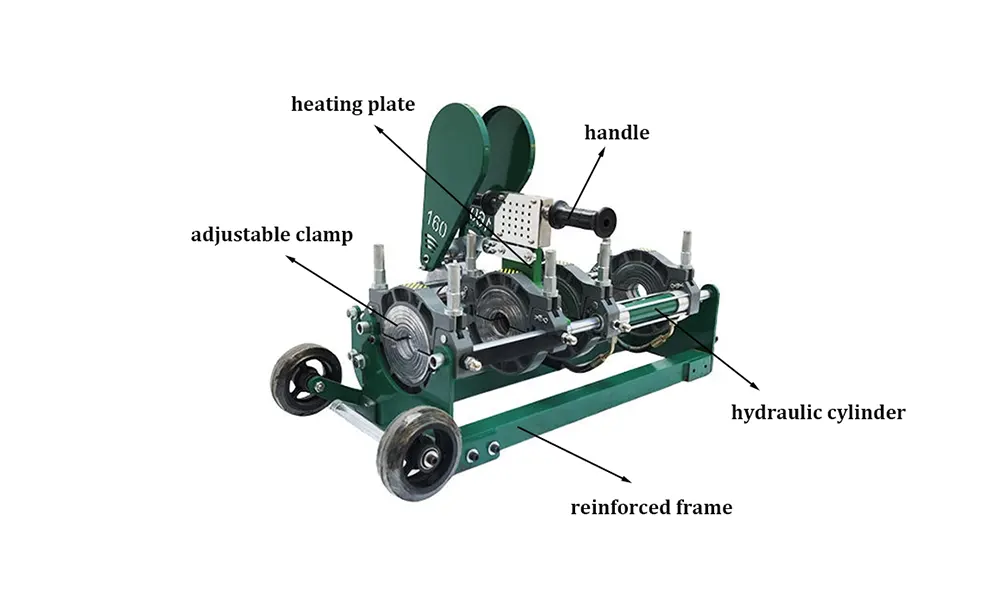
Butt fusion is the preferred method for long runs and large-diameter HDPE pipes. It aligns pipe ends, heats them with a controlled plate, then fuses under pressure to form a continuous joint. This is ideal for water mains, sewer force mains and heating loops for geothermal applications.
Electrofusion
Electrofusion fittings, with built-in heating elements, are excellent for repairs, branching connections and situations where precise alignment for butt fusion is difficult. Electrofusion offers on-site flexibility for maintenance teams operating in constrained or weather-exposed locations.
Selecting the right machine
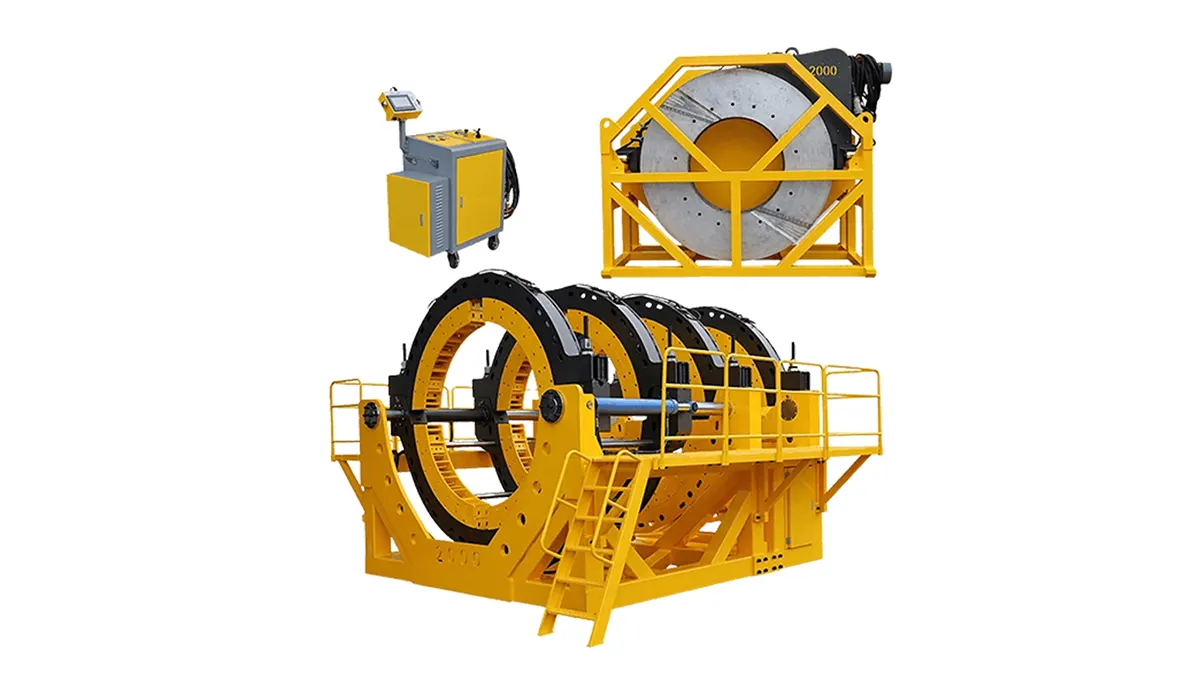
Choose equipment that matches pipe diameter, site logistics and production targets. Manual machines suit small repairs and low-volume work, while hydraulic and automatic butt fusion units increase consistency and productivity for large infrastructure projects. Portable units help crews reach remote valleys or coastal sites in Iceland.
Machine comparison at a glance
| Machine Type | Best For | Pipe Range | Key Benefit |
|---|---|---|---|
| Manual Butt Fusion | Repairs, small jobs | 20mm–160mm | Lightweight, portable |
| Hydraulic Butt Fusion | Medium to large pipelines | 160mm–2000mm+ | High repeatability, fast cycle |
| Automatic CNC Butt Fusion | Large-scale, precision projects | 250mm–1600mm | Data logging, consistent quality |
| Electrofusion Units | Connections and repairs | Fittings up to 630mm | Flexible, easy to deploy |
Quality control, standards and training
Certified welding procedures and on-site quality control are essential. Ensure technicians follow ISO and ASTM HDPE welding guidelines and use fusionometers or data-logging CNC systems for traceability. In Iceland, crews often need training on cold-weather welding techniques and best practices for preparing pipes under windy, low-temperature conditions.
Practical tips for Icelandic sites
-
Warm storage and pre-inspection of spool and fittings before welding reduces condensation and improves joint quality.
-
Use shields and portable enclosures to protect fusion operations from wind and precipitation.
-
Plan logistics: many rural sites need off-road transport and staged assembly to minimize downtime.
Choosing a welding equipment supplier
Look for vendors offering a range of manual, hydraulic and automatic butt fusion machines, spare parts availability and responsive service for remote projects. One such manufacturer is JQ-Fusion, known for HDPE welding machines and global support for infrastructure projects.
Next steps for contractors and project managers
Define your pipe sizes, expected daily weld output and site constraints. Request equipment demos, digital weld records and operator training packages. Prioritize solutions that minimize rework and support Icelandic climate conditions to keep projects on time and under budget.
Ready to start?
Secure leak-free pipelines with proven HDPE welding methods. Whether you need portable welders for remote repairs or automated systems for large municipal projects, selecting the right equipment and certified welders will protect your investment and the communities you serve.



