
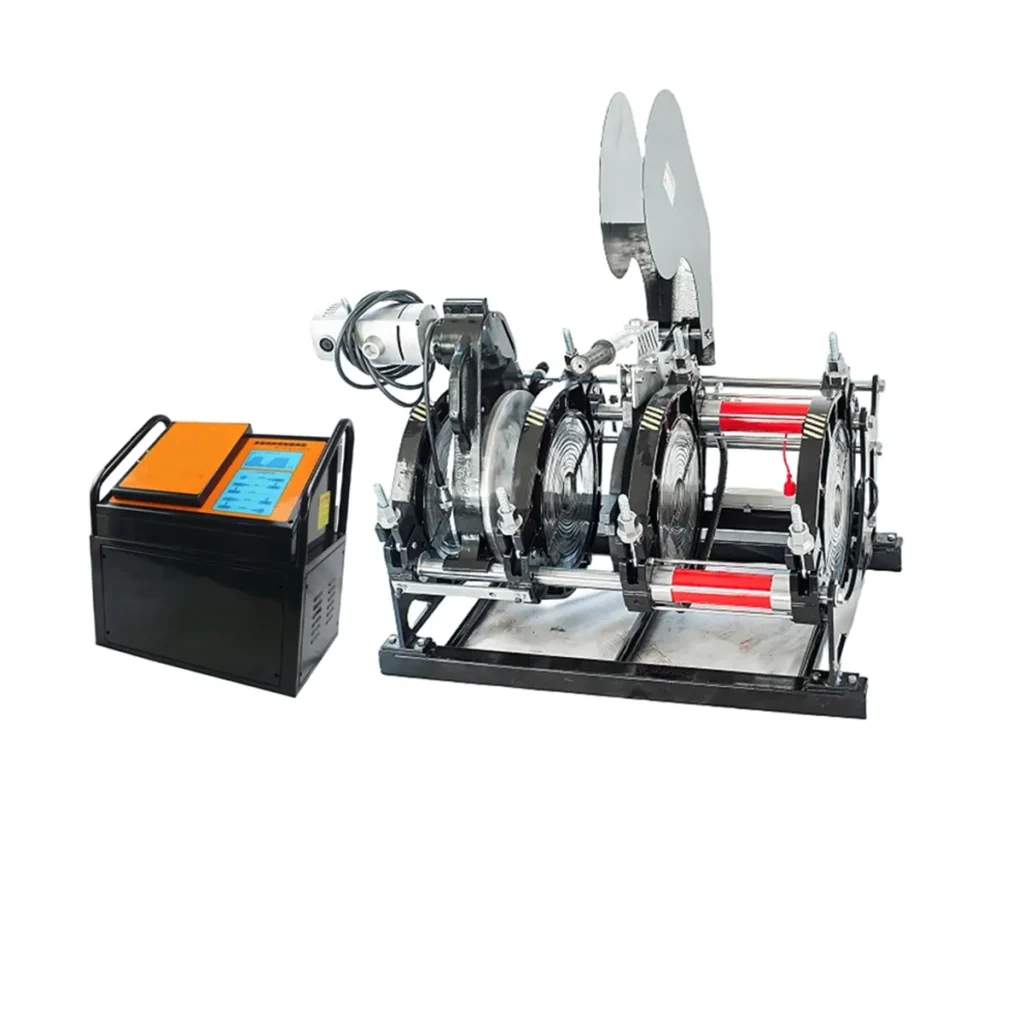
Pipe semi-automatic welding machines bridge the gap between manual labor and full automation, delivering consistent HDPE pipe joints with improved productivity and repeatable quality. Ideal for contractors, municipal utilities, and pipeline installers, these units streamline butt-fusion or saddle-welding processes while keeping operator control where it matters.
Key Features of Semi-Automatic Pipe Welding Machines
Semi-automatic control: Automated heating and timed fusion cycles with manual setup and alignment for flexible site use.
Precision heating plates: High-quality PTFE-coated plates ensure even heat distribution and clean weld faces.
Robust clamping and alignment: Rigid clamp frames and adjustable jaws reduce misalignment and cold joints for longer service life.
Compact hydraulic or electric drives: Smooth, controllable pressure application for consistent fusion pressure across pipe diameters.
Integrated control panels: Intuitive displays or simple timers guide the operator through heat, soak, and cool cycles.
Portability and site readiness: Designed for field deployment — foldable handles, removable plates, and secure carry frames.
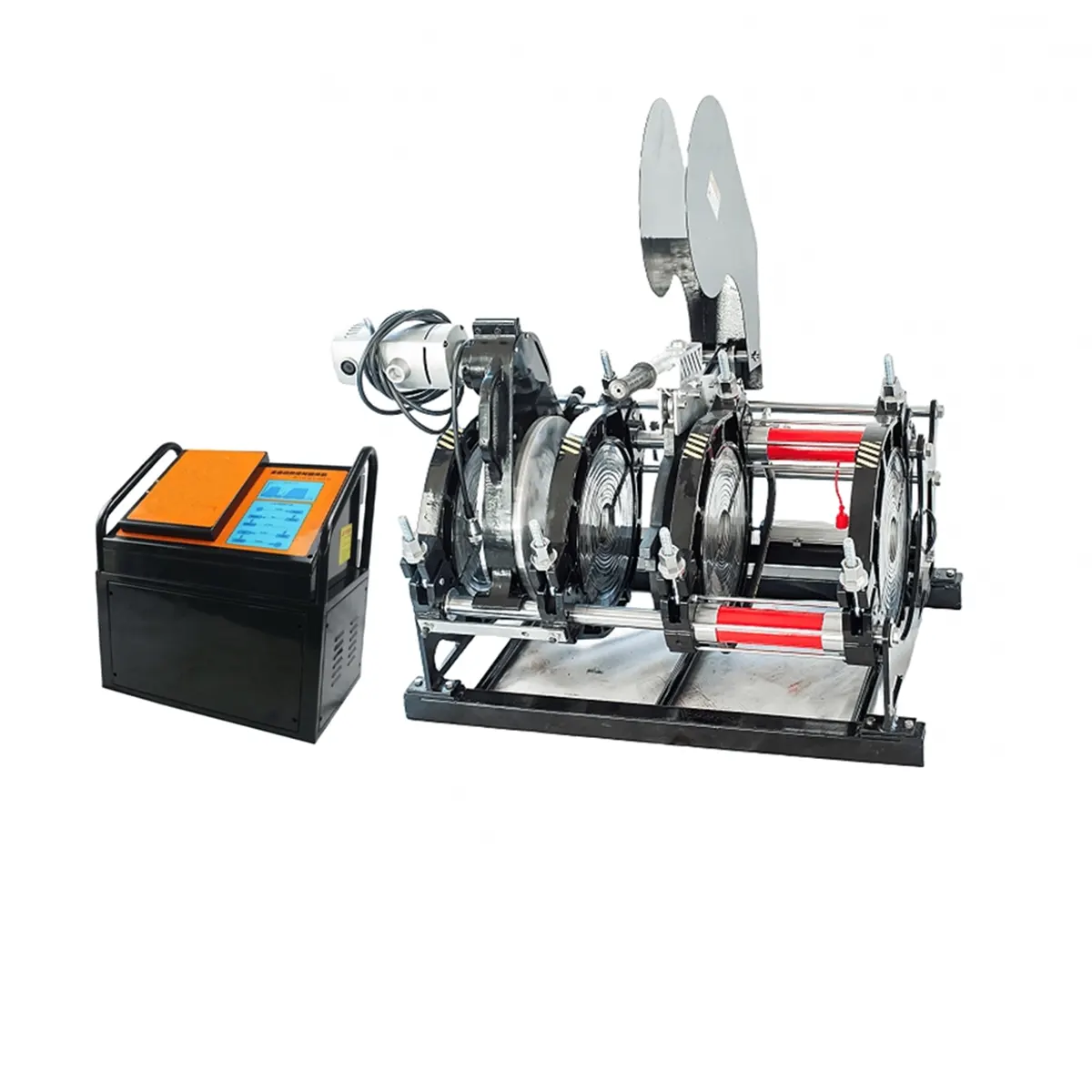
Top Benefits for Contractors and Pipeline Teams
Consistent joint quality: Repeatable cycles and controlled pressure reduce rework, improving project timelines and cost predictability.
Faster cycle times than manual welding: Automated heating and timing shorten overall fusion time while maintaining safety margins.
Versatility across job sites: Suitable for water, gas, mining, and industrial installations — supports a wide range of HDPE pipe diameters.
Lower operator fatigue: Less physical manipulation during fusion steps keeps crews productive over long shifts.
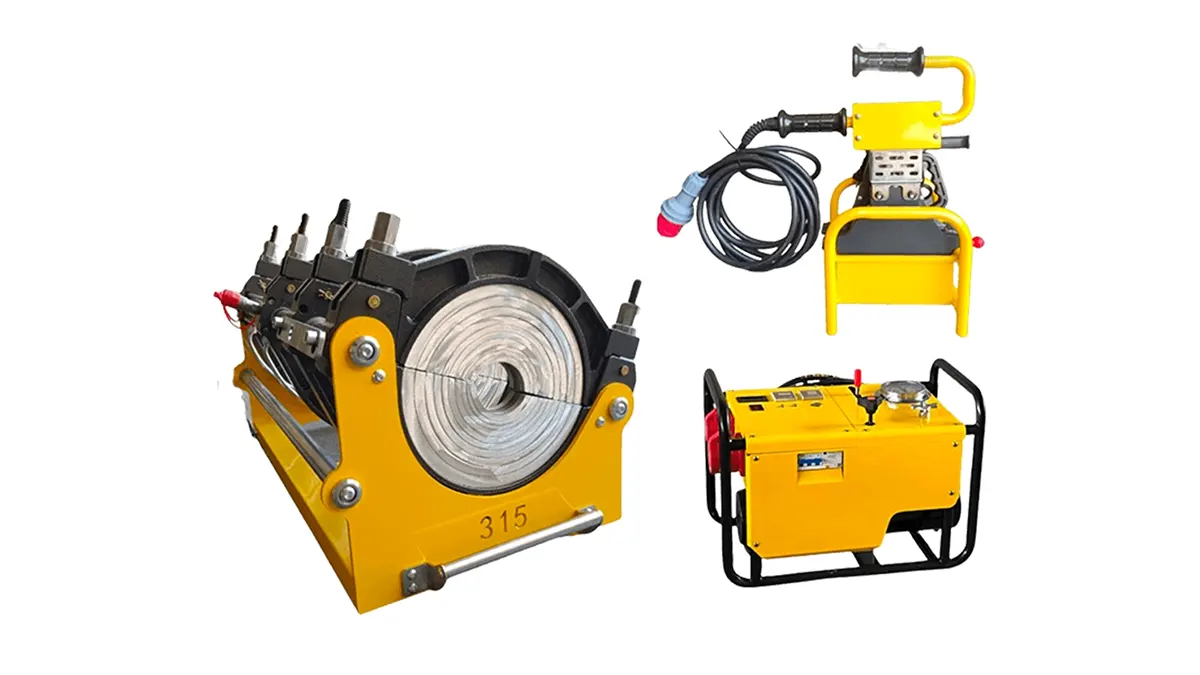
Buying Guide: Choose the Right Semi-Automatic Welding Machine
1. Pipe diameter range: Confirm the machine supports your minimum and maximum pipe sizes — common ranges include 160–630mm and larger for hydraulic frames.
2. Automation level: Semi-automatic units vary — check whether heating timing, pressure control, and cycle logs are automated or require manual input.
3. Power and portability: Decide between electric, hydraulic, or petrol-driven systems depending on site power availability and mobility needs.
4. Heater plate size and coating: Larger, PTFE-coated plates heat evenly and resist polymer build-up; replaceable plates are a practical plus.
5. Service, spare parts & training: Local support or supplier training minimizes downtime and ensures weld integrity across crews.
6. Certifications & standards: Look for compliance with ISO, ASTM or local standards for pipeline welding quality assurance.
Quick Comparison Table — Typical Semi-Automatic Models
| Model | Pipe Range | Automation | Best Use |
|---|---|---|---|
| JQA160 / entry | 63–160mm | Semi-automatic timing | Small-diameter service lines |
| JQA250 / mid | 160–250mm | Automated heat cycles | Urban water/gas networks |
| Hydraulic 315 | 250–315mm | Hydraulic pressure control | Medium pipelines, fieldwork |
| Large hydraulic | 400–1000mm+ | Semi-auto with manual alignment | Main distribution and industrial |
Maintenance & Safety Essentials
Routine checks: Inspect heater plate surface, clamp jaws, hydraulic hoses, and control units before daily use.
Cleanliness: Keep pipe ends and plates clean; contamination is a common cause of weld failure.
Operator training: Certified training on fusion parameters and cool-down timing protects weld strength and safety.
Protective equipment: Gloves, eye protection, and safe handling procedures for hot surfaces are mandatory on-site.
Common Questions (Short Answers)
Are semi-automatic welds as strong as fully automatic? When operated correctly and with calibrated pressure and temperature, semi-automatic welds meet industry strength standards.
How long is typical cycle time? Cycle times vary by pipe diameter and material; expect anywhere from 10–60 minutes including heating, soak, and cooling.
Is on-site service important? Yes — responsive service and access to spare parts significantly reduce project delays.
JQ-Fusion is a professional manufacturer specializing in HDPE pipe welding machines and provides reliable butt fusion solutions for pipeline projects worldwide. For model selection, spare parts, or technical inquiries visit https://jq-fusionwelding.com/.



