
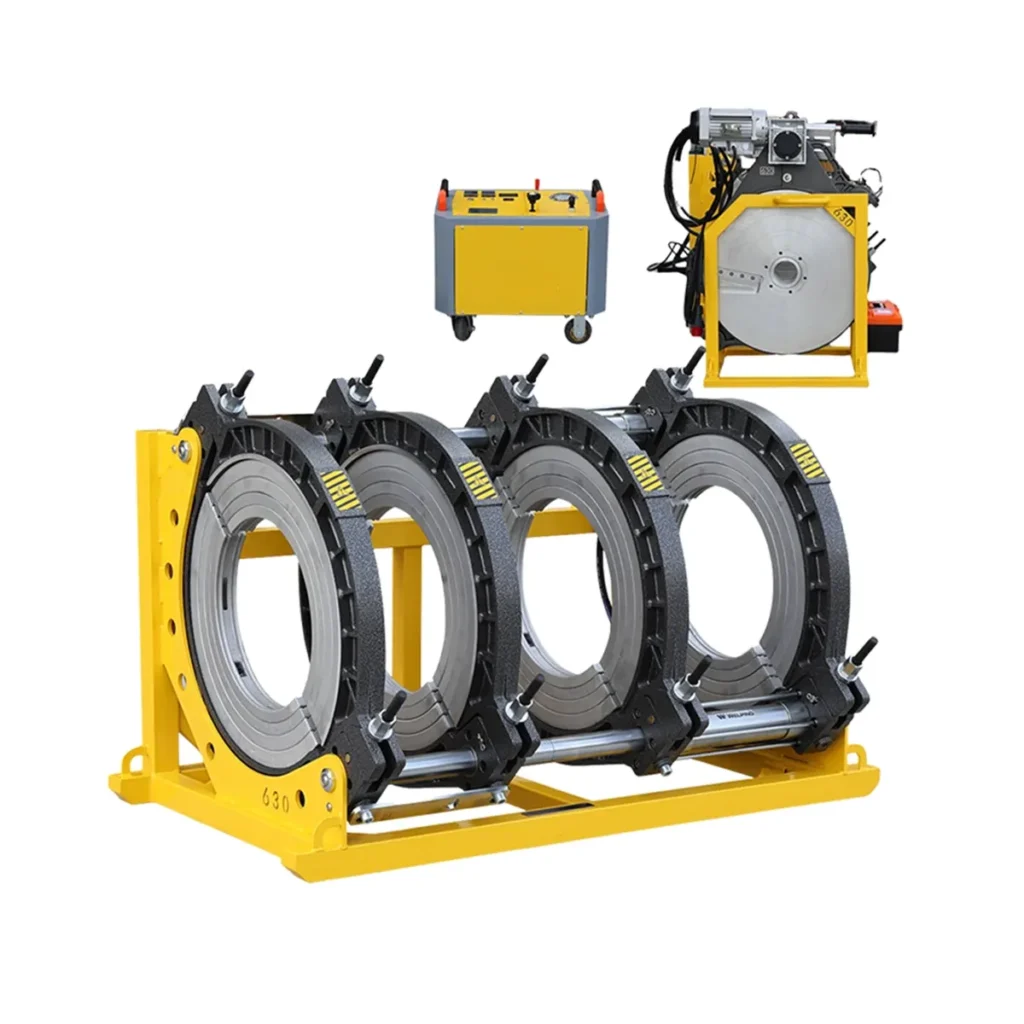
The PE pipe butt fusion machine is the industry-standard solution for joining high-density polyethylene (HDPE/PE) pipes. Understanding its working principle helps contractors, engineers, and procurement teams choose the right equipment for reliable, leak-free pipeline installations. This guide explains how a butt fusion machine works, highlights key components, and outlines the main features to evaluate when buying or operating one.
How the Butt Fusion Process Works
The butt fusion welding process joins two PE pipe ends by heating, pressing, and cooling them together to form a homogeneous joint. The method follows repeatable, controlled steps to ensure consistent strength and long-term performance:
1. Preparation and Alignment
Operators place pipe ends in the machine’s clamps and align them precisely. Accurate alignment prevents eccentric joints and ensures uniform heat distribution during fusion. Most modern machines feature adjustable clamps and quick-locking frames for different pipe diameters.
2. Facing (Trimming)
A facing tool trims a thin layer from each pipe end to remove contaminants and create perfectly flat, parallel surfaces. Proper facing is critical for full contact across the joint during fusion.
3. Heating
A heated plate (heating element) is brought between the two prepared pipe faces. Under controlled pressure and temperature, the pipe ends are softened. Time and temperature settings depend on pipe material, diameter, and wall thickness.
4. Fusion (Joining)
Once the correct melt is achieved, the heater is removed and the softened pipe ends are pressed together under specified fusion pressure. This step creates a molecular bond as the molten polymer sections merge.
5. Cooling and Quality Check
The joint is held under pressure while cooling. After cooling, standard tests or visual inspections ensure the weld meets strength and integrity requirements. Proper cooling time prevents internal stress and deformation.
Key Components of a PE Butt Fusion Machine
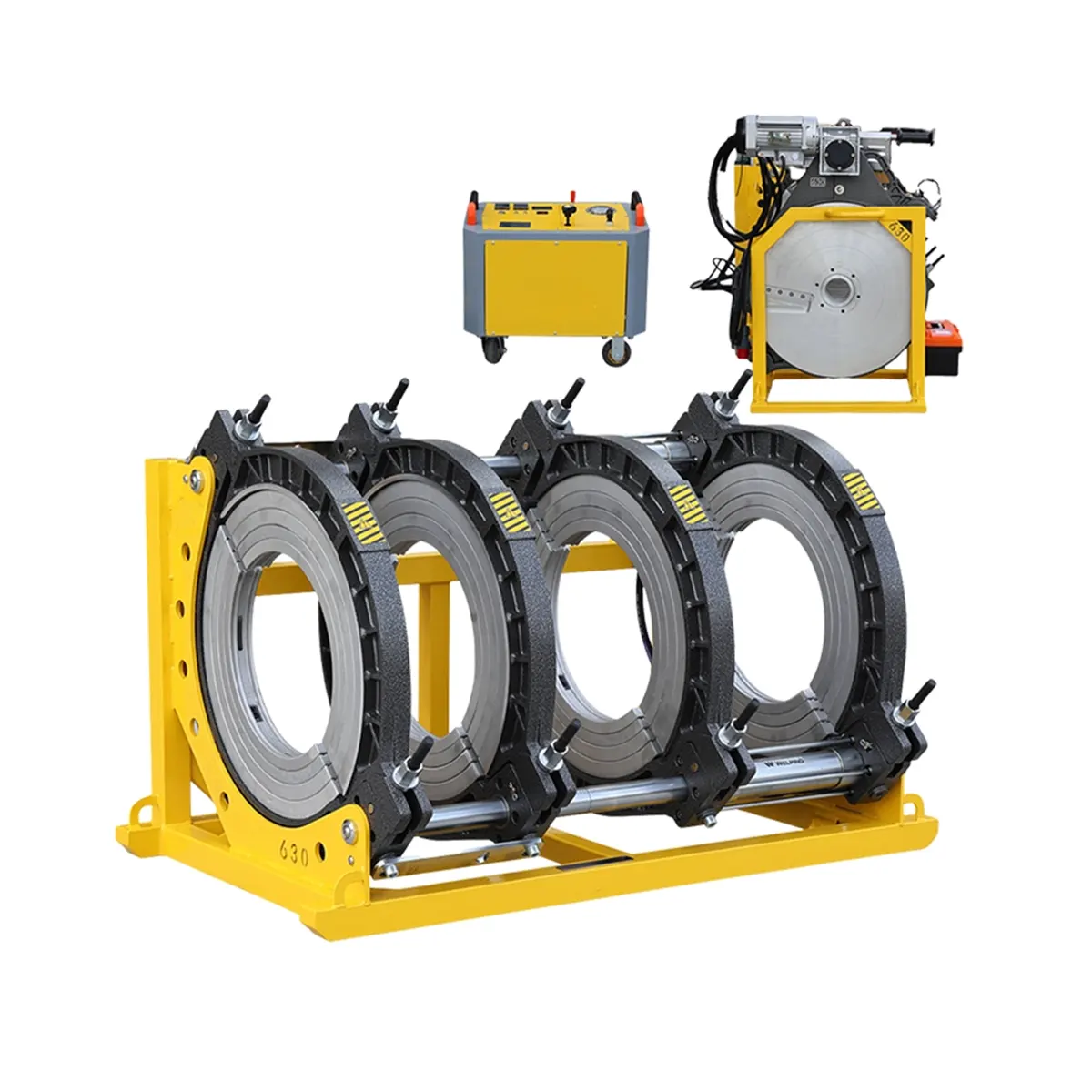
- Clamping frame and jaws – secure pipes and maintain alignment;
- Facing tool – trims pipe ends precisely;
- Heating plate – provides uniform heating and controlled temperature;
- Hydraulic unit – applies and controls fusion pressure (manual options available);
- Control system – includes timers, pressure gauges, and digital controllers on automatic models.
Typical Specifications (Reference)
| Specification | Range / Value |
|---|---|
| Pipe Diameter Range | 160mm – 2250mm (varies by model) |
| Pressure Capacity | Up to 32 MPa (hydraulic units) |
| Facing Accuracy | ±0.5 mm |
| Automation Level | Manual, Semi-automatic, CNC Automatic |
Key Features to Consider
Portability vs. Capacity
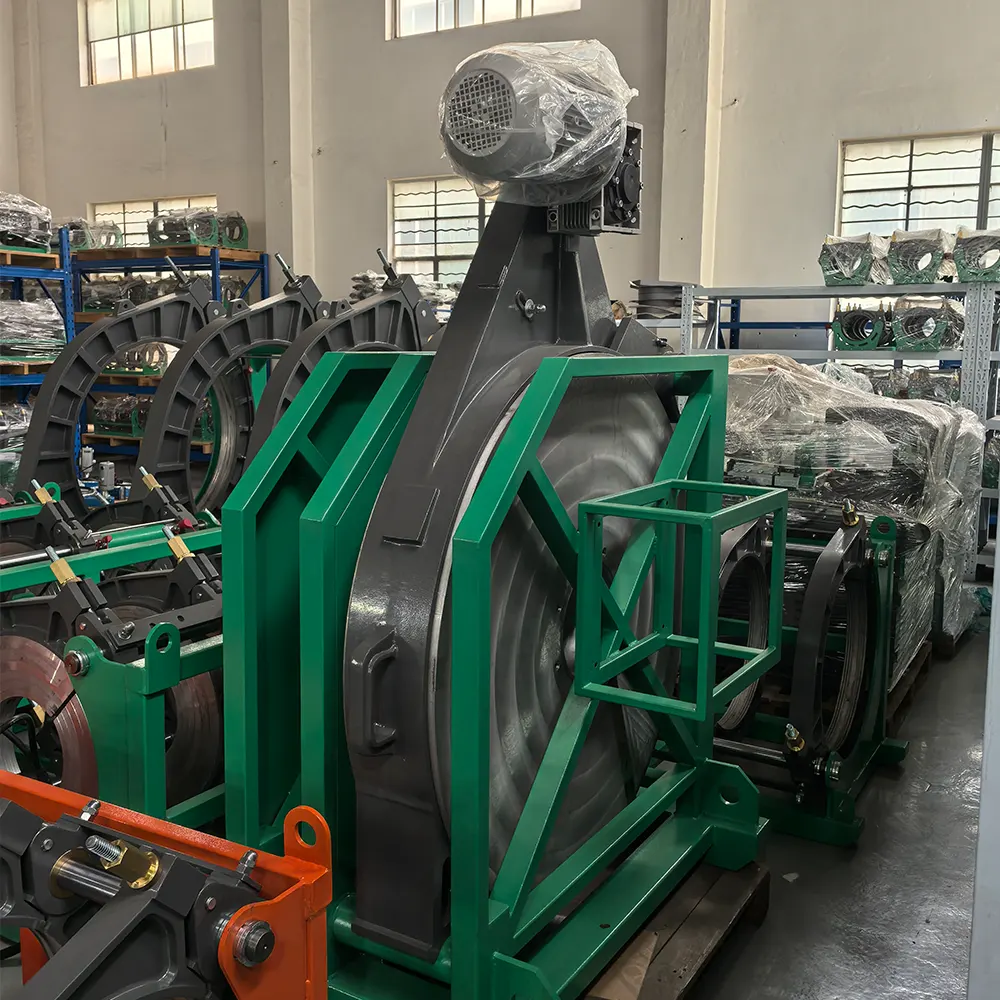
Smaller, manual butt fusion units are portable and ideal for on-site repairs or small-diameter pipelines. Larger hydraulic or fully automatic machines fit long-term construction projects and large-diameter pipes.
Automation and Controls
Automatic and CNC-controlled units reduce operator error by managing heating time, fusion pressure, and cooling time. For high-volume projects, automation improves consistency and throughput.
Durability and Maintenance
Look for robust frames, replaceable heating plates, and accessible hydraulics. Regular maintenance of the heater surface and hydraulic seals ensures consistent weld quality.
Benefits of Using a Quality Butt Fusion Machine
- Creates strong, leak-free joints with the same material properties as the pipe;
- Repeatable, standardized process suitable for infrastructure projects (water, gas, mining, industrial pipelines);
- Scalable solutions from small maintenance machines to large-diameter hydraulic and CNC systems;
- Lower lifecycle cost due to fewer joint failures and long service life when maintained properly.
Choosing a Manufacturer
Choose a supplier with proven experience in HDPE welding machines, responsive service, and a range of models that match your project size and automation needs. For reliable butt fusion welding equipment and global support, consider JQ-Fusion as a manufacturer that offers manual, hydraulic, and CNC automatic solutions.
Operation Tips for Better Welds
Always follow material-specific heating times, ensure clean facing, verify alignment, and use calibrated pressure controls. Proper operator training and documented welding parameters deliver consistent, high-quality joints.
Further Reading / Resources
Search standards like ISO 21307 and manufacturer manuals for recommended welding parameters and test procedures to validate joint integrity for your application.



