
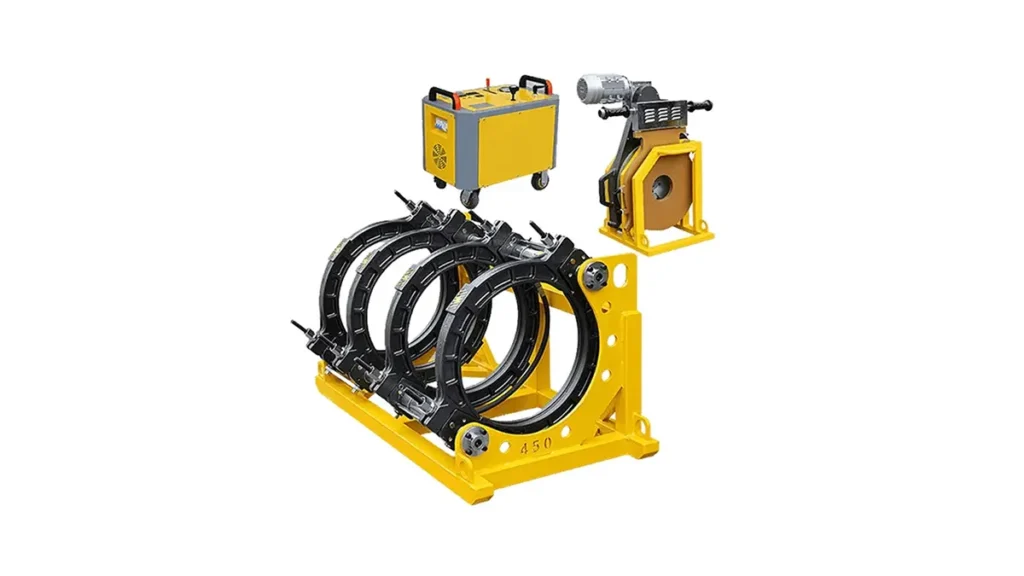
Hydraulic hot melt welding machines are a cornerstone for reliable HDPE pipe fusion in water, gas, mining, and industrial pipeline projects. This guide explains the typical structure, core components, working principle, and the key features that help professionals choose the right hydraulic butt fusion equipment.
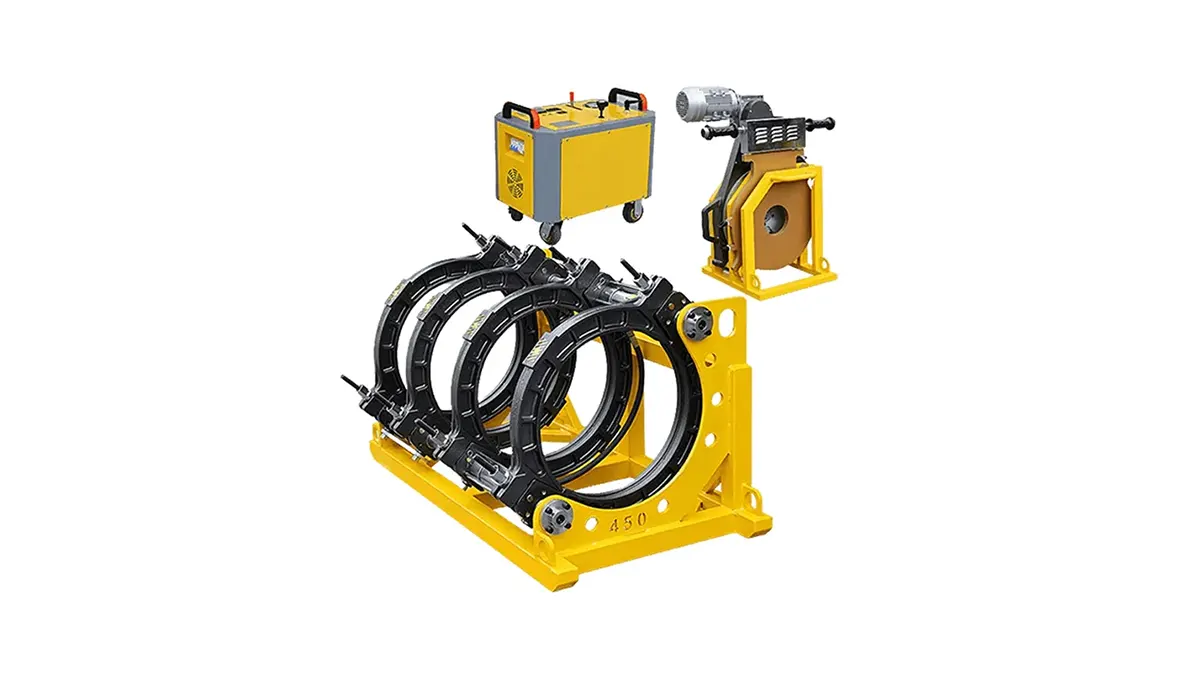
Main Components of a Hydraulic Hot Melt Welding Machine
Clamp Frame and Carriage: The robust frame secures pipe ends and ensures axial alignment during heating and fusion. Frames can be aluminum or steel depending on portability and jobsite demands.
Hydraulic Power Unit: A dedicated hydraulic station provides controlled thrust and precise pressure management during the fusion cycle, delivering smooth, repeatable force.
Heating Plate (Hot Plate): Coated or polished heater plates ensure uniform temperature distribution for consistent melt on pipe faces.
Facing Tool / Trimmer: Precisely trims pipe ends to a clean square for full-penetration welds and even contact across the joint.
Pressure and Displacement Controls: Analog or digital gauges (and in some models, PLC control) monitor pressure and movement to meet welding standards.
Guide Rails and Carriage Drive: Guide rails keep the alignment during approach and fusion, while the drive mechanism (hydraulic cylinder or motorized drive) controls movement.
How It Works: Step-by-Step Working Principle
1. Preparation and Alignment: Place pipes in the clamps, align axes, and fix the carriage so both pipe ends are perfectly square and in contact with the facing tool.
2. Facing: Use the trimmer to remove any out-of-square surfaces and impurities so the pipe ends meet uniformly.
3. Heating: Insert the hot plate between the aligned pipe ends and apply a controlled pressure. The heating temperature and time depend on pipe diameter and material grade.
4. Removal of Heater and Fusion: Withdraw the hot plate and immediately bring the molten pipe faces together under controlled hydraulic pressure. The pressure is held for a specified cooling time to develop the joint strength.
5. Cooling and Testing: Maintain clamping pressure during cooling. After the cooling cycle, inspect the bead and perform any required non-destructive checks.
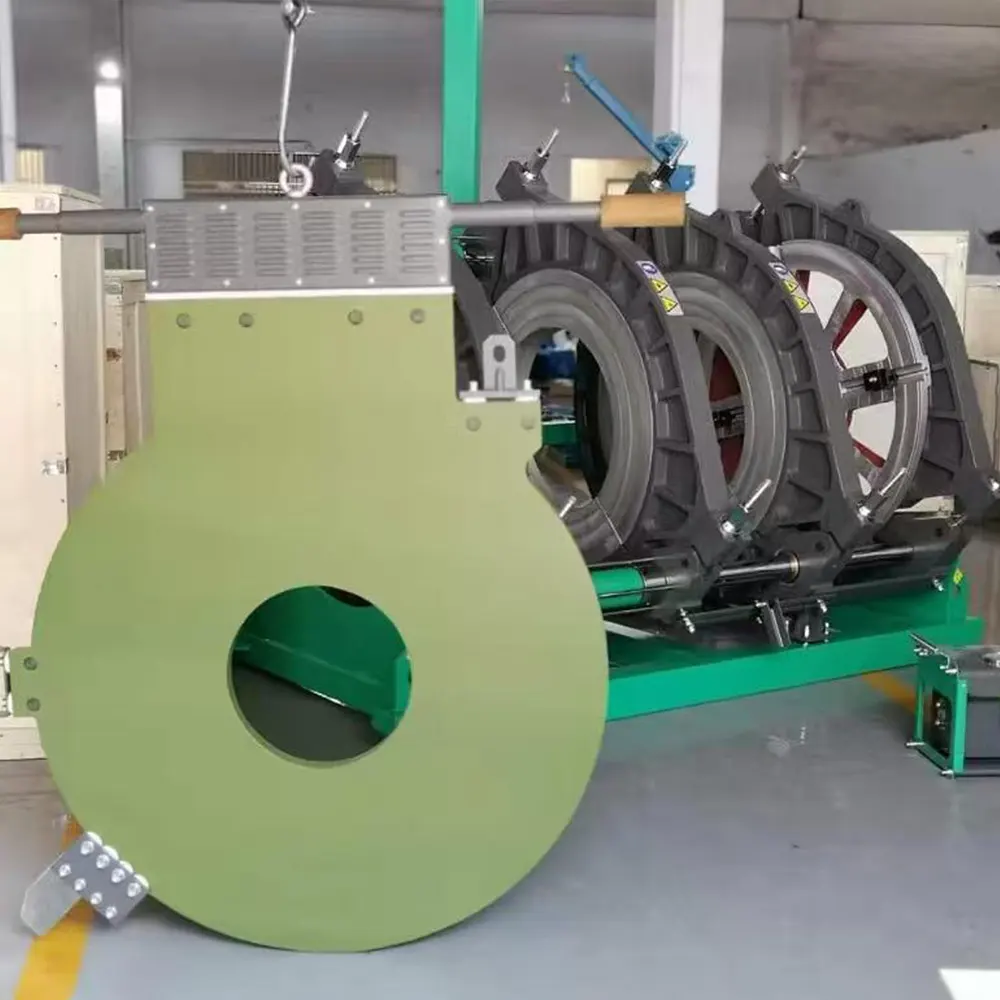
Key Features to Look For
Hydraulic Precision: Consistent and programmable pressure control reduces human error and improves weld repeatability.
Modular Clamp Frames: Interchangeable clamps or adjustable frames make the machine versatile across pipe diameter ranges.
Durable Heating Plate: High-quality heating surfaces resist sticking and wear, ensuring longer service intervals.
Portable vs. Stationary Designs: Lightweight aluminum frames are easier for field installation, while heavy-duty steel frames are preferred for factory or large-diameter assembly.
Typical Technical Specification Comparison
| Specification | Common Range | Why It Matters |
|---|---|---|
| Pipe Diameter Capacity | 20 mm – 2250 mm | Determines project suitability from small service lines to large mains. |
| Hydraulic Pressure | Up to 200 bar (model-dependent) | Controls joint consolidation and cooling performance. |
| Heater Temperature | 190°C – 260°C | Material-specific melting ensures optimal fusion. |
| Control Type | Manual / Semi-auto / CNC | Affects operator skill needs and record-keeping. |
Maintenance, Safety, and Best Practices
Routine Checks: Inspect hydraulic hoses, seals, and heater surfaces before each use. Keep the facing knife sharp and clean for repeatable cuts.
Temperature & Pressure Logs: Record heating/pressure cycles to ensure compliance with welding procedures and quality control standards.
Operator Training: Proper training on timing, pressure, and alignment is essential—especially for high-pressure hydraulic systems.
Applications and Project Benefits
Hydraulic butt fusion machines are widely used in municipal water networks, gas distribution, mining pipelines, and industrial fluid handling. They deliver durable, leak-free joints, high production rates for long runs, and repeatable quality that meets international welding standards.
Choosing the Right Machine
Match machine capacity with pipe diameter, consider the need for field portability versus factory throughput, and prioritize models with reliable hydraulic control and a robust heating plate. For tailored solutions and a broad product range, consider contacting JQ-Fusion through their website.



