
Installing HDPE pipe for irrigation systems is one of the most practical ways to build a durable, efficient, and low-maintenance water delivery network. In modern agriculture, landscape irrigation, and large-scale water distribution, HDPE piping is widely preferred because it resists corrosion, handles pressure well, and supports long service life even in demanding outdoor conditions. When installed correctly, an HDPE irrigation pipeline can reduce leakage, improve water efficiency, and lower overall operating costs for years.
Compared with traditional piping materials, HDPE offers excellent flexibility and strong resistance to chemical exposure, ultraviolet conditions, and ground movement. These advantages make it suitable for farms, greenhouses, orchards, golf courses, and other irrigation projects where consistent water flow matters. However, the benefits of HDPE pipe depend heavily on proper installation methods, especially joint preparation, trenching, fusion welding, pressure testing, and backfilling.
Before the installation begins, project planning is essential. The pipeline route should be carefully measured to avoid unnecessary bends, unstable soil, and future obstacles such as tree roots or heavy traffic areas. Engineers and contractors should also verify the pipe diameter, pressure rating, and fitting type according to the irrigation system’s water demand. For reliable joining performance, many professional projects rely on a butt fusion machine to create strong and leak-free HDPE connections.
Key advantage: HDPE irrigation systems can be built with fewer joints than many rigid pipe systems, which helps reduce leak points and improves long-term performance. This is especially important in large agricultural networks where water loss can directly affect crop productivity and operating costs.
To begin installation, the trench must be prepared with the correct depth and width. The trench should provide enough space for the pipe to be laid evenly without excessive stress. In most irrigation projects, the bottom of the trench is leveled and cleaned of sharp stones, roots, and debris that could damage the pipe wall. If the soil is hard or uneven, a bedding layer of sand or fine soil is often added to protect the pipe and support uniform settling.
Pipe handling is another important stage. HDPE pipe is durable, but it should still be stored and transported properly to avoid scratches, deformation, or contamination. Coils and straight lengths should be kept on a flat surface and away from open flames or excessive heat. During installation, workers should avoid dragging the pipe over rough ground, because surface damage can affect the quality of fusion and reduce the lifespan of the system.
After the pipeline route is ready, the next step is pipe alignment and cutting. HDPE pipe ends must be cut squarely to ensure proper fusion. Any ovality, dirt, moisture, or oxidation layer at the pipe ends should be removed before welding. Clean and precise preparation is critical because even a small defect can weaken the joint. In professional projects, the fusion area is usually cleaned with approved tools and aligned carefully in the fusion machine clamps.
Important note: The quality of the joint is the heart of the installation. If the pipe ends are not properly prepared, even the best HDPE pipe material cannot deliver the expected sealing strength. This is why trained operators and calibrated equipment are essential.
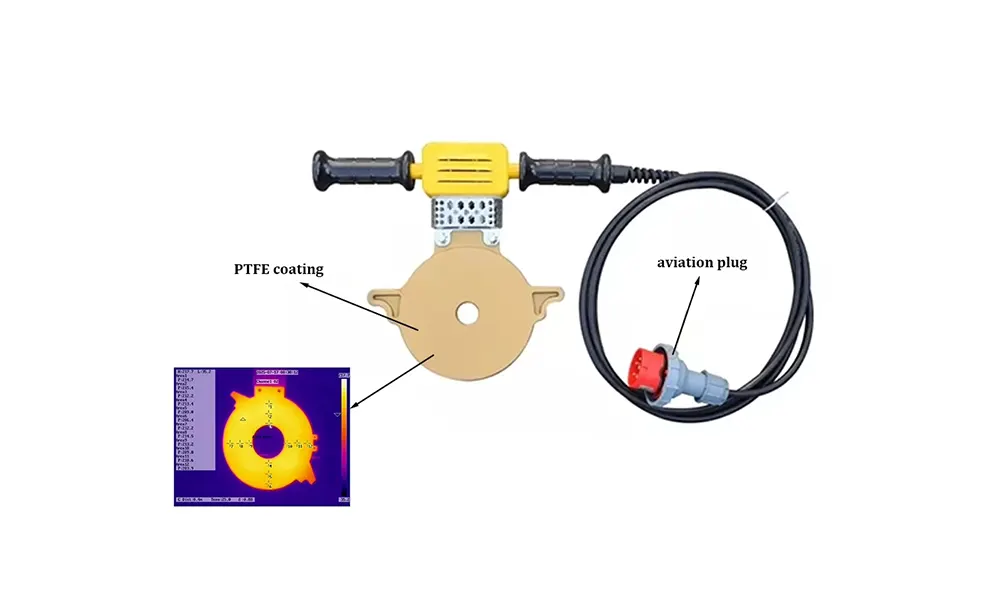
The most common method for joining HDPE pipe in irrigation projects is butt fusion. This process uses heat and pressure to fuse two pipe ends into one continuous pipe section. The pipe ends are first secured in the fusion machine, then faced to create matching surfaces. After heating the ends to the correct temperature, the heated surfaces are brought together under controlled pressure. Once cooled, the connection becomes a permanent, homogeneous joint with excellent mechanical strength.
Professional equipment plays a major role in this process. JQ-Fusion, a manufacturer specializing in HDPE pipe welding machines, provides manual, hydraulic, and CNC automatic butt fusion solutions for different pipe sizes and project requirements. Their products are designed for water supply systems, gas networks, mining projects, and industrial pipeline installations worldwide. For irrigation contractors, stable welding performance and accurate temperature control help ensure reliable field installation and reduce rework.
Tip: Choose welding equipment that matches the pipe diameter and project scale. Small agricultural lines may require compact manual solutions, while large irrigation trunk lines often benefit from hydraulic or CNC automatic systems for better consistency.
Once the joints are completed, cooling time must be respected before moving or stressing the pipe. This step is often underestimated, yet it is essential for joint integrity. Premature handling can disturb the fusion area and reduce strength. After cooling, the pipeline can be placed into the trench with careful alignment, ensuring there is no unnecessary tension at the joints.
When the pipe is laid in the trench, fittings such as tees, elbows, reducers, and valves should be installed according to the irrigation design. These components help control flow direction, branch lines, and pressure regulation. In many projects, electrofusion fittings are also used where space is limited or where special joining conditions require a compact connection. The goal is to build a balanced system that can distribute water evenly across the target area.
For irrigation systems, pressure testing is a mandatory step before final backfilling. The pipeline should be tested according to the project specification to confirm that there are no leaks, joint failures, or hidden installation defects. Testing procedures usually involve filling the pipe with water, removing air, and gradually increasing pressure to the required level. The system should be observed carefully during the test period, especially at joints and connection points.
In addition to pressure testing, flushing the line is also important before regular operation. Flushing removes dust, debris, and small particles that may have entered the system during construction. Clean water flow is essential for irrigation emitters, sprinklers, and drip lines, because even small blockages can affect distribution uniformity and reduce system efficiency.
Backfilling should be done after the pipe passes testing and all inspections are complete. The first layer of backfill is usually fine material placed gently around the pipe to support it without causing damage. Large rocks or hard objects should not be placed directly against the pipe wall. After the initial protective layer is installed, the trench can be filled in stages and compacted properly to prevent future settlement. Good backfilling helps protect the pipeline from external loads and soil movement.
In agricultural applications, one of the greatest advantages of HDPE irrigation piping is flexibility. Fields, orchards, and plantations often have irregular terrain, seasonal expansion, and changing water requirements. HDPE pipe can adapt better than many rigid materials, making it easier to design routes around slopes, corners, and obstacles. It also performs well in underground installations where soil movement might otherwise damage less flexible pipe systems.
Another major benefit is long service life. HDPE does not rust like metal pipe and does not suffer from many of the problems associated with brittle materials. This helps irrigation operators reduce maintenance frequency and avoid costly replacement work. Over time, the initial installation cost is often offset by lower repair needs and better water efficiency, especially in large systems covering wide acreage.
Quality control during installation should never be ignored. Operators should check temperature accuracy, fusion pressure, clamp alignment, and pipe cleanliness at every stage. These checks help maintain joint consistency and reduce the chance of failure in the field. JQ-Fusion emphasizes strict testing and manufacturing control in its production process, including temperature accuracy, hydraulic pressure stability, and clamp alignment inspection, which reflects the level of precision required for dependable pipe welding results.
For contractors working on international projects, customization and technical support are also valuable. Irrigation systems differ widely based on climate, crop type, water source, and terrain. A supplier that can offer tailored machine configurations, voltage options, and operational guidance can help improve project efficiency. JQ-Fusion provides OEM and ODM customization, fast logistics support, and technical assistance to meet different installation needs across global markets.
Practical recommendation: If the irrigation project includes multiple pipe sizes or frequent field repairs, it is useful to choose welding equipment with flexible settings and reliable after-sales support. This reduces downtime and helps contractors respond quickly to project changes.
Maintenance after installation is relatively simple, but regular inspections are still recommended. Operators should check visible above-ground sections, valve boxes, pump connections, and exposed joints for wear or movement. In systems buried underground, sudden pressure loss or uneven irrigation performance may indicate a leak or blockage. Early detection allows repairs to be completed before major water loss occurs.
For large-scale irrigation projects, HDPE pipe installation is not just a construction task; it is part of a long-term water management strategy. Properly installed HDPE systems can support precise water delivery, conserve resources, and improve agricultural productivity. Their reliability is especially valuable in regions facing water scarcity, rising labor costs, or the need for efficient land use.
From trench preparation to fusion welding, testing, and final commissioning, every step contributes to the overall success of the irrigation network. When contractors follow best practices and use suitable equipment, HDPE pipe becomes an excellent solution for modern water distribution. This is why many professionals choose trusted welding technology and carefully planned installation methods to protect project investment and performance.
As a manufacturer with more than 20 years of industry experience, JQ-Fusion supports global pipeline projects with reliable butt fusion welding solutions. Their product range includes hydraulic butt fusion welding machines, automatic butt fusion welding machines, electrofusion welding machines, and multi-angle pipe fitting welding machines, serving water supply, gas distribution, mining, and industrial applications. For irrigation systems, this kind of equipment support helps contractors achieve stable welding results and long-term pipeline reliability.
FAQ 1: What is the best joining method for HDPE pipe in irrigation systems?
Butt fusion is widely considered the best joining method because it creates a strong, continuous, leak-resistant joint. It is especially suitable for long irrigation pipelines and buried installations.
FAQ 2: How deep should HDPE irrigation pipe be buried?
Burying depth depends on soil conditions, traffic load, climate, and local project standards. In general, the trench should protect the pipe from surface damage, temperature exposure, and external pressure while allowing safe maintenance access.
FAQ 3: Why is pressure testing necessary after installation?
Pressure testing confirms that the pipeline has no leaks, weak joints, or hidden defects before it enters service. It helps prevent water loss and reduces the risk of expensive repairs later.
FAQ 4: Can HDPE pipe be used for both drip and sprinkler irrigation?
Yes, HDPE pipe is suitable for both drip and sprinkler systems. Its flexibility, durability, and pressure resistance make it a reliable choice for many irrigation layouts and water distribution needs.
FAQ 5: What should be checked before fusion welding HDPE pipe?
Before welding, the pipe ends should be clean, dry, square, and properly aligned. The operator should also verify machine temperature, clamp condition, and fusion settings to ensure a reliable joint.



