
Writing an engineering project welding report is more than a formality. It is the record that proves the welding work was planned, executed, inspected, and accepted according to project requirements. In pipeline construction, water supply systems, gas distribution networks, mining projects, and industrial installations, a clear welding report helps project teams trace quality, identify risks, and improve future performance. For contractors, supervisors, and engineers, a well-structured report can reduce disputes, support compliance, and create a stronger handover package for owners and inspectors.
In practice, a welding report should do three things well: show what was done, explain how it was done, and prove that the result meets standards. If a report is too brief, it becomes difficult to verify welding quality. If it is too complicated, people may not use it. The best reports are practical, accurate, and easy to read on both desktop and mobile devices.
Key idea: a strong welding report is not just documentation; it is a quality tool that helps teams make better technical decisions, improve traceability, and achieve better welding results on future engineering projects.
1. Understand the Purpose of the Engineering Project Welding Report
The first step is understanding why the report exists. In an engineering project, welding is often part of a larger system, such as a pipeline network or industrial process line. The report must connect individual welds to the overall project objective. It should answer questions such as: Who performed the weld? What equipment was used? What materials were joined? Were the settings correct? Was the weld inspected? Was it accepted or rejected?
A good report supports project control. It helps site managers check whether the work followed approved procedures, whether the welding machine was suitable, and whether environmental conditions affected the process. It also helps technical teams compare actual performance with planned standards. For companies working in international markets, this documentation is especially important because clients often expect consistent records that match global quality requirements.
When the report is used properly, it becomes part of the learning loop. The team can identify recurring issues such as poor alignment, unstable heating, incorrect pressure, or operator mistakes. These insights are valuable for improving training, selecting better equipment, and refining the welding method.
2. Build the Report Around Clear Technical Information
An effective welding report should contain the essential technical facts in a clear format. The most useful reports usually include project name, location, date, operator name, welding procedure, machine model, pipe material, pipe diameter, wall thickness, weather conditions, and inspection results. These details may seem simple, but they create the foundation for quality control and traceability.
For butt fusion work, the report should also record heating plate temperature, fusion pressure, drag pressure if applicable, heating time, changeover time, cooling time, and final bead appearance. If the project uses different machine types, such as hydraulic or automatic equipment, the report should show which system was used and whether it was calibrated correctly.
Important: documentation should always match the actual site process. A report that looks perfect but does not reflect real conditions is useless in an inspection or dispute.
3. Use a Logical Structure That Readers Can Follow Quickly
Because engineering project teams often review reports under time pressure, structure matters. A report should be arranged in a logical sequence so readers can find the information they need without confusion. A practical order is: project overview, material and equipment information, welding procedure, process data, inspection results, nonconformance notes, and final conclusion.
Using headings and short paragraphs improves readability, especially on mobile screens. Bullet points can be useful for key parameters, but they should not replace narrative explanation entirely. A report that combines concise technical data with short comments on quality and performance is often easier to use than a table-only file.
When describing welding results, avoid vague words such as “good” or “normal” unless they are supported by measurable evidence. Instead, note that the weld passed dimensional inspection, temperature was within range, pressure was stable, or the joint met acceptance requirements. This style gives the report more value in quality reviews and handover documentation.
4. Record Machine Performance as Part of Welding Quality
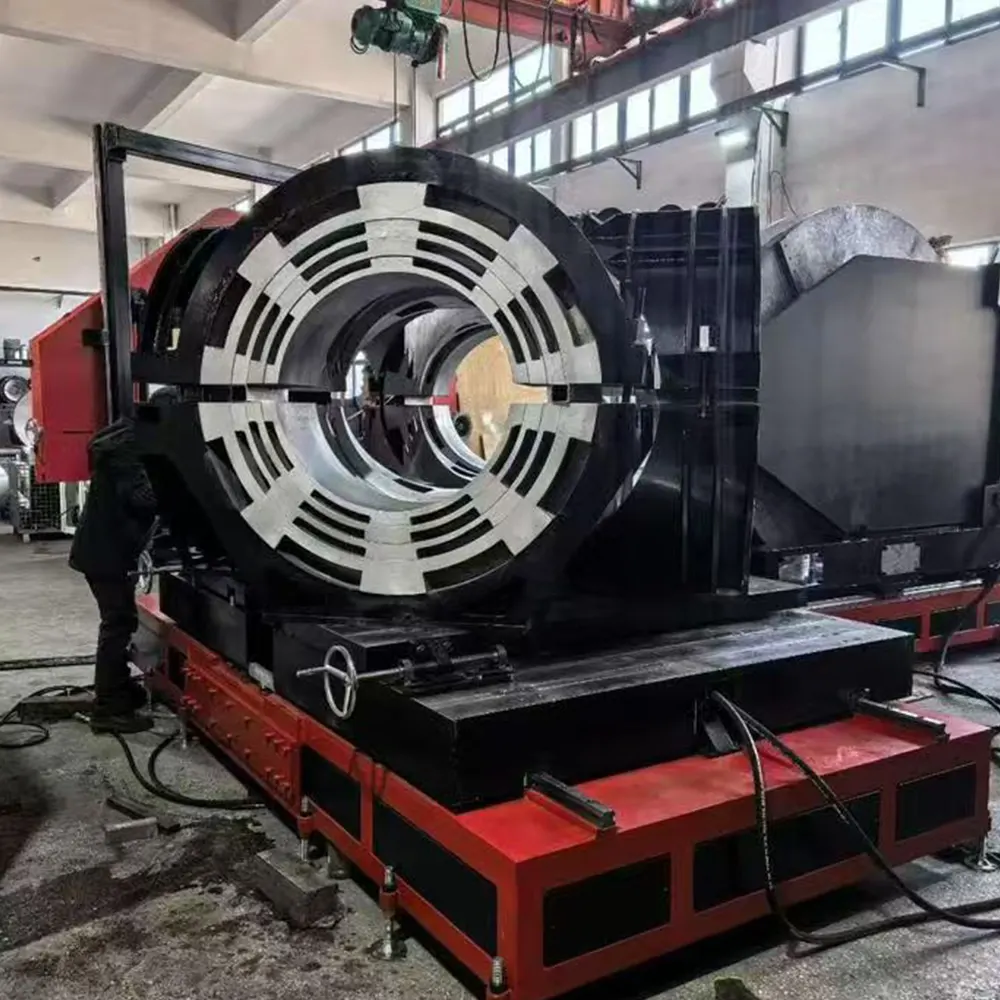
In many engineering projects, the quality of the weld depends heavily on the performance of the machine. A butt fusion machine must provide stable heat, reliable hydraulic pressure, precise alignment, and consistent control during each stage of the process. If the machine is not performing well, even a skilled operator may struggle to produce reliable results.
This is why report writers should not only record the weld outcome, but also the machine behavior. Did the temperature remain stable throughout the cycle? Was the clamp alignment checked before welding? Did the hydraulic system maintain pressure without fluctuation? Were the controls responsive? These notes can help engineers understand whether a result was influenced by equipment or by procedure.
For contractors working with a butt fusion machine, reliable machine data is especially useful because it supports both internal quality checks and client-facing reports. When equipment details are included, future maintenance and project planning also become easier.
5. Explain the Welding Procedure in Simple Professional Language
The welding procedure section should describe the process clearly enough for another engineer or inspector to understand what happened on site. Start with joint preparation, including pipe cutting, cleaning, facing, and alignment. Then describe the heating phase, fusion pressure application, changeover steps, and cooling period. End with inspection and acceptance.
Good procedure writing avoids unnecessary complexity. The goal is not to use impressive vocabulary, but to show that the job followed a controlled and repeatable method. If a deviation occurred, the report should state it directly and explain why. For example, if weather conditions required additional protection or if a joint had to be redone, that information should be included rather than hidden.
Professional habit: always connect procedure notes with actual results. This helps teams understand not only what was done, but why the outcome was successful or unsuccessful.
6. Include Inspection Results and Acceptance Criteria
No engineering welding report is complete without inspection details. The inspection section should show how quality was verified and whether the joint passed. Depending on the project, inspections may include visual examination, dimensional checks, pressure testing, or other non-destructive methods. If the report is used in a regulated project, it should also mention the standard or project specification used for acceptance.
Inspection results should be specific. Instead of saying “approved,” explain why the weld was approved. For example, the bead shape was uniform, the joint alignment was within tolerance, the fusion interface showed no visible defects, and the cooling period was completed correctly. If a defect is found, describe it clearly and record the corrective action.
In larger projects, the inspection record becomes a valuable trend analysis tool. If one machine, one team, or one pipe batch repeatedly produces issues, the report can reveal the pattern early. This makes the report useful not only for current quality control but also for long-term performance improvement.
7. Show How Good Equipment Supports Better Results
Welding quality is affected by people, process, and equipment. For engineering projects, choosing the right machine often makes a major difference in consistency and productivity. Modern manufacturers like JQ-Fusion focus on stable welding performance, strict quality control, flexible customization, and reliable global support, because these factors directly influence project success.
When a report includes equipment performance notes, it becomes easier to justify the use of higher-quality machinery. A stable machine reduces variability, helps operators follow the correct parameters, and supports better repeatability across multiple joints. This matters in projects with large pipe diameters, tight deadlines, or strict quality requirements.
Reliable suppliers also improve report quality because they often provide technical support, training, and clear machine specifications. For example, when project teams can trace machine type, model, and calibration status, the report becomes more credible and easier to audit. In this way, the welding report and the equipment strategy work together.
8. Add Practical Notes That Help Future Projects
A strong report is not only about the current weld; it should also help future projects. Practical notes can include operator observations, recommended parameter adjustments, equipment maintenance reminders, and lessons learned from site conditions. These notes are especially valuable in remote projects or recurring pipeline installations where teams need to improve efficiency over time.
For instance, if alignment took longer than expected because of pipe condition, the report can recommend better pre-checks before welding. If cooling time needed to be extended due to ambient temperature, that should be noted for future planning. If a particular machine model delivered stable results across many joints, that positive observation can help procurement and project management teams make better decisions.
Useful approach: write the report so it can serve as both a quality record and a project learning document.
9. Keep the Language Professional, Clear, and Consistent
Engineering reports should sound professional without becoming overly complex. Use consistent terminology for pipe sizes, joint types, temperatures, pressures, and inspections. Avoid mixed units unless the project specifically requires them. If abbreviations are used, they should be standard and understood by the project team.
Consistency also matters in formatting. The same type of information should appear in the same place throughout the document. This makes it easier for inspectors and managers to compare one weld record with another. In digital formats, a clean layout with short paragraphs, highlighted key points, and simple tables works well on both desktop and mobile devices.
Readable reports are more likely to be used. When teams can quickly identify the important information, they spend less time searching and more time making decisions. That is one reason well-prepared documentation often leads to better project results.
10. Suggested Content Flow for a Better Welding Report
If you want a practical template, the report can follow this flow: project and contract details, pipe and material data, equipment and operator information, welding procedure record, process parameters, inspection findings, corrective actions if any, and final conclusion. This structure works well because it follows the logic of the welding job from start to finish.
For companies involved in global pipeline work, this flow also supports standardization across different sites. Whether the project uses manual, hydraulic, or CNC automatic equipment, the documentation framework can remain similar. That consistency makes it easier to train staff, review performance, and satisfy client requirements.
When combined with the right equipment, such as reliable HDPE pipe welding machines and project-specific configurations, a good reporting process can improve both quality and operational control.
Frequently Asked Questions
Q1: What is the most important part of an engineering welding report?
The most important part is accurate traceability. The report should clearly show who welded, what was welded, which machine was used, what parameters were applied, and whether the joint passed inspection.
Q2: Should I include machine details in the report?
Yes. Machine model, status, calibration notes, and key performance data are important because equipment quality can directly affect welding results.
Q3: How detailed should the welding procedure section be?
It should be detailed enough for another qualified person to understand and review the process, but still concise and easy to follow.
Q4: Can a welding report help improve future projects?
Yes. A well-written report helps identify patterns, reduce repeated mistakes, improve training, and support better equipment and process decisions in later projects.
Q5: Why is report clarity so important for mobile reading?
Because many project teams review documents on phones or tablets in the field. Clear headings, short paragraphs, and highlighted key points make the report easier to read and use.
A well-prepared engineering project welding report helps teams turn welding work into measurable, traceable, and repeatable quality. When the report is accurate, structured, and focused on real project conditions, it becomes a practical tool for better results rather than a paperwork burden. By combining clear technical records, professional language, and reliable equipment performance, project teams can improve welding quality, reduce risk, and deliver stronger outcomes across every stage of the job.



