
When engineers, contractors, and distributors search for an efficient way to join polyethylene pipelines, they often ask the same practical question: what exactly makes an HDPE welding machine dependable, accurate, and suitable for long-term field use? The answer is not just one part, but a coordinated set of components that work together to create heat, control pressure, align pipes, and deliver a strong, leak-resistant joint.
An HDPE welding machine is used in water supply systems, gas distribution networks, mining projects, and industrial pipeline installations. Whether the machine is manual, hydraulic, or CNC automatic, its performance depends on the quality and integration of several key components. Understanding these components helps buyers choose the right equipment, operators reduce mistakes, and project managers improve welding consistency on site.
For companies looking for a trusted butt fusion machine, it is important to understand that the machine is more than a frame with heating parts. It is a precision system built to ensure stable temperature, balanced clamping, reliable pressure, and proper pipe fusion. In this article, we will break down the key components of an HDPE welding machine and explain why each one matters in real pipeline work.
Key idea: a high-quality HDPE welding machine produces more than heat. It creates controlled fusion conditions that determine joint strength, safety, and service life.
1. Main Frame and Machine Body
The main frame is the structural base of the HDPE welding machine. It holds all core parts in proper position and ensures stability during pipe clamping, facing, heating, and joining. A rigid frame reduces vibration and prevents misalignment, which is essential for creating smooth and uniform welds.
A strong machine body is especially important when welding large-diameter pipes or when working in demanding project environments. If the frame is weak or poorly manufactured, the entire fusion process can be affected. Even small deviations in alignment may lead to uneven beads, weak joints, or rejected welds.
Manufacturers with advanced engineering capability usually use precision machining and durable steel structures to improve machine stability. This is one reason why professional production systems matter so much in butt fusion equipment.
2. Clamping System
The clamping system is responsible for securing the HDPE pipes before welding begins. It holds both pipe ends in place and keeps them aligned throughout the process. Without proper clamping, pipe ends can shift, rotate, or move under pressure, which will directly reduce the quality of the final weld.
A reliable clamping system should provide firm grip without damaging the pipe surface. It should also support different pipe diameters and allow easy adjustment for jobsite flexibility. In many industrial environments, operators need a machine that can adapt to multiple pipe sizes quickly and accurately.
Important: accurate clamp alignment is one of the most important checks before welding. If the pipes are not held level and centered, even correct temperature and pressure will not produce a proper fusion joint.
3. Heating Plate
The heating plate is one of the most critical components in any HDPE welding machine. It heats the pipe ends to the correct fusion temperature so that the plastic surfaces soften evenly. Once the pipe ends reach the right condition, they can be pressed together to create a strong molecular bond.
A high-quality heating plate must provide consistent temperature across its entire surface. Uneven heating can cause one side of the pipe to soften more than the other, creating weak zones in the weld. That is why temperature accuracy is a major quality-control point in professional manufacturing.
Some advanced machines include improved coating materials, better insulation, and faster temperature recovery. These features help maintain stable heat performance even in demanding outdoor conditions.
Tip: always verify that the heating plate reaches and holds the required temperature before starting the fusion cycle. A machine with unstable heat output can create inconsistent results across multiple welds.
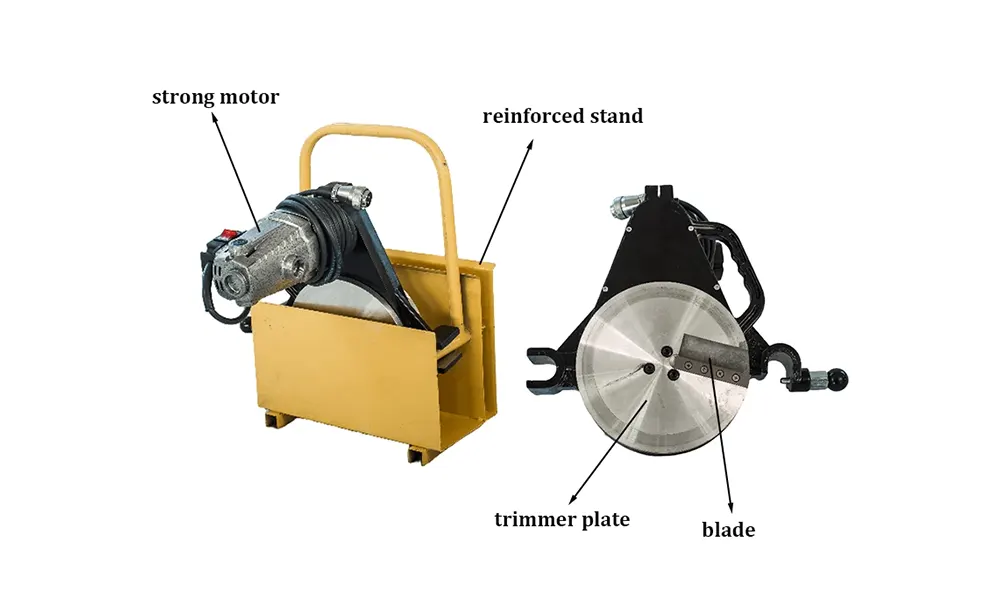
4. Trimmer or Facing Tool
The trimmer, also called the facing tool, prepares the pipe ends before heating. It removes a thin layer of material from each pipe face so the surfaces become flat, clean, and parallel. This step is essential because dirty or uneven pipe ends can prevent proper fusion.
A precise facing tool helps ensure that both pipe ends are matched correctly. It also removes oxidation and surface imperfections that could reduce weld strength. In many projects, this small component plays a surprisingly large role in final joint quality.
For operators, ease of use matters too. A good trimmer should be easy to mount, easy to control, and durable enough for repeated use on site. Since production schedules often depend on fast preparation, a well-designed facing tool can improve efficiency as well as quality.
5. Hydraulic System
In hydraulic HDPE welding machines, the hydraulic system provides the pressure needed during clamping and joining. This system controls the pushing force that brings softened pipe ends together at the correct speed and pressure. A stable hydraulic system helps produce uniform weld beads and reliable fusion strength.
Hydraulic pressure must be steady and accurate. If pressure is too low, fusion may be incomplete. If it is too high, material may be pushed out excessively, affecting the joint structure. This is why pressure stability is one of the core testing items during machine inspection.
High-quality hydraulic parts, including pumps, cylinders, valves, and hoses, help the machine perform more reliably in real project conditions. For large pipe systems and long-term applications, this component becomes even more important.
6. Control Panel and Interface
The control panel allows the operator to manage temperature, pressure, timing, and sometimes automatic fusion cycles. In manual machines, the panel may be simple, while in CNC automatic models, it can include digital displays and programmable settings.
A user-friendly control interface reduces operator error and improves workflow. Clear indicators and simple operation are especially important on busy job sites where multiple welds must be completed efficiently. Better control design also helps standardize the welding process across different shifts and operators.
Why it matters: the control system transforms the machine from a mechanical tool into a precision welding platform.
7. Temperature Control System
Temperature control is the foundation of successful HDPE fusion. The heating plate must reach a stable operating range and keep it steady throughout use. A dependable temperature control system helps prevent underheating, overheating, and fluctuations that can weaken the weld.
This component often includes sensors, thermostats, controllers, and indicators that work together to maintain accuracy. In professional machines, temperature deviation is minimized so that every joint receives the same thermal treatment. That consistency is vital for large pipeline projects where joint quality must remain uniform.
Before delivery, comprehensive temperature accuracy testing is a strong sign of manufacturing quality. Buyers should pay close attention to this point when comparing equipment options.
8. Power Unit and Drive System
The power unit supplies the energy needed for different machine functions. Depending on the model, it may support hydraulic motion, heating operation, or automated control functions. A stable drive system ensures smooth operation and reduces the risk of interruptions during welding.
In field projects, reliable power performance is important because welding work often happens under time pressure. If the power system is unstable, productivity drops and the risk of poor weld quality increases. That is why solid electrical components and safe wiring design are essential.
9. Accessories and Supporting Parts
An HDPE welding machine also depends on several supporting parts and accessories. These may include pipe inserts, reducers, heating plate supports, bolts, scrapers, measuring tools, and transport cases. Though smaller than the main assemblies, these items help improve operation, safety, and convenience.
Well-designed accessories make it easier to handle different project conditions. They also support better machine maintenance and easier transport between job sites. For distributors and contractors, a complete machine package often creates better long-term value.
How These Components Work Together
Each component in an HDPE welding machine has a distinct role, but the real value comes from how they work together. The frame keeps the machine stable. The clamping system secures the pipes. The facing tool prepares clean surfaces. The heating plate softens the pipe ends. The hydraulic system applies pressure. The control panel coordinates the process. And the temperature control system ensures precision at every stage.
If one component is weak, the overall welding result can be compromised. This is why professional manufacturers pay close attention not only to design, but also to testing, calibration, and assembly quality. In real pipeline construction, every detail affects the final joint.
Operational insight: the best machines are not necessarily the most complicated ones, but the ones that combine accurate temperature, stable pressure, strong alignment, and dependable build quality in a practical way.
Why Component Quality Matters for Buyers
For buyers, understanding the key components helps make a smarter purchase decision. A machine may look similar from the outside, but component quality can vary greatly from one supplier to another. Some machines are built for short-term use, while others are designed for heavy-duty industrial work and long service life.
Companies with more than 20 years of industry experience often focus on durability, customization, and global support. They may also offer manual, hydraulic, and CNC automatic options to match different project requirements. This flexibility is valuable for contractors, distributors, and engineering teams who need reliable tools for diverse applications.
In addition, strict quality control can help ensure that each machine meets practical performance expectations. Temperature tests, pressure stability checks, and clamp alignment inspection all contribute to better welding outcomes and fewer field problems.
Typical Application Scenarios
HDPE welding machines are used in a wide range of projects. Water supply systems require leak-proof joints that remain stable over long periods. Gas distribution networks demand high safety standards and precise fusion. Mining projects often need rugged equipment that can handle difficult environments. Industrial pipeline installations may require customized configurations for special pipe sizes or work conditions.
Because these industries are so different, the machine components must be durable, adaptable, and easy to maintain. This is where customization becomes valuable. Voltage options, design changes, branding, and project-specific configurations can make the machine more suitable for a target market or a specific engineering task.
What to Look for Before Buying
Before purchasing an HDPE welding machine, buyers should focus on component quality, manufacturing consistency, and after-sales support. It is wise to check whether the machine has strong frame construction, accurate temperature control, a reliable hydraulic system, and easy-to-use controls. These details directly affect project efficiency and welding quality.
It is also useful to confirm whether the manufacturer provides technical guidance, training support, and efficient logistics. Fast delivery and responsive support can make a major difference when project timelines are tight.
Final Thoughts
The key components of an HDPE welding machine include the main frame, clamping system, heating plate, trimmer, hydraulic system, control panel, temperature control system, power unit, and supporting accessories. Each part contributes to the quality, efficiency, and reliability of the fusion process. When these components are well designed and properly integrated, the machine can deliver strong, stable, and repeatable welding results across many project types.
For professionals working in pipeline construction, the real value of a welding machine lies in its ability to produce safe, durable joints under practical conditions. That is why high-quality engineering, strict testing, and flexible customization are so important when selecting equipment for global projects.
FAQs
Q1: What is the most important component in an HDPE welding machine?
A1: The heating plate and temperature control system are among the most important components because they determine whether the pipe ends reach the correct fusion condition.
Q2: Why is pipe alignment so critical?
A2: Proper alignment ensures the pipe ends join evenly. If alignment is poor, the weld may be weak, uneven, or rejected during inspection.
Q3: Do all HDPE welding machines use hydraulic systems?
A3: No. Some machines are manual, while others use hydraulic pressure or CNC automation. The right choice depends on pipe size, project requirements, and productivity needs.
Q4: How can buyers judge machine quality before purchase?
A4: Buyers should check frame stability, temperature accuracy, hydraulic performance, clamp alignment, certifications, and the manufacturer’s support capability.
Q5: Why do professional manufacturers offer customization?
A5: Customization helps match the machine to different pipe diameters, voltages, work environments, branding needs, and project-specific requirements.



