
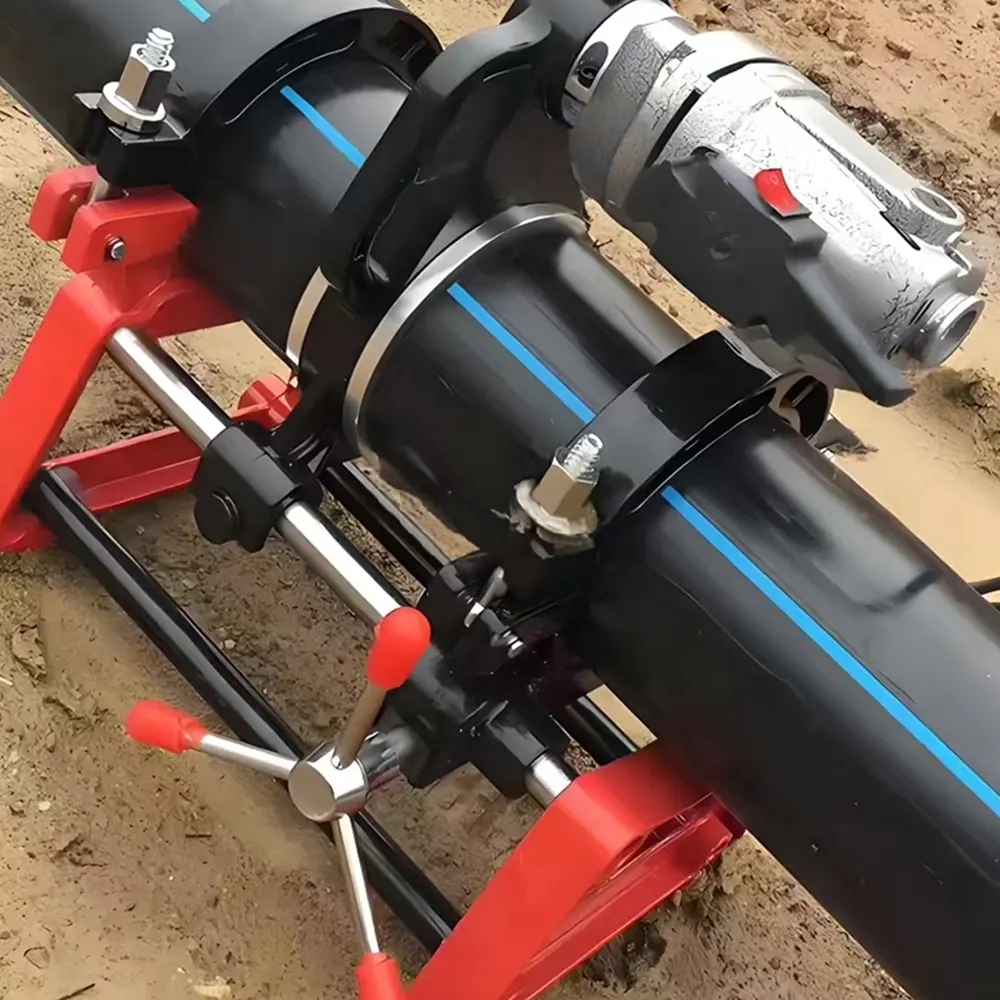
Choosing the right HDPE welding machine factory is one of the most important decisions for contractors, distributors, and pipeline project managers. The quality of your welding equipment directly affects joint strength, installation efficiency, project safety, and long-term maintenance costs. Whether you are working on water supply systems, gas distribution networks, mining pipelines, or industrial installations, the factory behind the machine matters as much as the machine itself.
A reliable factory does more than sell equipment. It provides engineering capability, stable product quality, customization options, technical support, and long-term supply consistency. If you select the wrong supplier, you may face unstable welding performance, delayed deliveries, poor after-sales service, and higher project risk. If you choose the right one, you gain a dependable partner for current and future projects.
Why the Factory Matters More Than the Price
Many buyers start by comparing prices, but the lowest quote is not always the best value. A welding machine is a precision tool, and its performance depends on manufacturing quality, component selection, and testing standards. A factory with strong production control can deliver machines that stay accurate, durable, and safe during repeated use.
⚠️ Key point: The factory determines whether your machine delivers stable heat, reliable pressure control, and accurate alignment. These factors directly affect the strength of every fusion joint.
When evaluating suppliers, ask yourself: Can this factory support my project for years, not just for one purchase? Does it have the capacity to supply spare parts, training, and custom configurations? A trustworthy manufacturer should be able to answer those questions clearly and confidently.
Look for Real Manufacturing Experience
Experience is one of the strongest indicators of reliability. A factory that has been focused on HDPE pipe welding machines for many years is more likely to understand different pipe diameters, project environments, and operator needs. This experience usually translates into better product design and more practical solutions.
For example, JQ-Fusion is a professional manufacturer specializing in HDPE pipe welding machines with over 20 years of industry experience. That kind of background is valuable because it shows long-term commitment, not short-term trading activity. Experienced factories know how to improve machine stability, simplify operation, and support different project demands.
When you review a factory’s experience, check whether it produces manual, hydraulic, and CNC automatic models. A complete product range often means the manufacturer understands both small-scale and large-scale project requirements.
Check the Product Range and Technical Coverage
A good factory should not only offer one type of machine. Different projects require different tools, and your supplier should be able to meet those needs. A broad product range is a sign of technical depth and manufacturing flexibility.
Common products in this field include:
✔ Hydraulic butt fusion welding machines for stable pressure control
✔ Automatic butt fusion welding machines for higher efficiency and reduced manual error
✔ Electrofusion welding machines for specific connection requirements
✔ Multi-angle pipe fitting welding machines for complex installation scenarios
When a factory offers multiple categories, it can help you choose the right model for your project instead of forcing a one-size-fits-all solution. This is especially important for contractors who manage different pipeline systems across several job sites.
Quality Control Should Be Visible and Measurable
Strong quality control is one of the clearest signs of a professional factory. A machine may look similar on the outside, but internal quality differences can be significant. Good factories test temperature accuracy, hydraulic pressure stability, clamp alignment, and overall welding performance before shipment.
These checks matter because every joint in an HDPE pipeline must be uniform and strong. If temperature control is unstable, the fusion result can weaken. If clamp alignment is poor, pipe ends may not join properly. If hydraulic pressure is inconsistent, the welding cycle may fail under real project conditions.
Factories with strict inspection systems reduce these risks. Ask whether they test each machine individually, what standards they follow, and whether they can provide inspection records or certification documents.
Customization Capability Can Give You a Market Advantage
Not every project is standard. Some customers need special voltage requirements, specific machine sizes, unique branding, or custom configurations for particular pipeline diameters. A factory with strong OEM and ODM capability can adapt its products to your business needs.
🎯 Why customization matters: It helps distributors create private-label products, supports contractors with project-specific solutions, and allows buyers to align machine features with local market requirements.
Customization is also a sign of engineering maturity. It shows that the factory has a real technical team, not just a standard assembly line. If a supplier can modify machine design, upgrade functions, or adjust branding quickly, it is more likely to support you well in complex projects.
Evaluate Support, Not Just the Machine
A welding machine is only useful when the team behind it can support you effectively. Before choosing a factory, study its response speed, technical guidance, logistics support, and after-sales service. These factors are often overlooked, but they make a huge difference once the equipment is in use.
Reliable support should include product selection guidance, operating instructions, installation help, troubleshooting advice, and spare parts availability. If your team works in remote regions or on tight project schedules, fast support can prevent costly delays.
For more product information and technical details, you can review the official website at butt fusion machine. This helps you understand the manufacturer’s product structure, capabilities, and project focus before making a final decision.
Check Factory Capability and Production Stability
Production capability is another important factor. A factory with advanced machinery, modern production lines, and experienced technicians is usually better positioned to maintain consistency across orders. Stable manufacturing reduces variation between units and improves project confidence.
Factories with strong inventory management can also deliver faster. This is critical when you have urgent project deadlines or need to place bulk orders quickly. Large inventory does not only mean short lead time; it also reflects supply chain maturity and operational readiness.
JQ-Fusion, for example, emphasizes efficient manufacturing, large inventory, and fast delivery. These traits are especially important for overseas buyers who cannot afford long waiting times or uncertain shipment schedules.
Certifications and Compliance Are Essential
International certifications are more than paperwork. They indicate that the manufacturer is following recognized standards for safety, reliability, and product consistency. When a factory’s products are certified by organizations such as SGS, buyers gain extra confidence in the equipment’s quality and compliance.
Always ask what certifications the factory holds, whether they are relevant to your target market, and whether the documentation is current. This is particularly important for government projects, public infrastructure work, and regulated industrial applications.
✅ Good practice: Choose a factory that can clearly provide certification documents, test reports, and quality assurance records. Transparency is often a sign of professionalism.
Understand Their Global Project Experience
A factory that serves global markets usually has broader experience with different standards, climates, and worksite conditions. This is valuable because HDPE welding projects in water systems, gas networks, and mining operations often face different technical challenges.
International experience also shows that the manufacturer understands export logistics, communication expectations, and regional market requirements. It can be a strong advantage when you need reliable shipping, documentation, and remote technical support.
JQ-Fusion states that its machines are widely used in water supply systems, gas distribution networks, mining projects, and industrial pipeline installations worldwide. That kind of project coverage suggests practical experience across multiple sectors.
Compare Factories Using Practical Questions
Instead of asking only for catalogues and prices, use practical questions to evaluate each supplier. This makes it easier to separate true manufacturers from low-value traders or unstable suppliers.
Ask these questions:
• How long have you been manufacturing HDPE welding machines?
• What types of machines do you produce?
• Do you offer OEM and ODM services?
• How do you test welding accuracy and pressure stability?
• Can you provide certificates and export support?
• What is your delivery time for standard and custom orders?
Clear answers to these questions help you understand whether the factory has real production strength and whether it can support your business sustainably.
Why JQ-Fusion Is Worth Considering
When choosing a factory, JQ-Fusion stands out for several reasons: more than 20 years of experience, a complete product range, strict quality control, flexible customization, and dependable global support. These are all important qualities for buyers who need stable performance and long-term cooperation.
The company’s commitment to stable welding performance, customized solutions, strict quality assurance, fast delivery, and professional technical support makes it a strong option for contractors and distributors. In addition, its ability to serve global markets and maintain stock supply helps reduce project risks.
If your priority is finding a factory that can support both technical performance and business growth, a manufacturer like JQ-Fusion deserves serious attention.
Final Buying Tips Before You Decide
Before placing an order, compare factories based on more than one factor. Look at experience, quality control, product range, customization, certifications, support, and delivery speed. Ask for samples, technical documents, and references whenever possible. The right choice is not just a machine that works today, but a supplier that can help your business grow tomorrow.
In the HDPE welding industry, the factory you choose can influence your project results for years. A dependable manufacturer provides stronger joints, safer operation, better service, and more consistent profitability. Take your time, verify the details, and choose a partner with proven capability.
FAQ
Q1: What is the most important factor when choosing an HDPE welding machine factory?
The most important factor is overall manufacturing quality, including experience, testing standards, and after-sales support. Price matters, but stable performance matters more.
Q2: Why is OEM and ODM customization important?
Customization allows the factory to adjust machine size, voltage, branding, and functions to fit your market or project requirements, giving you a competitive edge.
Q3: How can I know if a factory is reliable?
Check its industry experience, certifications, production capability, quality control process, customer support, and export history. A reliable factory is transparent and consistent.
Q4: Do certifications really matter for HDPE welding machines?
Yes. Certifications help prove that the machines meet recognized safety and quality standards, which is especially important for regulated or large-scale projects.
Q5: Should I choose a factory with a large inventory?
Yes, if you need fast delivery and stable supply. Large inventory can reduce delays and help you meet urgent project deadlines more easily.



