
High-density polyethylene (HDPE) butt fusion welding is a reliable method for creating long-lasting, leak-free pipeline joints. This guide covers safe, efficient operating methods for HDPE welding equipment, practical tips for operators, and a quick troubleshooting table to keep projects on schedule.
Essential Safety Checklist Before You Start
Personal protective equipment (PPE): safety glasses, heat-resistant gloves, long sleeves, and steel-toe boots. Verify that the work area is well-ventilated and clear of flammable materials.
Equipment inspection: check clamps, heaters, hydraulic lines, and the trimmer for wear or damage. Confirm the power supply and battery backup (if applicable) are functioning properly.
Environmental checks: avoid windy, dusty, or wet conditions that can compromise heating plates and alignment. For outdoor jobs, secure pipe ends from movement or contamination.
Quick Tools & Accessories to Have On-Hand
-
Calibrated thermometers and pyrometers
-
Pipe scrapers, alignment guides, and a clean cloth
-
Spare heating pads and trimming blades
-
Pressure gauges and a documented welding logbook
Step-by-Step HDPE Butt Fusion Process
1. Preparation & Alignment
Cut pipe ends square and remove any burrs. Clean surfaces with approved wipes. Position pipes in the clamps and align with the fusion machine’s reference marks. Precise alignment prevents weak joints and reduces rework.
2. Facing (Trimming)
Use a calibrated facing tool to trim both pipe ends until smooth and parallel. Remove trimmings and keep the heating faces clean. Confirm facing tolerance per the pipe manufacturer’s recommendations.
3. Heating
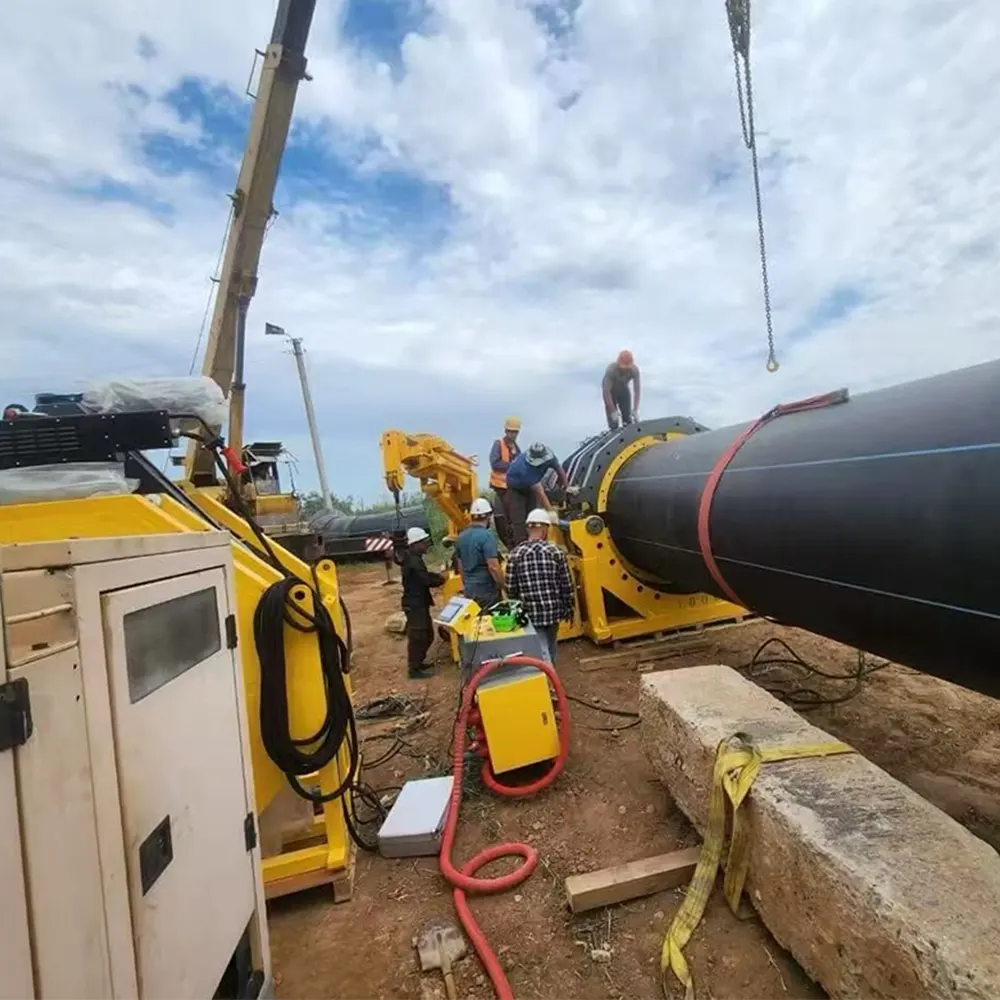
Bring the heating plate to the specified temperature, typically between 200–240°C depending on material grade. Apply the heater between the pipe ends under light pressure for the prescribed heating time. Avoid overheating; monitor temperature closely.
4. Fusion (Joining)
Remove the heating plate and bring the pipe ends together under controlled pressure. Hold the fusion pressure for the full cooling cycle to achieve molecular diffusion and joint strength.
Key Parameters to Monitor
| Parameter | Typical Range / Note |
|---|---|
| Heating plate temperature | 200–240°C (follow material spec) |
| Facing tolerance | ≤ 0.1° angular, smooth surface |
| Fusion pressure | Depends on diameter & SDR—use machine chart |
| Cooling time | Per pipe standard; avoid movement during cooling |
Maintenance & Storage Best Practices
Regular maintenance extends machine life and improves weld consistency. After each use, clean the heating plate, inspect hydraulic hoses for leaks, and store machines in a dry, dust-free area. Replace worn components promptly.
Daily Operator Checklist
-
Confirm heater calibration and surface condition
-
Verify clamp alignment and locking mechanisms
-
Check hydraulic fluid levels and electrical connections
-
Log welding parameters and serial numbers for traceability
Troubleshooting Quick Reference
| Issue | Likely Cause & Fix |
|---|---|
| Poor bead formation | Under/over heating or misalignment — check temp and facing, reface if needed |
| Hydraulic pressure drop | Air in system or leak — bleed system and inspect hoses |
| U-shaped or uneven fusion | Clamping error or uneven heating — recheck alignment and heater contact |
Operator Training & Documentation
Ensure welders are trained to recognized standards and maintain a fusion log with temperatures, forces, times, and operator signatures. This documentation supports quality assurance and dispute resolution when needed.
Practical Tips for On-Site Efficiency
-
Organize tools and spares in labeled kits for quick access.
-
Use a pre-weld checklist to save time and avoid rework.
-
Implement a buddy system for large-diameter welds to monitor cooling and safety.
For reliable HDPE welding equipment and global butt fusion solutions, consider contacting JQ-Fusion at https://jq-fusionwelding.com/ for machine options and technical support.



