
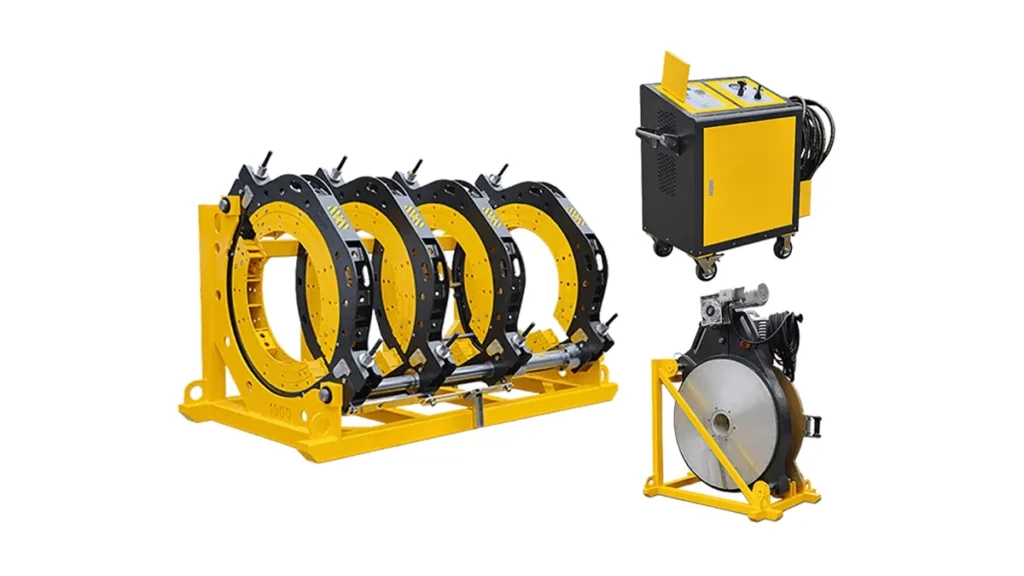
Choosing the right HDPE pipe welding equipment can make the difference between a reliable, long-lasting pipeline and repeated repairs. This guide covers the main types of butt fusion machines, where they are used, and practical buying tips to help contractors, distributors, and project managers select equipment that meets performance, safety, and budget goals.
Types of HDPE Pipe Welding Equipment
Manual Butt Fusion Machines – Ideal for small-diameter pipelines and on-site repairs. These units are lightweight, easy to transport, and require basic operator training. They are cost-effective for contractors handling irrigation, residential water services, or small utility connections.
Hydraulic Butt Fusion Machines – Built for medium to large diameters with higher clamping force and consistent heating pressure. Hydraulic units are preferred for municipal water mains, gas distribution, and industrial pipelines where repeatable, high-quality joints are required.
Automatic / CNC Butt Fusion Machines – Offer programmable welding cycles, digital control, and data logging. These machines reduce operator error and are the best choice for high-volume production, large diameter trunk lines, and projects demanding traceable weld records.
Multi-Angle & Fittings Welding Machines – Specialized units for welding saddle fittings, elbows, and tees with controlled angles and consistent heating plates. They improve efficiency in complex network assemblies and prefabrication yards.
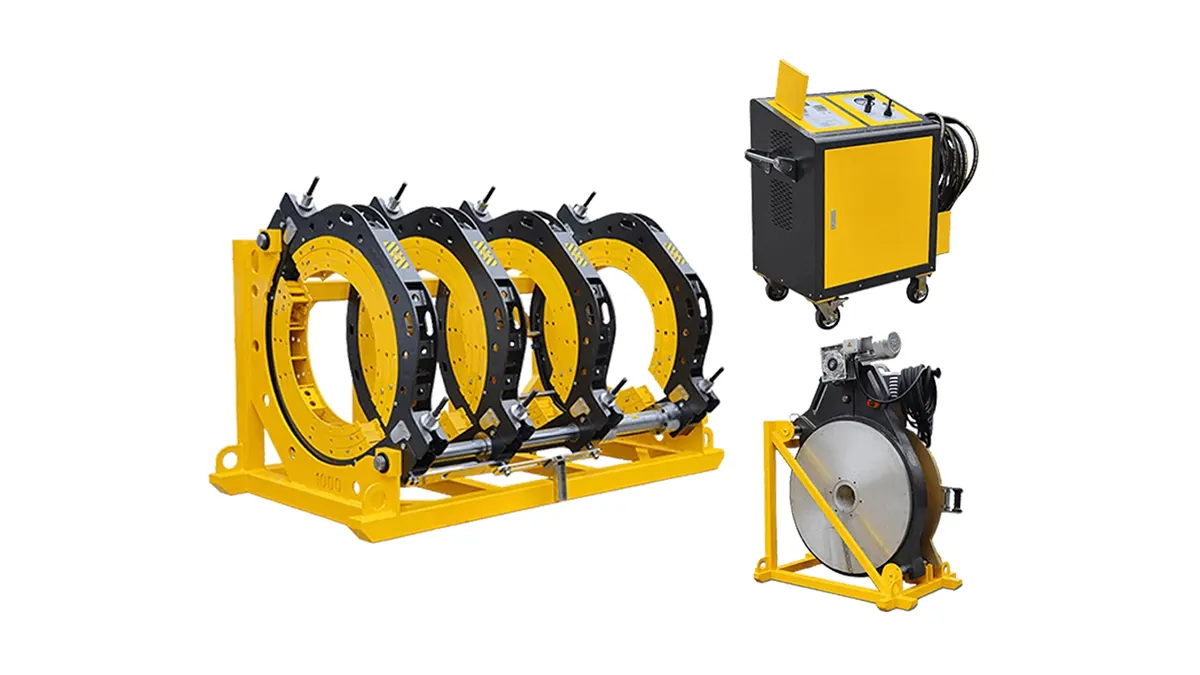
Common Uses & Industry Applications
HDPE pipe welding equipment serves a wide range of sectors:
Water Supply: Leak-free joints for potable water mains and distribution networks.
Gas Distribution: High-strength welds that comply with safety standards for low- and medium-pressure gas pipelines.
Mining & Industrial: Durable piping for slurry lines, chemical transfer, and high-abrasion environments.
Agriculture & Irrigation: Portable manual units for remote fieldwork and irrigation systems.
Quick Comparison: Machine Types
| Machine Type | Best For | Key Benefit |
|---|---|---|
| Manual | DN16–DN400 (approx.) | Low cost, portable |
| Hydraulic | DN63–DN1600+ | Higher force, consistent welds |
| Automatic / CNC | Production lines, large projects | Programmable, recordable welds |
| Multi-Angle Fitting Machines | Fittings & prefabrication | Accurate angles, faster fittings |
Buying Tips: How to Choose the Right Machine
1. Match machine capacity to pipe diameter range. Always choose equipment with clamping range and hydraulic force sufficient for your largest project pipe size.
2. Consider control and data features. Automatic or CNC systems with data logging are essential for projects requiring quality documentation.
3. Portability vs. production. Manual machines excel in mobility; hydraulic and CNC units are better for yards and long-term projects.
4. Power & utilities. Check whether the machine needs an external hydraulic power pack, generator, or standard industrial power supply.
5. Training, spare parts & service. Choose a supplier who offers operator training and a reliable spare parts channel to minimize downtime.
6. Compliance & certifications. Verify that welding machines comply with local standards (e.g., ISO, ASTM) and that weld procedures meet pipeline regulations in your region.
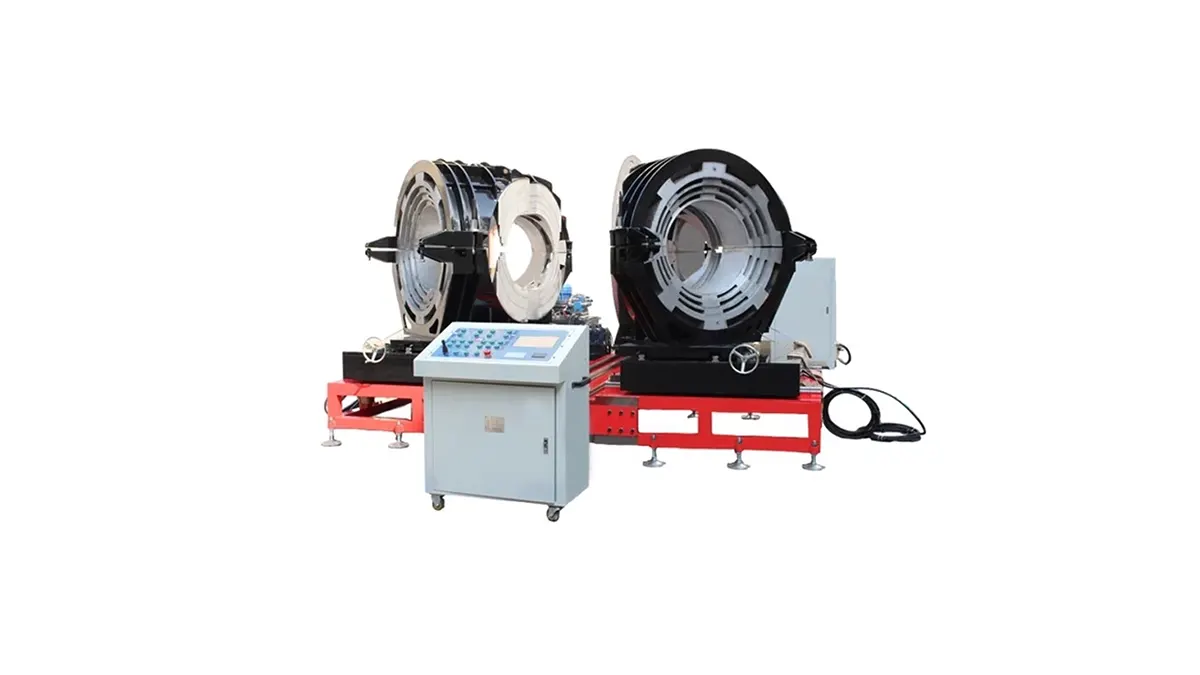
Installation, Operation & Maintenance Best Practices
Proper setup and routine maintenance extend machine life and ensure consistent weld quality:
Site preparation: Flat, clean working surface; protect heater plate from contamination.
Operator training: Train teams on heating cycles, facing techniques, and pressure control to prevent cold or over-pressed joints.
Routine checks: Inspect clamps, hydraulic hoses, heating elements, and alignment before each shift.
Calibration & records: Regularly calibrate pressure gauges and maintain weld logs for quality assurance.
Quality & After-sales Assurance
Manufacturers like JQ-Fusion focus on durable designs, customizable configurations, and after-sales support that includes training and spare parts. When evaluating vendors, confirm warranty terms, on-site commissioning options, and global shipping or dealer networks.
Final Selection Checklist
Before purchase, verify these essentials:
– Required pipe diameter range and material compatibility.
– Power requirements and portability needs.
– Control features: manual, hydraulic, or CNC automation.
– Availability of training, spare parts, and timely technical support.
If you need tailored recommendations, product specifications, or a quote, visit JQ-Fusion for a full catalog of HDPE welding machines and professional guidance.



