
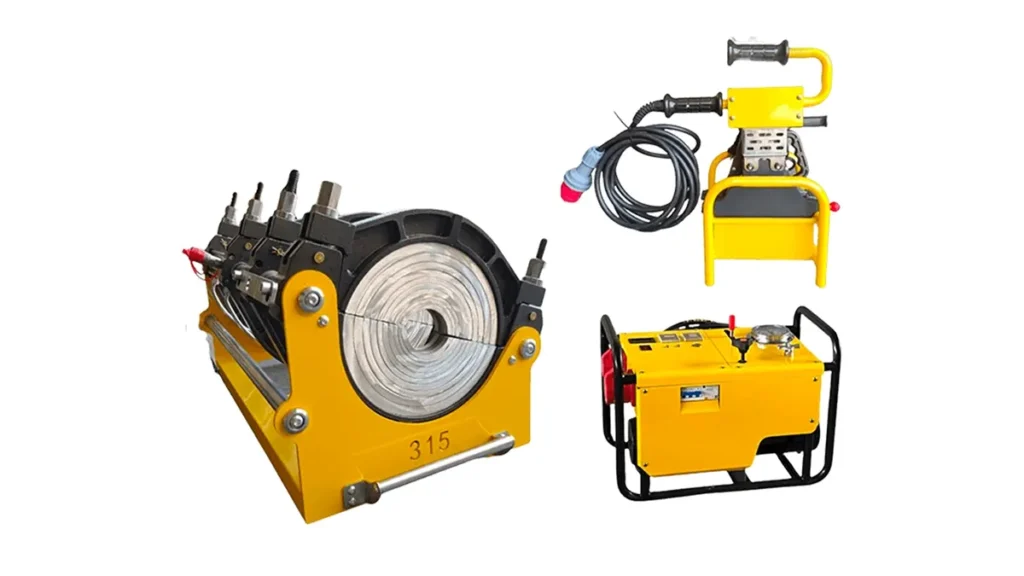
Butt fusion welding is the most reliable and widely used technique for joining HDPE pipes and fittings in high-pressure gas and water distribution networks. Understanding the butt fusion machine working principle is critical for pipeline contractors and engineers to guarantee leak-free, monolithic joint integrity.
What Is the Core Working Principle of Butt Fusion?
The fundamental butt fusion machine working principle revolves around thermal bonding under controlled pressure. Unlike socket welding or mechanical couplings, butt fusion uses a non-stick heating plate to melt the squared pipe ends simultaneously. Once the material reaches a specific viscous state, the plate is removed, and the two ends are pressed together. The molecular chains intertwine across the joint interface as the material cools, forming a homogeneous bond that is often as strong as the pipe itself.
4 Key Stages of the Butt Fusion Process
To master the butt fusion machine working principle, an operator must execute four distinct stages with precision. Proper clamping, temperature control, and timing dictate the weld quality.
1. Clamping and Facing
The pipe ends are secured tightly in the machine’s clamps to prevent any movement. A rotating disk facing tool planes the pipe faces until they are perfectly parallel and flat. This step removes oxidation and surface contaminants, ensuring simultaneous full-contact heating.
2. Heating and Heat Soaking
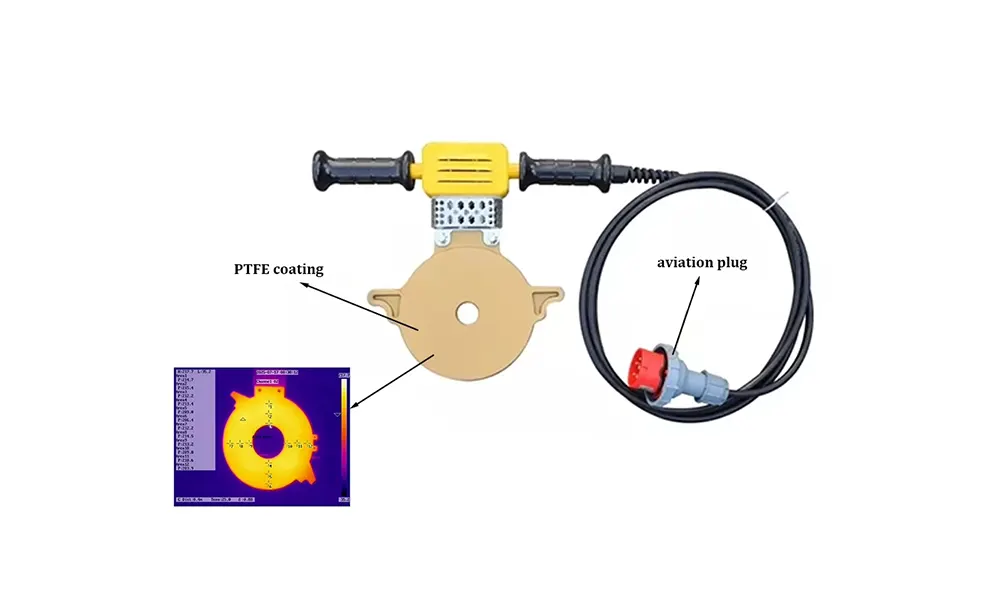
A PTFE-coated heating plate regulated to a precise temperature (typically between 210°C and 225°C for PE100) is inserted. The pipe ends press against the plate under a specific interfacial pressure to form an initial melt bead. Following this, the pressure is reduced to near-zero drag to allow heat soaking, where thermal energy penetrates the pipe wall thickness per ISO 21307 butt fusion procedures.
3. Plate Removal and Fusion
This is the most time-sensitive stage. The heating plate is swiftly removed, and the molten faces are visually inspected for contamination. The machine immediately brings the pipe ends together. The fusion pressure is built up gradually according to standards like PPI TR-33, allowing the viscous material to mix and molecular entanglement to occur.
4. Cooling and Solidification
The joint must remain clamped and motionless under maintained pressure. Removing the pipe too early can cause joint failure. The cooling time depends on the wall thickness and ambient temperature; machines with automatic data logging help verify this critical phase.
Key Parameters Influencing Weld Quality
| Parameter | Function | Typical Value/Standard |
|---|---|---|
| Heating Plate Temperature | Melts polymer without degradation | 210°C – 225°C (PE100) |
| Hydraulic/Pneumatic Pressure | Controls melt flow and mixture | 0.15 – 0.25 N/mm² |
| Pipe Surface Alignment | Ensures even bead formation | Maximum 10% wall misalignment |
| Cooling Time | Allows full recrystallization | Per PE butt fusion equipment standard curves |
How Hydraulic and CNC Automatic Systems Execute the Principle
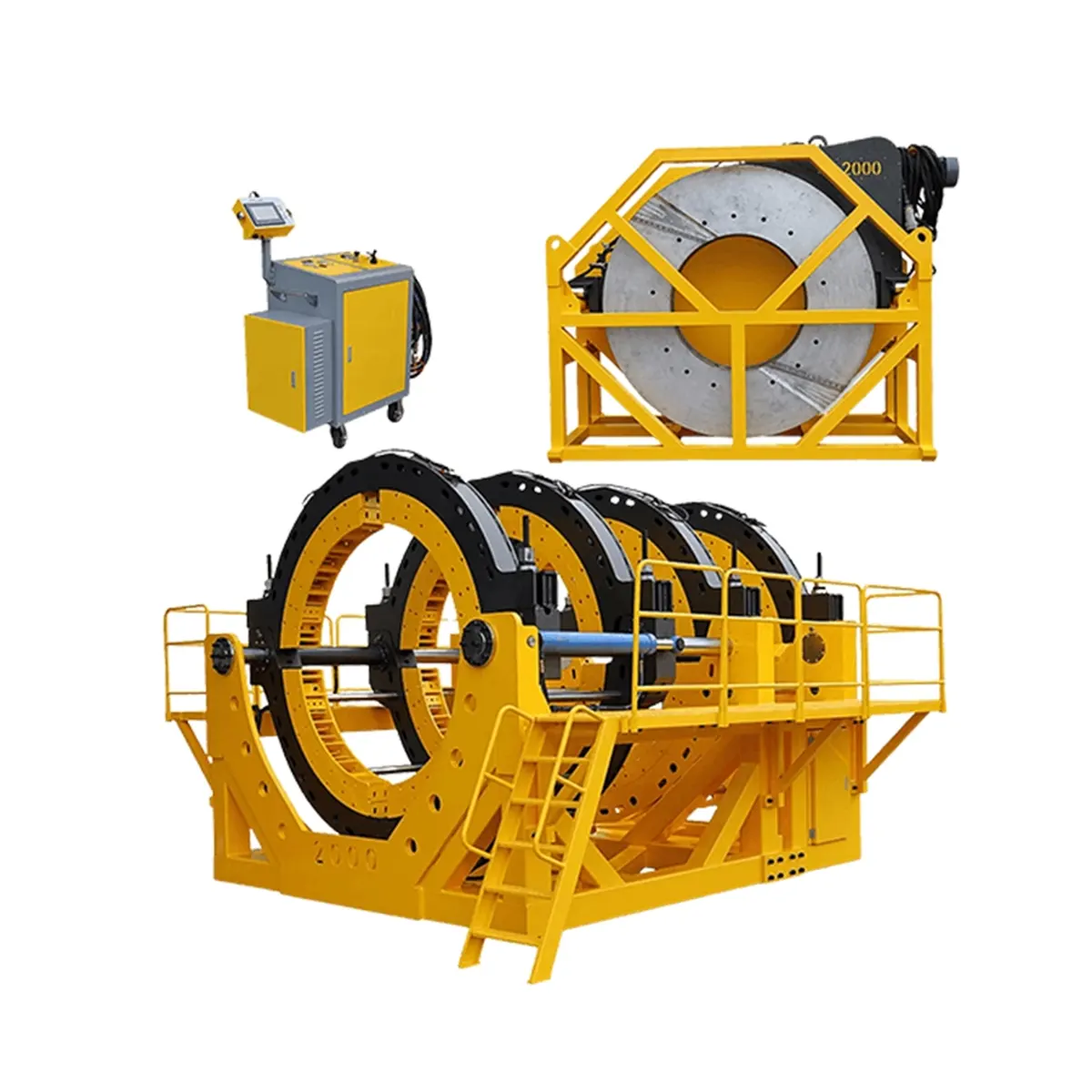
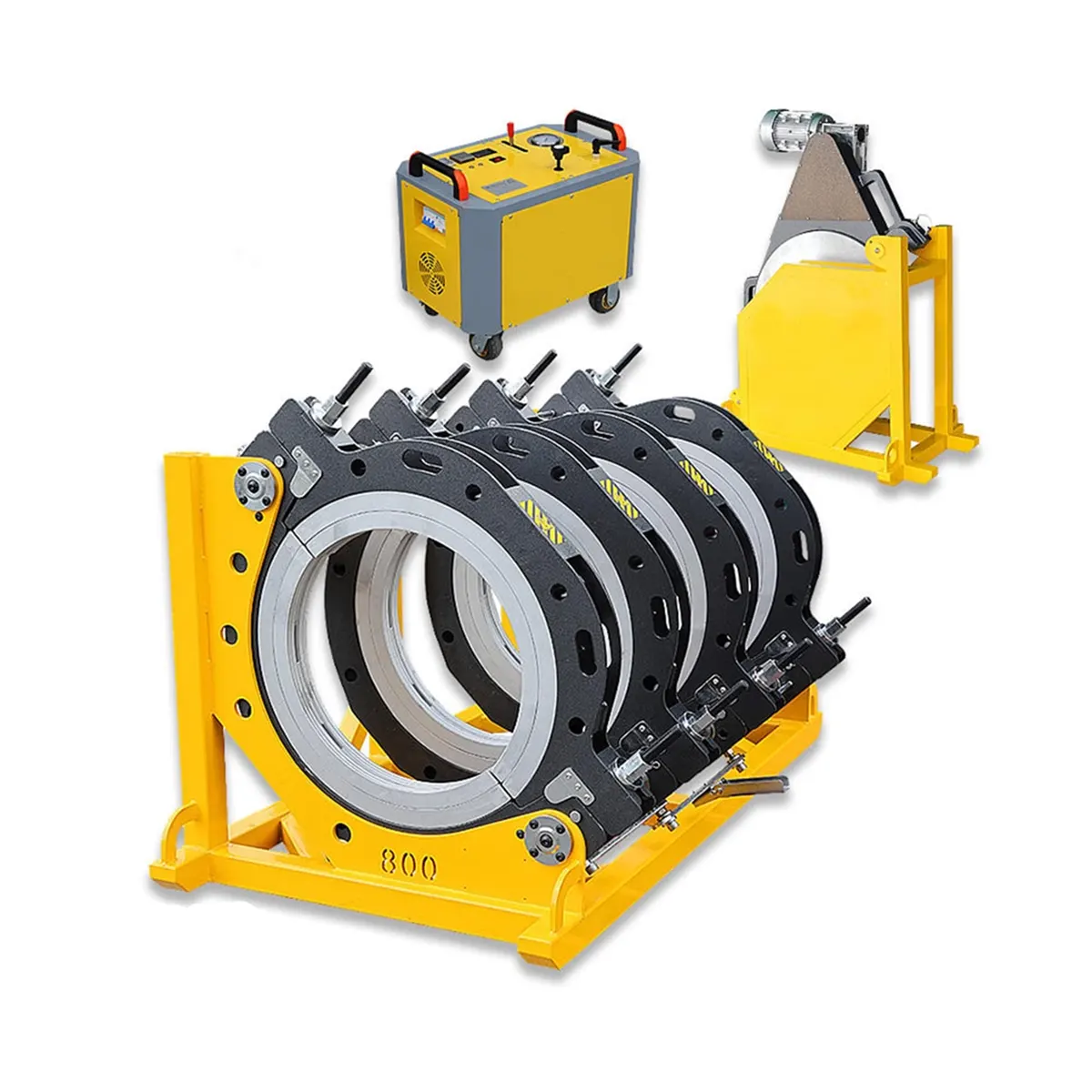
While the core butt fusion machine working principle remains constant, automation enhances repeatability. A hydraulic butt fusion machine replaces manual levers with power-assisted cylinders, delivering linear, vibration-free force ideal for large diameter pipes. The automatic CNC butt fusion machine takes this further by digitally controlling the sequence. Sensors monitor real-time temperature and travel speed, automatically adjusting for environmental variations. This eliminates operator bias and ensures compliance with rigorous traceability requirements.
Critical Application Areas
The reliability of the butt fusion technique makes it the default joining method for safety-critical infrastructure.
- Water Supply: Leak-tight joints are crucial for potable water mains. Butt fusion prevents root intrusion and external contamination.
- Gas Distribution: Polyethylene networks rely exclusively on butt welding to handle pressure surges without metallic corrosion risks.
- Mining Slurry Lines: The smooth internal bore created by a correct butt weld ensures low friction loss and high abrasion resistance.
- Industrial Effluent Systems: The chemical inertness of PE combined with homogenized welds handles aggressive chemical transfer safely.
Matching Machine Type to Field Conditions
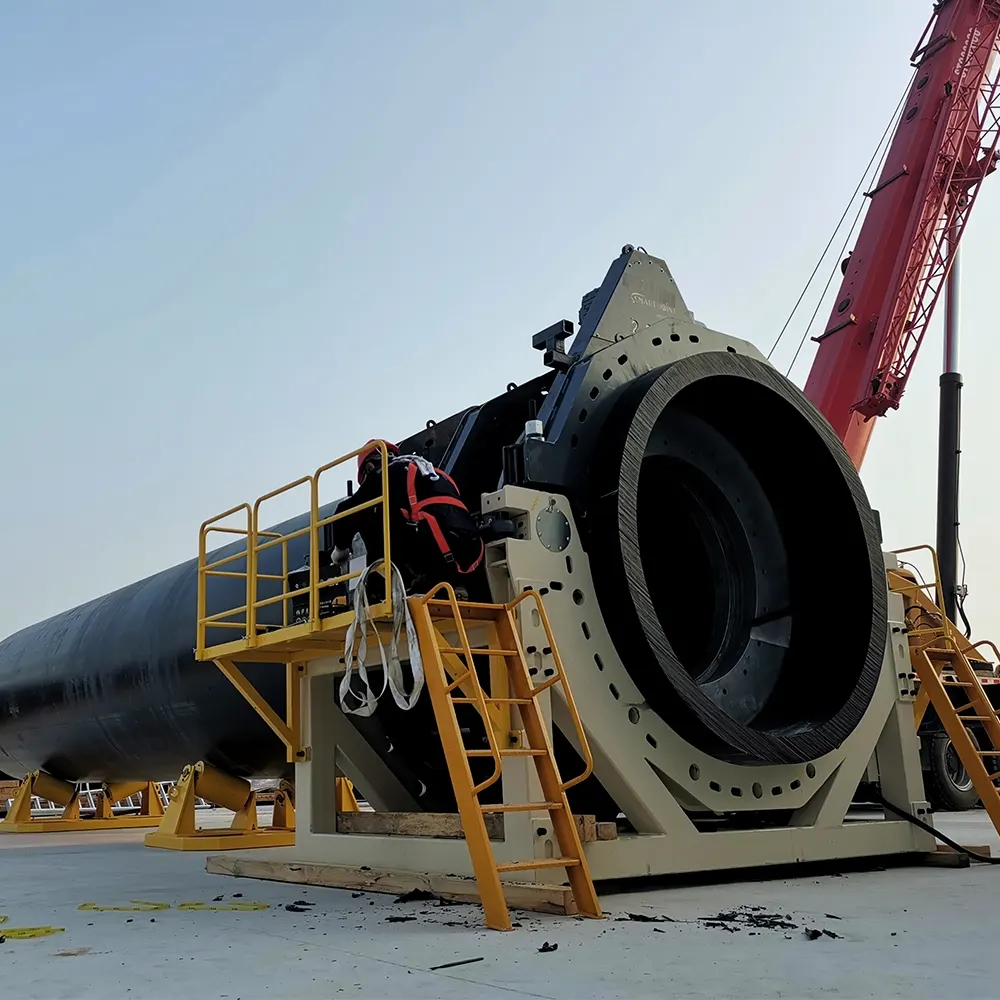
Selecting the correct equipment geometry is part of implementing the working principle effectively. For tight trench work, a manual butt welder offers portability for diameters up to 315mm. For large-scale infrastructure deployment, crawler-track hydraulic rigs support pipes over 2000mm. JQ-Fusion manufactures a full spectrum of these machines, including the JQH and JQA series, which integrate isolated hydraulic pressure regulation to stabilize the critical fusion stage. The design promotes uniform bead rollback, a visual indicator of correct pressure application as defined by the butt fusion machine working principle.
Maintaining Joint Consistency
Even a perfectly understood principle fails if machine maintenance is neglected. The heating plate’s surface must stay free of polymer residue; PTFE coatings should be checked with temperature crayons to verify no cold spots exist. The facing tool blades need regular sharpening to deliver flat, smooth surfaces. Hydraulic systems require calibration to ensure the displayed and actual forces match, preventing cold fusion or excessive melt squeeze-out.
Mastering the butt fusion machine working principle transforms pipeline assembly from mere connection into permanent system integrity. Whether deploying manual units in remote areas or automated rigs for city-wide grids, adherence to the heat-soak-fusion timeline determines long-term asset performance.



