
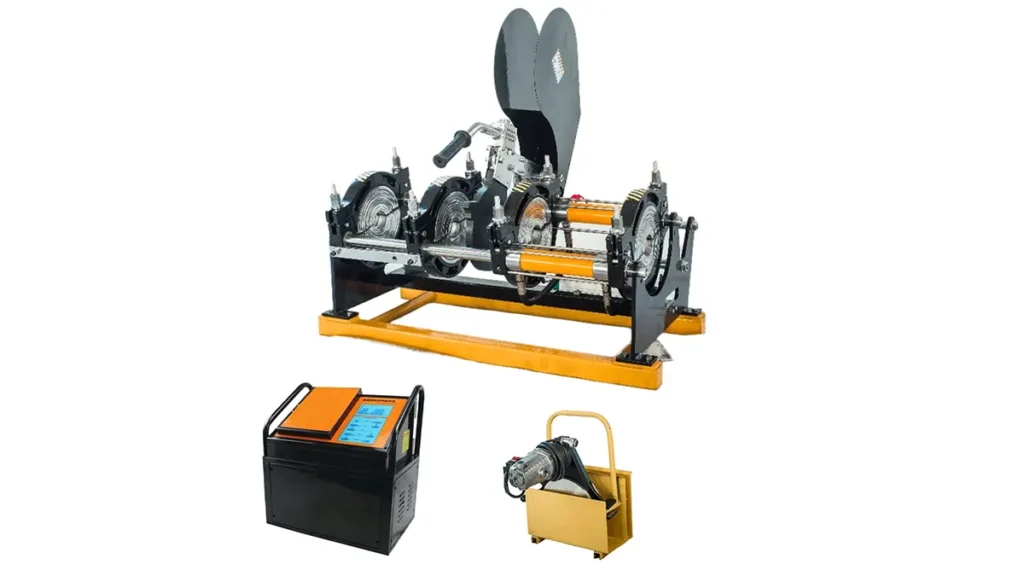
Investing in the right HDPE welder for large diameter pipes is a critical decision that directly impacts pipeline integrity, project timelines, and long-term operational costs. When dealing with substantial diameters—often exceeding 315mm and reaching up to 2000mm or more—the challenges of alignment, hydraulic pressure control, and consistent heating are magnified. Unlike smaller units, large diameter butt fusion welding machines must deliver immense clamping force while maintaining perfect axial alignment to meet stringent standards like ISO 21307 butt fusion procedures.
This guide breaks down the essential factors to consider before purchasing a large diameter pipe welding machine, ensuring your investment delivers reliable, high-strength joints across water, gas, and industrial applications.
Understanding the Demands of Large Diameter Welding
Welding high-density polyethylene pipes at large diameters is fundamentally different from small-scale operations. The sheer mass of the pipes requires robust frames and powerful hydraulic systems to overcome friction during the facing and fusion stages. According to PE butt fusion process guidelines, variables such as drag pressure become significantly more pronounced, requiring machines with precise pressure regulation. Without a purpose-built HDPE welder for large diameter pipes, operators risk cold fusion joints, misalignment defects, and costly project failures.
Key Features to Look for in a Heavy-Duty Welder
When selecting equipment, hydraulic capability is non-negotiable for diameters above a certain threshold. A superior large diameter machine should incorporate the following components:
- Rigid Frame Construction: The base frame must resist torsional flexing. Look for heavy-gauge steel with integrated pipe supports to prevent pipe sagging during the heating and cooling phases.
- High-Force Hydraulic System: A powerful hydraulic power pack is essential to move and hold the heavy carriages. The system must allow for infinitely variable pressure adjustments to match exact PE butt fusion equipment standard parameters.
- Removable Clamps and Inserts: Large machines should feature adaptable clamping systems to handle varying wall thicknesses without damaging the pipe surface.
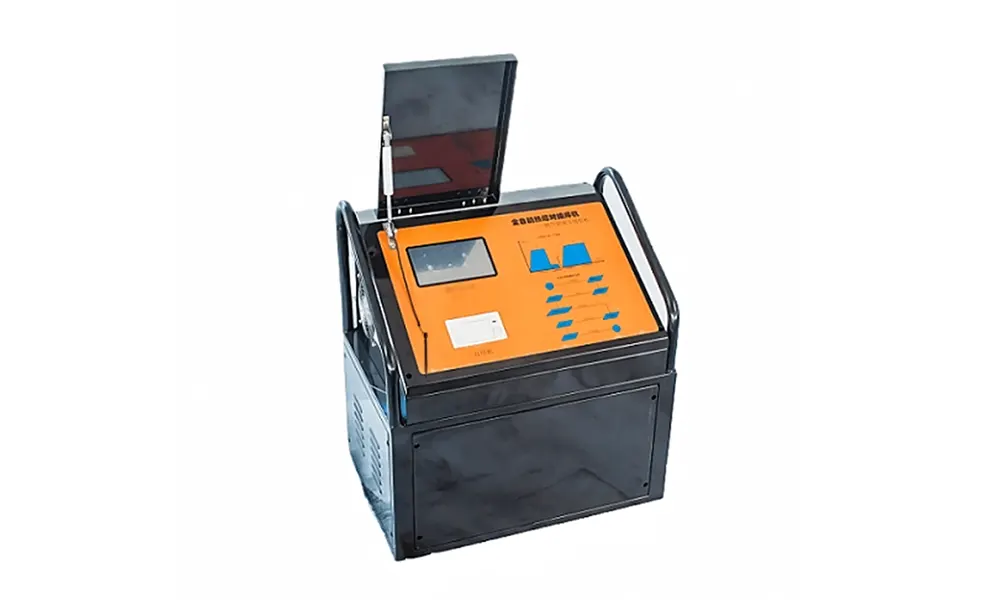
- Automated Data Logging: To ensure traceability, modern CNC automatic machines record critical parameters, providing a digital record of the fusion cycle for quality assurance.
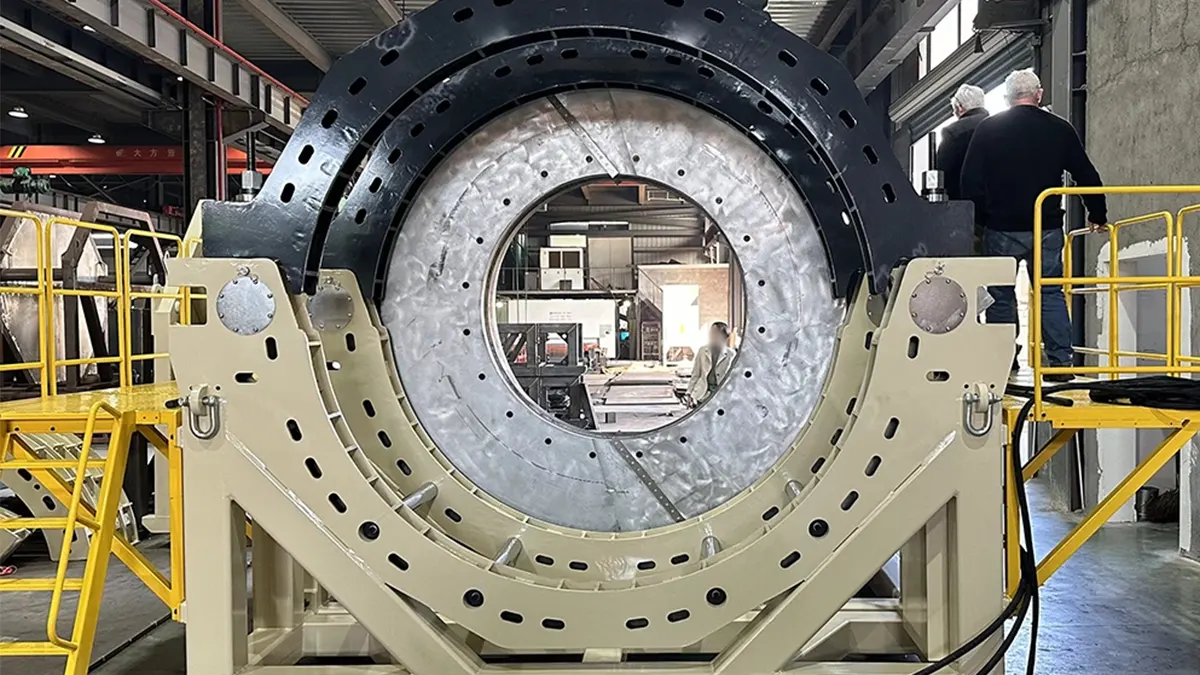
Comparing Automation Levels: Manual vs. Hydraulic vs. CNC Automatic
The degree of automation influences operator dependency and repeatability. Understanding your project scope is vital to match the machine type to the task.
| Machine Type | Best Suitability | Key Advantage |
|---|---|---|
| Manual | Small to medium diameters | Cost-effective but limited control for large sizes |
| Hydraulic | 315mm – 2250mm | High force, robust control, ideal for the target HDPE welder for large diameter pipes market |
| CNC Automatic | Critical infrastructure (gas/water) | Automatic pressure calibration, data logging, eliminates human error |
Technical Parameters That Define Weld Quality
Beyond the frame, the control system is the brain of the HDPE welder for large diameter pipes. Independent temperature control of the heater plate is necessary to maintain a uniform surface temperature, usually around 220°C. The facing tool, or trimmer, must have sharp, high-torque blades to create a smooth, parallel finish on the pipe ends without introducing contamination. Inadequate trimmer performance in large diameters leads to improper melt bead formation, compromising the integrity mandated by ASTM F2620 heat fusion practices.
Ensuring Global Compliance and Durability
Procurement managers must verify that the equipment complies with international quality benchmarks. A reliable hydraulic butt fusion machine should be built considering CE and ISO manufacturing principles. Components such as the hydraulic cylinders, seals, and PTFE-coated heater plates must be sourced and tested for extended field use in harsh environments, from desert pipeline projects to high-altitude water transfer schemes. JQ-Fusion focuses on integrating these durable components into their large diameter solutions, ensuring equipment longevity and consistent output.
The Importance of Matchining Support
Acquiring a HDPE welder for large diameter pipes is not just a transaction; it is a partnership. Evaluate the availability of spare parts, technical documentation, and remote diagnostics. Since these machines are deployed globally, a manufacturer with a responsive after-sales team is essential. Considerations should extend to operator training, as even a fully automatic CNC machine requires skilled interpretation of logged data.
Mobility and Jobsite Logistics
Large diameter machines are heavy and often require auxiliary equipment for movement. When choosing a model, assess the availability of a wheeled chassis, lifting eyes, or containerized packaging. If your project involves frequent relocation, a track-mounted frame or an integrated hydraulic lifting system can significantly reduce downtime between joints. The goal is to match the machine’s footprint to the logistical reality of your trench or yard.
Ultimately, selecting the optimal machine requires a balance of mechanical rigidity, advanced control technology, and service reliability. By focusing on these criteria, contractors secure a fusion solution that delivers robust, long-lasting welds in even the most demanding infrastructures.



