
Achieving a perfect butt fusion weld depends on precision at every stage, but the butt fusion machine heating time is arguably the most critical variable. If the heating cycle is too short, the pipe ends won’t reach a proper melt state. If it’s too long, you risk material degradation and a weak joint. Understanding the correct heating parameters ensures the long-term integrity of your HDPE piping systems.
Why Heating Time Matters in Butt Fusion Welding
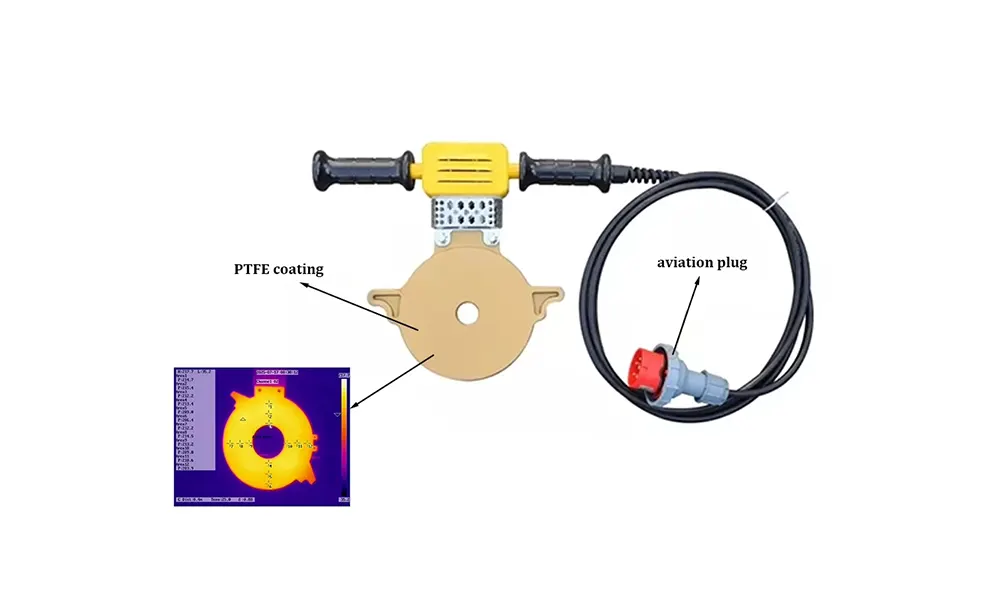
The principle of butt fusion relies on heating two pipe ends against a precisely controlled heated plate until they become molten. Once the bead formation is correct, the pipe ends are pressed together under controlled pressure to form a homogeneous joint. The heating time is not a random guess; it fundamentally determines the thermal soak and the quality of the molecular bond. According to ISO 21307 butt fusion procedures, deviations from the standard soaking time are a primary cause of field fusion failures.
Key Variables Influencing Heating Time
Setting up your butt fusion machine heating time is not a one-size-fits-all process. You must account for the specific material and environmental conditions. Ignoring these factors often results in cold welds or overly oxidized joints. The primary variables include:
- Pipe Diameter and Wall Thickness: The most obvious factor. Larger diameters and particularly thicker SDR ratings (like SDR 11) require significantly longer soak times to heat the pipe wall uniformly.
- Ambient Temperature Conditions: Welding in cold weather (below 5°C) removes heat from the pipe ends faster. You must either extend the heating time or use protective shelters to meet the ASTM F2620 heat fusion standards.
- Heater Plate Surface Temperature: The standard target is usually between 200°C and 230°C (392°F – 446°F). A plate that isn’t calibrated correctly or has cold spots will never achieve a proper melt pattern regardless of the set timer.
- Melt Flow Rate of the Resin: Different batches of PE100 or PE4710 may have varying viscosities. Materials with lower melt flow rates may require slightly more time to form the correct melt bead.
Standard Heating Time Parameters (Reference Chart)
While always verifying against the machine’s specific integration of PE butt fusion equipment standard is crucial, the following table represents a typical generic guideline for a standard SDR 11 pipe at a nominal 23°C ambient temperature. Always prioritize the PPI butt fusion procedure for technical validation.
| Pipe Diameter (mm) | Bead-Up Time (Initial Contact) | Soaking Time (Heating) | Dwell Time (Changeover) |
|---|---|---|---|
| 20 – 63 mm | 1 – 3 sec | 20 – 45 sec | Max 4 sec |
| 75 – 110 mm | 3 – 5 sec | 50 – 80 sec | Max 6 sec |
| 160 – 250 mm | 5 – 8 sec | 100 – 180 sec | Max 8 sec |
| 315 – 500 mm | 8 – 12 sec | 210 – 340 sec | Max 10 sec |
| 630 – 800 mm | 12 – 15 sec | 400 – 600 sec | Max 12 sec |
Manual vs. Hydraulic vs. CNC Automatic Heating Management
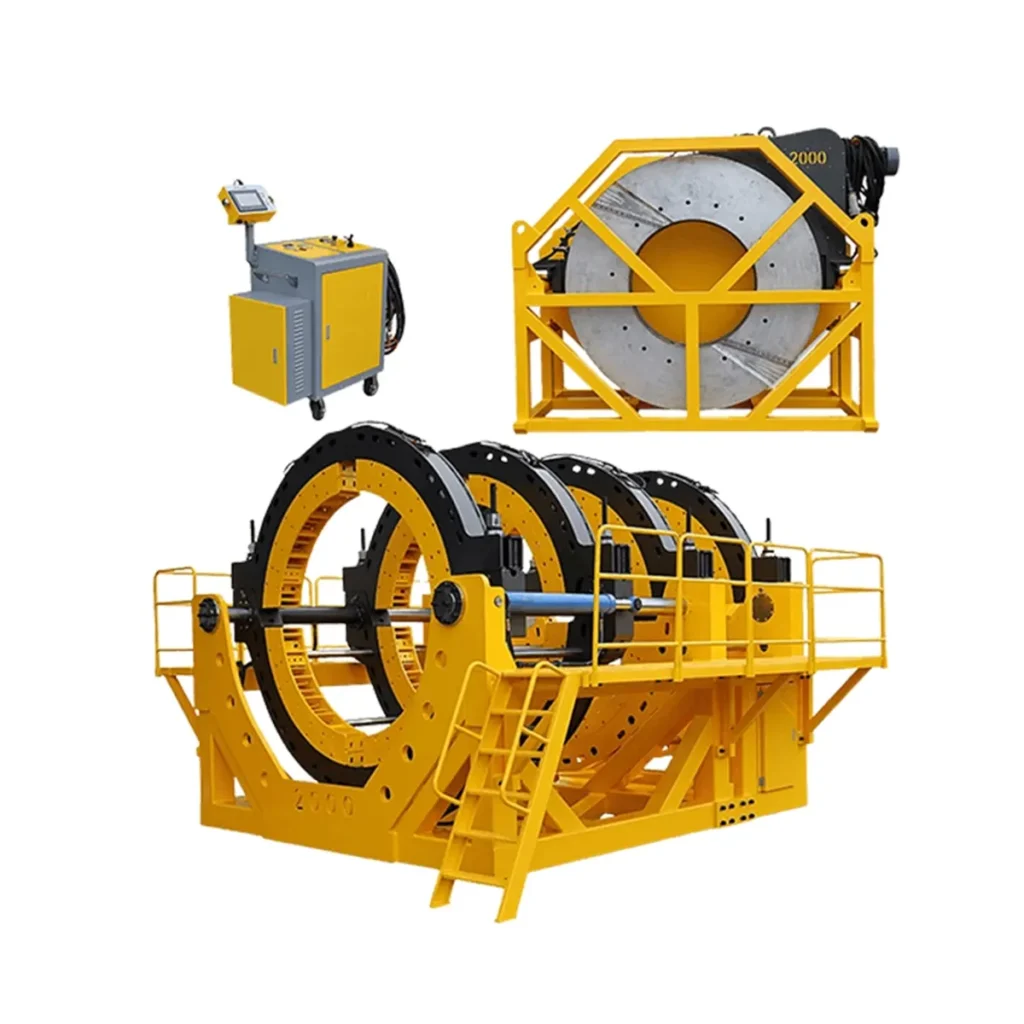
The way you manage heating time varies significantly based on your fusion equipment type. A manual butt fusion machine relies heavily on the operator’s stopwatch and experience; visual confirmation of the bead size is essential before plate removal. In contrast, hydraulic machines offer better control by automating the pressure applied during the heating soak, but timing might still be semi-manual. For mission-critical infrastructure, CNC automatic butt fusion machines remove guesswork entirely by digitally tracking temperature, time, and pressure, generating a fusion report that acts as a quality assurance log for the PPI technical guidance compliance.
The Perils of Incorrect Heating Duration
An improper butt fusion machine heating time manifests in two distinct failure modes. Under-heating prevents the polymer chains from diffusing across the joint interface, leading to brittle, low-strength connections that separate under pressure. Over-heating on a quality HDPE welding machine degrades the polymer matrix; the material becomes too fluid and the critical alignment beads collapse, potentially narrowing the inner bore or introducing oxidized, charred material into the joint. A symmetrical, rounded double bead on both sides of the pipe usually indicates a correct heat soak.
Optimizing Heating Cycles for Field Conditions
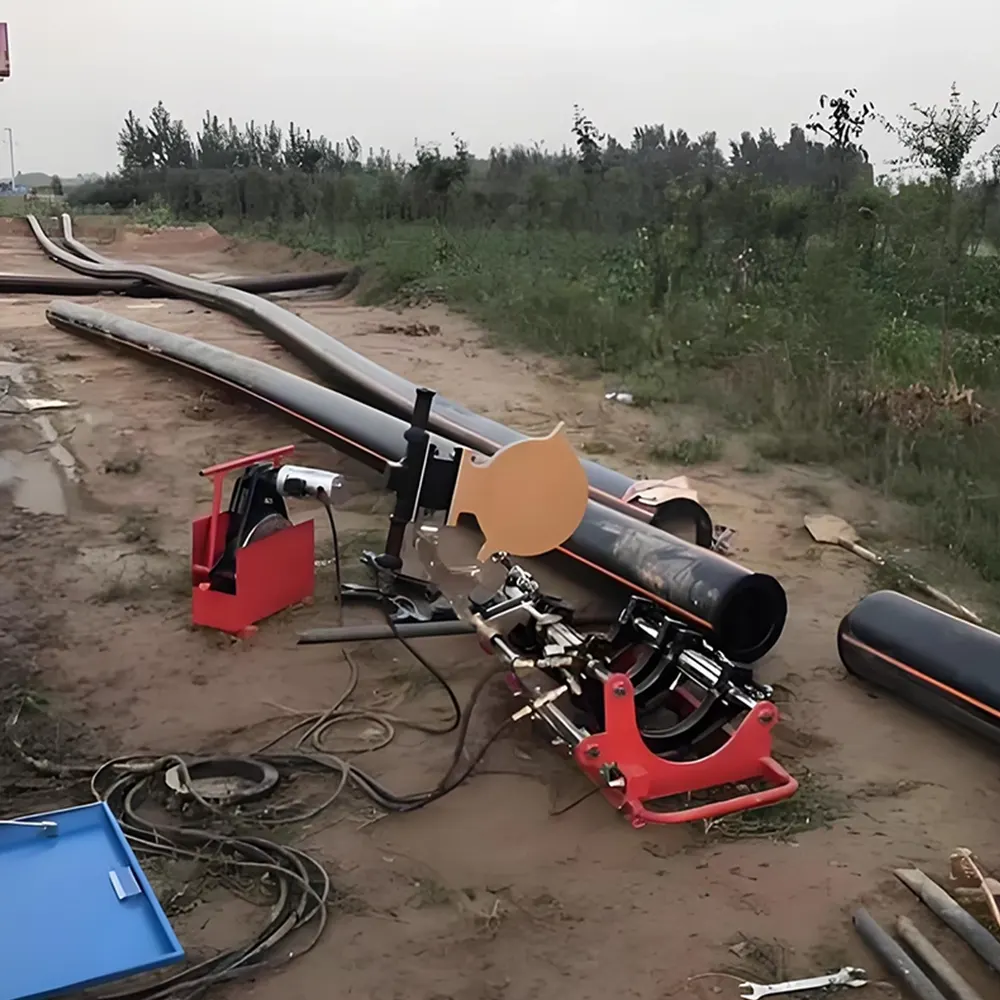
Adapting your technique in the field is critical. High-end butt fusion machines from manufacturers like JQ-Fusion are designed to maintain stable heating and precise alignment, but the operator must compensate for the environment. In windy conditions, the area between the plate and the pipe can cool prematurely; a wind shield is mandatory. Furthermore, during the dwell time (the interval between removing the heater plate and bringing the pipe ends together), speed is critical. A slow changeover allows ambient air to instantly cool the molten surface, effectively ruining the joint no matter how perfect the initial heat cycle was.
Establishing a Validation Weld Procedure
Every time you encounter a new material batch or move your machine to a new site, you should perform a test joint. Record the butt fusion machine heating time, measured bead size, and the destructive test results. This practice aligns with the strict requirements found in the heat fusion operator qualification standards. By maintaining a methodical approach to your heating parameters, you guarantee the longevity and safety of your pipeline network.



