
Why Standard Setups Often Fall Short
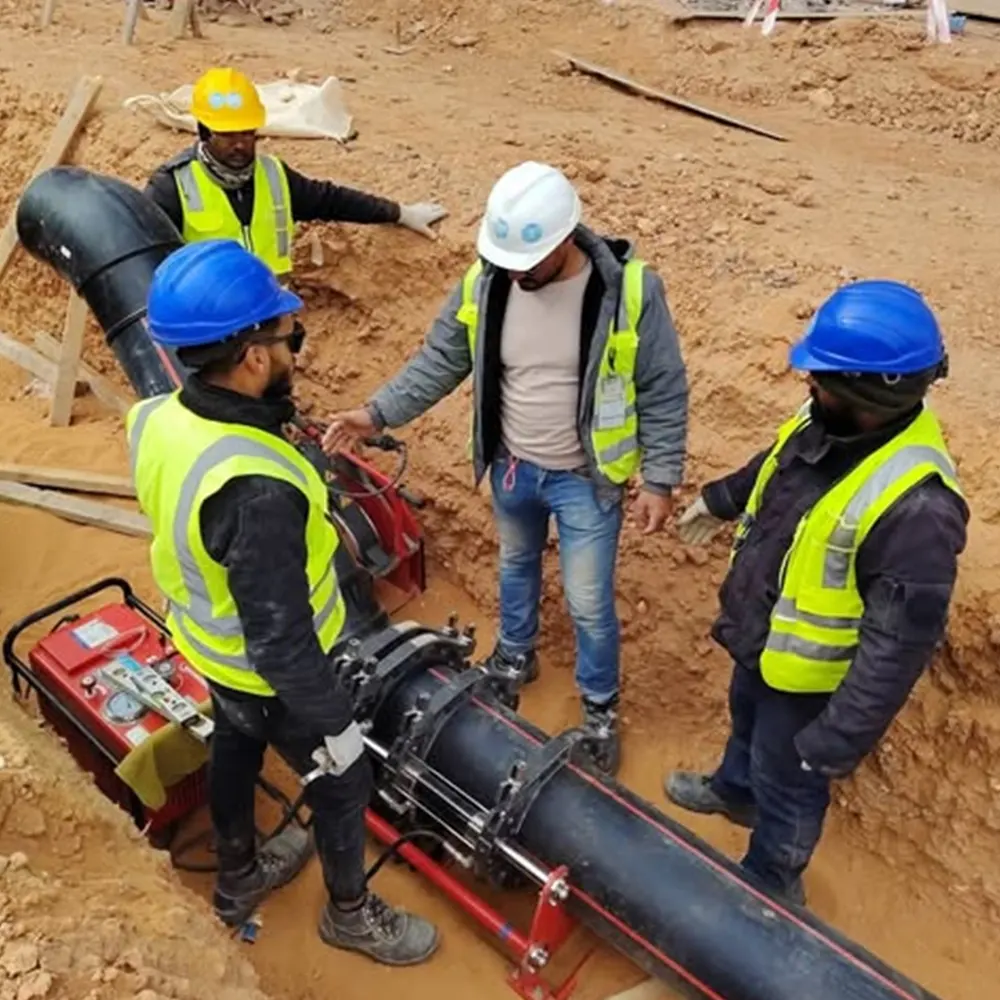
Off-the-shelf welding equipment rarely aligns perfectly with the demands of complex infrastructure projects. Every job site presents unique challenges—variable pipe diameters, specific wall thicknesses, cramped trench environments, or extreme climate conditions. Standard models force contractors to compromise, which can lead to slower workflows, inconsistent joint quality, and higher long-term operational costs. A tailored HDPE welding machine custom configuration eliminates these compromises from day one.
When you customize, you gain control over core components such as clamp type, hydraulic station power, heating plate coating, and frame geometry. This ensures your equipment matches the exact SDR ratings and material grades you work with daily. For projects following strict standards like ISO 21307 butt fusion procedures, a properly configured machine becomes a critical compliance tool rather than a limitation.
Core Elements You Can Tailor
A genuine HDPE welding machine custom configuration covers far more than just selecting a model number. Experienced manufacturers work with you to specify every functional detail. Below are the primary modules that can be adapted to your project scope:
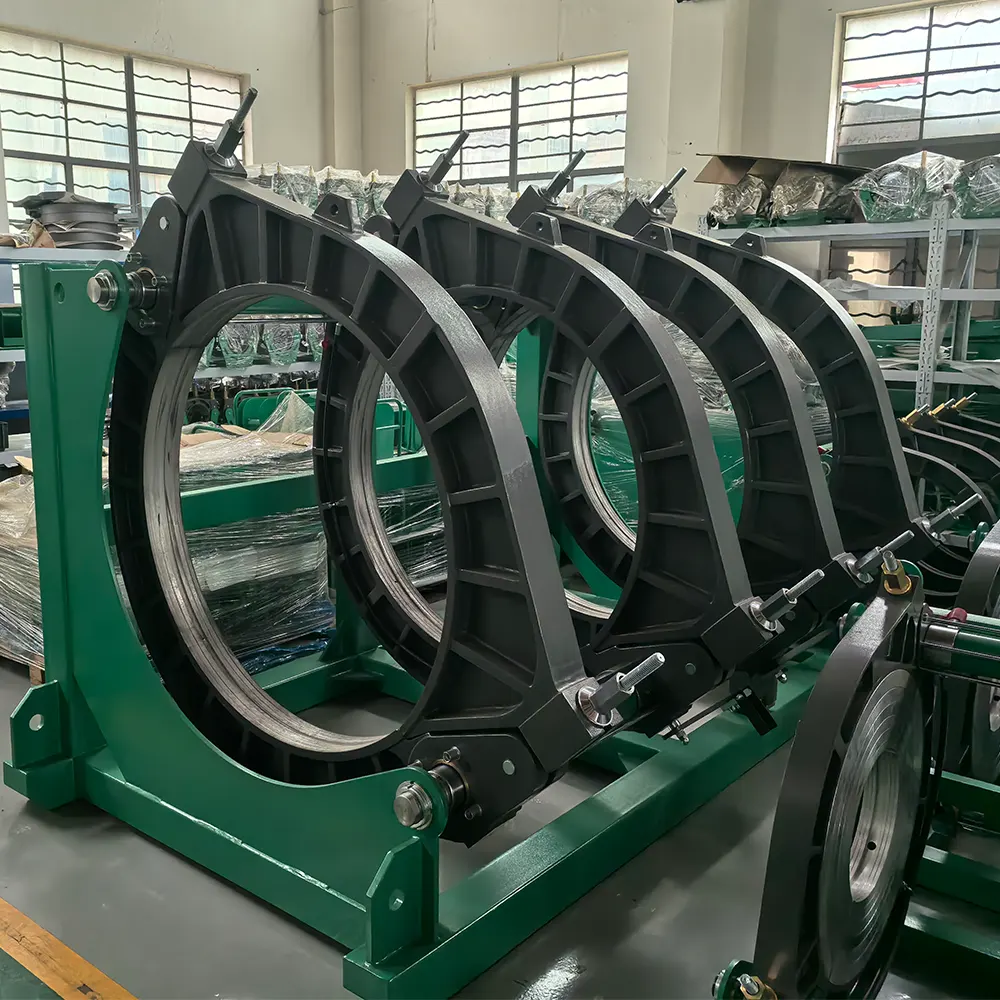
- Clamping System: Choose between steel or lightweight aluminum clamps. Aluminum reduces operator fatigue during repetitive manual handling, while steel offers heavy-duty durability for large-diameter pipes.
- Hydraulic Station: Specify single-phase or three-phase power, manual lever control or advanced digital pressure regulation. The oil reservoir capacity and pump speed directly influence cycle times on long pipe runs.
- Heating Plate: Select non-stick PTFE-coated surfaces or bare aluminum plates. Digital temperature controllers can be calibrated to ±1°C accuracy, critical when working with sensitive PE100-RC materials.
- Trimmer Design: High-speed steel blades versus carbide-tipped cutters. Spiral-cut geometry produces clean facing surfaces without chatter marks, even on thick-walled pipes exceeding 60mm.
- Frame Configuration: Two-clamp or four-clamp base frames, wheel-mounted trolleys, or stationary skids. For tight trenches, compact narrow-frame designs improve maneuverability without sacrificing alignment precision.
Automation Levels From Manual to CNC
Different project scales demand different degrees of automation. Mapping your daily output requirements and operator skill levels to the right control system prevents both overspending and underperformance. The table below outlines how each tier addresses distinct working environments.
| Configuration Level | Control Method | Best For |
|---|---|---|
| Manual | Handwheel-driven carriage movement, manual pressure application | Small-diameter pipes (≤315mm), field repairs, remote sites without power access |
| Hydraulic | Lever-operated directional valves, analog pressure gauges | Medium to large diameters (200mm–2250mm), municipal water mains, mining slurry lines |
| CNC Automatic | Touchscreen HMI, programmable fusion cycles, data logging | High-volume production, gas distribution networks, projects requiring PE fusion operator requirements traceability |
When configuring a CNC automatic butt fusion machine, you can preload jointing parameters for multiple pipe specifications. The system then automatically manages the full cycle—heat soak, clamp release, bead-up pressure, and cooling time—according to ASTM F2620 heat fusion guidelines. This repeatability is invaluable on large-scale contracts where every joint must pass non-destructive examination.
Application-Specific Configurations
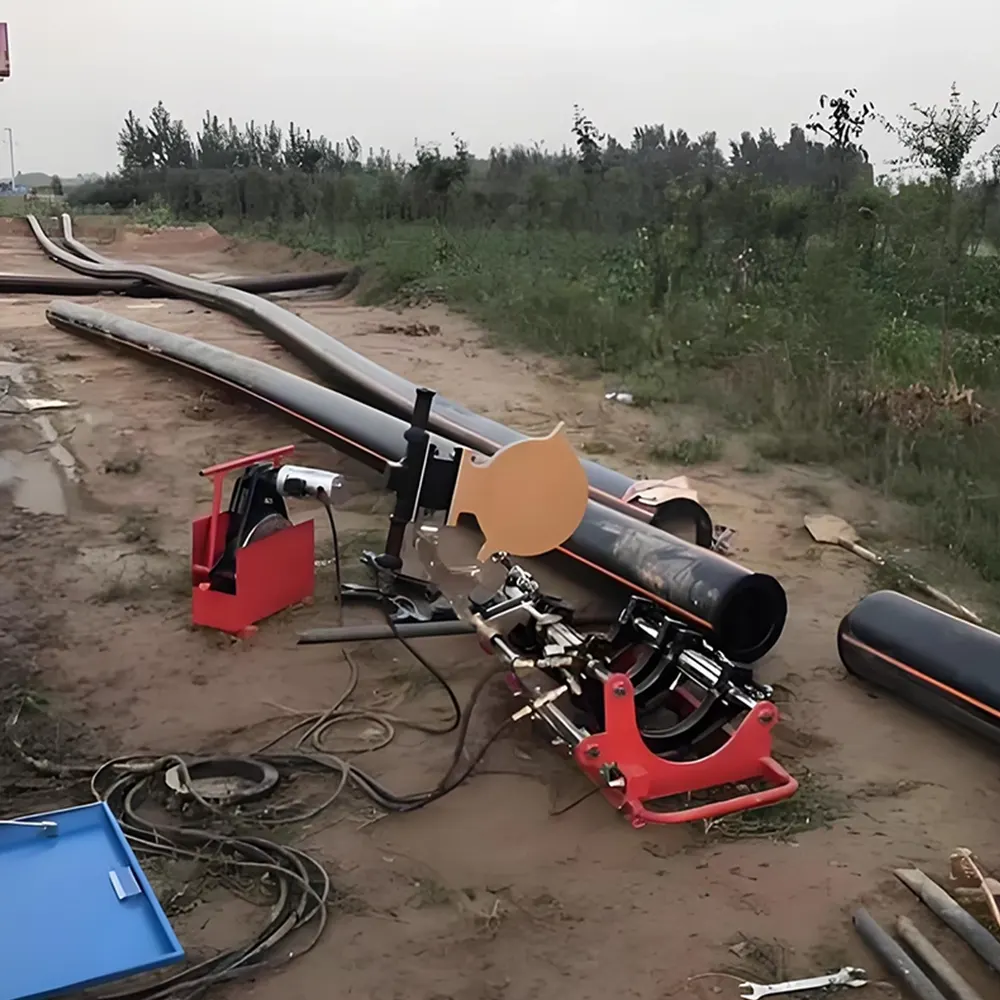
Your work environment directly shapes the ideal machine setup. A water transmission project in the Middle East faces different challenges than a gas distribution upgrade in Northern Europe. HDPE welding machine custom configuration accounts for these variables upfront.
Gas Distribution: Machines configured for natural gas pipelines often include spark-proof electrical enclosures, explosion-proof motors, and enhanced data recording modules. Traceability features align with PE gas piping systems standards, archiving fusion pressure curves for regulatory audits. A hydraulic butt fusion welding machine with dual pressure ranges accommodates both thin-wall service lines and thick transmission mains within a single shift.
Mining and Industrial: Slurry pipelines and chemical transfer systems demand abrasion-resistant heating plate coatings and reinforced carriage tracks. Configurations here prioritize rapid clamp changes between different SDR schedules, as mining sites frequently switch between dewatering lines and process water pipes. Heavy-duty trimmers optimized for continuous operation handle the extended facing times required by thick PE100 industrial pipes.
Municipal Water Systems: Potable water projects benefit from stainless steel heating plate surfaces and contamination-free hydraulic oil specifications. Large-diameter machines with four-clamp base frames ensure perfect alignment on 1200mm+ OD pipes, while integrated wheel kits allow teams to move the equipment between trench sections without disassembly.
Multi-Angle and Specialized Requirements
Not all pipelines run in straight lines. When your project involves fabricated fittings, elbows, tees, or custom-angle segments, a standard butt fusion setup becomes insufficient. Multi-angle pipe fitting welding machines can be configured with segmented clamps and rotating bed frames to handle crossings from 0° to 90° and beyond.
Configuring for multi-angle work typically involves specifying additional clamp inserts for short-stub pipes, extended trimmer reach, and heating plates with dual-side non-stick coating. The control logic also differs—operators need to manage asymmetric heating profiles when fusing fittings with varying wall thickness ratios. JQ-Fusion works closely with contractors to define these parameters during the custom configuration phase, ensuring the delivered machine handles both standard butt joints and complex fitting assemblies.
Matching Power and Portability to Site Conditions
Remote installations without grid power require HDPE welding machine custom configuration to focus on generator compatibility and fuel efficiency. Diesel-powered hydraulic units with oversized cooling fans maintain consistent pressure even in 45°C+ ambient temperatures. Conversely, urban night-work crews might prioritize low-noise electric power packs and integrated LED work lights.
| Site Condition | Configuration Priority | Recommended Options |
|---|---|---|
| High Altitude (>3000m) | Engine derating compensation, reduced cooling efficiency | Turbocharged diesel engines, high-flow hydraulic pumps |
| Arctic/Sub-Zero | Cold-start reliability, material embrittlement prevention | Synthetic hydraulic oil, insulated heating plate jackets, heated control enclosure |
| Confined Urban Trench | Compact dimensions, low exhaust emissions | Narrow-frame chassis, electric motor option, detachable power pack |
| Off-Grid/Desert | Self-contained power, dust and sand ingress protection | Integrated generator set, IP65-rated electricals, heavy-duty air filtration |
Integration With Electrofusion Systems
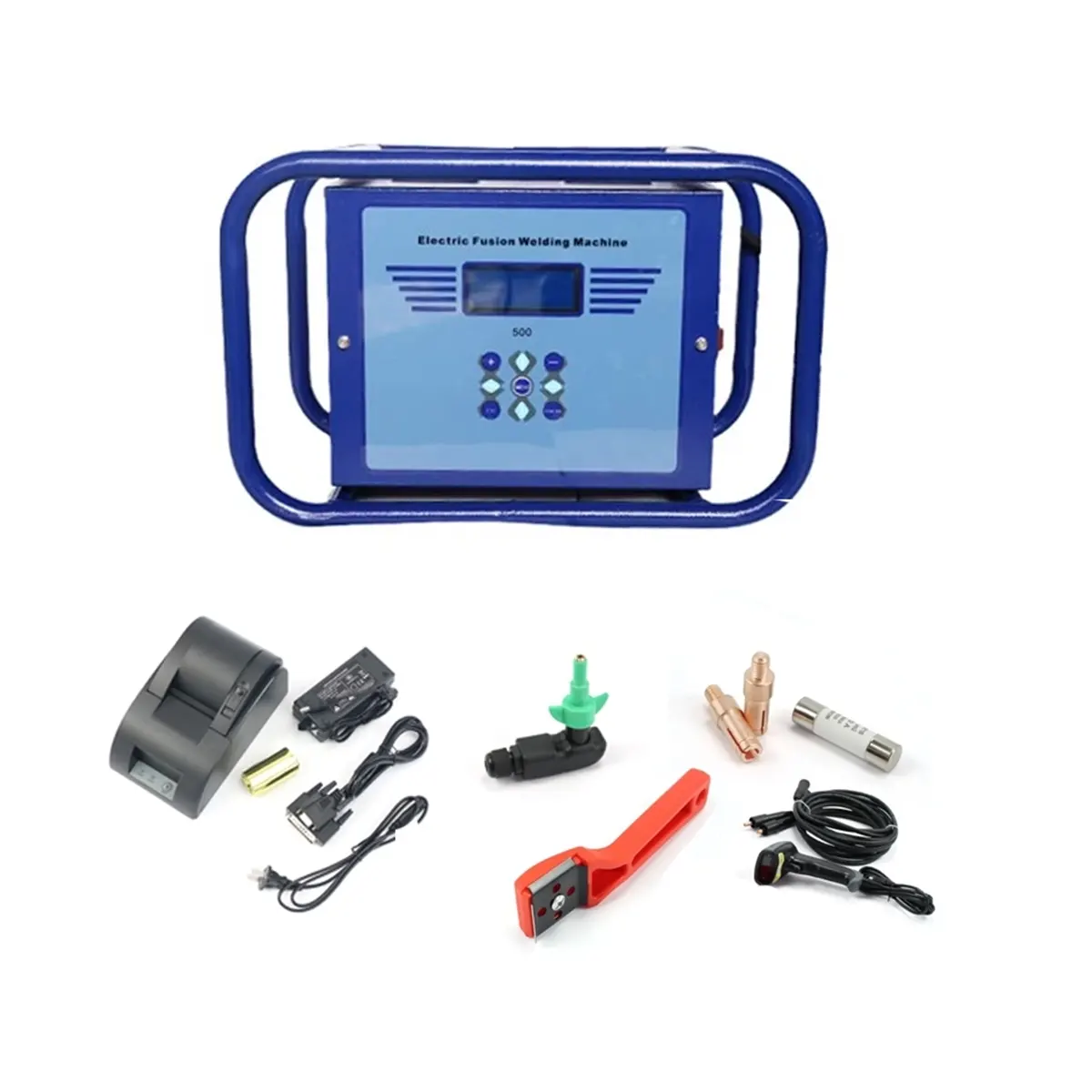
Many pipeline networks combine butt fusion for mainline joints with electrofusion for tie-ins and repairs. A comprehensive HDPE welding machine custom configuration might include complementary electrofusion units that share the same power source or transport frame. Modern electrofusion processors can be configured with barcode scanners, GPS tagging, and USB data export for complete joint documentation according to ASTM F1290 electrofusion standards.
When ordering a custom package, you can specify that all equipment operates on a common voltage, uses interchangeable connectors, and fits within the same shipping container footprint. This logistical coherence reduces mobilisation costs on multi-site programs.
Quality Assurance Built Into Every Configuration
Custom does not mean experimental. Every tailored machine should still undergo rigorous factory acceptance testing before dispatch. For HDPE welding machine custom configuration, the quality checklist includes temperature uniformity mapping across the entire heating plate surface, hydraulic pressure hold tests at 110% of maximum rated pressure, and carriage alignment verification using laser measurement tools.
Request detailed test reports that reference relevant standards. A properly documented machine gives you confidence on day one of installation and provides the baseline data needed for periodic recalibration. The PPI butt fusion procedure technical report offers excellent guidance on what parameters should be verified during commissioning.
Making the Right Choice for Your Next Project
Selecting a HDPE welding machine custom configuration is an investment in project efficiency. Start by auditing your pipe inventory—diameter range, SDR ratings, and material grades. Then assess your operating environment, crew experience levels, and documentation requirements. With these data points, a knowledgeable manufacturer can propose a configuration that balances performance, budget, and delivery timeline.
Rather than adapting your workflow to a standard machine, configure equipment that works the way you do. The result is faster cycle times, fewer rejected joints, and a lower total cost of ownership across the equipment’s service life. Explore available options and start building your specification today.



