
Plastic pipe welding machines are essential for Ghana’s expanding infrastructure—supporting water distribution, irrigation, mining operations, and urban utility upgrades. This guide helps buyers in Ghana choose the right HDPE pipe welding equipment, understand local installation challenges, and evaluate after‑sales needs for reliable long‑term performance.
Why HDPE Butt Fusion and Electrofusion Matter in Ghana
Durability and leak-free joints make HDPE systems ideal for Ghana’s rainy seasons and coastal zones. Low corrosion risk and long service life suit projects around Accra, Tema, Takoradi, as well as inland mining and irrigation schemes in the Ashanti and Northern regions. Field crews benefit from portable manual units for village water schemes while larger contractors prefer hydraulic or CNC automatic systems for large-diameter networks.

Common Applications in Ghana
Municipal water mains, rural potable water projects, irrigation for cocoa and staple crops, mine dewatering and slurry lines, telecom conduit installation, and local gas distribution all rely on strong, certified HDPE welds. Consider local factors such as seasonal access roads, coastal humidity, and fuel/electricity reliability when choosing a machine.
Types of Plastic Pipe Welding Machines
Manual (bench) Butt Fusion: Simple, low-cost, portable for 20–315mm. Ideal for rural teams and small contractors.
Hydraulic Butt Fusion: Higher clamping force for 160–2000mm pipes, suited to municipal and industrial projects.
Automatic / CNC Butt Fusion: Precise control and data logging for large projects and contractors needing consistent quality.
Electrofusion Machines: Best for fittings and repair work where spigot fusion isn’t feasible.
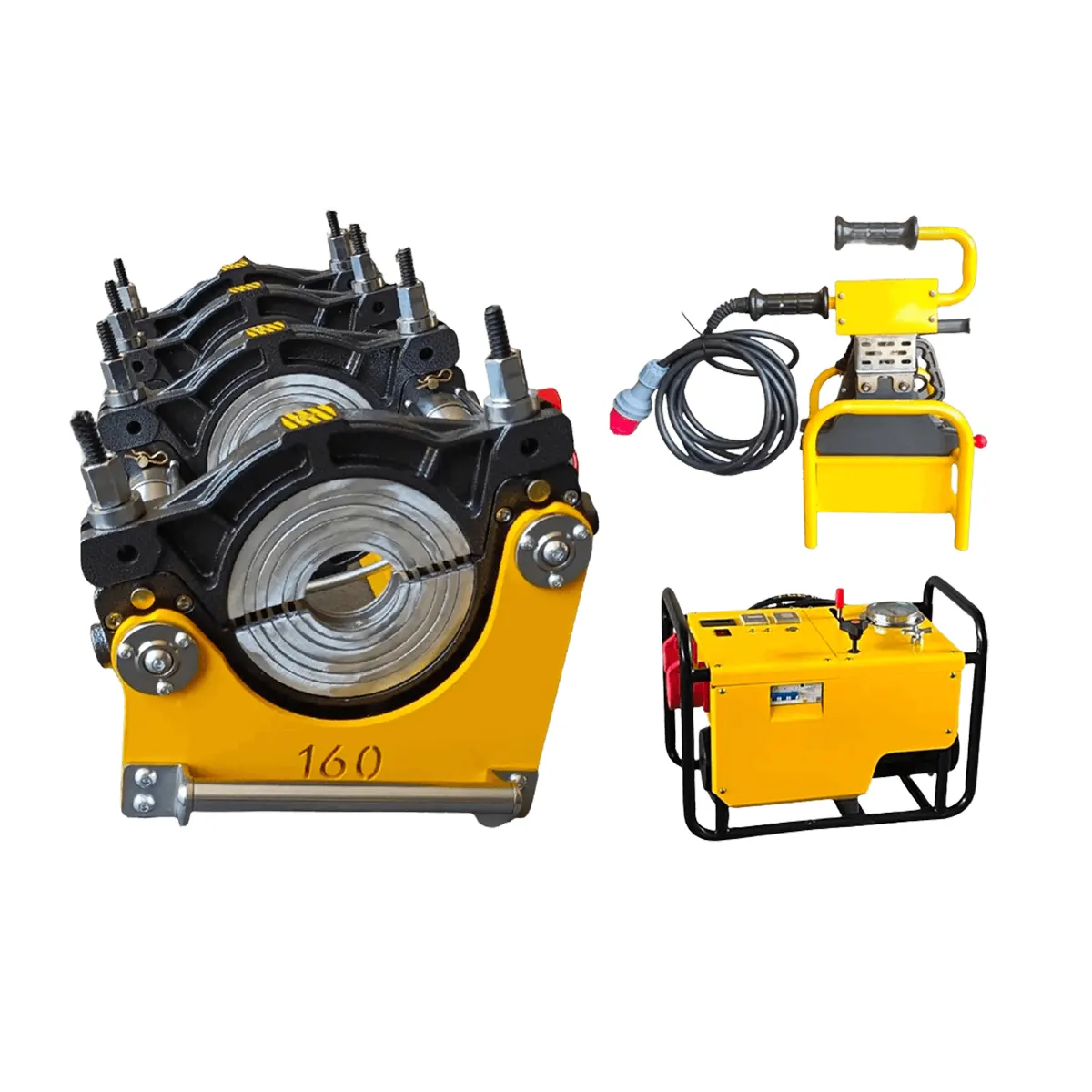
Quick Comparison Table
| Type | Pipe Range (mm) | Best For | Portability |
|---|---|---|---|
| Manual Butt Fusion | 20–315 | Village water, repairs | High |
| Hydraulic Butt Fusion | 63–2000 | Municipal & industrial | Medium |
| Automatic / CNC | 63–1800+ | Large pipelines, data logging | Low |
| Electrofusion | 20–630 (fittings) | Repairs, fittings, service lines | High |
Top Buying Considerations for Buyers in Ghana
1. Local power and fuel: Most Ghanaian sites offer 230V 50Hz supply—confirm generator compatibility for remote sites.
2. Port logistics: Import via Tema or Takoradi ports—ask suppliers about export packaging, lead times, and local customs paperwork.
3. Climate resilience: Choose corrosion-resistant controls and sealed housings for coastal humidity and dust in mining regions.
4. Operator training: Secure hands-on training and certification to ensure weld quality—especially for automatic systems that require programming skills.
5. Spare parts & service: Fast access to heaters, saddles, and sensors reduces downtime—confirm availability and warranty terms.
Installation and Site Tips for Ghanaian Projects
Prepare a flat, dry workspace when possible; schedule large fusion works in the dry season to reduce contamination. Protect heating plates from sand and corrosive salt air. For community projects, portable manual units and electrofusion kits allow fast, low-cost deployments with minimal logistics overhead.
Safety and Quality
Follow EN ISO and manufacturer welding procedures. Use traceable weld records for utility contracts. Enforce PPE, avoid open flames near heating plates, and monitor cooling times to prevent weak joints. For critical pipelines (drinking water, gas), implement pressure testing and non‑destructive inspection protocols.
Cost vs. Value: Choosing the Right Model
Initial cost is only part of the total lifecycle expense. Consider production speed, consistency, training needs, and servicing. For long-term municipal projects and contractors expanding across regions, investing in automatic or hydraulic equipment often yields lower per‑joint labor costs and higher traceability.
Where to Source Reliable Machines
When procuring, evaluate manufacturers for proven quality, export experience, and documentation. JQ-Fusion offers a wide range of manual, hydraulic, and automatic butt fusion machines tailored to global infrastructure needs, with parts and service support suitable for export markets.
Final Checklist for Ghana Buyers
Confirm pipe size range, power needs, portability, warranty, spare parts lead time, training options, and export logistics. Match the machine to local project scale: manual for small rural jobs, hydraulic for large industrial tasks, and CNC automatic for high-volume, quality-controlled contracts.
Need hands-on advice? Collect site photos, pipe specifications, and expected joint counts before contacting suppliers to get accurate quotes and lead times tailored to Ghanaian projects.


