
Switzerland’s demanding infrastructure — from Alpine water networks and municipal distribution systems to urban gas and district heating projects — requires durable, leak-free pipe welding. HDPE pipe jointing machines deliver the reliability and precision Swiss contractors expect, combining long service life with low maintenance and strong environmental performance.
Reliable HDPE Pipe Jointing for Swiss Projects
In Switzerland, where strict environmental standards and challenging terrain intersect, butt fusion welding of HDPE pipes is widely adopted for potable water mains, stormwater systems, gas distribution, and industrial pipelines. The technique produces continuous, homogenous joints that resist corrosion and ground movement — ideal for Alpine slopes and urban retrofit works alike.
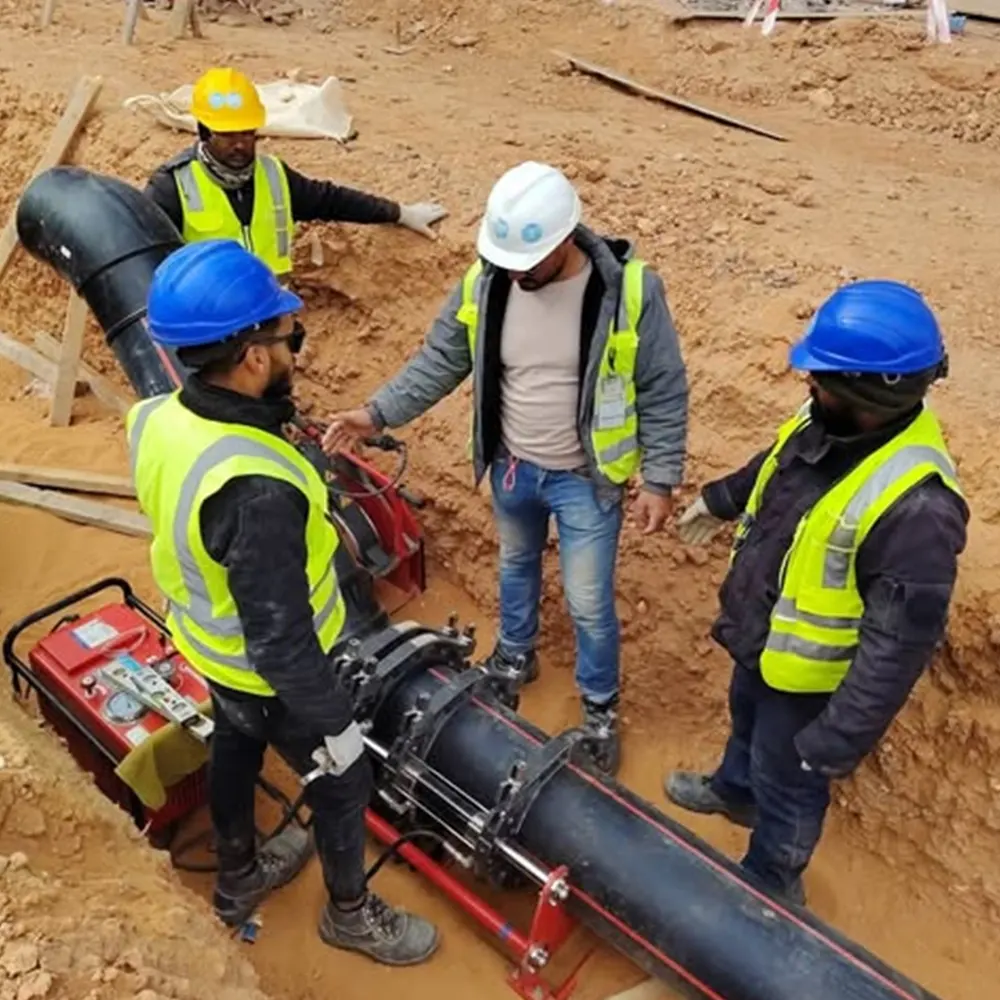
Why Butt Fusion Is Preferred in Switzerland
Butt fusion welding creates monolithic joints with no mechanical fittings, reducing leak risk and lifecycle costs. For Swiss municipalities and contractors, key benefits include:
- Leak-tight joints that meet strict potable water and gas safety requirements.
- Excellent performance in cold and variable ground conditions common in Switzerland’s mountainous regions.
- Compatibility with trenchless installation methods, minimizing disruption in dense urban centers like Zurich, Geneva, and Basel.
Machine Types & Choosing the Right Equipment
Selecting the correct jointing machine depends on project scale, pipe diameter, and on-site conditions. The main categories are manual, hydraulic, and automatic/CNC butt fusion machines, each offering trade-offs between portability, control, and productivity.
| Machine Type | Typical Diameter Range | Best For |
|---|---|---|
| Manual Butt Fusion | 20mm – 630mm | Small repairs, site work, rural connections |
| Hydraulic Butt Fusion | 63mm – 1600mm+ | Medium to large pipelines, high-efficiency site welding |
| Automatic / CNC Machines | 90mm – 2250mm+ | High-volume production, tight tolerance projects |
| Multi-angle Fitting Machines | Varies by model | Prefabricated fittings, complex joint assemblies |
Installation & Training for Swiss Contractors
Skilled welders and documented welding procedures are essential to meet Swiss and European standards (SN/EN). Contractors should ensure on-site teams receive multilingual training (German, French, Italian) and that welding parameters are recorded for quality assurance. Regular calibration and adherence to a Welding Procedure Specification (WPS) keep projects compliant and durable.

Maintenance, Safety & Sustainability
Routine maintenance (heater plate care, clamp inspection, hydraulic checks) extends machine life and ensures consistent weld quality. Safety protocols and proper PPE protect crews working in confined or cold conditions. HDPE systems contribute to sustainability by reducing leaks, lowering repair frequency, and offering recyclability at end of life.
How JQ-Fusion Supports Swiss Projects
JQ-Fusion offers a comprehensive range of HDPE butt fusion machines — manual, hydraulic, and CNC automatic models — built for precision, durability, and on-site adaptability to meet demanding Swiss infrastructure needs.
Selecting a Supplier: Key Questions
Ask potential suppliers about certification, spare parts availability, training services, warranty terms, and experience with Alpine or urban installations. Choose partners who can provide on-site support, documented welding procedures, and tailored solutions for local ground and climate conditions.
Practical Tips for Project Success
– Validate welding parameters and record heat cycles for each joint.
– Use heater plates and facing tools in good condition for consistent fusion surfaces.
– Plan logistics for large-diameter machines in narrow mountain passes or dense city sites.
– Prioritize trained operators and documented QA to meet Swiss municipal requirements.
Investing in the right HDPE pipe jointing machine ensures long-term reliability, cost savings, and compliance — vital for Swiss infrastructure that must perform in some of Europe’s most challenging environments.


