
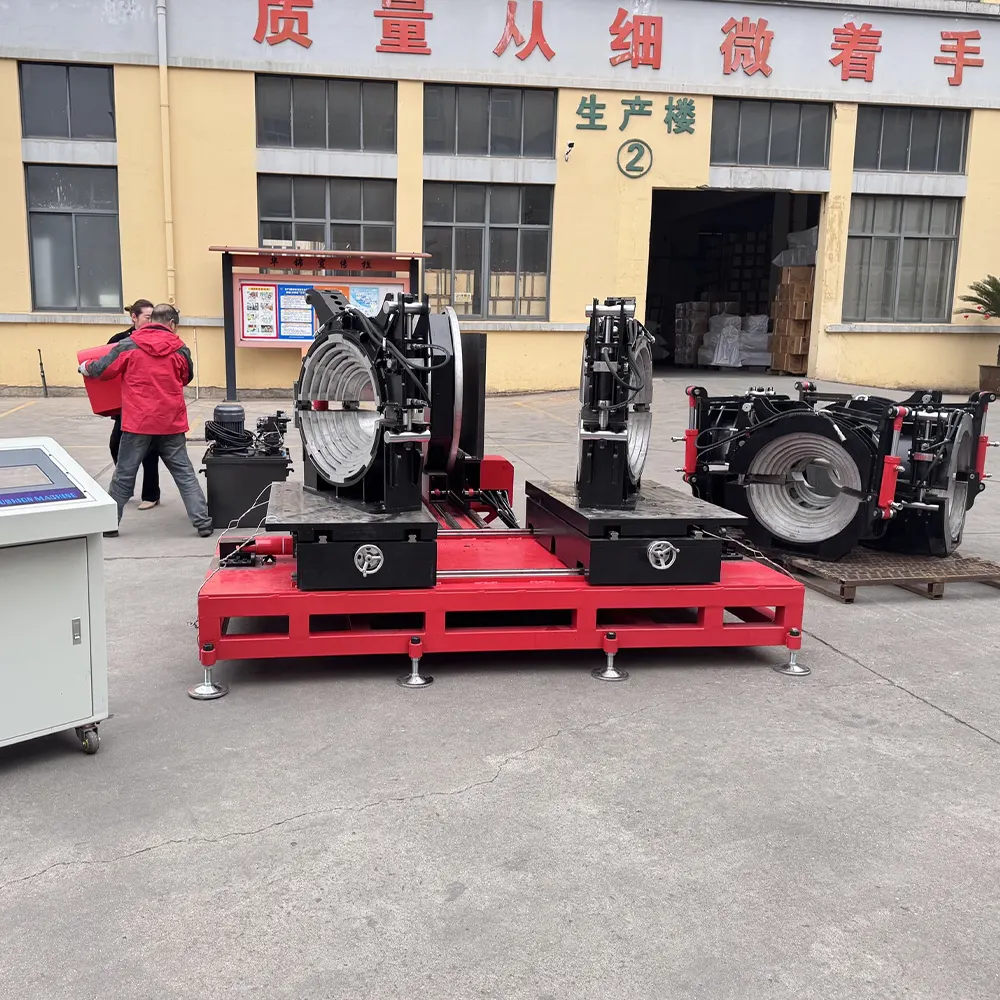
When a pipeline project depends on strength, speed, and consistent weld quality, choosing the best heavy duty welding machines is not just a purchasing decision—it is a productivity decision. Pipeline contractors work in demanding environments where temperature, alignment, pressure control, and weld repeatability can determine whether a joint lasts for decades or fails under stress. That is why heavy duty welding equipment must deliver more than power alone; it must combine precision, durability, and stable operation for long production cycles.
In pipeline construction, especially for water supply, gas distribution, mining, and industrial applications, the welding machine must handle large pipe diameters, harsh site conditions, and strict quality requirements. For many contractors, a butt fusion machine is the core tool that ensures a reliable joint structure and efficient installation workflow. With the right machine, teams can reduce downtime, improve consistency, and maintain the welding standards expected in global infrastructure projects.
Key point: For pipelines, the best heavy duty welding machine is the one that balances strength, accuracy, automation, and after-sales support rather than simply offering the highest output power.
What Defines a Heavy Duty Welding Machine for Pipelines?
Heavy duty welding machines for pipelines are designed to join thermoplastic or metal pipeline sections under demanding industrial conditions. In HDPE pipeline projects, the machine must create a strong fusion bond with stable heating and controlled pressure. In this category, manual, hydraulic, and CNC automatic models each serve different work environments and project scales.
The most important characteristics include rigid frame construction, accurate clamp alignment, stable heating plate performance, and durable hydraulic control. For large projects, a machine must also support continuous work without overheating or drifting in pressure accuracy. These features are especially important when welding long-distance pipeline systems where every joint must remain uniform.
Important: A machine that is easy to transport but unstable during welding may cost far more in rework and inspection failures than a heavier, better-engineered model.
Main Types of Heavy Duty Pipeline Welding Machines
1. Hydraulic Butt Fusion Welding Machines
Hydraulic butt fusion machines are widely used in pipeline construction because they provide controlled pressure, steady alignment, and strong fusion quality. They are ideal for projects where pipe sizes vary and reliable weld results are essential. Hydraulic systems reduce manual inconsistency and help operators maintain a stable fusion cycle even in tough field conditions.
For contractors working on water networks, gas lines, and mining pipelines, hydraulic models are often the first choice because they combine efficiency with practical site adaptability. They are suitable for medium to large diameter pipes and are known for dependable daily operation.
2. Automatic Butt Fusion Welding Machines
Automatic machines are designed for projects that require high precision and repeatable performance. CNC control helps operators manage heating time, pressure, and cooling phases more consistently. This is especially valuable in large-scale infrastructure projects where quality records and production efficiency matter.
Although automatic systems require a higher initial investment, they can reduce labor dependency, lower operator error, and improve project throughput. For contractors facing strict deadlines or standardized welding requirements, automation often becomes a long-term cost advantage.
3. Manual Butt Fusion Welding Machines
Manual machines are simpler, easier to maintain, and often suitable for smaller pipeline installations or cost-sensitive projects. They are valued for their straightforward structure and lower purchase price. However, they rely more heavily on operator skill, so they are generally less suitable for large heavy duty pipeline tasks where repeatability is critical.
Still, for certain field repairs or limited-scale work, manual models can be practical when portability and simplicity are priorities.
Selection tip: If your project includes large diameter pipes, demanding inspection standards, or frequent daily use, hydraulic or automatic models usually provide better long-term value than manual equipment.
How to Choose the Best Heavy Duty Welding Machine for Pipelines
Choosing the right equipment starts with understanding your pipeline material, diameter range, worksite conditions, and productivity goals. A machine that performs well in a factory setting may not be the best choice for remote field construction. The key is to match the machine’s capability with the project’s operational reality.
Pipe diameter range is one of the first specifications to check. The machine must support both current project needs and future expansion if possible. Contractors often save money by selecting a model that covers multiple diameter sizes instead of buying separate machines for each range.
Clamp precision is equally important. Poor alignment can weaken the weld and increase the risk of joint failure. A heavy duty machine should maintain rigid clamping force, stable pipe positioning, and minimal distortion during the fusion cycle.
Heating plate quality also affects the result. Temperature accuracy and even heat distribution are critical for producing strong, uniform welds. Inconsistent heating can lead to poor fusion, weak bonding, or wasted material.
Hydraulic stability is another major factor. If pressure fluctuates, the weld bead and fusion interface may become inconsistent. Stable hydraulics help ensure a smoother process and more reliable final joint performance.
Remember: The best machine is not always the most expensive one. It is the machine that matches your pipe size, project type, operator skill, and welding standards.
Why Quality Control Matters in Pipeline Welding
For heavy duty pipeline work, quality control is not optional. Every joint must meet performance expectations because failures can lead to leakage, downtime, and expensive repairs. High-end welding equipment should be tested before shipment and supported by reliable technical documentation.
Professional manufacturers often inspect temperature accuracy, hydraulic pressure stability, clamp alignment, and overall machine operation. These checks are essential for ensuring the equipment can perform consistently on real projects. In many cases, the long-term success of a pipeline installation depends more on equipment reliability than on theoretical machine specifications.
Brands with strong manufacturing capability and strict quality systems, such as JQ-Fusion, often stand out because they combine engineering knowledge with production discipline. That combination is especially valuable for contractors who need stable supply, customized solutions, and dependable support in overseas markets.
Application Scenarios for Heavy Duty Pipeline Welding
Heavy duty welding machines are used in a wide range of projects. In water supply systems, the focus is on leak-free joints and long service life. In gas distribution networks, safety and compliance become even more important because of the consequences of failure. In mining projects, the equipment must withstand rugged environments, frequent movement, and intensive use. Industrial pipelines often require high productivity and consistent welding quality across large installations.
For all these scenarios, contractors want equipment that minimizes downtime and supports smooth daily operation. A reliable welding machine can improve output, reduce operator fatigue, and help teams meet deadlines without sacrificing quality.
Best practice: Choose equipment based on the most demanding part of your project, not only the average pipe size or the easiest site condition.
The Role of Customization and OEM/ODM Support
For distributors and contractors working in different regions, customization can be a major advantage. Voltage standards, branding, machine color, control layouts, and structural details may all need to adapt to local market requirements. OEM and ODM support helps businesses build a stronger position by offering equipment that fits specific project or brand expectations.
Customization is also useful for specialized pipeline projects. Some contractors need enhanced mobility, while others need reinforced components for continuous production. In these cases, working with a manufacturer that offers flexible engineering support can save time and improve the final outcome.
JQ-Fusion, for example, emphasizes OEM & ODM customization, modern manufacturing lines, and fast response support. These capabilities matter because heavy duty pipeline projects often have strict schedules and little room for equipment delays.
Benefits of Choosing a Reliable Manufacturer
Buying a heavy duty welding machine is not only about the machine itself. Manufacturer reliability affects logistics, training, replacement parts, technical guidance, and future support. A strong supplier can help reduce project risk by providing consistent product quality and fast communication.
Key benefits include:
✔ Stable welding performance for consistent project quality
✔ Fast shipping and inventory support for urgent deadlines
✔ Technical training and after-sales service for smooth operation
✔ Certification and testing to meet international standards
✔ Custom solutions for specific pipeline requirements
In global markets, these factors can be just as important as the initial machine price. Contractors and distributors often prefer suppliers that combine engineering strength with dependable delivery and service capability.
What Makes JQ-Fusion a Strong Option?
JQ-Fusion focuses on HDPE pipe welding machines with more than 20 years of industry experience. Its product range includes hydraulic butt fusion welding machines, automatic butt fusion welding machines, electrofusion welding machines, and multi-angle pipe fitting welding machines. This variety allows contractors to choose the right solution for different project needs.
The company also highlights strict quality control, SGS-certified products, and global support. For pipeline buyers, these elements are valuable because they reduce uncertainty and improve confidence in long-term equipment performance. Whether the need is for a single project or a distributor supply chain, a manufacturer with proven experience can make procurement easier and more reliable.
Practical insight: In heavy duty pipeline work, reliability, support, and customization often matter more than short-term savings from a low-spec machine.
Conclusion
The best heavy duty welding machines for pipelines are those that combine structural durability, accurate temperature and pressure control, suitable pipe diameter capacity, and dependable manufacturer support. Hydraulic and automatic butt fusion solutions usually provide the strongest results for demanding pipeline applications, while manual machines can be useful for smaller or simpler tasks.
For contractors and distributors, the ideal choice depends on project scale, welding standards, and future operational needs. A well-selected machine improves joint quality, reduces rework, and supports efficient delivery on water, gas, mining, and industrial pipeline projects. In a sector where reliability is everything, the right welding equipment becomes a long-term asset rather than a one-time purchase.
Frequently Asked Questions
Q1: What type of welding machine is best for large pipeline projects?
Hydraulic and automatic butt fusion welding machines are usually the best options because they offer strong control, stable alignment, and consistent welding quality for large-diameter pipelines.
Q2: Why is temperature accuracy important in pipeline welding?
Accurate temperature control ensures proper fusion between pipe sections. If the heating plate is unstable, the weld may become weak or inconsistent, increasing the risk of failure.
Q3: Can one machine handle different pipe sizes?
Yes. Many heavy duty butt fusion machines are designed with adjustable clamps and broad diameter ranges, allowing them to support multiple pipe sizes within one project.
Q4: What should I check before buying a welding machine for pipelines?
Check pipe diameter range, hydraulic stability, clamp alignment, heating plate quality, certifications, manufacturer support, and whether customization is available for your market or project.
Q5: Is a more expensive machine always better?
Not always. The best machine is the one that fits your project requirements, quality standards, and operating environment while offering reliable long-term performance.



