
HDPE welding looks straightforward at first glance, but anyone who has worked on a pipeline project knows that reliable fusion depends on preparation, control, and understanding the material. Whether you are joining water supply lines, gas distribution pipes, mining pipelines, or industrial systems, the quality of each weld determines the long-term safety and performance of the entire installation.
Before welding HDPE, it is important to understand how heat, pressure, alignment, and timing work together. A strong joint is not created by force alone; it is created by clean pipe ends, accurate machine settings, stable heating, and proper cooling. For contractors, distributors, and project managers, that means choosing the right equipment and following the right process every time.
Key takeaway: HDPE welding is highly dependable when the operator follows the correct procedure and uses a stable machine with accurate temperature and pressure control.
One of the most common questions is whether HDPE welding is difficult. The answer is that the process itself is not complicated, but it is very sensitive to mistakes. If the pipe ends are not prepared correctly, if dust or moisture remains on the fusion surfaces, or if the temperature is inconsistent, the weld can be weak even if it looks acceptable on the outside. That is why experienced teams rely on proven procedures and equipment designed for repeatable performance.
What is HDPE welding?
HDPE welding is the process of joining high-density polyethylene pipes and fittings by applying heat and pressure until the material softens and fuses into one continuous structure. In pipeline construction, this creates a joint that can be as strong as the pipe itself when performed correctly. The most common method in large-diameter projects is butt fusion welding, which is widely used because it produces durable, leak-resistant connections.
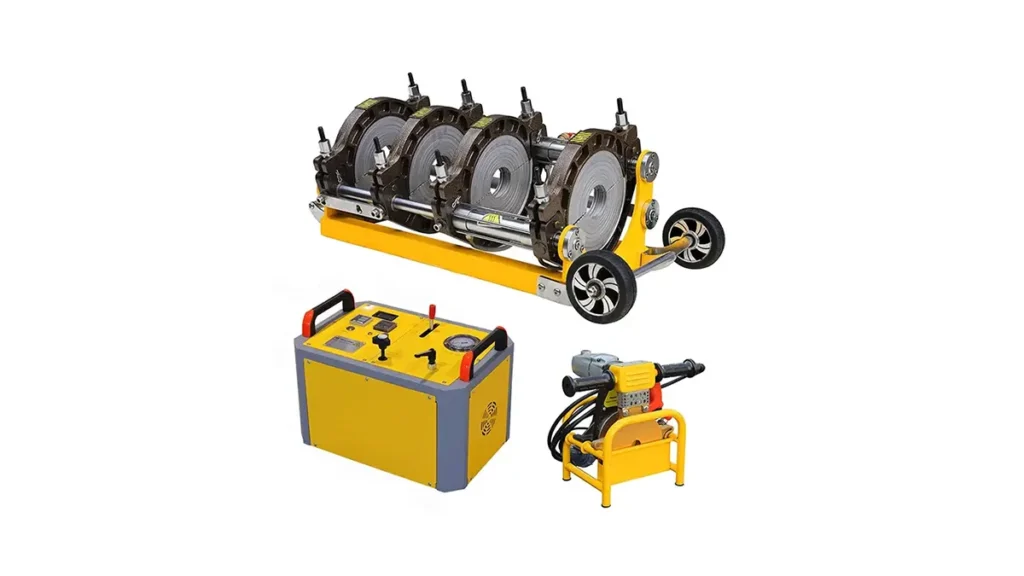
For projects that require high reliability and repeatability, many contractors prefer a professional butt fusion machine because it helps maintain consistent heating, alignment, and pressure throughout the welding cycle. This is especially valuable in water, gas, and industrial systems where long service life is expected.
There are also other joining methods, such as electrofusion welding, but butt fusion remains one of the most recognized solutions for straight pipe connections and large projects. The choice of method depends on the pipe size, site conditions, project specifications, and the type of system being built.
What are the most important questions before welding HDPE?
Before starting any weld, operators should ask a few essential questions. Is the pipe material compatible? Is the pipe surface clean and dry? Is the ambient condition suitable? Is the machine calibrated and tested? Are the operator and assistants trained for the specific procedure? These questions may sound basic, but each one affects weld quality.
Important: A successful weld begins before the heating plate touches the pipe. The most common failures happen because of poor preparation, not because of the fusion stage itself.
✔ Check the pipe standard and material grade
✔ Verify end squareness and alignment
✔ Confirm heating plate temperature
✔ Maintain stable pressure during fusion
How do you prepare HDPE pipe for welding?
Preparation starts with inspection. The pipe ends should be free from damage, contamination, and deformation. If the ends are oval or uneven, they must be trimmed and aligned before fusion. The surfaces to be welded must be cleaned carefully to remove dust, grease, and moisture. Even small particles can prevent a proper molecular bond.
Best practice: Clean the pipe ends after facing and avoid touching the fusion surface with bare hands. Oils and dirt from skin can reduce weld quality.
The pipe should also be clamped securely so that the ends remain perfectly aligned. Misalignment can create stress concentration in the finished joint, which may reduce the durability of the pipeline under pressure or movement. In large projects, this is one of the reasons professional teams use stable machinery with precise clamp alignment and hydraulic control.
What temperature is needed for HDPE welding?
The exact temperature depends on the welding standard, pipe size, material specification, and equipment instructions. In butt fusion welding, the heating plate must reach the correct operating temperature before the pipe faces are heated. If the temperature is too low, fusion may be incomplete. If it is too high, the material can degrade or form an uneven melt bead.
A stable heating system is essential because temperature variation can create inconsistent welds across different pipe joints. This is one reason many professionals choose machines with accurate temperature control and tested heating plates. Manufacturers like JQ-Fusion, which focus on HDPE pipe welding equipment, emphasize temperature stability as a core quality factor for field performance.
Operators should always follow the welding procedure sheet or project specification rather than relying on guesswork. The right temperature, heating time, and cooling time must be matched to the pipe diameter and wall thickness.
Why does pressure matter so much?
Pressure is what brings the softened pipe ends together to form a single fused structure. However, the pressure must be controlled carefully. Too little pressure can leave voids or weak bonding. Too much pressure can force molten material out excessively and disturb the fusion interface.
In manual systems, the operator must manage pressure by experience and close observation. In hydraulic or CNC automatic systems, the machine helps maintain more stable and repeatable pressure during the entire cycle. For this reason, many pipeline contractors select hydraulic or automatic equipment when the project involves multiple joints, long distances, or demanding timelines.
Practical note: Stable pressure is not only about force. It is also about consistency during heating, joining, and cooling. A sudden pressure change can weaken the weld.
How long does it take to weld HDPE?
The full welding cycle includes pipe preparation, alignment, facing, heating, fusion, and cooling. The total time depends on pipe diameter, wall thickness, ambient temperature, and the welding standard being used. Smaller pipes take less time, while larger pipes may require longer heating and cooling periods to achieve a reliable joint.
It is important not to rush the cooling stage. Even when the outer surface appears solid, the internal fusion may still be stabilizing. Moving or stressing the pipe too early can compromise the joint. Good project planning allows enough time for each weld to complete fully before the next operational step begins.
What machine features should you look for?
A reliable HDPE welding machine should provide stable alignment, accurate heating, smooth hydraulic control, and durable construction. For global pipeline projects, it is also helpful if the machine supports multiple pipe diameters and can be customized for voltage, branding, and jobsite requirements. This flexibility is especially important for distributors and contractors serving different markets.
JQ-Fusion focuses on butt fusion solutions with manual, hydraulic, and CNC automatic systems, which helps users choose equipment based on project scale and welding frequency. Their products are used in water supply systems, gas networks, mining projects, and industrial pipeline installations, where stable welding performance is essential.
Look for these features:
• Precision-machined clamps and frame
• Temperature accuracy and stable heating plate performance
• Hydraulic pressure stability
• Easy operation and clear workflow
• Service support, spare parts, and training availability
What are the most common HDPE welding mistakes?
Some of the most common mistakes include poor cleaning, incorrect temperature, inadequate alignment, and insufficient cooling time. Another frequent issue is using equipment that is not properly maintained or calibrated. If the heating plate is inaccurate or the clamps are misaligned, even an experienced operator may struggle to achieve a dependable joint.
Weather conditions can also affect the process. Cold temperatures, wind, dust, and moisture may change heating behavior or contaminate the pipe surface. For outdoor projects, operators should protect the work area as much as possible and adjust procedures according to site conditions.
Remember: A clean, stable, and properly controlled weld is always better than a fast one. Time saved during preparation often becomes time lost during repair.
Why do experienced buyers choose professional manufacturers?
Experienced buyers understand that the welding machine is not just a tool; it is a quality-control system for the entire pipeline project. Professional manufacturers with long industry experience, strict testing, and customization capability can help reduce operational risk. JQ-Fusion, for example, highlights advanced manufacturing technology, strict quality control, OEM and ODM customization, and reliable global support.
That kind of support is valuable when a project requires fast delivery, technical guidance, and equipment that can be adapted to local standards. A dependable supplier also helps ensure that the machine performs consistently from the first weld to the last.
How do you improve welding results over time?
Improving weld quality is usually a matter of discipline. Keep records of temperature, pressure, heating time, and cooling time for each job. Train operators to follow one standard procedure. Inspect machine condition regularly. Replace damaged parts promptly. When problems occur, analyze them systematically instead of changing multiple variables at once.
It is also helpful to work with suppliers that offer technical support and training. Good support shortens the learning curve and helps teams adapt to different pipe sizes, site conditions, and project requirements. Over time, this improves productivity and reduces the risk of rework.
Conclusion
HDPE welding is reliable, efficient, and widely used across modern pipeline construction, but only when the process is handled with care. The most important factors are preparation, temperature control, pressure stability, alignment, and cooling discipline. When these elements are managed correctly, the welded joint can deliver long-term strength and leak resistance in demanding applications.
For projects that require stable performance and consistent output, choosing the right machine matters just as much as the operator’s skill. Whether you need manual, hydraulic, or automatic fusion equipment, working with an experienced manufacturer can make the entire welding process more dependable and efficient.
FAQ
Q1: Can HDPE be welded in outdoor conditions?
Yes, but wind, dust, moisture, and temperature changes must be controlled as much as possible to protect weld quality.
Q2: What is the most important step before welding HDPE?
Cleaning and proper alignment are critical because contamination or misalignment can weaken the final joint.
Q3: Why is cooling time necessary?
Cooling time allows the fused material to stabilize. Moving the pipe too early can damage the weld structure.
Q4: What type of machine is best for large projects?
Hydraulic or CNC automatic butt fusion machines are often preferred because they provide better pressure control and consistency.
Q5: How can I reduce welding defects?
Use clean pipe surfaces, accurate temperature settings, proper alignment, and well-maintained equipment, and follow the welding procedure strictly.



