
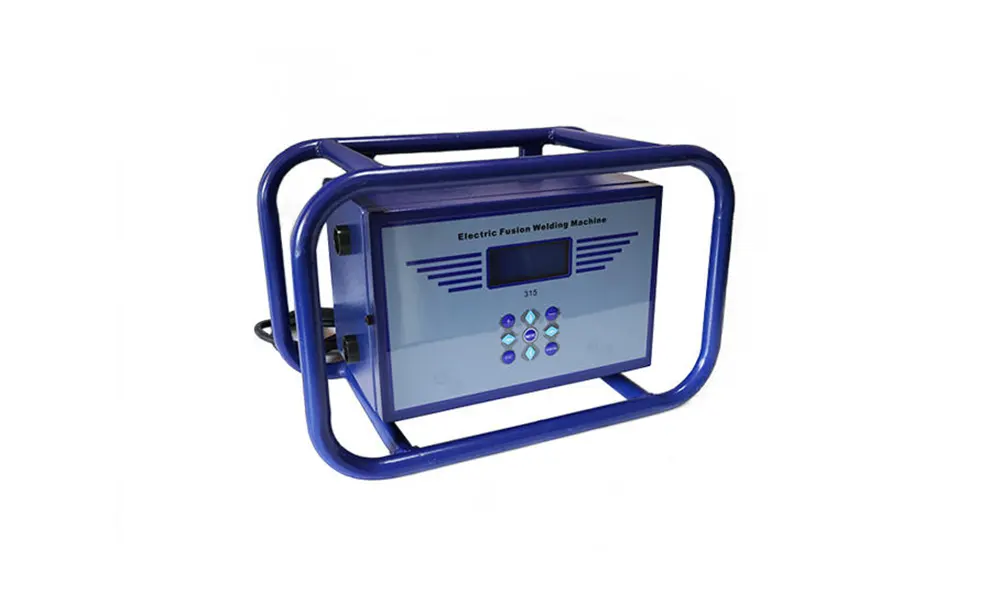
When people ask, what are the output specifications of an electrofusion machine, they are usually trying to understand one practical thing: can the machine deliver the exact power, timing, and control needed to create a safe and durable pipe joint? In pipeline construction, output specifications are not just technical numbers. They directly affect weld quality, joint reliability, site efficiency, and long-term project performance. For contractors, distributors, and engineers, knowing these specifications helps in selecting the right equipment for water supply systems, gas distribution networks, mining projects, and industrial installations.
Key idea: the output of an electrofusion machine is designed to match the fitting’s embedded heating coil, which means the machine must deliver the correct voltage, current, and weld time with high precision. If the output is unstable or inaccurate, the fusion process may be weak, uneven, or unsafe.
1. Understanding the Core Output of an Electrofusion Machine
An electrofusion machine works by sending electrical energy into an electrofusion fitting. The fitting contains a heating coil that melts the inner surface of the fitting and the outer surface of the pipe. Once the molten materials cool and solidify, they form a strong, leak-free bond. The machine’s output specifications define how this energy is delivered.
The most important output parameters usually include:
Voltage output — the electrical potential applied to the fitting, commonly controlled with precision to match fitting requirements.
Current output — the amount of electrical current supplied during fusion, affecting how quickly the coil heats up.
Welding time — the duration of power delivery, often determined by barcode scanning or manual input.
Energy control accuracy — the ability to maintain the exact power profile needed for a specific fitting.
These outputs work together to produce consistent heat inside the fitting without overheating or underheating the pipe connection.
2. Common Voltage Output Ranges
Most electrofusion machines are designed to support a wide output voltage range so they can work with different fitting brands and sizes. In many cases, the output is optimized for standard electrofusion fittings used in polyethylene pipe systems.
Typical machines may provide an output voltage range such as 8V to 48V, or they may adjust automatically according to the fitting’s specification. The exact number depends on the manufacturer, the model, and the intended application. Advanced machines can recognize the fitting data through a barcode or manual entry and then apply the exact voltage required for that weld.
Important: voltage stability matters more than simply having a wide range. A machine that can hold the correct voltage steadily during the entire fusion cycle usually delivers better weld quality than one with fluctuating output.
For contractors working on large projects, this precision reduces the risk of failed joints and rework. It also helps maintain compliance with project specifications and international welding standards.
3. Current Output and Power Delivery
Current output is another key specification. Depending on the machine model, electrofusion units may deliver different maximum current levels to support fittings of various sizes. Small fittings need less power, while larger fittings require more substantial current for proper heating.
The machine must be able to provide enough current to heat the coil efficiently, but not so much that it burns the fitting. High-quality machines use intelligent control systems to balance power output based on the fitting’s resistance and fusion requirements.
In practical terms, stable current output leads to:
• uniform coil heating
• reduced risk of overheating
• stronger and more reliable joints
• better performance on job sites with changing conditions
Since pipeline projects often take place outdoors, equipment must handle voltage variation, generator power, and environmental stress without losing output stability.
4. Welding Time Control and Its Role in Output
One of the most valuable output functions of an electrofusion machine is accurate time control. The machine is not only responsible for supplying power; it also determines how long that power is applied.
Fusion time is usually calculated based on the fitting’s embedded code or technical data. Some machines read this automatically through a barcode scanner, while others require manual input. The output specification therefore includes the machine’s ability to deliver timed power with minimal deviation.
Why it matters: if the weld time is too short, the pipe and fitting may not fuse properly. If it is too long, the material may deform, weaken, or create internal stress. Accurate output timing is essential for weld integrity.
Modern electrofusion machines often store welding parameters, making it easier to repeat the same high-quality process across multiple joints. This is especially useful in large-scale installation work where consistency is essential.
5. Output Accuracy and Control Systems
Output specifications are not only about raw power. They also include the precision of the machine’s electronic control system. A reliable machine should monitor and regulate the output in real time. This includes compensating for changes in ambient temperature, generator instability, cable resistance, and fitting resistance.
Advanced control systems improve the fusion process by ensuring:
✔ exact power delivery
✔ automatic parameter recognition
✔ error detection and alarm functions
✔ data traceability for quality records
For companies that also use other pipeline equipment, such as a butt fusion machine, this level of control is especially important because both welding methods rely on consistent process management and dependable engineering.
In many modern projects, output accuracy is tied directly to documentation. Machines that record welding data can help contractors prove that each joint was completed according to the required standard.
6. Input and Output Relationship in Practical Use
To understand output specifications clearly, it helps to look at the relationship between input power and output performance. The machine receives power from a source such as a generator or mains supply, then converts that power into controlled output for the fitting.
This means the machine must be able to handle unstable site power while still producing accurate welding output. In field conditions, the input may vary, but the output should remain steady enough to protect the weld process.
Good machines often include protection features such as:
Protection functions: over-voltage protection, under-voltage protection, short-circuit protection, overheating protection, and automatic shutoff if abnormal conditions occur.
These features make the output safer and more reliable, especially in remote construction environments where power quality may not always be ideal.
7. Output Specifications for Different Project Sizes
Electrofusion machines are used in a broad range of applications, from small repair jobs to large municipal and industrial pipeline systems. Output specifications should therefore match the scale of the project.
For smaller diameter pipes, a compact machine with moderate output may be enough. For larger networks and heavy-duty projects, higher output capacity and more advanced control are often necessary. The best machine is the one that can reliably meet the project’s technical needs without wasting energy or slowing down installation.
JQ-Fusion, as a professional pipeline welding equipment manufacturer, understands that different projects need different output solutions. Its manufacturing experience in hydraulic, manual, and CNC automatic systems shows how output requirements vary across applications and pipe sizes. You can learn more about the company’s broader welding solutions on the official website at https://jq-fusionwelding.com/.
8. Output Display, User Interface, and Ease of Operation
Another important part of output specifications is how the machine displays and controls the output information. A clear digital display helps operators confirm voltage, current, and welding time before starting the job. This reduces mistakes and improves field efficiency.
Many modern electrofusion machines offer easy-to-read screens, simple input systems, and automatic parameter settings. These features are especially useful for teams working under time pressure or in difficult site conditions.
Operator benefit: when output data is visible and easy to confirm, the chance of human error drops significantly. This improves welding quality and reduces costly rework.
9. Why Output Specifications Matter for Quality Assurance
Every electrofusion joint depends on output quality. Even a small deviation in voltage, current, or time can affect the final weld. That is why professional users always pay close attention to the machine’s output specifications before purchase.
Reliable output supports quality assurance in several ways:
• it creates repeatable weld results
• it helps meet project and industry standards
• it improves long-term pipe system safety
• it reduces equipment-related failures
Manufacturers with strong testing and inspection processes typically produce machines with more dependable output. For example, quality control may include checks for temperature accuracy, pressure stability, and clamp alignment in related pipeline welding equipment, all of which reflect the same commitment to precision engineering.
10. How Buyers Should Evaluate Output Specifications
Before purchasing an electrofusion machine, buyers should compare more than the price tag. A careful review of output specifications is essential. The following points are worth checking:
1) supported voltage range
2) maximum current capacity
3) welding time control accuracy
4) automatic recognition features
5) protection functions and safety systems
6) suitability for the target pipe sizes and fittings
It is also useful to choose a supplier with proven manufacturing capability, OEM/ODM customization options, and global technical support. These factors can make a big difference when equipment must be adapted for local standards, branding, or special project requirements.
For businesses expanding their product line or market reach, it is wise to work with a manufacturer that can offer stable stock supply, fast shipping, and technical training. That kind of support helps minimize delays and improves project success rates.
FAQs
Q1: What is the most important output specification of an electrofusion machine?
Voltage stability and accurate welding time are usually the most important, because they directly determine whether the fitting heats correctly and produces a strong joint.
Q2: Can one electrofusion machine work with different fittings?
Yes, many machines can work with a wide range of fittings if they support the required output voltage and parameter settings. Automatic recognition systems make this even easier.
Q3: Why does output accuracy matter so much?
Because electrofusion relies on precise heat control. Even a small output error can lead to weak fusion, overheating, or a failed pipe joint.
Q4: Is a higher output always better?
Not necessarily. The best output is the one that matches the fitting’s technical requirements. Too much power can be as harmful as too little.
Q5: What should buyers look for besides output specs?
They should also consider machine durability, protection features, ease of use, data recording, warranty, customization options, and after-sales support.



