
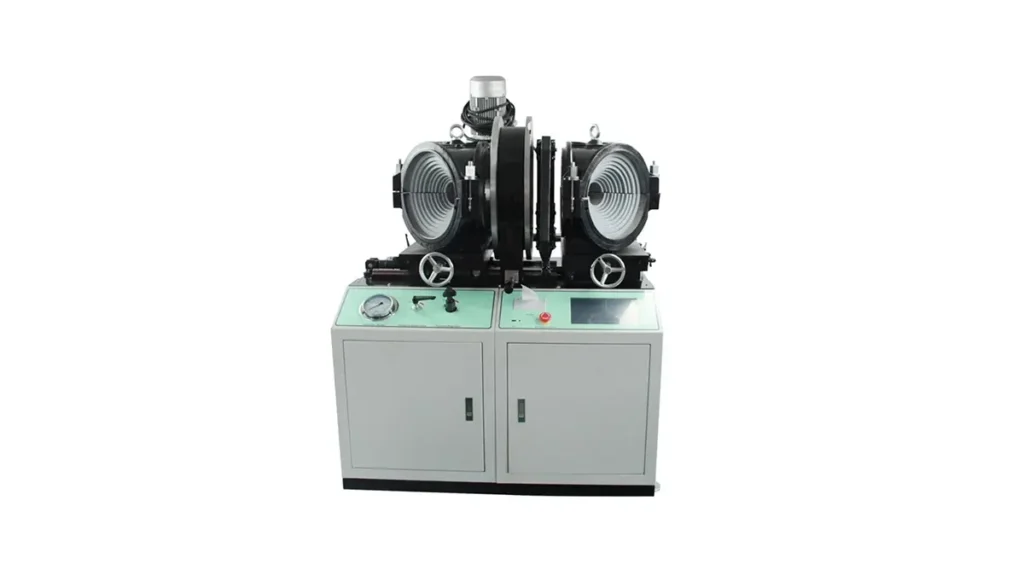
In modern manufacturing, welding is no longer judged only by the strength of the finished joint. It is also measured by how efficiently the work is completed, how consistently the results are produced, and how well every stage of the process is documented. That is why many factories, workshops, and pipeline contractors are now investing in butt fusion machine monitoring systems. These systems help teams track heat, pressure, cycle timing, operator behavior, and weld quality in real time, making it easier to improve productivity while reducing costly defects.
For businesses that handle critical infrastructure, such as water supply networks, gas distribution lines, mining pipelines, and industrial installations, welding quality directly affects safety and long-term operating costs. A single weak joint can lead to leaks, rework, project delays, and even serious failures. Monitoring systems solve this problem by turning every weld into measurable data. Instead of relying on visual inspection alone, managers can use digital records to understand what happened during each cycle and quickly identify what needs to be improved.
Today’s best welding machine monitoring systems combine sensors, software dashboards, automatic alerts, and reporting tools. Some are designed for manual processes, while others support hydraulic or CNC automatic equipment. The most valuable systems are not just those with advanced features, but those that fit the real workflow of the factory or construction site. The ideal solution should be easy to use, accurate, durable, and capable of supporting consistent quality under demanding production conditions.
Key idea: A welding monitoring system is not only a quality-control tool. It is also a productivity tool that helps reduce downtime, standardize operations, and improve confidence in every joint produced.
Why Welding Monitoring Systems Matter
In many welding environments, productivity losses happen gradually and are easy to miss. Operators may spend extra minutes adjusting parameters, heating may drift outside the ideal range, or pressure may vary from weld to weld. These small inconsistencies accumulate into larger problems such as rework, scrap, and slower project completion. Monitoring systems help solve this by making the process visible and measurable.
One of the biggest benefits is consistency. When every weld is monitored under the same standard, the team can compare results across shifts, operators, and job sites. This makes it much easier to spot patterns. If a certain machine starts producing abnormal temperature readings or pressure fluctuations, the issue can be corrected before it affects a large batch of work.
Another major benefit is traceability. In regulated industries and large infrastructure projects, clients often want proof that welding was done according to procedure. Monitoring systems create a digital record that can be stored and shared. This strengthens documentation and supports compliance, which is especially valuable for contractors working on international projects.
Benefits commonly seen in practice: fewer defects, faster troubleshooting, better reporting, stronger operator discipline, and improved customer confidence.
Core Features of the Best Systems
When comparing available monitoring solutions, the best systems usually share several important functions. The first is real-time parameter tracking. A useful system should capture key values such as temperature, pressure, fusion time, cooling time, and alignment status. This allows supervisors to see whether a weld is staying within acceptable limits while the operation is still in progress.
The second is alarm and warning control. If a reading moves outside the set range, the system should alert the operator immediately. This fast feedback prevents defects from being locked into the weld. In high-volume production, even a few seconds of early warning can save a significant amount of time and material.
The third is reporting and storage. The best systems organize data into clear reports that can be reviewed later. Some systems can export files for quality audits or customer records. Others can sync with factory management software, helping production leaders analyze output across multiple machines and shifts.
Another important feature is user-friendly operation. A complicated interface slows down production and increases the chance of operator error. The strongest systems are designed with simple displays, clear icons, and easy navigation so that workers can focus on welding rather than troubleshooting the software.
Tip: Choose monitoring equipment that matches the skill level of your operators. A powerful system is only effective if the team uses it correctly every day.
How Monitoring Improves Productivity
Productivity is often improved in three ways: less downtime, fewer rework cycles, and faster decision-making. Monitoring systems help all three. By recording machine performance, they show where bottlenecks are occurring. For example, if a machine frequently pauses due to temperature recovery issues, maintenance teams can identify the problem and take corrective action before the delay becomes routine.
They also reduce the need for repeated inspections. Since the system already records key process values, quality teams can review the data without performing excessive manual checks. This saves labor and allows skilled workers to focus on more valuable tasks. In busy production environments, that time savings can have a major impact on total output.
Monitoring systems can also support operator training. New workers learn faster when they can see how their actions affect the weld in real time. Over time, this improves process discipline and reduces the learning curve. Better-trained operators make fewer mistakes, which means production can scale without sacrificing quality.
Productivity advantage: When operators receive immediate feedback and managers have accurate data, the entire welding workflow becomes faster, smoother, and easier to control.
How Monitoring Improves Quality
Quality improvement starts with control. A weld can only be reliable if the process stays within the required parameters from start to finish. Monitoring systems provide that control by documenting whether each stage follows the welding procedure. If pressure is too low, heat is uneven, or timing is incorrect, the issue becomes visible immediately.
This kind of control is especially valuable for HDPE pipe joining and other fusion-based applications, where consistent heat and pressure are essential. A small deviation can weaken the joint, and a weak joint can compromise an entire pipeline section. By keeping the process stable, monitoring systems reduce the risk of hidden defects and improve long-term reliability.
Another quality benefit is standardization. When every weld is measured against the same criteria, performance becomes more predictable. This is especially useful for companies with multiple crews or multiple project sites. The same quality standard can be maintained even when the work is spread across different regions, shifts, or contractors.
For companies serving water supply systems, gas distribution networks, mining projects, and industrial pipeline installations, this reliability is not optional. It is a business necessity. High-quality monitoring supports safer infrastructure, fewer complaints, and stronger client trust.
Types of Welding Machine Monitoring Systems
There is no single monitoring system that fits every welding environment. The best choice depends on machine type, production scale, and the level of data required. Manual systems may only need basic parameter recording, while automated lines may require integrated software and centralized control.
1. Basic digital monitors
These systems display important parameters such as time, pressure, and temperature. They are suitable for smaller operations that want better visibility without investing in a complex platform. Their main advantage is simplicity.
2. Data logging systems
These systems store weld information for later review. They are useful for quality assurance teams and project documentation. When traceability matters, data logging is one of the most valuable features.
3. PLC-integrated monitoring systems
These solutions connect with machine control systems and automate much of the data collection process. They are ideal for production lines that need stronger process control and faster feedback.
4. Cloud-based monitoring platforms
These are increasingly popular in large operations because they allow managers to access data remotely. This can be helpful for companies with multiple sites or contractors that need centralized supervision.
5. Custom OEM/ODM monitoring solutions
Some manufacturers need specialized monitoring based on their own equipment design or market requirements. Custom systems are useful when standard configurations do not fully support the intended workflow.
Important: The best system is not always the most advanced one. It is the system that gives your team the right data, at the right time, in the easiest possible format.
What Buyers Should Evaluate Before Purchasing
Before choosing a monitoring system, buyers should first define what problem they want to solve. Is the main goal to improve weld consistency, reduce rework, meet documentation requirements, or manage a multi-site operation? Clear goals make product comparison much easier.
Next, buyers should evaluate compatibility. The monitoring system should work properly with the existing welding machine, control platform, and production environment. If the system requires frequent adjustments or difficult installation, it may slow down rather than improve output.
Accuracy is another critical factor. If the data cannot be trusted, the system loses value. Buyers should look for stable sensor performance, reliable calibration, and clear measurement standards. Durability also matters because many welding projects take place in harsh industrial conditions.
Finally, after-sales support should not be ignored. Even a good system may need setup guidance, training, or maintenance assistance. Suppliers that provide technical support and fast response help reduce downtime and protect the buyer’s investment.
Buyer checklist: compatibility, accuracy, reporting, ease of use, durability, and technical support.
Why Manufacturers Like JQ-Fusion Focus on Monitoring and Control
Professional welding machine manufacturers understand that modern buyers want more than basic equipment. They want systems that deliver stable welding performance, strict quality assurance, and flexibility for different project requirements. That is why advanced manufacturers continue to improve their machines with better control, stronger testing procedures, and optional customization.
JQ-Fusion, for example, is known for producing manual, hydraulic, and CNC automatic butt fusion welding machines for a wide range of pipe diameters. Such product diversity supports different monitoring needs because each machine type may require different data collection and control methods. For large pipeline projects, reliable monitoring helps ensure that every weld supports the full system design and operational requirements.
The value of strong manufacturing capability becomes even clearer when project schedules are tight. If a contractor needs dependable machines, fast delivery, and technical guidance, supplier capability matters as much as machine specifications. Monitoring systems are part of that larger reliability picture because they help prove performance, not just promise it.
For companies building their own brand or serving specialized markets, OEM and ODM customization can also be important. Customized machine size, voltage, color, branding, and configuration options allow buyers to match equipment more closely to their field demands. When monitoring is integrated into that customized workflow, productivity and quality become easier to manage.
Practical Examples of Monitoring Benefits
In a water pipeline project, a monitoring system can help ensure each fusion joint is completed under proper temperature and pressure conditions. This reduces the risk of leakage and supports long-term system stability. In gas distribution, where safety margins are especially important, traceable weld records provide additional confidence for inspectors and project owners.
In mining environments, equipment must often operate under difficult conditions, and maintenance windows are limited. Monitoring systems help crews identify abnormal patterns before a failure stops production. In industrial pipe installations, digital records simplify handover documentation and strengthen quality documentation for the client.
Across these different applications, the common advantage is control. The more visibility a team has over the process, the easier it becomes to improve output without sacrificing weld integrity. That is why the best systems are not passive recorders; they are active tools for production management.
Result in real projects: fewer rejected welds, smoother workflow, better audit readiness, and stronger confidence from both operators and clients.
Future Trends in Welding Monitoring
The future of welding monitoring is moving toward smarter automation, better data integration, and remote visibility. As factories continue to adopt digital manufacturing methods, monitoring systems will increasingly become part of larger production ecosystems. This means welding data may be linked with maintenance schedules, inventory control, and project management tools.
Artificial intelligence and predictive analytics may also play a larger role. Instead of only reporting what happened, future systems may help predict when a parameter drift is likely to occur or when maintenance is needed. This would allow teams to act earlier and reduce unplanned downtime.
At the same time, usability will remain important. Even as features become more advanced, operators still need clear interfaces and reliable operation. The best future systems will combine intelligence with simplicity, so that adoption remains practical on the shop floor and in the field.
Conclusion
Welding machine monitoring systems are now essential tools for companies that want to improve both productivity and quality. They help teams standardize operations, reduce mistakes, accelerate troubleshooting, and create a clear record of every weld. In industries where safety, durability, and project reliability are critical, these benefits can make a major difference.
Whether the goal is to support a small workshop, a large fabrication facility, or a complex pipeline project, the best system is the one that fits the actual work environment and delivers usable data every day. When combined with strong equipment, skilled operators, and dependable supplier support, monitoring becomes a powerful advantage rather than just a technical accessory.
Frequently Asked Questions
Q1: What is the main purpose of a welding machine monitoring system?
It tracks key welding parameters in real time so teams can improve consistency, reduce defects, and document quality more effectively.
Q2: Can monitoring systems help increase production speed?
Yes. They reduce troubleshooting time, lower rework rates, and help operators work more efficiently with immediate feedback.
Q3: Are monitoring systems useful for butt fusion welding?
Yes. They are especially valuable in butt fusion applications because temperature, pressure, and timing must remain tightly controlled for strong joints.
Q4: What should buyers look for when choosing a system?
Buyers should focus on accuracy, compatibility, ease of use, reporting features, durability, and technical support from the supplier.
Q5: Is data logging important for quality control?
Yes. Data logging creates traceable records that support audits, compliance, troubleshooting, and long-term quality improvement.



