
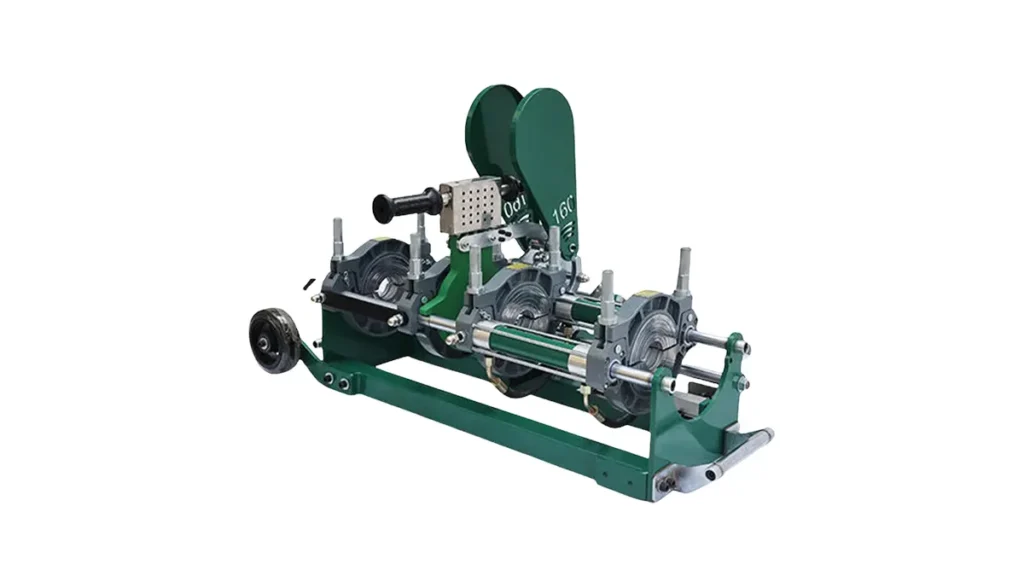
In welding, precision is everything. Even the most advanced fusion machine cannot deliver a reliable joint if the pipes are not aligned correctly before heating and joining. That is why pipe alignment tools play such an important role in the welding process. They help technicians hold two pipe ends in the same centerline, reduce misalignment, and improve the overall quality of the weld.
For contractors working on water supply systems, gas distribution networks, mining projects, or industrial pipeline installations, choosing the right alignment tool can make a major difference in productivity and joint consistency. A well-aligned pipe not only creates a stronger weld but also reduces rework, material waste, and installation delays.
Today, there are many types of pipe alignment tools available, each designed for different pipe sizes, materials, and welding environments. Some are simple manual tools for small jobs, while others are heavy-duty systems built for large-diameter pipeline projects. The best choice depends on your pipe material, project scale, budget, and required welding accuracy.
When selecting equipment, many professionals also consider the entire fusion workflow. If you need a reliable butt fusion machine for consistent field performance, the alignment stage should be matched with the machine’s capacity and clamping system to ensure smooth operation from start to finish.
Why Pipe Alignment Matters in Welding
Pipe alignment is more than just a setup step. It directly affects the quality of the final weld. If two pipe ends are offset, the molten material may not distribute evenly during fusion. This can lead to weak seams, pressure loss, stress concentration, and even long-term failure in the pipeline.
Key point: Proper alignment improves weld strength, reduces defects, and helps the operator maintain a stable and repeatable welding process.
In butt fusion welding, alignment is especially important because the pipe ends must be held squarely against each other before heating. Any angular deviation, ovality, or vertical misplacement can affect the quality of the bead and the integrity of the joint. This is why professional pipeline crews rely on specialized pipe alignment tools rather than using guesswork or improvised supports.
Main Types of Pipe Alignment Tools
There are several types of alignment tools used in welding, and each serves a slightly different purpose. Understanding these categories helps you choose the right tool for your project.
1. Internal Alignment Tools
Internal alignment tools are inserted into the pipe and expand to position the pipe ends from the inside. They are often used for larger pipelines where internal centering is critical. These tools provide accurate centering and are useful when the outer surface is not easy to clamp evenly.
They are especially helpful in field welding where large pipes need to be joined with tight tolerances. However, internal tools can be more complex to use and may not be suitable for all pipe materials or access conditions.
2. External Alignment Clamps
External alignment clamps are among the most common tools in pipe welding. They hold the pipe ends from the outside and keep them in position while the operator performs the fusion process. These clamps are available in manual, hydraulic, and mechanical versions.
For many butt fusion applications, external clamps are preferred because they are easy to install, versatile, and suitable for a wide range of pipe diameters. They are also widely used with fusion machines in factory and field environments.
3. Manual Alignment Devices
Manual alignment devices are typically used for smaller pipe sizes or lower-volume projects. They depend on operator adjustment and are usually more affordable than hydraulic systems. These tools are a good option for maintenance work, small installations, and contractors who need a practical solution without excessive complexity.
Although manual tools are less expensive, they still require careful operation. Skilled technicians can achieve excellent results as long as the tool is stable and the pipe ends are prepared correctly.
4. Hydraulic Pipe Clamps
Hydraulic pipe clamps are designed for more demanding welding projects. They apply controlled pressure to hold the pipes securely and uniformly. This makes them ideal for large-diameter pipes, high-volume work, and projects where precision is critical.
Hydraulic systems reduce operator effort and improve repeatability. They are often integrated into professional butt fusion equipment to create a more efficient welding setup.
5. Self-Aligning Clamps
Self-aligning clamps are designed to automatically position the pipe ends as the clamp is tightened. They are useful when speed and convenience matter, especially in repetitive welding tasks. These tools help reduce setup time while maintaining a reliable alignment standard.
In many cases, self-aligning clamps are chosen for industrial jobs where consistent results are required across many joints.
Features to Look for in the Best Pipe Alignment Tools
Not every alignment tool is equally suitable for welding. The best tools combine accuracy, durability, ease of use, and compatibility with the project requirements. Before purchasing, it is important to evaluate the following features.
- Pipe diameter range: Make sure the tool supports the sizes you need.
- Material compatibility: Different tools may be better for HDPE, steel, or other pipe materials.
- Alignment accuracy: The tool should maintain proper centerline positioning and reduce offset.
- Clamping strength: Strong and stable clamping helps prevent movement during welding.
- Portability: Field projects often require equipment that is easy to transport.
- Ease of maintenance: Durable components and simple structure reduce downtime.
In professional pipeline work, the best alignment tool is the one that balances precision and efficiency without slowing down the installation process.
How Alignment Tools Improve Welding Quality
Pipe alignment tools help welders produce better joints in several ways. First, they ensure both pipe ends are concentric and properly seated before heating begins. This reduces the risk of uneven melting and bead formation. Second, they stabilize the pipe during the welding cycle, which is essential when handling larger or heavier sections.
Third, alignment tools reduce operator fatigue. Instead of manually holding the pipe in place, the system does the work of securing and positioning the material. This improves workflow and allows welders to focus on temperature control, pressure application, and timing.
Finally, alignment tools help standardize quality across multiple welds. In large projects, consistency matters as much as strength. A good clamp or alignment system ensures each joint meets the same installation requirements.
Best Pipe Alignment Tools for Different Welding Needs
There is no single “best” tool for every job. The right choice depends on the scale and type of welding project.
For small maintenance jobs: Manual alignment clamps are often sufficient. They are simple, affordable, and easy to carry.
For medium-scale contractor work: External alignment clamps with stronger frames and better adjustment systems usually offer the best balance of value and performance.
For large-diameter pipeline projects: Hydraulic or self-aligning systems are typically the best choice because they improve accuracy and reduce setup time.
For teams that need a complete welding solution, pairing the alignment tool with a dependable fusion system is essential. Manufacturers with strong engineering capability, such as JQ-Fusion, offer equipment designed for stability, precision, and different project requirements. Their experience in HDPE pipe welding machinery makes them a useful reference point when selecting compatible tools and machines for pipeline work.
JQ-Fusion and the Importance of Reliable Welding Equipment
JQ-Fusion is a professional manufacturer of HDPE pipe welding machines, focusing on manual, hydraulic, and CNC automatic butt fusion solutions. With more than 20 years of experience, the company serves water supply, gas distribution, mining, and industrial pipeline projects worldwide.
What makes a supplier like JQ-Fusion valuable is not only the machine range, but also the understanding of how alignment, heating, pressure, and cooling work together in a welding system. Their products are built to support stable welding performance, and their custom options help contractors adapt equipment to different pipe sizes and operating conditions.
For users comparing tools and systems, it is useful to consider the entire workflow. An alignment tool should not be chosen in isolation. It must work properly with the machine’s clamp structure, pipe holding method, and pressure control system. This is why reputable manufacturers often provide full technical guidance and customization support.
Advantages of Choosing the Right Alignment Tool
The right alignment tool brings both immediate and long-term benefits to a welding project.
- Higher weld quality: Better centering and fit-up lead to stronger joints.
- Less rework: Accurate alignment reduces the chance of defects.
- Faster installation: A stable setup shortens preparation time.
- Improved safety: Secure pipe positioning reduces movement during welding.
- Lower total cost: Fewer mistakes and delays save money over the life of the project.
In large infrastructure projects, these advantages can have a major impact. Even a small improvement in alignment efficiency can save many hours across a full pipeline installation.
Common Mistakes When Using Pipe Alignment Tools
Even good tools can perform poorly if they are used incorrectly. One common mistake is failing to clean the pipe ends before positioning them. Dirt, burrs, and uneven cutting can cause improper seating and reduce fusion quality.
Another mistake is tightening the clamp unevenly. If pressure is applied incorrectly, the pipe may shift or become distorted. Operators should also check that the pipe diameter matches the tool’s capacity and that the pipe is supported properly along its length.
In addition, technicians should inspect the tool regularly. Worn clamps, loose parts, or damaged adjustment mechanisms can affect performance and lead to inconsistent results.
How to Choose the Best Tool for Your Project
When choosing a pipe alignment tool, start with the pipe size and material. Then consider whether the work will be done in the field or in a workshop. Portable manual tools are often best for mobile repair work, while hydraulic clamps are better for larger installations.
Also think about the level of accuracy required. High-pressure pipelines and critical infrastructure projects usually demand stronger alignment control than simple drainage or temporary systems. If your team handles many different projects, a flexible and adjustable tool may offer the best long-term value.
Finally, review the support available from the supplier. Technical training, spare parts, and after-sales service can make a big difference over time. A reliable supplier should help you choose equipment that fits your workflow, not just sell a product.
Conclusion
Pipe alignment tools are essential for producing strong, accurate, and repeatable welding joints. Whether you are working on a small maintenance task or a large industrial pipeline, the right tool improves fit-up, reduces defects, and supports overall welding efficiency. Manual clamps, external alignment systems, hydraulic devices, and self-aligning tools all have their place depending on the project requirements.
When selecting equipment, focus on pipe size, material compatibility, alignment precision, and ease of use. For professional welding operations, pairing the right alignment tool with dependable fusion machinery creates a more stable and productive workflow. In modern pipeline construction, precision at the alignment stage is one of the most important steps toward long-lasting weld quality.
Frequently Asked Questions
Q1: What is the main purpose of a pipe alignment tool?
Its main purpose is to hold two pipe ends in the correct position so they can be welded with proper centerline alignment and minimal offset.
Q2: Which pipe alignment tool is best for large-diameter pipelines?
Hydraulic or internal alignment tools are often the best choice for large-diameter pipelines because they provide stronger and more accurate positioning.
Q3: Can manual alignment clamps be used for professional welding?
Yes. Manual clamps are suitable for many professional jobs, especially smaller pipe sizes and maintenance projects, as long as they are used correctly.
Q4: Do alignment tools affect weld strength?
Yes. Proper alignment helps ensure uniform heating and joining, which directly improves weld strength and reliability.
Q5: What should I check before buying a pipe alignment tool?
You should check pipe diameter range, material compatibility, clamping strength, accuracy, portability, and whether the tool matches your welding machine and project needs.



