
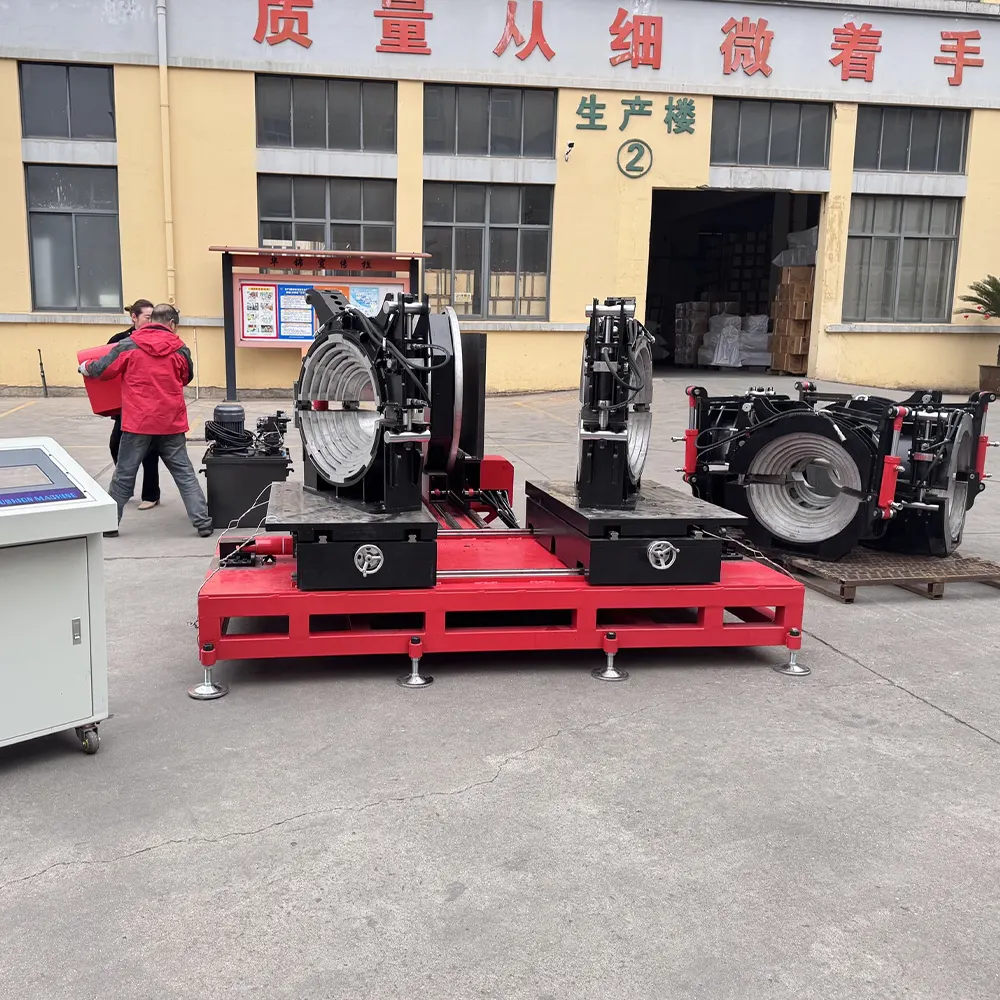
When HDPE pipelines are expected to perform under pressure, temperature change, vibration, and long-term ground movement, the quality of each welded joint becomes critical. A weak seam can lead to leakage, downtime, contamination, costly repairs, and in some cases serious safety risks. That is why advanced HDPE welding is not only about melting plastic and joining two pipes together; it is about creating a controlled, repeatable, and durable bond that can serve demanding water, gas, mining, and industrial applications for years.
Among the most trusted joining methods for HDPE pipe systems, butt fusion stands out for its ability to form a continuous pipe wall when it is executed correctly. The process uses heat, pressure, and precise alignment to join two pipe ends into a single fused structure. In modern pipeline projects, the difference between an ordinary joint and a leak-free one often depends on technique, machine stability, operator skill, and strict process control. For contractors, distributors, and project owners looking for dependable equipment, a professional butt fusion machine is the foundation of consistent results.
Before discussing advanced techniques, it helps to understand why HDPE welding is so widely used. High-density polyethylene is valued for its chemical resistance, flexibility, corrosion resistance, and long service life. However, these same material advantages also require careful handling during welding. Because HDPE expands, contracts, and reacts to temperature changes, fusion parameters must be controlled precisely. In practical terms, that means every step from pipe preparation to final cooling must be done with discipline. Even a small deviation in facing quality or heating time can affect joint strength.
Key principle: strong HDPE joints are not created by speed alone. They are created by clean preparation, stable heating, accurate pressure control, and full cooling time.
1. Pipe Surface Preparation Is the First Quality Check
Advanced welding begins long before heat is applied. The pipe ends must be clean, dry, and free from contamination. Dust, oil, moisture, oxidation, and scratches can all interfere with fusion quality. On site, the most common mistake is underestimating how much surface contamination affects the final joint. A pipe may look clean at a glance, yet still carry a thin oxidized layer that weakens bonding if it is not removed properly.
The best practice is to inspect the pipe ends carefully, trim them square, and remove the oxidized outer layer using the facing tool supplied with the welding machine. This step ensures fresh material is exposed for fusion. It is also important to avoid touching prepared surfaces with bare hands after cleaning, as skin oils can create a hidden barrier at the bond line. For large projects, a clean preparation routine should be repeated the same way every time, regardless of pipe diameter or job urgency.
Pro tip: if the pipe end looks uneven after facing, do not proceed. Reface it until the surfaces are perfectly aligned and smooth.
2. Alignment Control Prevents Internal Stress
Even a perfectly heated joint can fail if the pipe sections are not aligned correctly. Misalignment creates stress concentration, weakens the fused area, and may lead to premature cracking under load. Advanced HDPE welding requires careful use of clamps, stable support, and accurate centering before the heating plate is introduced.
Modern hydraulic and CNC systems help operators maintain consistent alignment, especially on larger diameter pipes where manual positioning becomes difficult. The advantage of these systems is not only convenience; it is repeatability. A machine that holds both pipe ends securely reduces human error and improves the uniformity of the fused bead. In field projects, this matters because real-world conditions are often less than ideal. Uneven ground, temperature swings, and long pipe sections all make alignment more challenging.
For projects that demand tighter control, pairing skilled operation with a reliable machine platform is essential. JQ-Fusion supports a wide range of welding needs with manual, hydraulic, and automatic equipment designed for different pipe sizes and project conditions. That flexibility is especially valuable in water supply, gas distribution, and industrial piping where each installation may have different performance demands.
3. Heating Plate Temperature Must Be Stable, Not Just High
One of the most misunderstood aspects of HDPE welding is temperature. Some operators assume that a hotter plate means a stronger weld, but excessive heat can actually damage the material and reduce joint quality. The goal is not maximum temperature; the goal is correct temperature stability. The heating plate must remain within the recommended range so the pipe ends soften evenly without burning or over-melting.
Advanced techniques include regular calibration checks and verification of heat consistency across the plate surface. Uneven heat distribution can create a joint where one side fuses properly while the other side does not, resulting in weak zones that are difficult to detect visually. That is why professional production standards place strong emphasis on temperature accuracy testing. In high-quality equipment, this precision is backed by stable electrical components, reliable controls, and consistent manufacturing processes.
Important: never rush the heating stage. A proper heat soak is essential for creating a smooth, even melt pattern before joining.
4. Pressure Application Should Follow the Material, Not the Operator’s Guess
After heating, the softened pipe ends must be brought together with controlled pressure. This is where experience matters, but it should always be guided by machine settings and project specifications rather than intuition. Too much pressure can squeeze molten material out excessively and reduce weld mass. Too little pressure can leave voids or incomplete fusion. The best advanced welding practice is to apply pressure gradually and consistently according to pipe diameter, wall thickness, and material grade.
Hydraulic systems are especially useful in this stage because they offer more stable pressure management than purely manual methods. For large-diameter HDPE pipelines, pressure fluctuations can be difficult to control by hand. A well-designed hydraulic butt fusion system helps the operator maintain the required force with much greater accuracy. This is particularly important in critical applications such as gas networks or mining pipelines where joint failure is unacceptable.
Professional welders also pay attention to bead formation. A uniform bead on both sides of the joint is often a sign that the pressure and heat cycle were correctly balanced. However, bead shape alone does not guarantee quality; it must be supported by proper process documentation and, when required, inspection protocols.
5. Cooling Time Is a Structural Requirement, Not a Waiting Period
One of the most common causes of weak or distorted HDPE joints is premature movement during cooling. Once the pipe ends are fused, the joint needs time to solidify under controlled conditions. If the clamp is opened too early or the pipe is disturbed before the fusion zone fully stabilizes, internal stress can be locked into the joint and reduce long-term reliability.
Advanced welding practice treats cooling as part of the weld, not as an afterthought. The cooling time should always follow the machine and material recommendations, and this is especially important for larger pipes or colder environments. During this stage, external forces should be minimized. In field projects, teams should avoid dragging, twisting, or loading the line until the joint has fully matured.
Best practice: keep the joint stable until it reaches full cooling. A perfect-looking bead can still fail if it is disturbed too early.
6. Machine Quality Has a Direct Impact on Weld Quality
Advanced welding methods depend heavily on machine performance. A precise process can still be undermined by unstable clamps, inconsistent heating controls, poor hydraulic performance, or weak alignment systems. This is why professional contractors often choose equipment from manufacturers with strong engineering capability and quality control systems.
JQ-Fusion, as a professional manufacturer specializing in HDPE pipe welding equipment, focuses on stable performance, long service life, and practical customization. Its product range covers hydraulic butt fusion welding machines, automatic butt fusion welding machines, electrofusion welding machines, and multi-angle pipe fitting welding machines. For projects that need different pipe sizes, voltage requirements, branding, or configuration options, OEM and ODM flexibility can make a significant difference in project planning and market competitiveness.
Quality control is equally important. Reliable machines should undergo checks for temperature accuracy, hydraulic pressure stability, and clamp alignment before they leave the factory. This kind of discipline helps ensure that field performance matches design expectations. In global pipeline work, that reliability can reduce rework, shorten installation time, and support smoother project execution.
7. Operator Training Makes Advanced Techniques Truly Effective
Even the best equipment cannot replace trained personnel. Advanced HDPE welding requires operators to understand pipe material behavior, machine settings, and troubleshooting methods. Good training covers surface preparation, heating cycle timing, pressure control, bead inspection, and safe operation. Skilled teams are able to recognize when conditions are changing, such as temperature drops, moisture issues, or pipe misalignment, and adjust accordingly.
Training also improves consistency across different crews and job sites. In large infrastructure projects, this consistency is often more valuable than raw speed. A well-trained team can produce strong joints repeatedly, which lowers the risk of leaks and helps the project stay on schedule. This is why many equipment suppliers provide technical support and guidance in addition to the machines themselves. The value is not just in the hardware; it is in the complete welding solution.
Highlighted benefit: when machine quality and operator training work together, the result is not only a stronger weld, but also lower maintenance cost over the full life of the pipeline.
8. Inspection and Documentation Strengthen Project Confidence
For critical applications, a finished joint should never be assumed to be perfect without inspection. Visual checks, process records, and in some cases destructive or non-destructive testing help verify that the weld meets project requirements. A consistent documentation system also allows teams to trace issues back to specific settings, operators, or material batches if a problem is discovered later.
This level of control is especially important in commercial and municipal pipeline systems, where project owners expect long-term reliability. Inspection records also support quality assurance on large international projects, where standards may be reviewed by third parties or certification bodies. Products manufactured in compliance with international standards and certified by organizations such as SGS provide an additional layer of confidence for buyers seeking dependable equipment.
9. Choosing the Right Welding Approach for the Job
Not every project requires the same machine or same level of automation. Small installations may benefit from manual systems that are simple and economical. Medium and large projects often perform better with hydraulic control, while highly demanding or repetitive environments may justify CNC automatic solutions. The right choice depends on pipe diameter, workload, crew experience, and the level of precision required.
In practice, this means that advanced HDPE welding is not a single technique but a process family. Contractors who understand the strengths of each method can match equipment to application more effectively. For example, water supply and drainage systems may prioritize speed and dependable routine performance, while gas distribution projects may emphasize tight control and documentation. Mining and industrial systems may require durability, pressure resistance, and strong field support.
With over 20 years of industry experience, JQ-Fusion continues to serve global pipeline projects by delivering equipment designed for stability, customization, and practical real-world use. From factory production capability to fast delivery and technical support, the focus remains the same: help customers build stronger, leak-free joints with confidence.
Frequently Asked Questions
Q1: What is the biggest cause of weak HDPE fusion joints?
In most cases, contamination, poor alignment, unstable temperature, or incorrect pressure causes weak joints. Good preparation and disciplined process control solve most of these issues.
Q2: Is a higher heating temperature always better?
No. Excessive heat can damage HDPE and reduce weld quality. The key is stable, correct temperature within the recommended range for the pipe material.
Q3: Why is cooling time so important?
Cooling allows the fused material to solidify properly. If the joint is moved too soon, internal stress and distortion can weaken the weld.
Q4: Which machine type is best for advanced HDPE welding?
It depends on the project. Manual machines suit smaller jobs, hydraulic machines improve pressure control, and automatic systems are ideal for higher precision and repeatability.
Q5: How can contractors improve weld consistency on site?
Use reliable equipment, train operators well, follow standard procedures, inspect every joint, and maintain clean working conditions throughout the welding process.



