
In Iraq’s fast-growing gas distribution and industrial sectors, selecting the right gas line welder is critical to safe, long-lasting HDPE pipeline performance. This guide helps contractors, municipal engineers, and oil & gas field teams evaluate butt fusion welding machines that withstand hot, dusty conditions and meet local project demands.
Overview: Gas Line Welders for Iraq’s Environment
HDPE butt fusion machines are the preferred choice for gas piping because they deliver leak-free joints and long service life. In Iraq — from the urban centers of Baghdad and Basra to remote field installations — welders must operate reliably in high temperatures, sandy environments, and sometimes limited-power sites. Choosing equipment designed for durability and easy maintenance reduces downtime and improves safety compliance for gas distribution networks.
Types of Machines and Typical Uses
Manual butt fusion – Best for small-diameter distribution lines and tight access jobs. Easy to deploy with minimal power needs.
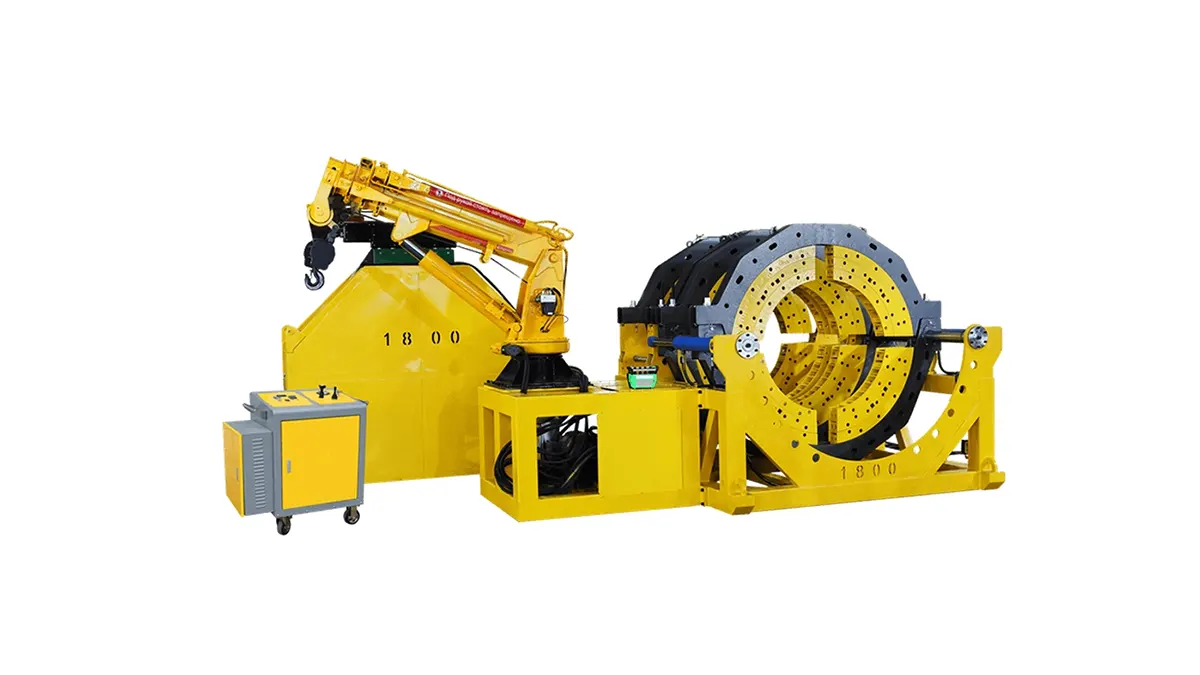
Hydraulic butt fusion – Suitable for medium to large pipelines, offering higher clamping force and stable heating under heavy workloads.
Automatic / CNC butt fusion – Ideal for large-diameter gas mains and projects where repeatable precision and data logging are required.
Quick Comparison Table
| Machine Type | Typical Pipe Range | Best For |
|---|---|---|
| Manual Butt Fusion | OD 20mm – 160mm | Local distribution lines, tight job sites |
| Hydraulic Butt Fusion | OD 160mm – 2000mm+ | Large mains, industrial installations |
| Automatic / CNC | OD 63mm – 2000mm+ | High-volume projects, QA documentation |
Key Features to Prioritize
Reliable heaters & temperature control — Precise heating plates and stable thermostats ensure consistent PE fusion, critical for gas safety.
Strong clamping systems — Hydraulic or mechanically robust clamps resist slippage in dusty or uneven field terrains common in Iraq.
Data logging & traceability — Machines with weld records simplify compliance with project QA and regulatory checks for gas networks.
Portability & power options — Lightweight frames, optional generator compatibility, and battery-assisted controls help crews working remote desert sites.
Installation, Training & Local Considerations
In Iraq, plan for logistics around customs clearance and site accessibility. Operator training is essential — even the best machines need skilled welders to follow preheat, alignment, fusion, and cooling protocols. Choose vendors that provide:
• On-site or remote training materials and demonstration videos
• Spare parts kits and locally shippable consumables (heating plates, trims, clamps)
• Clear documentation for weld parameters aligned with local standards and project specs
Maintenance & Compliance
Routine maintenance — Keep heating plates clean, check hydraulic fluids, and inspect alignment fixtures after heavy use in sandy conditions. Proactive maintenance lowers repair costs and extends machine life.
Safety & certification — Look for equipment with recognized manufacturing standards, CE or ISO-aligned production, and accessible calibration support to meet international pipeline safety expectations.
Get Started
For tailored solutions suited to Iraq’s gas distribution projects, contact JQ-Fusion to discuss model selection, shipping options, and operator training packages. Well-chosen equipment delivers safer pipelines, faster installs, and reduced lifecycle costs.



