
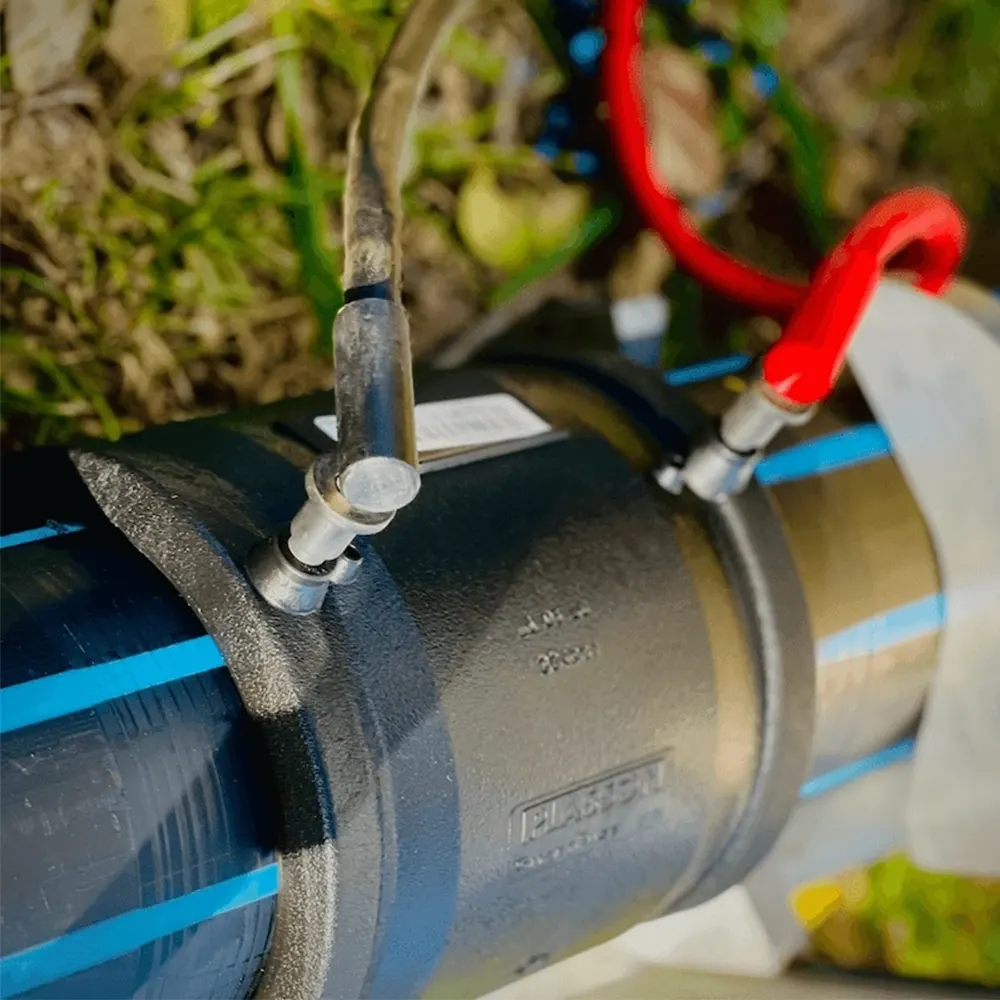
In power plant cooling systems, pipe integrity is not a detail; it is a foundation for safe and efficient operation. When cooling water must move continuously through long pipeline runs, elbows, branches, and large-diameter headers, the welded joint becomes one of the most critical parts of the system. This is where HDPE pipe welding plays a major role. For modern plants seeking corrosion resistance, lower maintenance, and long service life, HDPE pipelines assembled with a reliable butt fusion machine are increasingly preferred over traditional metallic piping in many auxiliary cooling applications.
HDPE, or high-density polyethylene, is known for its flexibility, chemical resistance, and excellent resistance to scaling and corrosion. In power plant environments, cooling systems are often exposed to water with varying temperatures, suspended solids, and continuous vibration from pumps and mechanical equipment. These conditions can accelerate wear in metal pipes. By contrast, properly welded HDPE pipelines can tolerate harsh operating environments while maintaining stable flow characteristics and reducing the risk of leakage. The key is not just the pipe material itself, but the quality of the welding process used to connect every section.
Among the available joining methods, butt fusion welding is one of the most widely used for HDPE cooling pipelines because it creates a joint that is nearly as strong as the pipe wall itself. In a butt fusion process, the ends of two aligned pipes are heated with a fusion plate and then pressed together under controlled pressure. Once cooled, the result is a homogeneous joint that can withstand long-term service in demanding industrial systems. For cooling water networks in power plants, this means stronger reliability, fewer maintenance shutdowns, and better operational continuity.
Why HDPE Is Suitable for Power Plant Cooling Systems
Power plant cooling systems must handle continuous water circulation, thermal cycling, and long operating hours. HDPE performs well in these conditions because it resists corrosion from water chemistry, does not rust, and has a smooth internal surface that helps reduce friction loss. That smoothness is especially valuable in large cooling loops, where even a slight reduction in resistance can improve system efficiency.
Key advantage: HDPE cooling pipelines can significantly reduce the problems commonly seen in steel piping, such as internal scaling, corrosion pits, and frequent joint repairs.
Another reason HDPE is widely used is its ability to absorb vibration and minor movement. Power plant cooling systems often include pumps, valves, and expansion sections that create mechanical stress over time. HDPE’s flexibility helps reduce stress concentration at joints, which is important in preventing fatigue-related failures. When these pipes are joined through precise fusion welding, the resulting pipeline becomes a stable and durable part of the plant infrastructure.
How Butt Fusion Welding Works in Cooling Pipeline Construction
Butt fusion welding is a controlled thermal process that requires accurate temperature, pressure, and alignment. In cooling system installation, each pipe end is first trimmed and aligned carefully in the machine clamps. The heated plate then softens both ends to the proper fusion state, after which the plate is removed and the pipe ends are pressed together. The melted surfaces combine into a single continuous connection after cooling.
This process is especially valuable for power plant applications because it avoids the need for mechanical fittings in many straight pipeline sections. Mechanical joints can loosen, leak, or require more frequent inspection. Fusion joints, by contrast, reduce the number of weak points in the system. For large cooling networks where the pipeline may extend over long distances, this creates an important reliability advantage.
High-quality equipment is essential for success. A machine with accurate heating control, stable hydraulic pressure, and proper clamp alignment helps ensure the weld meets project requirements. That is why project teams often choose industrial-grade fusion equipment from experienced manufacturers such as JQ-Fusion, whose focus on HDPE pipe welding solutions supports demanding pipeline projects worldwide.
Main Applications in Power Plant Cooling Systems
HDPE pipe welding is used in several parts of a power plant cooling network. One common application is raw water intake and discharge lines, where large quantities of cooling water are transported from a source to the plant and then returned after use. These lines often require corrosion-resistant materials because of their exposure to the environment and waterborne debris.
It is also used in auxiliary cooling loops that serve equipment such as heat exchangers, condensers, pumps, and turbine support systems. These systems must operate steadily, and even a small leak can cause downtime or trigger emergency maintenance. Welded HDPE pipelines provide a dependable option for these non-high-temperature but high-volume water transport functions.
Important note: HDPE is commonly selected for water-based cooling lines and auxiliary circulation systems, not for direct use in extremely high-temperature steam service.
In ash handling and wastewater-related cooling circuits, HDPE also offers practical benefits. These systems may carry water with sediment or chemical residue. Because HDPE has strong chemical resistance and welded joints are highly sealed when performed correctly, it helps reduce environmental leakage risks and lowers maintenance demands.
Benefits of Using Fusion Welded HDPE Pipelines
One of the biggest advantages of fusion welded HDPE in cooling systems is leak prevention. A properly fused joint becomes a continuous section of pipe, minimizing the chance of seepage at connection points. This is especially important in power plants where water loss can impact operating efficiency and increase repair costs.
Another major benefit is long service life. HDPE does not corrode like steel, so the pipeline remains stable even after years of exposure to moisture and fluctuating water conditions. In addition, the welded system typically requires less routine maintenance than many traditional alternatives. For plant operators, fewer repairs mean lower lifecycle costs and less unplanned interruption.
Additional advantages include:
✔ Reduced corrosion and scaling
✔ Strong, seamless fusion joints
✔ Good resistance to vibration and ground movement
✔ Lower maintenance frequency
✔ Efficient flow through smooth bore piping
In many projects, these advantages make HDPE a practical choice for both new construction and replacement work. When an aging metallic pipeline is replaced with fusion welded HDPE, operators often see immediate improvements in corrosion resistance and reduced leakage risk.
Why Welding Quality Matters So Much
Even the best pipe material cannot perform well if the welding quality is poor. In power plant cooling systems, every joint must be able to handle continuous operation and occasional pressure variations. Poorly aligned pipes, inconsistent heating, contaminated pipe ends, or insufficient cooling time can weaken the weld and compromise the entire system.
That is why professional welding equipment and strict procedure control are essential. Operators should verify pipe cleanliness, maintain correct fusion temperature, and ensure the pressure is applied according to the pipe size and wall thickness. Each weld should be inspected visually and, where necessary, tested according to project standards. In large plant projects, this process helps ensure the cooling system remains reliable after commissioning.
JQ-Fusion supports this demand through a range of hydraulic and automatic butt fusion machines designed for stable, repeatable performance. For contractors and distributors serving industrial pipeline projects, this kind of equipment helps reduce variability and improve final weld quality. The company’s experience in global pipeline applications also makes it easier to match the machine to the specific diameter and project requirement.
Installation Considerations for Plant Engineers
Successful HDPE welding in a power plant starts with proper planning. Engineers should consider pipeline routing, support spacing, thermal expansion, and access for welding equipment. Large-diameter cooling lines often require spacious work areas and accurate pipe handling to maintain alignment throughout the fusion process.
Because HDPE expands and contracts more than metal, the design should include appropriate allowances for movement. Supports, anchors, and guides need to be selected carefully to avoid stress buildup. When installed correctly, however, the pipe can perform very well in both buried and above-ground cooling applications.
Best practice: Use qualified welders, calibrated machines, and standardized procedures for every fusion joint. Consistency is critical in long cooling networks.
How the Right Welding Equipment Supports Project Success
The choice of welding machine directly influences the quality and speed of installation. Manual systems may suit smaller jobs, but large industrial cooling projects often benefit from hydraulic or CNC automatic butt fusion machines because they improve precision and reduce operator error. Automatic control can be particularly useful when many joints must be completed within a tight schedule.
JQ-Fusion offers a product range that includes manual, hydraulic, and automatic fusion equipment, along with electrofusion and multi-angle pipe fitting welding solutions. For power plant contractors, this variety is useful because different sections of a cooling project may require different welding capabilities. A stable machine with accurate temperature and pressure control helps produce consistent joints across the entire system.
For international buyers, OEM and ODM customization is another important advantage. Voltage requirements, machine size, branding, and color can be adjusted to suit project and market needs. This flexibility is especially valuable when supplying equipment to large industrial projects across different regions.
Operational Reliability and Long-Term Value
The long-term value of HDPE pipe welding in power plant cooling systems comes from its ability to combine durability with lower maintenance. Once installed correctly, these systems can provide years of dependable service with minimal corrosion-related degradation. That means fewer emergency repairs, less downtime, and more predictable lifecycle costs.
For operators, this reliability supports plant safety and output stability. For contractors, it means the installed system is more likely to meet performance expectations over time. And for engineers, it provides confidence that the cooling network will continue to support critical equipment under demanding conditions.
When backed by tested welding equipment and strict quality control, HDPE fusion joints become a strong answer to many of the challenges faced in industrial water transport. Whether used in intake lines, auxiliary cooling loops, or wastewater-related circuits, the combination of HDPE material and precise butt fusion welding delivers a practical, efficient solution.
Common Problems That Proper HDPE Welding Helps Avoid
Improperly joined pipelines can lead to several costly issues in cooling systems. These include leakage, misalignment, pressure loss, and joint weakness under vibration or temperature variation. In severe cases, a failure at one joint can force a section of the plant to shut down for emergency repairs.
Proper butt fusion welding helps avoid these issues by creating a consistent and sealed connection. It also reduces the number of mechanical couplings, which are more vulnerable to loosening over time. In an environment where stable water flow is essential, this can make a major difference in operational continuity.
When a project demands high reliability, plant owners should pay attention not only to pipe selection, but also to machine quality, welding procedure, and installer training. These three factors work together to determine whether the cooling system will perform as intended.
Frequently Asked Questions
Q1: Why is HDPE often chosen for power plant cooling systems?
HDPE is chosen because it resists corrosion, offers smooth internal flow, and performs well in water-based cooling applications with lower maintenance needs.
Q2: Why is butt fusion welding preferred over mechanical joints?
Butt fusion creates a continuous, strong joint that reduces leak points and improves long-term reliability in industrial cooling pipelines.
Q3: Can HDPE be used in all parts of a power plant?
It is commonly used in cooling water, auxiliary circulation, intake, discharge, and related water handling systems, but not in direct high-temperature steam service.
Q4: What makes a good HDPE weld in a cooling system?
Proper alignment, correct fusion temperature, stable pressure, clean pipe ends, and sufficient cooling time are all essential for a strong weld.
Q5: How does JQ-Fusion support industrial pipeline projects?
JQ-Fusion provides butt fusion welding machines, technical support, OEM and ODM customization, and reliable equipment for global HDPE pipeline applications.
In power plant cooling systems, HDPE pipe welding is more than a construction method. It is a reliability strategy that supports efficient water transport, reduces corrosion issues, and helps maintain long-term operational stability. With the right welding equipment, trained operators, and strict quality control, fusion welded HDPE pipelines can become a highly effective part of modern power plant infrastructure.



