
When companies search for energy efficient welding machines, they are usually trying to solve two problems at the same time: reduce electricity use and keep welding quality stable. In modern fabrication, pipeline installation, and industrial maintenance, power consumption can have a direct impact on operating costs, project scheduling, and even generator sizing on remote job sites. Choosing the right machine is not only about brand or price; it is about matching the machine’s output, duty cycle, and control system to the real application. For contractors working on field projects, a smarter machine can mean fewer interruptions, less wasted power, and better long-term value.
Energy efficiency in welding does not simply mean using the smallest machine available. It means using equipment that converts electrical input into usable welding performance with minimal loss. That can include inverter-based technology, precise temperature control, optimized hydraulic systems, and intelligent automation. For businesses that manage recurring projects, even a modest reduction in power consumption can create meaningful savings over time. In addition, efficient machines often generate less heat waste, improve process consistency, and reduce the chance of rework.
Key takeaway: the best energy efficient welding machines are the ones that deliver stable weld quality while using only the power truly needed for the task. A machine that is “bigger” than necessary may consume more power than required, while an undersized machine may waste time and cause quality issues.
What Makes a Welding Machine Energy Efficient?
A welding machine becomes energy efficient when it minimizes input loss and maintains output stability under real working conditions. The best systems usually combine several design advantages. First, they may use inverter technology, which is generally more efficient than older transformer-heavy designs. Second, they often provide accurate control of welding current, voltage, or temperature, avoiding unnecessary energy spikes. Third, efficient machines are designed to run smoothly at the required duty cycle instead of drawing excessive power during standby or low-load periods.
In practical terms, a machine with good energy performance should help you do three things: complete welds consistently, reduce unnecessary power draw, and support long service life. If the machine heats up quickly, maintains stable output, and avoids large fluctuations, it is usually a strong candidate for lower power consumption. This is especially important for remote construction sites, where generators or limited site power make efficiency a major operational concern.
Best Types of Energy Efficient Welding Machines
1. Inverter Welding Machines
Inverter welding machines are widely considered one of the best choices for lower power consumption. They convert power more efficiently and typically offer better control than traditional machines. Because they use high-frequency switching, they can deliver a stable arc while keeping energy waste lower. This makes them popular for fabrication shops, maintenance work, and sites where electrical capacity is limited.
Why they stand out: inverter units often provide fast response, compact size, and improved power conversion efficiency. For many users, this is the most practical upgrade if lower electricity usage is a top priority.
2. Automatic Butt Fusion Welding Machines
Automatic welding machines are especially useful when repeatability and optimized power usage matter. By controlling the welding cycle precisely, they reduce operator error and prevent unnecessary heating or pressure variation. In pipeline work, automatic systems help ensure that each fusion cycle uses the exact amount of energy required for the pipe size and material. This avoids overuse of power and reduces rework, which is another hidden source of energy waste.
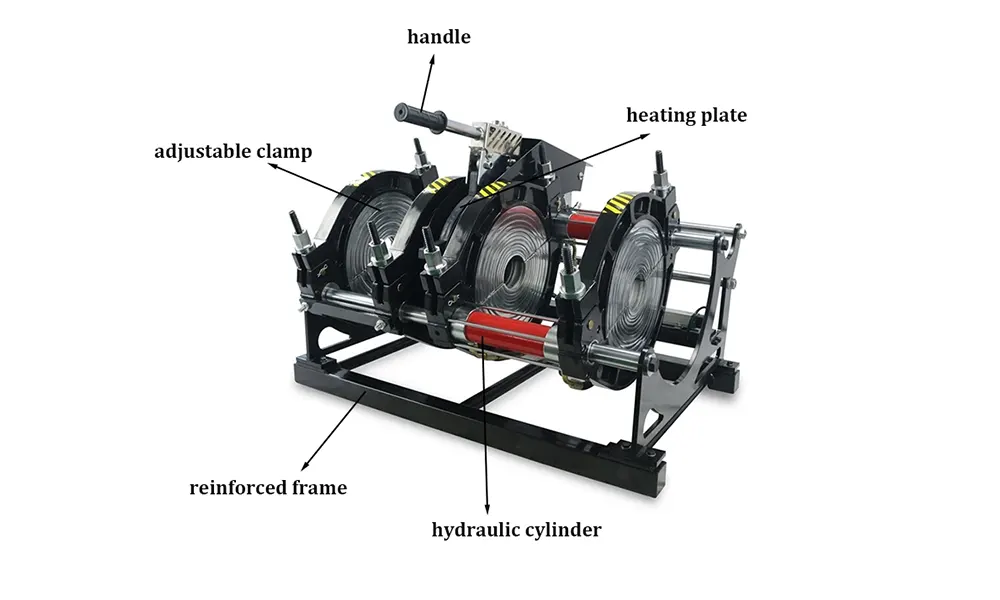
For contractors handling HDPE pipeline projects, this type of machine can be a smart investment because it improves consistency while lowering the risk of failed joints. If you want to explore professional pipeline welding solutions, you can review this butt fusion machine option from a specialized manufacturer.
3. Hydraulic Butt Fusion Welding Machines
Hydraulic butt fusion machines are valued for their strong clamping force and stable operational control. A well-designed hydraulic system can improve efficiency by applying pressure accurately without excessive mechanical strain. This matters because unstable pressure can lead to poor fusion quality, causing wasted material and higher total power consumption over repeated work cycles. In many field applications, hydraulic machines strike a practical balance between robustness and energy control.
Best for: construction contractors, gas and water pipeline teams, and users who need dependable output across a wide pipe diameter range.
4. Electrofusion Welding Machines
Electrofusion systems are often selected when precision matters and the pipe network requires clean, controlled joint formation. These machines can be highly efficient because they deliver electrical energy directly to the fitting coil, concentrating power where it is needed instead of wasting it. When the machine is correctly matched to the fitting size and material, energy use can be quite efficient compared with less controlled methods.
This type is especially helpful in gas distribution and repair work, where joint integrity is essential and clean operation is important. The lower risk of repeat welding can also reduce power waste across the full project.
How to Choose the Best Machine for Lower Power Consumption
Not every “efficient” machine is the right machine for every user. The correct choice depends on pipe diameter, material, site power conditions, production frequency, and quality requirements. Below are the main factors to consider before purchasing.
1. Match power rating to the job
A machine with a rating far above your actual needs may waste electricity. Select a model that fits the pipe size, material thickness, and production volume you handle most often.
2. Look for precise control systems
Temperature accuracy, pressure stability, and smart cycle control can reduce wasted energy and improve weld quality at the same time.
3. Check duty cycle and standby efficiency
Some machines consume more power during idle periods than users expect. Efficient models manage standby power better and stay ready without unnecessary draw.
4. Consider portability and job-site conditions
Compact machines may be easier to transport and can reduce setup time and site power needs. For field operations, this often matters as much as wattage numbers.
Why JQ-Fusion Matters in This Discussion
For buyers looking at pipeline welding solutions, JQ-Fusion offers a professional product range focused on butt fusion welding equipment. With more than 20 years of industry experience, the company produces manual, hydraulic, and CNC automatic machines for a wide range of applications. That breadth matters because efficient power consumption is not only about the motor or heating system; it is also about choosing a machine architecture that matches the job.
Their machines are used in water supply systems, gas distribution networks, mining projects, and industrial pipeline installations worldwide. These are applications where stable performance and controlled energy use are essential. In addition, the company’s manufacturing approach emphasizes testing, temperature accuracy, hydraulic pressure stability, and clamp alignment, all of which help reduce energy waste caused by poor welding quality or repeated work.
If your project requires tailored specifications, JQ-Fusion also supports OEM and ODM customization. That can help buyers optimize voltage, design, machine size, and functional configuration for a specific market or site condition. In real-world use, a tailored machine is often more energy efficient than a generic one because it is built around actual operating needs rather than broad assumptions.
Practical Tips to Reduce Welding Power Consumption
- Use the correct machine size for the pipe diameter and material thickness.
- Keep clamps, heaters, and hydraulic components in good condition to avoid energy loss.
- Train operators to follow the proper cycle so the machine does not overheat or overwork.
- Avoid repeated weld attempts by ensuring alignment and preparation are correct before starting.
- Choose machines with stable output so each weld uses only the energy required.
Maintenance also plays a major role in power efficiency. Dirty heating plates, worn clamps, loose connections, and unstable hydraulic systems can all increase energy consumption. Even a highly efficient machine can become power-hungry if it is poorly maintained. Therefore, energy savings come not just from the machine itself but also from the way it is used over time.
Recommended Buyer Mindset
The smartest buyers think beyond the initial purchase price. They calculate the total cost of ownership, including electricity use, maintenance, downtime, operator training, and rework risk. A lower-priced machine that wastes power and causes inconsistent welds can become expensive very quickly. By contrast, a well-designed energy efficient welding machine can save money every month while improving project reliability.
In short: the best machine is not always the one with the highest power rating or the lowest upfront cost. It is the one that gives you reliable welds, controlled energy use, and stable performance across your actual work conditions.
Conclusion
The best energy efficient welding machines for lower power consumption are usually inverter-based, precisely controlled, and matched carefully to the application. For fabrication shops, construction teams, and pipeline contractors, efficiency should be measured not only by electrical input but also by weld quality, repeatability, and reduced rework. Whether you choose an inverter unit, an automatic system, a hydraulic butt fusion machine, or an electrofusion model, the goal is the same: use less power while producing stronger, more reliable results. For companies working in HDPE pipeline projects, trusted manufacturers like JQ-Fusion can provide solutions that combine energy-conscious design with professional-grade performance.
FAQ
Q1: Are inverter welding machines always the most energy efficient?
They are often among the most efficient options, but the best choice still depends on your workload, material, and required welding process.
Q2: Does a larger machine consume more power?
Usually yes, especially if it is oversized for the job. Matching machine capacity to actual requirements helps reduce unnecessary power use.
Q3: Can regular maintenance improve energy efficiency?
Yes. Clean components, stable pressure, and proper calibration help the machine operate efficiently and avoid wasted electricity.
Q4: Which industries benefit most from energy efficient welding machines?
Pipeline construction, water supply, gas distribution, mining, and industrial fabrication all benefit because these sectors depend on stable output and controlled operating costs.
Q5: What should I prioritize first when buying an efficient welding machine?
Start with application fit, then look at control accuracy, energy conversion efficiency, and long-term support from the manufacturer.



