
In modern pipeline construction, welding quality is not a detail to be checked later; it is the foundation of safety, durability, and long-term performance. When a pipe joint fails, the result can be costly downtime, product loss, environmental risk, or even a complete system shutdown. That is why welding procedures are never treated as guesswork in professional projects.
A Pipe Welding Procedure Qualification Record, often called a PWPQR or more commonly a Welding Procedure Qualification Record, is the documented proof that a welding procedure has been tested and approved. It shows that a specific procedure can produce a weld meeting required standards under defined conditions. In simple terms, it is the evidence that the method works before it is used on real work.
For contractors, engineers, inspectors, and project owners, this record is not just paperwork. It is a technical assurance that the welding process has been verified for strength, consistency, and compliance. Whether the project involves water supply, gas transmission, industrial piping, or mining infrastructure, qualification records help reduce uncertainty and protect the final installation.
What a Pipe Welding Procedure Qualification Record Actually Proves
A welding procedure qualification record documents the results of testing a specific welding method. It records details such as pipe material, pipe size, welding position, heat settings, joint preparation, pressure, cooling time, and test results. These details prove that the welding parameters are capable of producing sound joints.
The purpose is not to describe how someone “usually” welds. The purpose is to prove that a defined procedure can reliably create acceptable welds when performed by qualified personnel and with proper equipment. This is especially important in high-demand environments where welded joints must endure pressure, vibration, temperature changes, and long service life.
Important: A qualification record is evidence-based. It confirms that the welding procedure has passed tests and is suitable for controlled production use.
Why It Is Important in Real Pipeline Projects
The importance of a welding qualification record becomes clear when you look at the risks of failure. A poorly controlled weld can create weak fusion, internal defects, deformation, leaks, or stress concentration. In a pipeline system, even a small defect can become a major operational problem over time.
Qualification records help project teams standardize welding behavior. This standardization is valuable because multiple operators, multiple shifts, and different site conditions can otherwise lead to inconsistent results. When procedures are qualified, teams can follow a verified method instead of relying on individual preference.
It also supports regulatory compliance. Many projects require documented proof that welding procedures meet applicable standards before installation begins. Without qualification records, it may be impossible to pass inspection or receive project approval.
For procurement teams and contractors, it also reduces commercial risk. A qualified welding method makes it easier to demonstrate quality to clients, inspectors, and third-party auditors.
Key Elements Found in a Qualification Record
Although formats can vary depending on the code or project requirements, most records include several core items.
Typical details include:
- Base material type and grade
- Pipe diameter and wall thickness
- Joint design and preparation method
- Welding process and machine settings
- Heating, fusion, and cooling parameters
- Test methods and acceptance results
These details are essential because welding performance depends on controlled variables. If the pipe material changes, the diameter changes, or the pressure cycle changes, the procedure may no longer be valid without additional qualification.
That is why records are so valuable: they do not just say “it passed.” They explain what passed, under which conditions, and with which limits.
How Qualification Supports Quality Control
Quality control in pipe welding is more than checking the final bead appearance. It begins before the first weld is made. A qualification record sets the technical boundary for acceptable work and gives inspectors a benchmark for evaluating welding results.
When a team works from a qualified procedure, the process becomes more predictable. Operators know the correct heat cycle, alignment requirements, pressure control, and timing. Supervisors can compare actual work against the qualified values. Inspectors can verify whether field welding remains inside the approved range.
This is especially important for automation. Modern welding systems require precise control to maintain stability and repeatability. A qualified procedure helps confirm that the machine settings and process logic are capable of meeting project requirements.
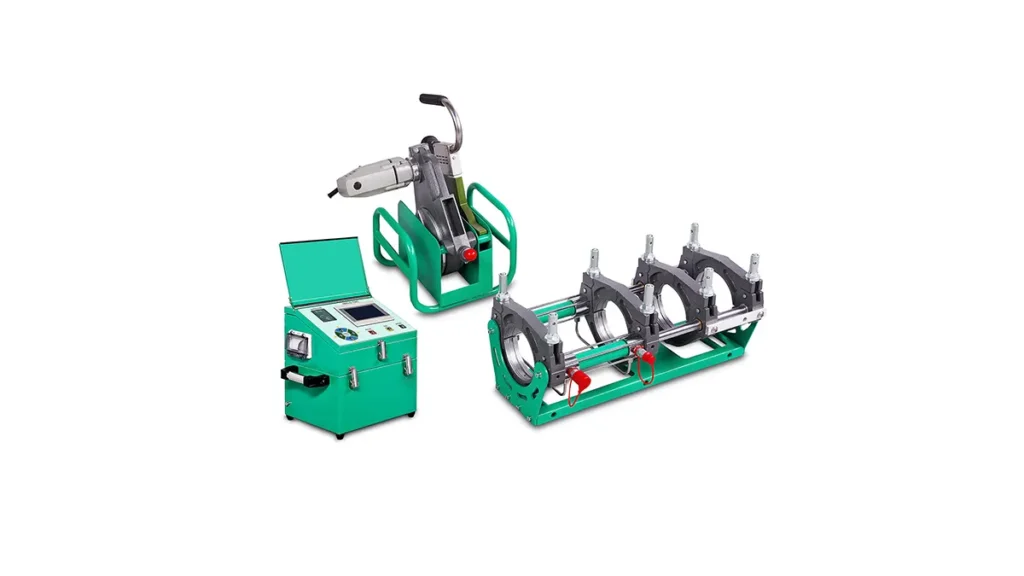
If you want to understand how professional equipment supports this level of consistency, a reliable butt fusion machine can play a major role in achieving stable alignment, heat accuracy, and repeatable output on site.
The Relationship Between Procedure Qualification and Project Risk
Every pipeline project carries risk, but qualified welding procedures help reduce it. The risk is not limited to structural failure. It also includes schedule delays, repair costs, rejected welds, and disputes over accountability. A properly qualified record acts as a shield against those issues by documenting that the method was tested before production use.
For critical infrastructure, this documentation matters even more. Projects involving gas distribution, water transport, or industrial fluids must remain safe over long service periods. A qualified record helps prove the construction method was chosen with care and verified through testing.
In practical terms, this means fewer surprises during inspection and fewer problems after commissioning. It also supports long-term maintenance planning because the original welding data remains available for reference.
Why Equipment Quality Matters in Procedure Qualification
Even the best procedure cannot perform well if the machine is unstable. Heat inconsistency, pressure fluctuation, clamp misalignment, or poor control response can affect the quality of the weld and the validity of the qualification test. That is why equipment quality is directly tied to the credibility of the qualification record.
Manufacturers with strong engineering control and stable production systems help contractors achieve more reliable test outcomes. In professional pipeline work, equipment is not just a tool; it is part of the quality system. A dependable welding machine supports accurate procedure qualification and repeatable field execution.
For projects that require manual, hydraulic, or CNC-controlled solutions, a machine provider with experience in global pipeline applications can help ensure the process is matched to the application. JQ-Fusion, for example, focuses on reliable butt fusion solutions for demanding pipeline projects and offers equipment tailored for different pipe diameters and working conditions.
How Qualification Records Improve Communication Across Teams
Large projects involve many people: design engineers, site supervisors, welders, inspectors, and clients. If each group interprets welding requirements differently, mistakes can happen. A qualification record creates a shared technical reference that everyone can rely on.
Instead of relying on verbal instructions, teams can refer to the documented procedure. This reduces confusion and improves coordination. It also helps new workers understand the approved method faster, which is particularly useful when project timelines are tight.
From the client’s perspective, a qualification record shows professionalism. It demonstrates that the contractor is not improvising on site but following a controlled and verified process.
Practical benefit: Better documentation means fewer misunderstandings, stronger inspection readiness, and smoother project handover.
Common Situations Where a Qualification Record Is Required
Qualification records are often required when a project introduces a new pipe material, a new wall thickness range, a different welding process, or a different machine configuration. They may also be needed when work is being performed under stricter codes or when a client demands full traceability.
They are especially common in:
- Municipal water supply networks
- Gas distribution systems
- Mining slurry pipelines
- Industrial process piping
- Infrastructure upgrades and expansion projects
In each of these cases, a verified welding method helps protect the installation from future failures. It also supports better planning for inspections, repairs, and lifecycle maintenance.
How Manufacturers Support Better Welding Documentation
Professional machine manufacturers contribute more than hardware. They often provide technical guidance, operating stability, and configuration options that help users qualify procedures correctly. This matters because the qualification record is only as strong as the process behind it.
JQ-Fusion is one example of a manufacturer focused on HDPE pipe welding equipment for global projects. With manual, hydraulic, and CNC automatic machines, the company supports different production needs and pipe sizes. Its products are used in water supply systems, gas distribution networks, mining projects, and industrial pipeline installations worldwide.
The company also emphasizes strict quality control, advanced manufacturing technology, OEM and ODM customization, and global support. These capabilities are valuable when a project needs machine settings or operational formats aligned with specific qualification requirements.
For more information about product capabilities, certifications, and customization options, you can explore the official website at JQ-Fusion.
Best Practices for Using a Qualification Record Effectively
To get the most value from a welding qualification record, teams should treat it as a living technical document, not a file stored and forgotten. It should be easy to access during production, inspection, and handover.
Best practices include keeping the record aligned with the actual machine settings, training operators to follow the approved limits, and updating the documentation when material or process conditions change. It is also wise to store test results, inspection reports, and related procedure documents together for easier traceability.
When a project is large or technically demanding, involving experienced suppliers and technical support can make the qualification process smoother. Stable equipment, responsive guidance, and clear documentation all help ensure the final welds meet expectations.
Conclusion
A pipe welding procedure qualification record is important because it turns welding from assumption into verified practice. It proves that a process has been tested, meets defined requirements, and can be trusted in real pipeline work. For contractors and project owners, that means better quality, lower risk, smoother inspections, and stronger long-term performance.
As pipeline systems become more complex and expectations for quality continue to rise, qualification records remain one of the most important tools in welding management. They connect equipment, procedure, operator skill, and compliance into one reliable technical system.
In short, if the integrity of a pipeline matters, the qualification record matters too.
FAQs
Q1: Is a Pipe Welding Procedure Qualification Record the same as a Welding Procedure Specification?
No. A qualification record documents the test results that prove a procedure works, while a welding procedure specification describes how welding should be performed.
Q2: Who usually prepares the qualification record?
It is typically prepared by welding engineers, quality teams, or technical departments involved in procedure testing and approval.
Q3: Does every pipeline project need a qualification record?
Not every project has the same requirements, but many industrial and infrastructure projects require documented qualification before welding begins.
Q4: Why can’t welders just follow experience instead of documentation?
Experience is valuable, but documentation provides traceable proof that the process has been tested and approved under defined conditions.
Q5: How does equipment affect qualification?
Stable, accurate equipment helps ensure the welding test reflects real performance and supports consistent results in production use.



