
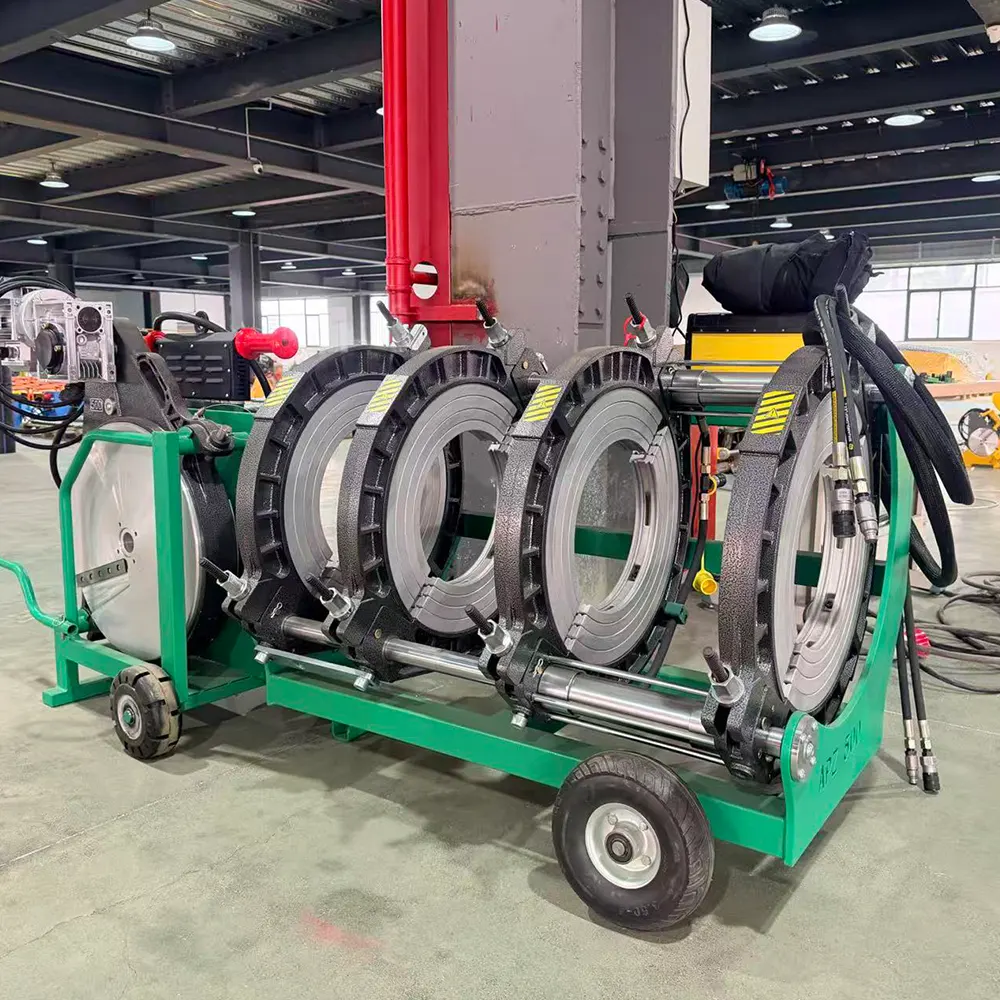
When an HDPE pipeline is built for water supply, gas distribution, mining, or industrial transport, the quality of the fusion joint determines the reliability of the entire system. A pipe may look perfect from the outside, but if the weld is underheated, misaligned, contaminated, or poorly cooled, the joint can become the weakest point in the line. That is why a butt fusion machine is only part of the job; the inspection process after welding is just as important as the equipment itself.
The HDPE pipe fusion welding inspection checklist is a practical quality-control tool used to verify that every fusion joint meets project requirements, international standards, and site safety expectations. It helps contractors, supervisors, and operators confirm that the welding procedure was followed correctly from preparation to final cooling. In real projects, this checklist reduces rework, prevents leakage risks, and improves long-term system performance.
Key idea: Inspection is not a separate task after fusion. It is part of the welding quality system and should begin before heating starts and continue until the joint is fully cooled and recorded.
Why the Inspection Checklist Matters
HDPE butt fusion welding is widely used because it creates a strong, leak-resistant, and long-lasting connection when done correctly. However, unlike mechanical joints, fusion joints cannot be inspected only by looking at bolts or seals. The operator must evaluate process conditions, weld appearance, and procedure compliance. A checklist makes this process consistent and traceable.
Without a checklist, site teams may miss small issues such as a dirty pipe end, incorrect heating plate temperature, insufficient cooling time, or uneven bead formation. These problems may not fail immediately, but they can shorten service life or create hidden weak points. For infrastructure projects, especially those buried underground, a failed joint can mean expensive excavation, downtime, and safety hazards.
Using a checklist also supports communication between the welding crew, the quality inspector, and the project manager. Everyone can follow the same standard and record the same critical points. This is especially useful on large projects with multiple shifts, different crews, or subcontractors.
Inspection benefit: A clear checklist improves accountability, reduces human error, and creates a written record that can support warranty, certification, and project handover.
Pre-Welding Inspection Items
The inspection process begins before the first pipe end is heated. Pre-welding checks ensure that the materials, machine, and working environment are suitable for fusion. If the setup is wrong at this stage, later correction becomes much more difficult.
1. Verify pipe and fitting specifications
Confirm that the pipe diameter, wall thickness, SDR rating, and material grade match the project drawing and welding procedure. The pipe and fitting should be made from compatible HDPE material. Check that the component surfaces are clean, dry, and free from damage or deformation.
2. Check the fusion machine condition
The butt fusion machine should be in good working order. Inspect the hydraulic system, clamp alignment, facing tool, and heating plate. Temperature accuracy is critical, so the heating plate must be calibrated and stable. If the machine does not clamp the pipe evenly, joint alignment may be affected.
3. Confirm environmental conditions
Weather, wind, rain, dust, and temperature all affect fusion quality. The welding area should be protected from contamination and excessive moisture. In cold conditions, preheating and longer stabilization may be required. For outdoor work, a sheltered setup is often the best option.
📌 Practical reminder: Even a perfectly adjusted machine cannot compensate for dirty pipe ends or unstable environmental conditions.
Essential Welding Process Checks
Once the machine setup is approved, the operator should inspect each stage of the welding process. Fusion quality depends on disciplined execution. Any shortcut can affect bead formation, strength, and internal uniformity.
1. Pipe end preparation
The pipe ends should be cut square and faced evenly. After facing, the ends must be aligned so that no visible gap or mismatch remains. The inspector should confirm that the pipe surfaces are clean after scraping and that no dirt, oil, or oxidation remains.
2. Heating plate temperature
The heating plate must reach the correct target temperature before contact with the pipe ends. Too low, and the material will not melt properly; too high, and the polymer structure may be damaged. Temperature checks should be recorded at the start of the shift and periodically during operation.
3. Heating and changeover time
The heating time, removal time, and changeover speed must follow the approved welding procedure. Delay during changeover can allow the molten surfaces to cool too much, while rushing can disturb bead symmetry. The operator and inspector should watch these timing steps closely.
4. Fusion pressure and bead formation
The applied pressure during fusion should be stable and appropriate for the pipe size and wall thickness. A proper external bead should form around the circumference. The bead should look uniform, smooth, and balanced. Irregular bead shape may indicate poor alignment, pressure fluctuation, or incorrect temperature.
Visual clue: A consistent bead does not prove every hidden issue is absent, but it is one of the strongest immediate indicators of a well-executed fusion cycle.
Post-Welding Inspection Checklist
After fusion, the joint should not be moved or stressed until the minimum cooling time has passed. Many field failures happen because the joint is disturbed too early. Post-welding inspection verifies the final appearance and documentation of the weld.
1. Cooling time compliance
Confirm that the joint remained undisturbed throughout the full cooling period. Cooling time varies depending on pipe size, ambient temperature, and procedure requirements. The inspector should not allow handling, rotation, or pressure testing before the joint is ready.
2. Bead inspection
Check the external bead around the entire circumference. It should be uniform in shape, with no visible burns, cracks, contamination, or excessive collapse. The bead is an important record of the fusion process, so abnormal shape should be noted immediately.
3. Misalignment and deflection
The joint should be examined for angular misalignment or offset. Small alignment errors can create stress concentration in the pipeline. A good inspection checklist should include a simple pass/fail assessment for this point.
4. Weld record and traceability
Every completed weld should be recorded with information such as date, time, operator name, machine ID, pipe size, welding parameters, and inspection result. For projects requiring QA documentation, this record is essential. It supports system traceability and future maintenance planning.
For companies with standardized production and project control, documentation becomes even more valuable. JQ-Fusion, for example, focuses on reliable equipment, strict quality control, and stable welding performance for global projects. Their experience in manual, hydraulic, and CNC automatic systems reflects the importance of repeatable process control in pipeline construction.
What a Good Checklist Should Include
A strong checklist is simple enough for field use but detailed enough to catch important risks. It should be organized in a logical sequence, starting with material identification and ending with final approval. The checklist should also be easy to mark, sign, and archive.
Here are the core sections that a professional inspection form usually includes:
Checklist sections: material verification, machine condition, environmental checks, pipe preparation, heating control, fusion pressure, bead appearance, cooling compliance, documentation, and final acceptance.
A more advanced project may also include calibration verification for the heating plate, hydraulic pressure stability checks, clamp alignment inspection, and operator qualification records. These points are especially relevant when the project must meet strict engineering and safety requirements.
Common Defects the Checklist Helps Prevent
The purpose of inspection is not only to confirm success but also to identify potential defects before they turn into failures. Some issues appear immediately, while others emerge later during service. The checklist helps reduce both types of risk.
Common defects include: contamination at the pipe end, underheating, overheating, uneven bead formation, excessive flash, insufficient pressure, misalignment, premature movement during cooling, and incomplete traceability records. Each of these can weaken the joint or make future troubleshooting more difficult.
In gas and water systems, even a small defect can have large consequences. A pipeline may appear sound after installation, but pressure cycling and ground movement can expose poor fusion quality over time. That is why inspection must be treated as a continuous responsibility, not a final formality.
How Equipment Quality Supports Inspection Results
Inspection is more effective when the machine itself delivers stable and repeatable performance. High-quality butt fusion equipment helps operators keep the heating temperature stable, apply proper pressure, and maintain alignment throughout the process. When the machine is reliable, checklist results become more consistent.
JQ-Fusion is a professional manufacturer with more than 20 years of experience in HDPE pipe welding machines. The company supplies manual, hydraulic, and CNC automatic solutions for different pipe diameters and project requirements. With modern production lines, strict testing, and OEM/ODM customization, they support contractors and distributors that need dependable fusion equipment for global work.
Their product range includes hydraulic butt fusion welding machines, automatic butt fusion welding machines, electrofusion welding machines, and multi-angle pipe fitting welding machines. In practical terms, this means the inspection checklist is not just about finding mistakes; it is also about confirming that the machine and process are capable of producing a dependable joint in the first place.
Recommended Field Workflow
For best results, the inspection process should follow a clear workflow. First, verify materials and machine setup. Next, inspect pipe preparation and welding parameters. Then, monitor the fusion operation and check bead quality. Finally, confirm cooling, record the weld, and sign off the inspection result.
This workflow is especially useful on large projects where multiple joints are completed every day. It helps reduce confusion and ensures that every operator follows the same standard. A consistent process also makes training easier for new staff.
✅ Best practice: Use the same checklist format across all crews, and keep a digital or paper archive for each weld batch.
Final Thoughts
The HDPE pipe fusion welding inspection checklist is a simple but powerful tool. It protects the project by turning technical requirements into visible, verifiable steps. When used properly, it improves quality, reduces failure risk, and builds confidence in the finished pipeline.
Whether the project uses a manual, hydraulic, or automatic system, inspection should remain consistent. The best fusion joint is not only strong at the moment of welding; it is also documented, traceable, and proven through a disciplined quality process.
FAQs
Q1: Why is bead appearance important in HDPE fusion inspection?
Bead appearance gives a quick visual indication of whether the heating, pressure, and alignment were controlled correctly. A uniform bead usually suggests stable fusion conditions.
Q2: Can a good-looking joint still be defective?
Yes. Visual inspection is essential, but it cannot detect every internal problem. That is why process records, parameter checks, and procedure compliance are also necessary.
Q3: What should be checked before starting the fusion weld?
Confirm pipe compatibility, machine condition, heating plate temperature, environmental protection, and cleanliness of the pipe ends before beginning the weld cycle.
Q4: How important is cooling time after fusion?
Cooling time is critical. If the joint is moved too early, the internal structure may be disturbed and the weld strength can be reduced.
Q5: What is the main purpose of a welding inspection checklist?
The main purpose is to ensure every joint meets the required quality standard, remains traceable, and performs reliably throughout the pipeline’s service life.



