
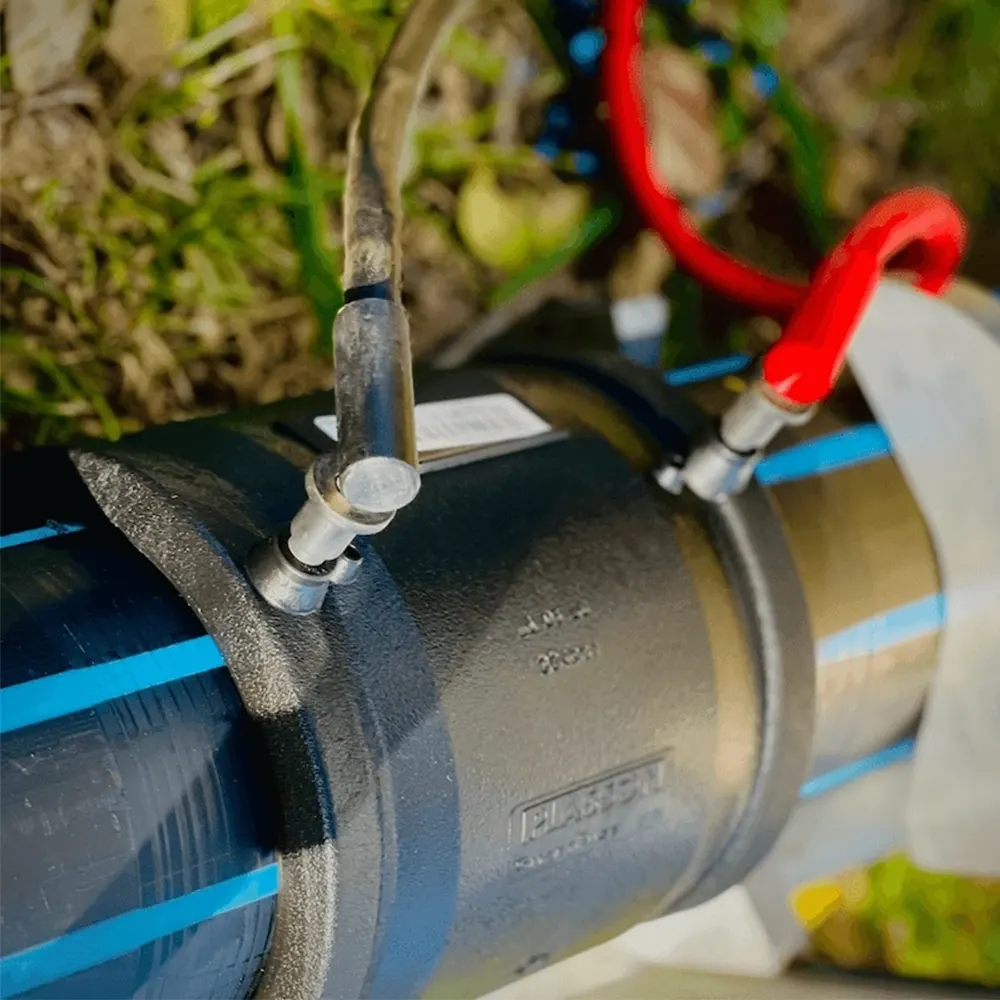
When a pipeline project moves from planning to installation, one document often determines whether the final weld record is useful years later or becomes a confusing pile of notes: the pipeline welding report template. For contractors, inspectors, and project managers, the right template is more than paperwork. It is the backbone of accurate inspection records, traceable weld quality, and compliance-ready documentation. A well-designed report template helps teams capture the exact information needed at the right moment, reducing errors, missing entries, and costly rework.
A professional pipeline welding report template should work across the full welding workflow, from material verification to post-weld inspection. It should be easy to complete in the field, readable on mobile devices, and structured to support audits, QA/QC reviews, and client handover. In practice, the best template is not the most complicated one. It is the one that consistently records the critical details of every weld in a clear, standardized format.
Why a Pipeline Welding Report Template Matters
Pipeline welding is a high-stakes process. A single poor weld can lead to leaks, shutdowns, environmental damage, safety risks, and expensive repairs. That is why accurate inspection records are essential. A strong report template creates a shared language between welders, inspectors, supervisors, and quality teams. It ensures that every weld is documented with the same level of detail, making it easier to compare results and identify problems early.
In addition, a standardized template supports accountability. If an issue is found later, teams can trace the weld back to the operator, machine settings, pipe size, environmental conditions, and inspection results. This is especially important in water supply, gas distribution, mining, and industrial pipeline projects where compliance and safety requirements are strict.
Key point: The best report template is not only a record of what happened. It is a tool for preventing future quality issues by preserving reliable, complete, and traceable data.
What Should the Best Template Include?
A good pipeline welding report template should be simple enough for field use but detailed enough for quality control. It should include all the essential elements of the welding process without overwhelming the user. The following fields are commonly considered necessary:
Important fields to include: project name, location, date, weld joint number, pipe material, pipe diameter, wall thickness, welding method, machine model, operator name, inspector name, environmental conditions, heating time, fusion time, pressure settings, cooling time, and final inspection results.
These fields create a complete story for each weld. Without them, a report may look finished on the surface but still fail during review because critical context is missing. For example, if a defect appears, the inspector should be able to check whether the pipe was within temperature range, whether the pressure was stable, and whether the operator followed the correct cycle.
The template should also include a clear pass/fail status, corrective action notes, and signature or approval fields. These final touches help organizations maintain a clean audit trail and demonstrate that inspection decisions were properly reviewed.
What Makes a Template Accurate in Real Field Conditions?
Accuracy depends on more than the number of fields. It depends on usability. If a report is difficult to complete, users may skip sections or enter data incorrectly. The best pipeline welding report template is designed for practical field conditions, where time is limited and environmental factors may affect recording.
A mobile-friendly layout is extremely important. Inspectors often work near trenches, stations, or remote project sites, so the template should display clearly on phones and tablets. Short labels, grouped sections, and logical data flow make it easier to complete records quickly and correctly.
Another major factor is consistency. Every field should be defined the same way across all reports. If one inspector writes “pipe OD” and another writes “outer diameter,” data analysis becomes harder. Standard naming conventions reduce confusion and improve long-term record management.
A practical template also supports dropdown fields, checkbox options, and controlled input formats. These reduce spelling mistakes and keep records consistent across different crews, sites, and shifts.
How to Design a Report Template That Fits Different Welding Methods
Not all welding projects use the same process. Butt fusion, electrofusion, and other joining methods require different inspection details. That is why the best template should be adaptable. A one-size-fits-all form can work only if it includes modular sections that can be enabled or hidden depending on the project type.
For example, butt fusion records should capture machine temperature, facing quality, alignment, pressure, bead formation, and cooling duration. Electrofusion records should include coupler batch number, bar code data, voltage, and fusion indicator status. A flexible template makes it easy to support multiple welding methods without creating separate document systems for every job.
This flexibility is especially useful for companies working across water, gas, and industrial systems. Teams can keep one reporting structure while still adapting it to different job requirements. That saves time in training, improves document control, and helps reduce errors during project execution.
For organizations looking for reliable equipment that supports repeatable weld quality, it can be useful to review solutions from a trusted butt fusion machine manufacturer that understands field documentation needs and welding consistency.
How Inspection Records Benefit from Better Reporting
Inspection records are only valuable if they are complete, readable, and easy to verify. The report template is the foundation that makes this possible. When records are structured correctly, quality teams can review weld trends, compare operator performance, and identify recurring equipment issues. This supports better decision-making across the entire pipeline project.
Accurate records also help with warranty claims, subcontractor evaluation, and project closeout documentation. If a customer asks for proof of weld quality, the report should provide a clear answer without requiring a long investigation. A strong template turns scattered field notes into professional documentation that supports confidence and credibility.
Useful inspection outcome data: visual condition, bead uniformity, alignment check, dimensional conformity, operator remarks, and any nonconformity action taken on site.
In modern projects, digital recordkeeping is becoming more common. A template that can be converted into electronic forms, spreadsheets, or quality management software offers even greater value. Digital formats make it easier to search, sort, back up, and share records among project stakeholders.
Best Practices for Filling Out the Template
The most reliable reports are created with disciplined field habits. Even the best template will fail if users do not record data immediately and accurately. Teams should complete key fields at the time of welding rather than relying on memory later in the day. This reduces transcription errors and improves trust in the document.
It also helps to assign clear responsibilities. The welder should record process details, while the inspector verifies results and signs off on acceptance. Supervisors may then review the report for completeness. This layered approach improves quality control and keeps responsibilities clear.
Another useful practice is to use the same template version across the project. When multiple versions circulate, data can become inconsistent. A controlled document system ensures everyone uses the same format, which is essential for large pipeline projects with many crews and shifts.
Teams should also train new operators and inspectors on how to interpret each field. A report template is only effective when the people using it understand why each entry matters. Training creates better records and fewer avoidable mistakes.
How JQ-Fusion Supports Better Welding Documentation
Reliable equipment contributes directly to reliable records. If welding conditions are stable, it is easier to document consistent outcomes. JQ-Fusion has more than 20 years of experience in manufacturing HDPE pipe welding machines, including manual, hydraulic, and CNC automatic butt fusion solutions. Their equipment is used in water supply systems, gas distribution networks, mining projects, and industrial pipeline installations around the world.
With modern production lines, strict quality control, and testing for temperature accuracy, hydraulic pressure stability, and clamp alignment, JQ-Fusion helps contractors achieve repeatable welding performance. That kind of consistency is valuable when inspection reports must reflect stable and traceable process conditions.
For projects that require customization, JQ-Fusion also offers OEM and ODM services, including machine size, voltage, color, branding, and project-specific configurations. This makes it easier for distributors and contractors to match equipment to regional standards and operational needs.
Because large projects often need both quality and speed, the company’s inventory and logistics support can help reduce downtime. When the machine, process, and documentation work together, project teams can maintain smoother inspection records and stronger final handover files.
What Is the Best Template in Practice?
The best pipeline welding report template is the one that combines clarity, completeness, and field usability. It should capture every critical weld parameter, support different welding methods, and remain easy to fill out under real site conditions. It should also be compatible with digital workflows and capable of producing records that hold up during audits or client review.
In short, the strongest template is not overloaded with unnecessary fields, but it also does not leave out the information that matters most. It balances simplicity with technical depth. That balance is what makes inspection records accurate instead of merely filled in.
Best-practice formula: use a standard format, capture data at the point of work, verify entries immediately, and keep the template flexible enough to match different pipeline welding methods.
Conclusion
A pipeline welding report template is far more than a form. It is a quality assurance tool, a compliance record, and a project memory system. The best template helps teams document every important detail accurately, support inspection decisions, and protect the long-term integrity of the pipeline.
For contractors, inspectors, and manufacturers, the real goal is not simply to create paperwork. The goal is to produce records that are trustworthy, complete, and easy to use in the field. When the template is thoughtfully designed, inspection records become clearer, audits become easier, and project quality improves across the board.
Frequently Asked Questions
Q1: What is the most important field in a pipeline welding report template?
All fields matter, but weld joint identification, process parameters, and inspection results are usually the most critical for traceability and quality verification.
Q2: Should a pipeline welding report template be digital or paper-based?
Both can work, but digital templates are often better for searching, sharing, and archiving records. Paper forms may still be useful in remote field conditions.
Q3: Can one template be used for butt fusion and electrofusion?
Yes, if the template is designed with modular sections that can adapt to different welding methods and their specific inspection requirements.
Q4: Why do inspection records need standardized templates?
Standardized templates improve consistency, reduce missing data, make audits easier, and help teams compare weld quality across multiple crews or sites.
Q5: How can companies improve report accuracy on site?
They can train staff, use controlled document versions, complete records immediately after welding, and choose a template that is clear and mobile-friendly.



